

For many NY Jews, delis are the ‘secular version of the synagogue’
From Katz’s to the Second Avenue Deli, those hungry for the nostalgic days of yore can worship on the altar of pastrami on rye
 Add ToI as a Preferred Source on Google
Reporter at The Times of Israel
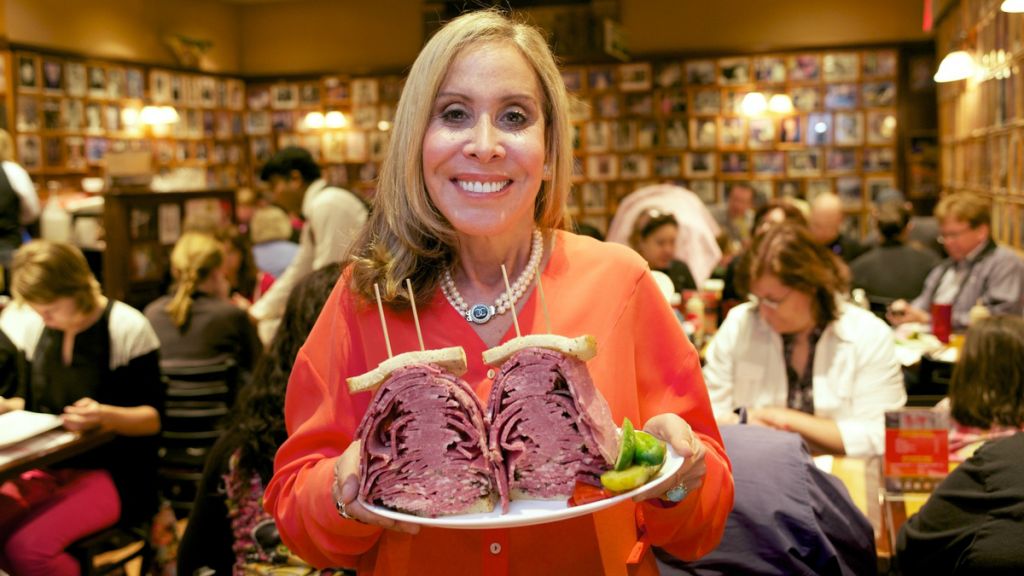
NEW YORK — Inside the Second Avenue Deli the scent of cured meats with notes of spicy golden mustard and sour pickles wafts through the air.
As one of the few bona fide Jewish delicatessens left in New York City, the eatery is more than a piece of living culinary history. It offers a glimpse into a past when the delis were more than a place to gather for a bite, but neighborhood community centers.
And while the city once boasted between three and four thousand delis, today there are fewer than two-dozen. It’s a shift that says as much about changing diets as it does about the assimilation of American Jews.
“The delicatessen is really an American invention. The reason for the popularity of the deli is it was a gathering place for Jews, it was the gestalt of the experience,” said Ted Merwin, author of “Pastrami on Rye: An Overstuffed History of the Jewish Deli” in a telephone interview.
“Delis became the secular version of the synagogue. The Irish had pubs, the African-Americans had the barbershop, and Jews had the delis. And in its way the pastrami sandwich became a symbol for the American dream.”
One of the most famous deli is Katz’s Delicatessen at Houston and Ludlow on New York’s Lower East Side. Founded 128 years ago, it’s something of a tourist magnet today.
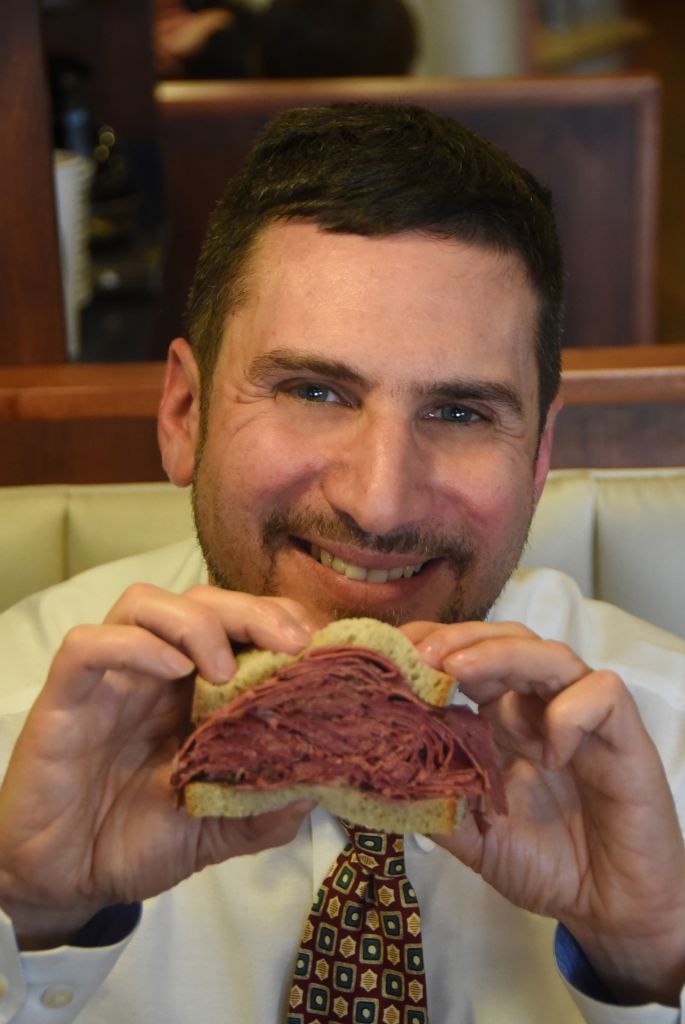
Lines of customers waiting for tables often spill onto the street. Some are hoping to order pastrami on rye, others want to see where director Rob Reiner filmed the famous “I’ll have what she’s having” scene in “When Harry Met Sally.”
Uptown, the Second Avenue Deli — another celebrated eatery — is enjoying a bit of a rebirth. Abe Lebewohl opened it as a 10-seat luncheonette in 1954. After he was murdered in 1996 on the way to make a bank deposit, his widow, daughter, and brother kept it open until a dispute with a landlord forced its closing in 2006. Lebewohl’s nephews Josh and Jeremy reopened the iconic establishment in two locations: 162 East 33rd Street and 1442 First Avenue.
Jack Lebewohl, Abe’s brother, was just six when his brother opened the deli.
“I remember everybody ate at the deli; Jews, Blacks, Italians and Irish. It was known as a Jewish restaurant, but really everybody ate here,” Lebewohl, 68, told The Times of Israel.
“I even remember as a boy delivering turkeys on Thanksgiving to all the Italian families in the neighborhood. Deli food became New York food, not just Jewish food. People came in once a week, twice a week – it was their home away from home.”
These days not only has the frequency with which people dine at Second Avenue declined, their orders have also changed. Where they once ordered flanken and mushroom barley soup with abandon, most people are looking for sandwiches and fries, Lebewohl said.
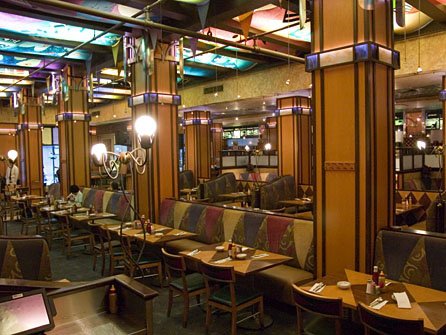
As for atmosphere nothing beats the Art Deco style of Ben’s Kosher Deli on 38th Street, near the garment district, said Merwin.
“I love the idea of it, it has a nostalgia for that whole period when Jews felt like they belonged even though they really didn’t. At the time there was anti-Semitism, and quotas and Jews couldn’t belong to many clubs or go wherever they wanted. But the delis gave the illusion of belonging,” Merwin said.
‘It has a nostalgia for that whole period when Jews felt like they belonged even though they really didn’t’
“The deli was a place to connect. Harpo Marx said he loved coming home and going to a deli where he found people speaking his language with the same accent he had. There was a sense of homecoming.”
It’s that sense of homecoming that Noah Bernamoff wanted to capture when he opened The Mile End Delicatessen in in 2010 in Brooklyn and Manhattan.
“We wanted to create a warm and hospitable atmosphere and the food we serve lends itself to that,” said Bernamoff.
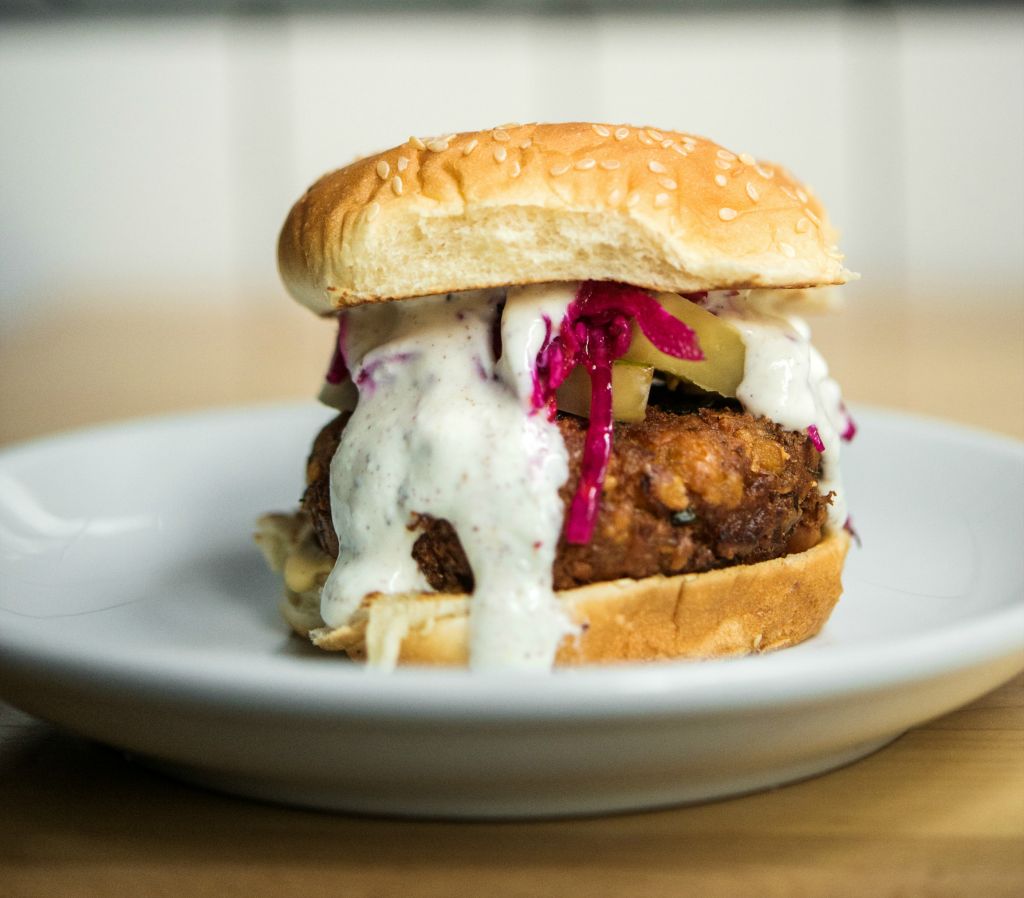
However, Bernamoff, who grew up in Montreal, said it was important to him that the restaurant didn’t wander into the realm of nostalgia. And so the restaurant serves a classic Reuben or whitefish toast, but it also offers a falafel burger or a bowl of yogurt and maple granola.
“We drew the line between comfort and memory and comfort and experience. Memory is so subjective. Instead we wanted to create something real and lively, we wanted to create a deli for real life New York,” Bernamoff said.

When Merwin, who is also Associate Professor of Religion and Judaic Studies at Dickinson College in Pennsylvania, first set about chronicling the history of Jewish delis he thought the early 1900s marked the golden era of delicatessens, when more than one million Jews lived in the Lower East Side of Manhattan.
In reality, most of those newly arrived immigrants could barely scrape together enough pennies to buy a sour pickle, Merwin said. As for meat, be it smoked or stewed, that was a special occasion dish. Indeed meat was the “caviar of Jewish life,” said Merwin.
Deli food wasn’t part of the Eastern European Jewish diet, Merwin said. There just wasn’t a lot of meat eaten in Eastern Europe; people were poor, couldn’t afford to purchase it, and most didn’t have access to grazing lands.
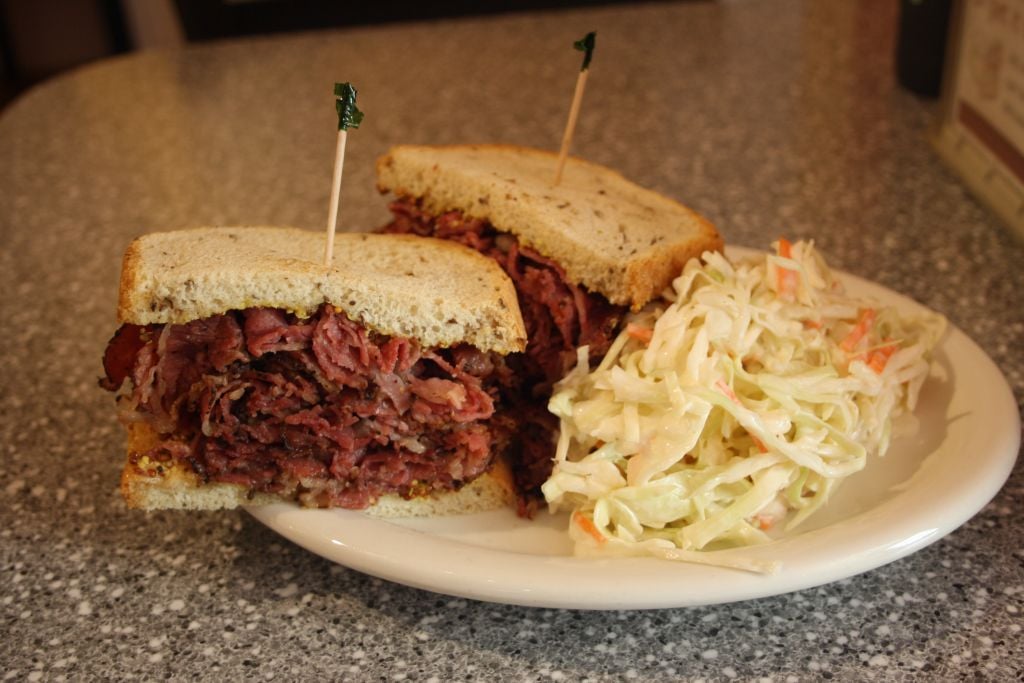
During the golden era of delis there were kosher delis and kosher-style delis. The former were usually low-profile take-out stores, the latter typically a celebrity hangout located near the entertainment district. There, children of Jewish immigrants indulged in slices of mile-high cheesecake at Lindy’s and pastrami sandwiches at newly reopened Carnegie Deli.
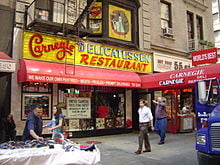
“The glitz and glamor of these places were where Jews could celebrate their arrival here. Places where there were pictures of the stars of stage and screen on the walls, and sandwiches named after them. Being in this stardust atmosphere appealed,” Merwin said.
However, as Jews migrated to the suburbs and were no longer barred from country clubs, golf courses, and recreation centers, delis lost their significance and no longer had a central place on Jewish America life. That, combined with changing tastes and diets, led to a decline in the number of delis.
“There was a time when everything revolved around the fact that you were Jewish — everything you did, everything you said. Jewish life doesn’t have that same presence anymore,” Merwin said.
“People are waking up to this now, that something has disappeared. There seems to be a wish to recapture it,” said Merwin.









The Times of Israel Community.