

IDF head adamant that he received no warning of war
Benny Gantz sends letter to Netanyahu rejecting Shin Bet security agency’s claim that it said Hamas was readying attack
 Add ToI as a Preferred Source on Google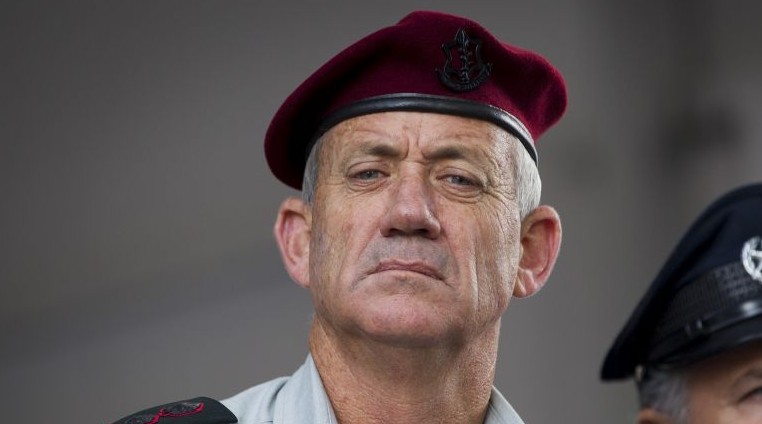
IDF Chief of Staff Benny Gantz sent a letter to Prime Minister Benjamin Netanyahu on Wednesday in which he strongly protested claims by the Shin Bet, Israel’s security agency, that it had warned of a major offensive planned by Hamas for the summer, months before the recent conflict with the terror group.
In the missive Gantz rebutted the claims made by Shin Bet director Yoram Cohen and the agent responsible for intelligence in the south of the country, who has been identified in Israeli media only as R, Channel 10 reported.
The Shin Bet figures contend that as far back as January the organization gave repeated — but unheeded — warnings to the army that Hamas was gearing up for a major raid into Israel scheduled for July.
However, a senior IDF official told Channel 10 that there were no warnings given by the Shin Bet.
“There was no such warning or even half a warning,” the source said. “The Shin Bet is doing a swindle, and is just trying to present the IDF as not having prepared for the war that the Shin Bet warned about.”
Gantz reiterated to Netanyahu that the IDF was not alerted to a Hamas plan and noted that as a result of the allegations there is now a serious crisis of trust between the army and the Shin Bet.
Earlier this week a Channel 2 TV documentary reported an “unprecedented rift” between the Shin Bet and the IDF over the issue.
According to the report, two days after the war ended, there was a cabinet meeting at which Shin Bet chief Cohen told ministers that his security service gave advance warning of the Hamas war plan, and the then head of military intelligence, Aviv Kochavi, retorted: “You didn’t say a word about [the danger of] a war [breaking out] in July.”
The program filmed a Shin Bet operative named Shiran who said that “from January 2014” information began to accumulate from which it was clear to the Shin Bet that Hamas was “preparing for war.”
The Shin Bet concluded that Hamas was aiming to “initiate a war” before Israel would be able to prepare with troops on the border. The goal would be to “invade Israeli communities — a war of ‘liberation'” — presumably through its cross-border tunnels as a first step. Hamas’s planned “second stage” would be to kidnap soldiers.
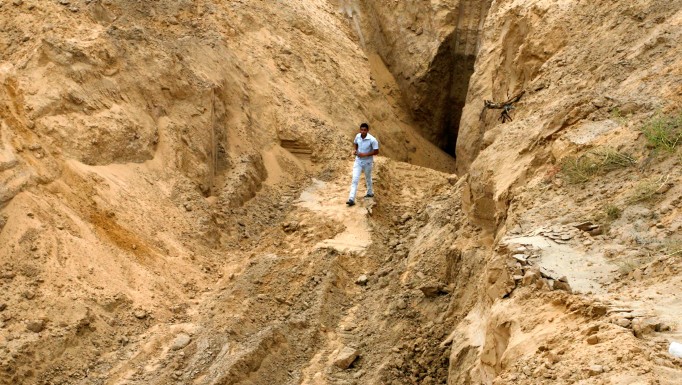
The Shin Bet had specific information that Hamas sought to complete its preparations by the end of June, so that it would be ready for the conflict in early July — precisely as proved to be the case.
The TV report filmed another Shin Bet operative saying he was “certain” that Shin Bet chief Cohen “passed the information to those to whom it had to be passed.”
However, IDF Spokesman Moti Almoz told the program no such advance warning was ever given. The word “war” was never uttered, he said, “not in January, not in February… It didn’t happen.”
The 50-day Israel-Hamas war saw the IDF expose and demolish dozens of tunnels Hamas had dug under the border, with Prime Minister Benjamin Netanyahu saying that the Islamist terror group planned to use the tunnels to catastrophic effect against Israeli troops and civilians.
Eleven Israeli soldiers were killed in attacks by Hamas gunmen emerging from the tunnels during the summer conflict.
Hamas and other Gaza-based terror groups launched over 4,500 rockets and mortars at Israeli cities throughout Operation Protective Edge, which claimed the lives of over 2,000 Palestinians, at least half of them said by Israel to be combatants, 72 Israelis, the majority of them soldiers, and one Thai national working in Israel.
The war ended in late August in an Egyptian-brokered interim truce agreement, after which the sides were set to resume indirect negotiations in Cairo over a more long-term deal and tackle thorny issues such as the return of the remains of two IDF soldiers, the easing of the blockade on Gaza and the rehabilitation of the Palestinian enclave, an endeavor which has already commenced.
The fate of the talks remains unclear as Egypt last month refused to receive the Islamist group’s delegation to the negotiations, following a deadly terror attack in the Sinai which killed over 30 Egyptian troops, and in which Hamas was accused of being involved.





The Times of Israel Community.