

Iran might not retaliate against an Israeli strike, says vice prime minister
Silvan Shalom, who opposes Israeli intervention and says he hopes ‘we don’t arrive at such scenarios,’ also notes Tehran has limited missile arsenal
 Add ToI as a Preferred Source on Google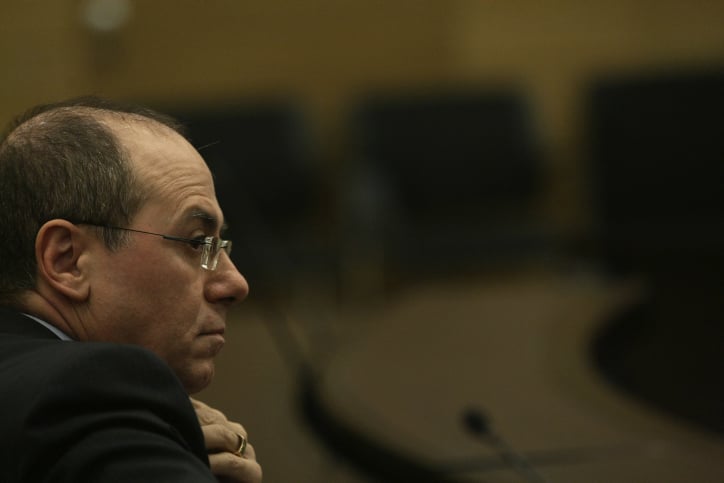
Iran may not necessarily retaliate should its nuclear facilities be attacked by Israel. And even if it does, Tehran does not possess unlimited missiles, Vice Prime Minister Silvan Shalom, who opposes an Israeli strike on Iran at this stage, said on Monday.
And while Syria, Lebanon, and/or Hamas might attack Israel in the aftermath of a strike on Iran’s nuclear weapons program, Israel could hit back at infrastructure critical to everyday life such as power plants and refineries, Shalom added.
“I hope we don’t arrive at such scenarios,” the vice premier stressed, in an interview on Israel Radio.
Iran has stated repeatedly that it would hit back at Israel were it to come under Israeli attack.
Shalom said he expects the international community to levy “real sanctions” on Iran, capable of forcing it to give up its nuclear program. One such measure would be stricter sanctions on Iran’s central bank, Shalom said.
He also reiterated that Israel should allow more time for sanctions before considering a resort to military action.
On Sunday, in comments that contrasted with reports that Prime Minister Benjamin Netanyahu and Defense Minister Ehud Barak have all-but decided on the need for a military strike, Shalom had told Army Radio: “If the sanctions are for real, they get the job done. We saw that with the apartheid era in South Africa, we saw it with Libya’s nuclear program and we saw it with North Korea… Maybe we’ll see them work against Iran.”
Shalom said in that interview that the current sanctions placed by the international community on Iran were not effective enough to bring about a 180 degree shift in Iran’s nuclear policy, but that if the regime is made to feel it is at risk, it could abandon its nuclear ambitions.
The former foreign minister said that Russia and China were not going to support tougher sanctions, fearing rising energy costs and the loss of regional influence, but that the US and Europe could do more than they were doing at present.
When asked if he sided with the prime minister on the necessity of an Israeli strike on Iran, Shalom said, “I believe we still have time to convince the Americans to implement tougher sanctions.”
On Friday, Channel 2 News devoted much of its evening program to the issue of Iran, positing that Netanyahu and Barak are “almost ready” to approve an Israeli military attack despite opposition from the Obama administration and from many Israeli security chiefs. Several Hebrew newspapers have carried similar assessments, apparently based on briefings by people close to the prime minister and defense minister.








The Times of Israel Community.