

New causes for concern at home, in the West Bank, and facing Gaza
Domestic Arab protests are intensifying, the West Bank is heating up, and Hamas may be about to escalate its attacks

 Add ToI as a Preferred Source on Google
Avi Issacharoff, The Times of Israel's Middle East analyst, fills the same role for Walla, the leading portal in Israel. He is also a guest commentator on many different radio shows and current affairs programs on television. Until 2012, he was a reporter and commentator on Arab affairs for the Haaretz newspaper. He also lectures on modern Palestinian history at Tel Aviv University, and is currently writing a script for an action-drama series for the Israeli satellite Television "YES." Born in Jerusalem, he graduated cum laude from Ben Gurion University with a B.A. in Middle Eastern studies and then earned his M.A. from Tel Aviv University on the same subject, also cum laude. A fluent Arabic speaker, Avi was the Middle East Affairs correspondent for Israeli Public Radio covering the Israeli-Palestinian conflict, the war in Iraq and the Arab countries between the years 2003-2006. Avi directed and edited short documentary films on Israeli television programs dealing with the Middle East. In 2002 he won the "best reporter" award for the "Israel Radio” for his coverage of the second intifada. In 2004, together with Amos Harel, he wrote "The Seventh War - How we won and why we lost the war with the Palestinians." A year later the book won an award from the Institute for Strategic Studies for containing the best research on security affairs in Israel. In 2008, Issacharoff and Harel published their second book, entitled "34 Days - The Story of the Second Lebanon War," which won the same prize.
Israel needs to be acutely concerned about several developments over the last few hours.
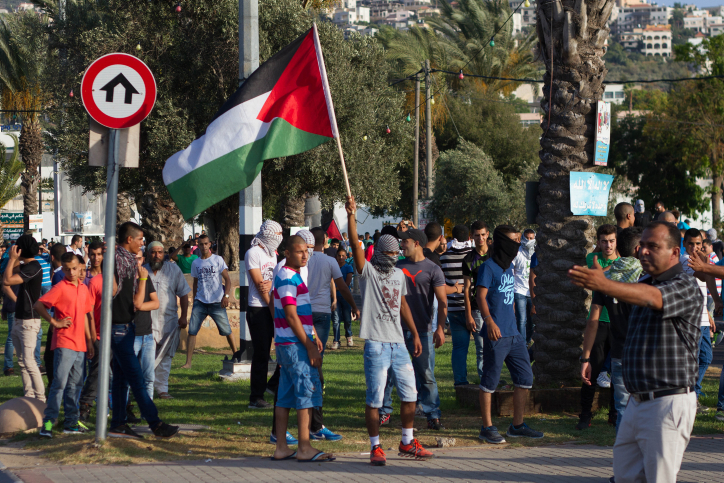
First, late Sunday saw the continuation of demonstrations and violent clashes in several Arab towns and villages throughout the country. Sunday was the third successive night of Arab protests within Israel, and they’re getting worse. Carefully timed demonstrations, especially in the south — close to Omer, for example — are starting to look like rather more than spontaneous outbursts.
Arab Knesset member Ahmad Tibi said on Monday morning that these are protests by young Arabs consumed by frustration and anger, but it may well be that they are in fact being orchestrated. Anti-Israel incitement in the mosques of the Negev on Sunday appeared to have been deliberately engineered by the northern branch of the Islamic Movement, which is close to Hamas, designed to whip up anger among the Arabs in Israel and cause protests similar to those of October 2000, at the start of what became the Second Intifada.
Thus far the Arab youths who have taken to the streets in the Galilee and the Negev are a tiny minority. Plainly, the Israel-Arab leadership — the mayors and the politicians — are not interested in a repeat of those protests 14 years ago. They, at least, are trying to restore calm.
The second area of concern relates to the West Bank. Sunday night saw substantial protests for the first time in there too — at Al -Arub, near Hebron, at Joseph’s Tomb, near Nablus, and close to the industrial area on the outskirts of Tulkarem.
Thus far, the Palestinian public in the West Bank has generally kept out of the clashes and demonstrations of recent days. Even last Friday, the day of the funeral of Muhammad Abu Khdeir, the 16-year-old Palestinian allegedly murdered by Jewish extremists, there weren’t marches or major demonstrations in the West Bank. East Jerusalem, by contrast, was inflamed — not just Abu Khdeir’s Shuafat neighborhood, but other neighborhoods and villages too. On Sunday night, however, the protests did spread to the West Bank. Most Palestinians in the West Bank do not want a third intifada; the Palestinian Authority, and its security forces, certainly don’t. Therefore, one must hope that the PA will be able to contain the demonstrations and maintain calm.
Third and last, we come to the relentless deterioration of the situation with Gaza. Rocket fire on the south is now routine. The slogan “quiet in return for quiet” has proved empty. Israel is doing its best to prevent escalation, responding quietly to a fairly major rocket onslaught — 30 rockets fired on the south in the course of Sunday alone.
But what changed on Sunday night was the deaths of seven Hamas fighters in the collapse of a tunnel in the Rafiah area. Hamas claims that Israel blew up the tunnel, causing the seven fatalities. But Tal Lev Ram, Army Radio’s military correspondent, reported on Monday morning that the seven were killed in a “work accident”: they entered the tunnel, which had been blown up several days ago, and while they were assessing the damage it collapsed on them.
The problem is that even if there was no Israeli strike, Hamas still insists that Israel is responsible for the deaths of its seven operatives. And the Hamas military wing consequently sees itself as obligated to escalate its response against Israel.
The journey from here to a major escalation, one that neither side actually wants, is perilously short.





The Times of Israel Community.