

AG calls on High Court to overturn appointment of Gofman as new Mossad chief
Baharav-Miara says Gofman knew the IDF division he commanded used a blogger in an influence op, but lied to an IDF probe, thereby leading to the blogger’s arrest and prolonged detention
 Add ToI as a Preferred Source on Google
Jeremy Sharon is The Times of Israel’s legal affairs and settlements reporter
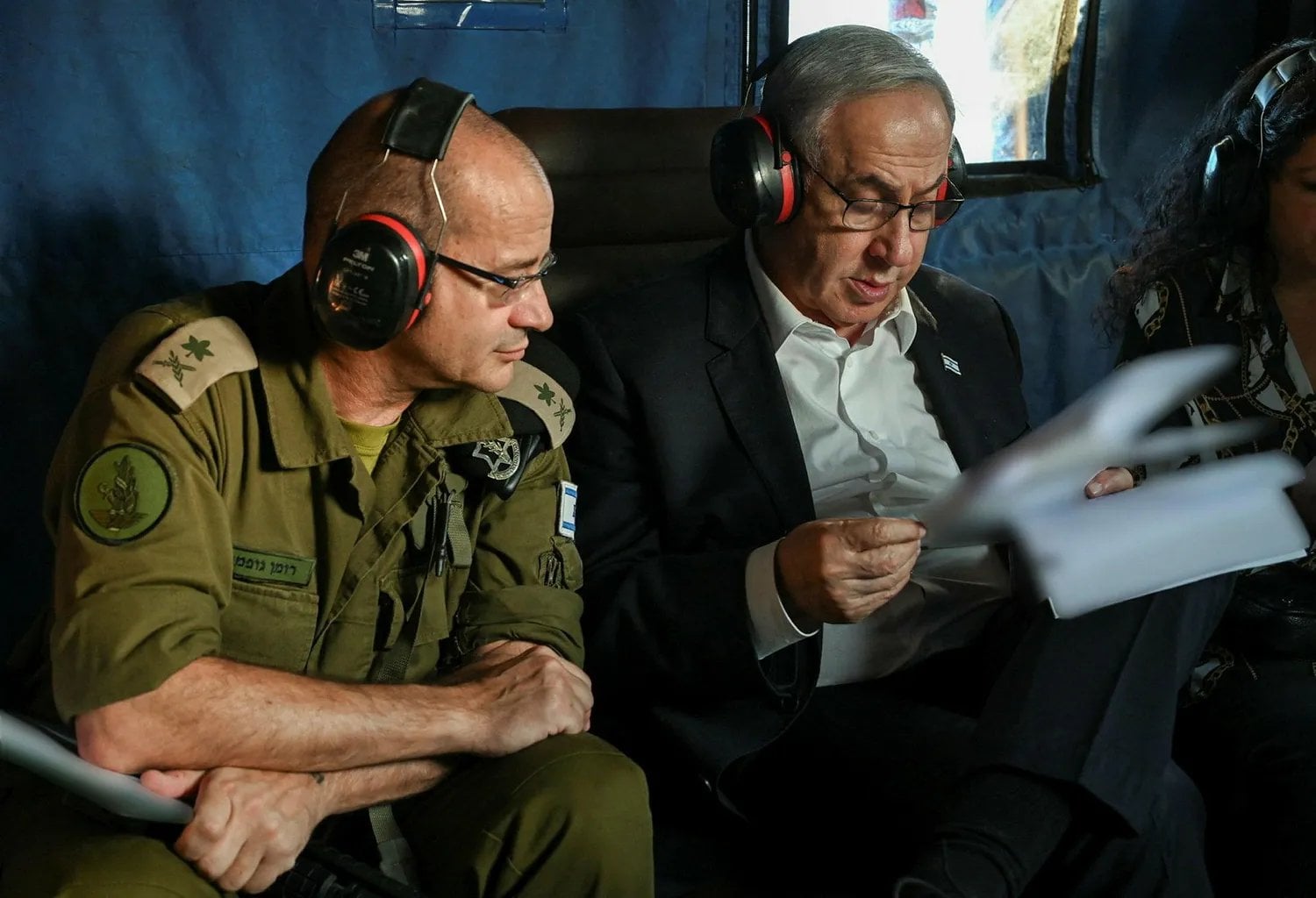
Attorney General Gali Baharav-Miara called on the High Court of Justice to overturn the government’s decision to appoint Maj. Gen. Roman Gofman as the next head of the Mossad, and accused the appointments committee, which re-approved his selection earlier this week, of deliberately ignoring key facts over the incident in 2022 at the heart of petitions against the appointment.
The Senior Appointments Advisory Committee re-approved Gofman’s appointment on Tuesday by three votes to one after the High Court ordered the committee to hear and review new evidence and testimony which it failed to obtain when it first approved Gofman’s appointment in April.
But in her response to the committee’s decision sent to the court Thursday morning, Baharav-Miara stated that the new evidence and testimony the committee reviewed showed that Gofman was aware that the IDF’s 210th Division he commanded in 2022 had used a blogger, Ori Elmakayes, in an online influence operation, and that Gofman failed to intervene on Elmakayes’s behalf after the blogger was wrongfully arrested and indicted on espionage charges as a result of his work with Gofman’s division.
The attorney general said that the committee deliberately ignored the critical new evidence it reviewed after the court order, and that it appeared that “the target was drawn around the arrow,” essentially accusing the committee majority of seeking to appoint Gofman regardless of the facts of the case.
“The opinion of the committee majority ignores some of the real-time testimonies and documents, which have significant weight for understanding the matter, and includes ‘inaccuracies,’ as the committee chair said,” added the attorney general in reference to retired Supreme Court president Asher Grunis, who voted against immediately approving Gofman’s appointment and in favor of further clarifying the affair.
In 2022, the IDF’s 210th Division, commanded by Gofman, authorized Elmakayes to publish intelligence information on his Telegram channel in an online influence operation targeted at enemy elements in Syria who read his posts.
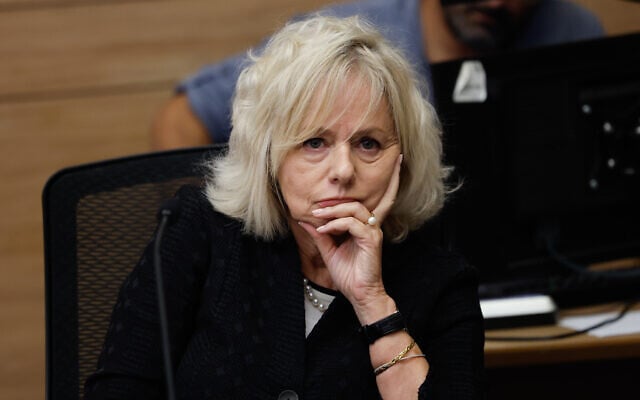
Elmakayes, who was 17 at the time and therefore a minor, was subsequently arrested and indicted for espionage when the Shin Bet became aware of the information he was publishing, without being aware that he was working with the IDF.
Elmakayes was held in detention for 44 days, and under house arrest for nearly a year and half, and was only exonerated 18 months later after being arrested, during which time Gofman did not inform the Shin Bet, the army, or the prosecution services that Elmakayes had been cooperating with the IDF.
In a detailed review of the case the attorney general filed to the court on Thursday, she set out the key details of the affair based on the investigation the IDF’s Information Security Department conducted before and after Elmakayes was arrested on May 24, 2022; a summary of a conversation the investigating officer, a brigadier general referred to as Gimmel, conducted with Gofman on May 15, 2022; an an affidavit Gimmel submitted to the appointments committee about that conversation last week; and the testimony of Gimmel and the IDF officer in the 210th Division who was Elmakayes’ handler, referred to as Tzadik, to the committee.
Baharav-Miara asserted that the information from those documents and the testimony of the officials established that Gofman knew his division was using an Israeli Telegram channel operator the entire time the operation was active, and that there is a very high likelihood that he knew that the operator, Elmakayes, was arrested.
The attorney general said that Gofman had, however, failed to tell the relevant agencies that Elmakayes was working with his division, which led directly to his arrest and indictment, since the investigative authorities believed Elmakayes had published the information independently and unlawfully, not with the coordination of Gofman’s unit.
The influence operation begins
The attorney general wrote that according to Gofman’s own testimony to the appointments committee in December 2025 and March 2026, he acknowledged having told Tzadik to contact bloggers for the purpose of an influence operation sometime before January 2022, after he failed to get approval from IDF Military Intelligence for such an operation.
Tzadik initially only transferred open-source information to Elmakayes for publication on his Telegram channel, although the IDF investigation found that Tzadik did pass some classified information to him as well.
Tzaddik told the appointments committee in March 2026 that he had regularly updated Gofman about the operation through Elmakayes and his Telegram channel.
“He [Gofman] didn’t know every detail. If there was something specific that Elmakayes posted on his Telegram channel and it’s something I transmitted… things like that I sent to Roman [Gofman],” Tzadik told the committee.
In April 2022, Elmakayes published classified information on his channel, seemingly transferred by Tzadik, which caught the attention of the security services and prompted a joint criminal investigation by the Shin Bet, the IDF military police, and the Israel Police.
Elamakyes was arrested on May 24, 2022, on suspicion of espionage offenses because of what he had published, but before the arrest, Gimmel spoke with Gofman by phone about the affair.
That phone call was held on May 15, 2022, and according to the conversation summary produced by Gimmel’s assistant immediately after the call, Gimmel asked Gofman “if he knew of any direct or indirect connection to a current affairs and security Telegram channel,” to which Gofman answered that he did not.
Gofman also failed to tell Gimmel that he had authorized Tzadik to work with current affairs and security bloggers, or that Tzadik was updating him about that operation.
Elmakayes was arrested nine days later.
״From a normative perspective, even if Gofman was unaware of the identity of the blogger Elmakayes, and even if he believed that he had not been given classified information, he should have indicated in a conversation with the operational commander [Gimmel] that such contact existed, and allowed the commander to continue the investigation on the basis of full information,” Baharav-Miara told the court in her submission on Thursday.
“His failure to do so means we are talking about the most severe defect on [his] ethical conduct,” she added, saying that Gofman had therefore severely harmed Elmakayes’ rights as a suspect.
Following Elmakayes’ arrest, Tzadik told Gofman he believed Elmakayes had been arrested, according to the IDF investigation and Tzadik’s testimony to the appointments committee.
Tzadik made this assessment based on the fact that Elmakayes had stopped publishing updates on his Telegram channel and stopped answering Tzadik’s messages, and because he saw publications about an arrest that fit Elmakayes and the situation.
Eventually, Tzadik himself was questioned by the IDF Information Security Department over the affair on August 10, 2022, and told the investigation that the operation had been approved by Gofman.
Immediately after Tzadik was questioned, Gofman called the head of investigations in the IDF Information Security Department.
“He asked to clarify that he had authorized Tzadik to contact bloggers dealing with Syria in order to gather information and for influence purposes,” the IDF investigation summary noted.
The summary added that Gofman had also said that Tzadik was “an excellent officer who does excellent work, and requested that this officer not be adversely affected.”
Baharav-Miara was strongly critical of Gofman for intervening on Tzadik’s behalf but not for Elmakayes.
She also leveled heavy criticism at the majority of the appointments committee for ignoring these facts, and focusing instead on the issue of whether or not the 210th Division had passed classified information to Elmakayes, something the attorney general said was irrelevant to the committee’s task of reviewing whether Gofman had violated accepted practices of ethical conduct.
“This is not the relevant question. The failure to disclose the connection that the division under Gofman’s command had with a blogger, under his direction and approval…This is the core of the defect in ethical conduct,” Baharav-Miara said.
“The majority opinion of the advisory committee is characterized by a tendency aimed at minimizing Gofman’s role [in the affair], and absolving him of responsibility for Elmakayes’ prolonged detention.
“Reading the minutes [of the committee’s deliberations], it is difficult to escape the impression that some members of the majority were determined to legalize the appointment no matter what, and as a result ignored facts and information that did not support their thesis.”
As such, the committee majority’s recommendation in favor of Gofman’s appointment could not stand, Baharav-Miara maintained, and said that the court should therefore annul the cabinet’s decision to appoint him Mossad chief.




The Times of Israel Community.