

Artist serves up slice of Jewish life with collection of synagogue paintings
Brit Beverley-Jane Stewart, whose collection is on display in Tel Aviv, says she was fascinated by shuls even as a child: ‘It’s telling people about time, a mix of old and new’
 Add ToI as a Preferred Source on Google
Jessica Steinberg, The Times of Israel's culture and lifestyles editor, covers the Sabra scene from south to north and back to the center
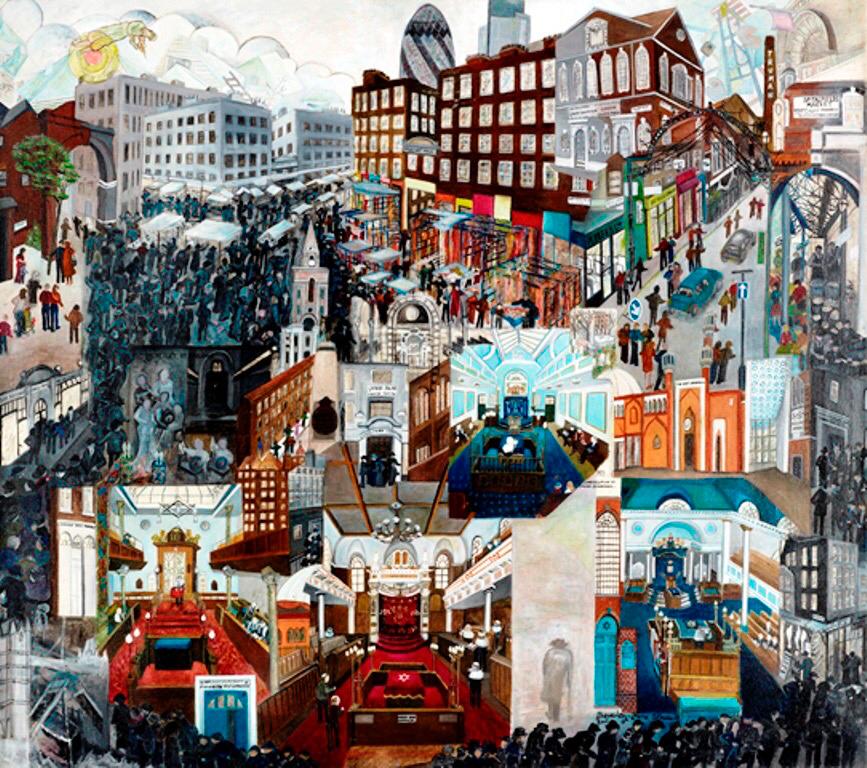
Anyone who’s ever spent time in a synagogue or church will recognize that seminal, sometimes spiritual, often communal experience in “Halls of Prayer, The Spirit of British Jews,” a collection of paintings by British artist Beverley-Jane Stewart, currently exhibited at Tel Aviv University’s Cimbalista Jewish Heritage Center through February 20.
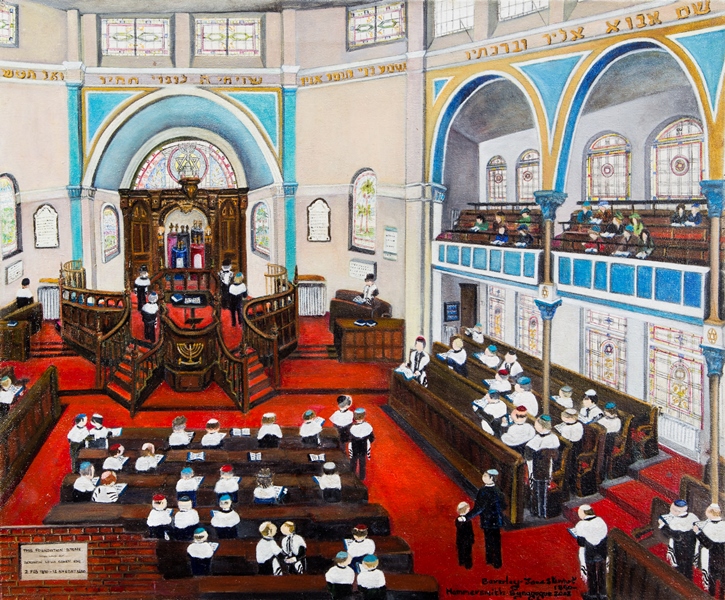
It’s an exhibit that takes visitors on a tour through British synagogues, from the Art Deco-designed Marble Arch Synagogue and 18th century Bevis Marks Synagogue to the more modern St. Johns Wood Synagogue or Bradford Tree of Life, built by German immigrants in 1881 in West Yorkshire.
For some viewers the paintings offer a trip back in time to these places of prayer, but one doesn’t have to be familiar with British shuls in order to identify with Stewart’s realistic oils, painstakingly recreating the sanctuaries where communities have long celebrated Sabbath, holiday and celebratory gatherings.
“I tried to put things into a perspective of time, how things got established and what it was like,” said Stewart. “What brought people out here and what existed here in the past.”
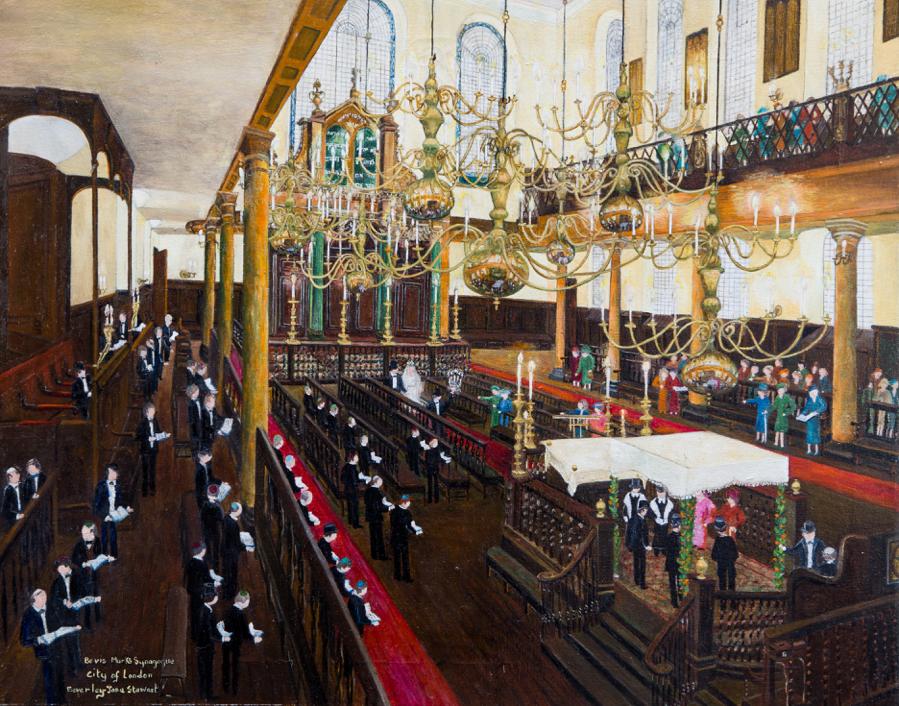
Each painting is a myriad of details, from stained glass windows, sloping sanctuary floors and chandeliers lit with real candles to the congregants themselves, wearing black-tie or jeans and sweaters, depending on the synagogue.
Stewart paints from memory, and from photographs that she takes while visiting the synagogues in order to get the details.
Stewart’s work on such paintings spans decades, but it was only when she met curators Vera Pilpoul and Ram Ozeri that they began forming a collection for exhibition, even adding some of the sketches that Stewart had relegated to the dust bin.
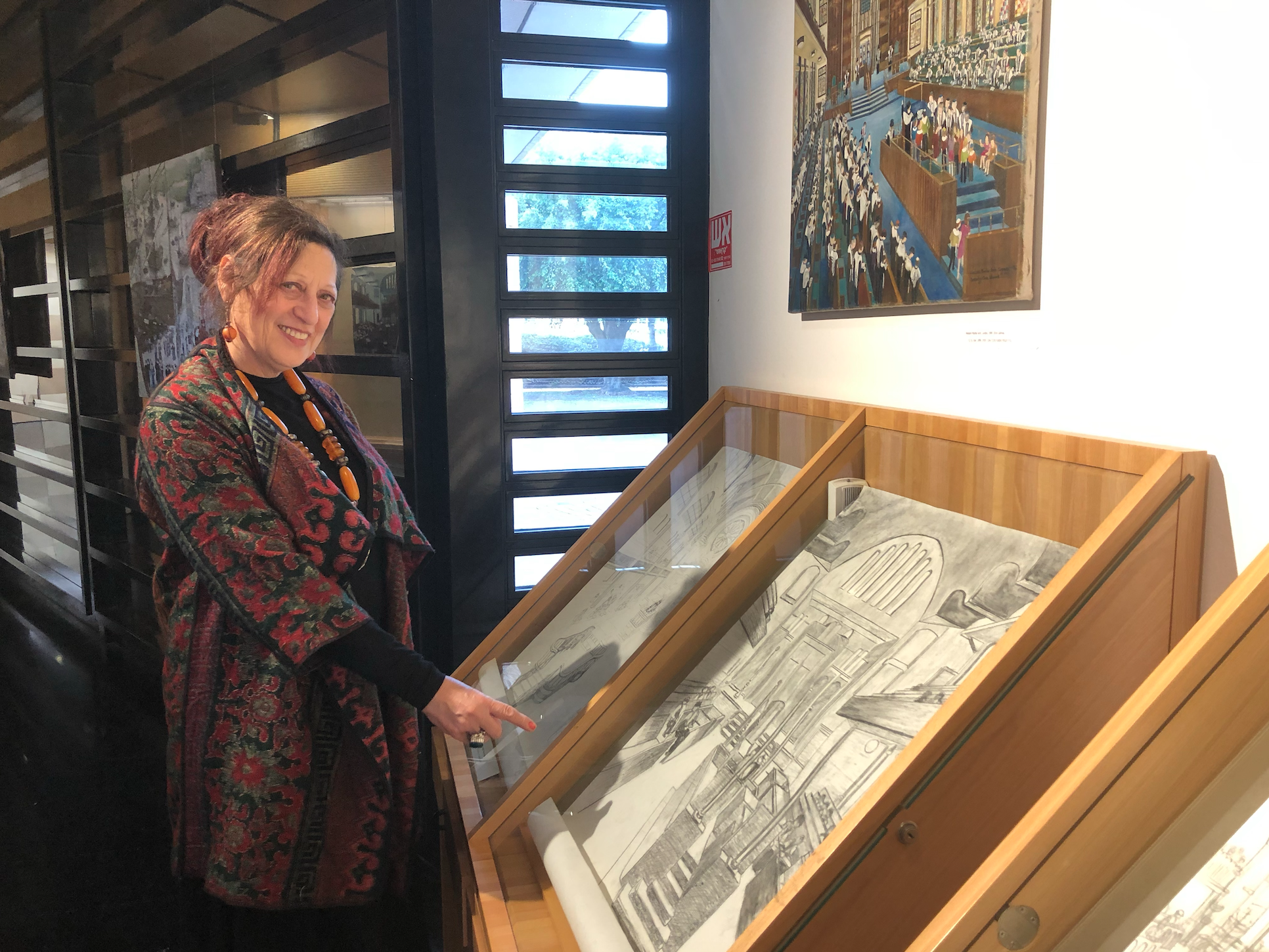
It was Ozeri, the founder of the Jerusalem Biennale for Contemporary Jewish Art where Stewart exhibited “Balfour Accomplished” in 2017, who thought of putting together Stewart’s works.
The result of their collaboration is this single gallery glance at the historical journey that Stewart has been on since 1986, when her own childhood synagogue in Brixton closed, offering a slice of social history on her own doorstep.
Stewart’s own fascination with synagogues and the communities they formed began during her childhood. She says she grew up in a traditional Jewish family and regularly attended synagogue with her mother, who served as the unofficial social worker of the community.
Stewart trained as a teacher but always painted throughout, creating works about British Jewish communal life. She traveled around her native London as well as throughout England, visiting synagogues and exploring the histories and backgrounds of Jewish communities.
Some of her works include separate scenes at the sides or bottoms of the paintings showing the exteriors of the synagogues, or street views that describe the overall locations — such as the sea and port in Exeter or the wool markets in Plymouth.
“I sliced paintings to show what it all looked like,” said Stewart. “It’s telling people about time, a mix of the old and the new.”
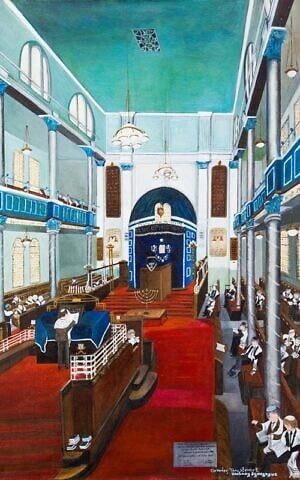
Bradford Tree of Life is a Reform synagogue built by German Jewish immigrants that was the first of its kind. Stewart’s painting of it tells the history of the community, many of whom were wool traders and merchants, as befitting the region.
Next to it is a painting of London’s East End and its collection of shuls, some closed now. Its rich, dense layers of exterior details show the nearby streets and businesses, a cemetery and in one corner — a faint image of Marc Chagall’s fiddler on the roof, referring to Stewart’s own questions as to whether the Jewish communities of the East End would survive and stay in London.
For now, they, and their synagogues, remain.
“Halls of Prayer” will run until February 20. The exhibit moves on to Casale Monferrato Synagogue and Museum, Italy, in March 2020.










The Times of Israel Community.