

With Israel and Gaza already beset by chaos, West Bank ‘explosion’ looms
Palestinian Authority security forces have cracked down on some protests; Hamas’s influence said to be spreading widely in the area, sparking fears that relative calm may not last

 Add ToI as a Preferred Source on Google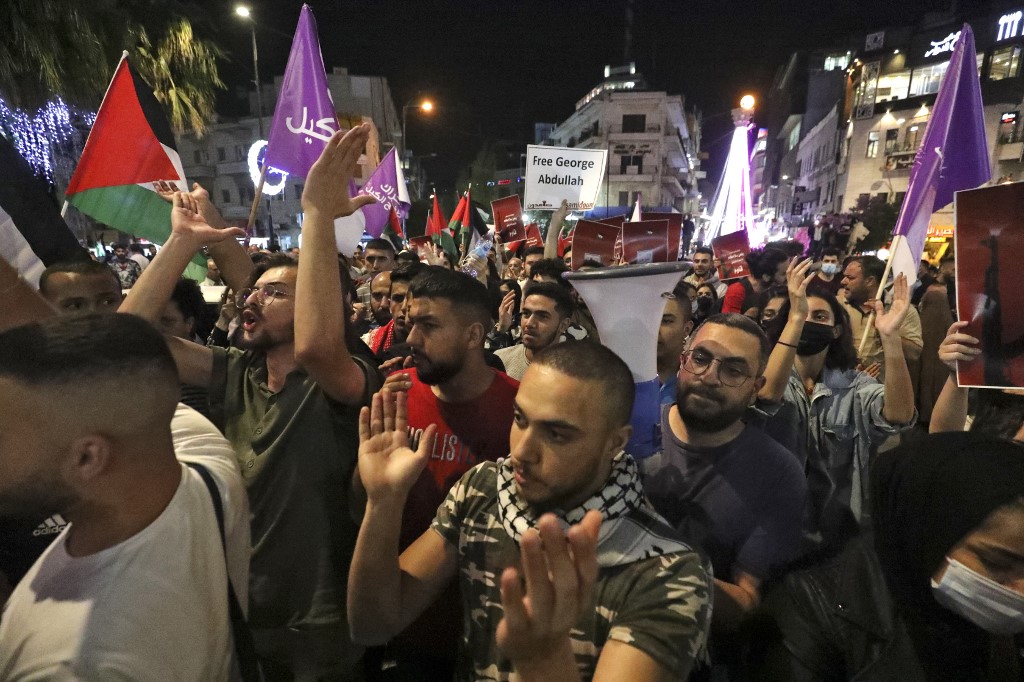
As Gaza, Jerusalem and Israel’s Jewish-Arab cities have seen widespread violence and unrest, tensions in the West Bank had remained at a simmer until Friday afternoon, amid fears it too would soon boil over, with one Palestinian official warning of an impending “explosion.”
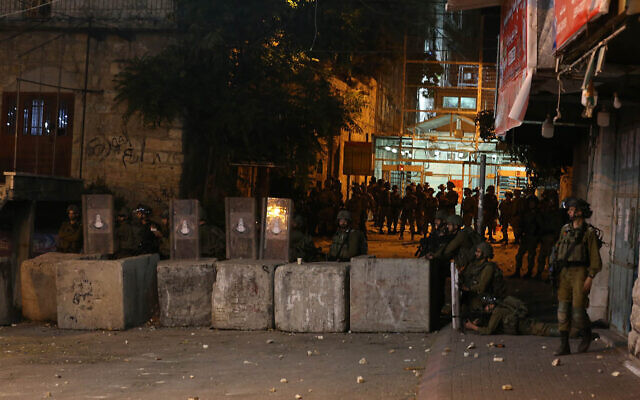
Clashes have taken place in the West Bank between Palestinians and Israeli security forces. Many have taken place in flashpoint areas, such as Nabi Saleh and near Hebron’s Bab al-Zawiya checkpoint, which regularly see violent demonstrations against Israeli rule.
A number of Palestinians have been shot and killed in what the Israeli military has said were terror attacks, including an attempted stabbing. At least one of those killed turned out to be a member of the Palestinian Authority security services, who was reportedly shot by mistake. On Friday, three Palestinians were killed during rioting in the West Bank, according to the Palestinian Authority Health Ministry.
The spate of West Bank Palestinian casualties — seven in the past week — would be front-page news at almost any other time. But the level of violence is dwarfed by the news coming out of Israel and Gaza.
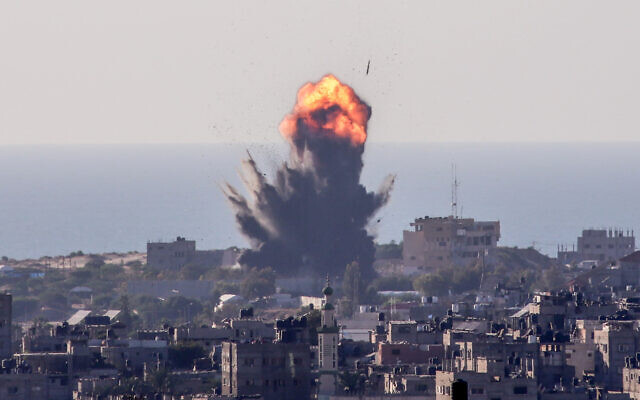
Hamas has sought to call the West Bank into action. With riots and protests filling the streets in Israeli cities and thousands of rockets flying in from Gaza, this could be an ideal time for Ramallah to attempt to seize the upper hand against Israel.
But the Palestinian Authority leadership is far from interested in joining the current melee, leading it to seek to keep the situation from escalating, officials said.
“It was [Prime Minister Benjamin] Netanyahu who blew up the situation, and he is the only one who benefits from it,” said senior Palestine Liberation Organization official Ahmad Majdalani.
The escalation in Gaza and Israel comes at a poor time for Palestinian Authority President Mahmoud Abbas. The aging Palestinian leader recently indefinitely delayed the first Palestinian legislative elections in 15 years amid growing fears that he might lose to his rivals in Fatah and Hamas, provoking public anger.
Before the escalation, Hamas had already sought to portray itself as the defender of Palestinian democracy after the elections were effectively canceled, refusing to attend the meeting in which Abbas announced the delay.
Canceling the elections did not lead to mass protests, but it strengthened the sense for some Palestinians that Abbas’s Palestinian Authority had reached the end of its road.
In the eyes of some Palestinians, Abbas’s commitment to coordination with Israel — with the exception of last year’s six-month break in ties — has brought few achievements for the Palestinians. Meanwhile, Hamas’s violence has sown chaos across Israel and forced it to make some concessions, appearing to bring in the goods.
“Ramallah lost credibility by canceling the elections, it lost credibility by being unable to control anything or rein in Israel. Israel has also undermined Abbas for years, instead privileging its tit-for-tat relationship with Hamas,” a Western diplomat in Ramallah told The Times of Israel.
Abbas has been unpopular for years, with consistent majorities demanding his resignation in opinion polls. But Hamas has rarely seemed like an attractive alternative to West Bank Palestinians. The current crisis might sway that, some officials suggested.
“Hamas has not managed to gain a little popularity — it’s managed to gain a lot of popularity. In the West Bank, for sure, and elsewhere in the Palestinian diaspora. Perhaps a little less in Gaza,” said a Palestinian official, who spoke on condition of anonymity.
The Western diplomat concurred: “Hamas has thrived on this. In the eyes of the populace, they’ve gained in popularity. They were at 8 percent of the electoral vote two days before the elections were canceled. Now? I don’t even want to see the polling.”
The West Bank has yet to see a full-scale uprising. Part of this is due to Israeli and Palestinian Authority cooperation, as both sides are working closely to keep the situation under control.
“Israel was very effective prior to the escalation in arresting a number of key members of Hamas and the Popular Front for the Liberation of Palestine. They also still cooperate very closely with the Palestinian Authority security services,” the Western diplomat in Ramallah said.
In some cases — but not all — Palestinian Authority security forces have worked to prevent protesters from reaching so-called “friction points” to clash with Israeli forces.
Hundreds of demonstrators have gathered in Ramallah and Jenin several nights this week. In videos on social media, Palestinian security services can be seen attempting to disperse demonstrators in Jenin; some protesters responded by seeking to beat them.
Majdalani, the PLO official, dismissed the criticisms. He said that the security services had acted to prevent friction between Israeli soldiers and Palestinian protesters, saving Palestinian lives.
“There have been attempts by security services to prevent friction and martyrs and wounded. This is not ‘repression,’” Majdalani said in a phone call earlier this week.
The anonymous Palestinian official called the protests thus far “poorly attended and quite low level.”
“So the PA has prevented a protest or two inside the downtown area of major cities. What about the countryside, the refugee camps? The PA has no presence there. If they rose up, no one could prevent it,” the official said.
The Palestinian official dismissed the possibility that the Fatah leadership would join in a round of escalation or pursue a path of widespread popular protest against Israel.
“This leadership of Fatah, its ranks of leaders are deeply entrenched in personal interests. One day they will — but not under this leadership,” the Palestinian official said.
Nonetheless, the official warned: “Any incident could blow up the West Bank, and I hope that day is soon.”
“Do not be fooled. All of this calm is deceiving, unnatural, temporary. The West Bank is a gunpowder casket, and one day — soon — it will explode,” the Palestinian official said.







The Times of Israel Community.