

Brutal murder of teen in Shfar’am a symptom of a diseased system, say residents
Reeling from revenge killing of 17-year-old Adel Khatib, northern Arab city’s leaders can’t shake the feeling that Israel sees the Arab sector’s plight but prefers to look away
 Add ToI as a Preferred Source on Google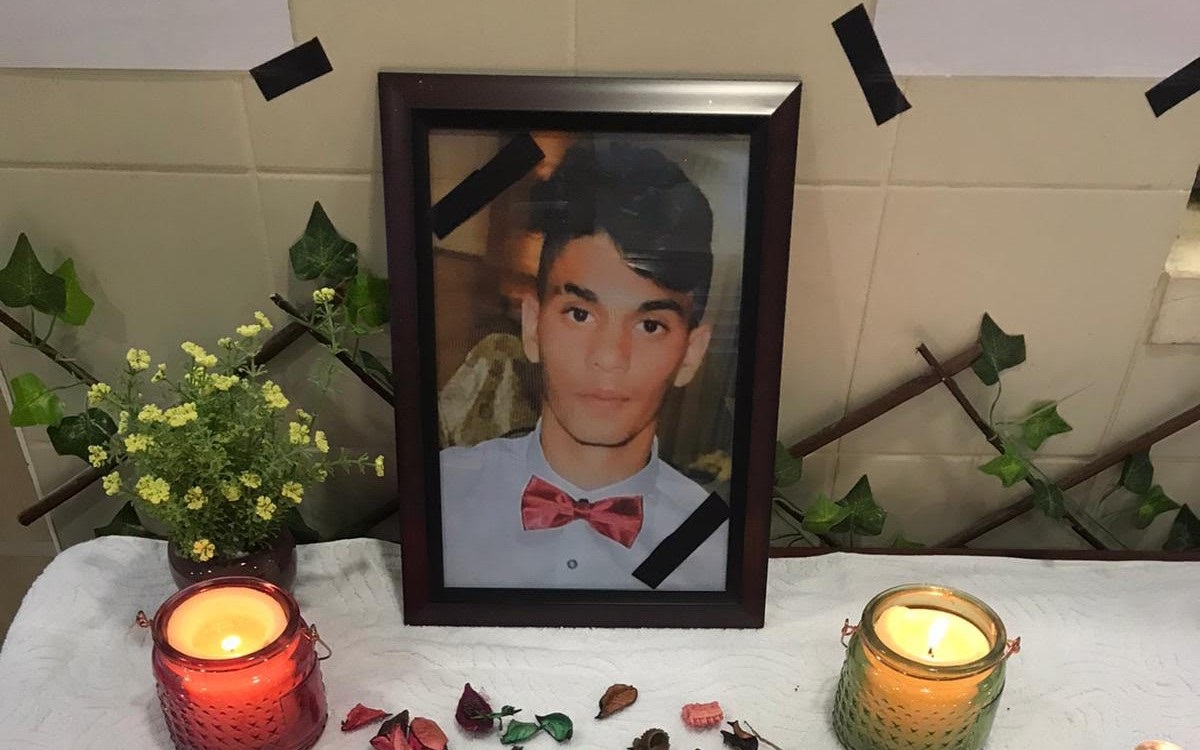

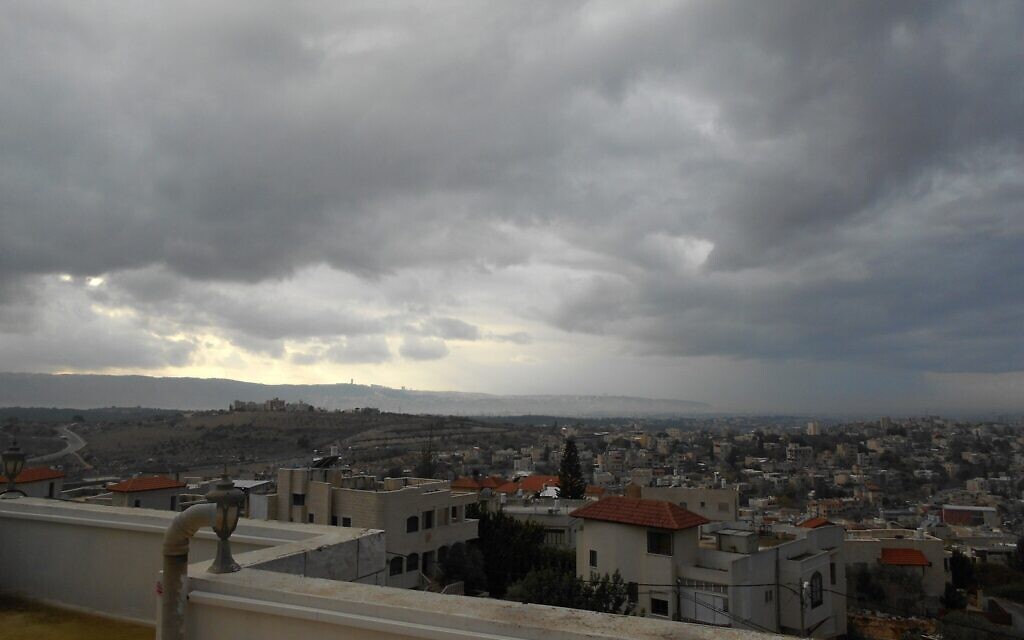
The Arab Israeli city of Shfar’am is on edge. The usually serene community, where the old blends with the new against the picturesque backdrop of the hilltops and mountains that frame northern Israel, has found itself ensnared by a gruesome murder that demonstrated the brutal nature of what has become a worn-out statistic about “violence in the Arab sector.”
Shfar’am is home to some 42,000 people. About 60 percent of its residents are Muslim, nearly 30% are Christian, and the rest are Druze and Bedouin. The local Catholic church is located only a few steps from the ancient synagogue in the city and a Crusader-era fortress stands nearby.
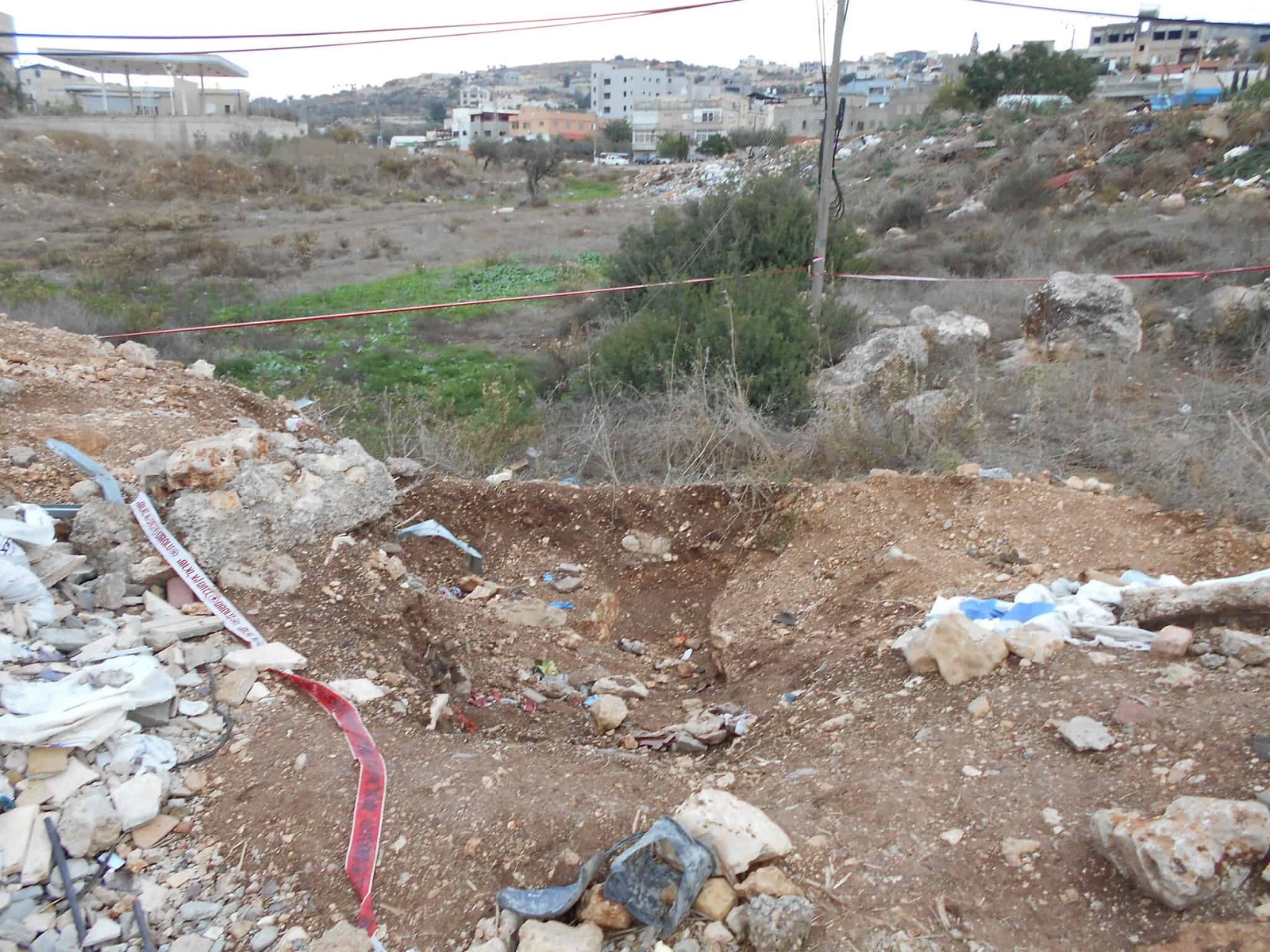
But now, red police tape marks a spot near the eastern edge of the city, cordoning off a large hole in the ground — the scene of a brutal murder that has shaken the city to its core.
Earlier this month, 17-year-old Adel Khatib of Shfar’am received a phone call. On the other end of the line were allegedly other teens with whom he had a falling out. They lured him to the edge of the city and killed him.
The Israel Police has placed a gag order on the investigation, saying only that four suspects, ages 18-24, were in custody.
Khatib was a high-school dropout who worked at his grandfather’s plaster workshop and loved horseback riding. His parents and four sisters describe him as having a kind yet dominant personality. He dreamed about getting a car, going back and finishing high school, and finding love.
He also dreamed of a better future for his city and attended weekly meetings hosted by the “City without Violence” program. One of the participants told Zman Yisrael, the Hebrew sister site of The Times of Israel, that Khatib was a regular fixture at the meetings.
Launched in 2004, “City Without Violence” is the national program for combating violence on the local level, especially among teenagers. It seeks to counter antisocial behavior, violence, delinquency, and crime. Currently, 151 local governments participate in the program.
Zuhair Karkabi, a former investment consultant with Israel’s Bank Leumi, is a Shfar’am city councilman representing the mixed Arab-Jewish Hadash party. This allegedly makes him a left-wing communist, but “there’s no middle here. You’re either a leftist or an Islamist,” he said.
Hadash is currently an opposition party in Shfar’am, with two seats on the city council. The other slates are local sectarian ones, and official positions in city hall are divided according to the clout each group holds, meaning that the mayor is Muslim, his first deputy is Christian and his second deputy is Druze.
Karkabi himself is Christian, something he says makes little difference to him or anyone else. His family boasts a grand political legacy: His grandfather, Daoud Sulaiman Talhami, was the city’s mayor from 1910 to 1933.
Regardless of their religion, residents of Shfar’am have always opted for brotherhood over animosity, Karkabi noted. This was evident in the wake of Khatib’s murder when the local church postponed its traditional Christmas tree lighting ceremony as a sign of respect and solidarity with their mourning Muslim neighbors.

The September 17 general election saw a 60% voter turnout in Shfar’am. The majority voted for the Joint List alliance of Arab-majority parties, while the right wing Yisrael Beytenu party won a surprising 11%, mostly due to the fact that local Druze resident Hamad Amar is one of the party’s lawmakers in the Knesset.
Karkabi was quick to stress that Yisrael Beytenu party leader Avigdor Liberman does not represent him personally. “He hates us,” Karkabi said.
‘The state has to find the solution’
Like many Arab townships in Israel, Shfar’am is struggling to balance tradition with the modern lifestyle, a task made harder by various infrastructure issues that plague communities in the Arab sector as a whole.
The city has a relatively young population, who come to it from the surrounding villages and nearby Nazareth mostly for the affordable housing.
According to Karkabi, big developers show no interest in pursuing housing projects in Shfar’am, leaving building initiatives to local contractors. But a recent amendment to construction law, which has aggravated the penalties for illegal construction, has stoked fears that Israeli authorities may demolish homes.
In Karkabi’s opinion, while the last Jewish family — “whom my grandparents knew” — left Shfar’am in 1920 due to financial hardship, the fact that there is no local Jewish community does not absolve the state from its responsibility there. It is the state that should be the one to offer solutions in terms of housing and employment for Shfar’am’s newcomers, Karkabi said.
These should include affording city residents who serve in the military subsidies to buy land, and developing the necessary infrastructure to support the growing population, he said.
Shfar’am is one of only a handful of cities in Israel to have been preserved in its entirety in the wake of the 1948 War of Independence, probably thanks to the mediation efforts by its Druze community. Walking through its streets, one can see centuries-old houses all around.
The Old City of Shfar’am is home to a grand Crusader-era fortress built in 1760 by then-governor Daher el-Omar with the aim of protecting the area, including the local houses of worship — a synagogue, a mosque, the Druze khalwa, and a Catholic church.
When guns are as cheap as chips
Karkabi believes that quelling the violence plaguing Israel’s Arab sector is not a pipe dream, and he supports police efforts to get illegal guns off the streets in various buyback and immunity campaigns.
The Israel Police comes out with various such campaigns periodically, but so far, despite the support it receives from Arab mayors, the Police has recorded only middling success. According to Army Radio, the latest campaign — which ended on December 5 — did especially poorly, and only a few dozen of the thousands of illegal guns in the Arab sector were turned in.
“Unfortunately, the guns are very cheap. You can buy one for the cost of a serving of falafel,” Karkabi said.
“You also have to remember that we didn’t used to have organized crime in the Arab sector, and now you have crime families. We’ve made progress on education and in our financial standing, but we’ve lost sight of our morals,” he said.
The shock and pain over Khatib’s murder run deep. That is understandable when one considers that Shfar’am has been able to recover following the infamous shooting perpetrated by IDF soldier Eden Natan-Zada, who in 2005 boarded a local bus and opened fire, killing four Israeli Arabs and wounding 12 others. He was restrained and disarmed when he tried to reload his weapon, then beaten to death by an angry mob who arrived at the scene.
A monument was built in the heart of the city to memorialize the attack, which was widely condemned by Israeli politicians across the political spectrum.
In the years since the attack, Shfar’am has been able to heal, and for the most part it is a peaceful community whose residents shy away from radicalism. This is why the fact that four residents have been killed in 2019 due to “violence in the Arab sector,” has rattled the city to its core, Karkabi said.
The demise of the patriarchal code
Sayid Khatib, Adel’s cousin, is an attorney and social worker who heads the local “City without Violence” program.
“We’ve been waiting for change for 70 years, but it never happened. Adel was a victim of that. We’ve seen all kinds of atrocities, and I have to believe that the Jewish people, who have survived the Holocaust, wouldn’t want that to happen in the Jewish state,” he said.
Arab society in Israel is grappling with the demise of the patriarchal code, which is rattling conventional social norms, Khatib explained.
“In the past, the head of the family would control its finances and by extent every member of the family, so if there was an incident and later he brokered or accepted a sulh, the family was obliged to follow suit,” he said, using the Arabic term for “resolution.”
“Now the situation is different,” said Khatib. “Young people study and work outside the family business. Fathers no longer have land to leave to their sons and no real financial means. The result is a loss of authority.”

As an example, he recounted an incident between Adel Khatib and a group of other teens who harassed him. An attempt to reach a sulh proved futile, as the teens’ parents told Khatib’s father that they had no control over their children.
“The parents told Adel’s parents that their children were delinquent and referred them to the police. These are emotionally immature boys. They kept harassing Adel and eventually they dared him to face them. They told him, ‘If you’re a man, show up,'” Khatib said.
“He had his pride but he was also naïve. He thought that they might beat him up, but I doubt he ever imagined they would set him up to die, just to meet their desire for revenge,” he continued. “Those boys come from broken families and they’re angry at everything, at society, and they took it out on Adel. If it wouldn’t have been him, it would have been someone else.”
According to Khatib, the anti-violence program his cousin attended “improved his behavior and how he coped with all kinds of problematic situations.”
Most of Shfar’am’s youth strive to get a university degree. The city currently has 9,000 students in its school system and several thousand of its youth attended colleges and universities in Israel and abroad.
But Adel dropped out of school and his cousin blames his school for encouraging it rather than fighting to keep him there, saying many school principals prefer seeing the weaker students drop out so as not to spoil the school’s statistical standing.
“Had Adel stayed in school I’m sure he would have been with us right now. It would have kept him off the streets. I encouraged him to get his high school diploma, but there are no real youth programs [in Shfar’am] other than ‘City without Violence,'” Khatib said.
Khatib called on the government to increase its support of such programs so that instructors can actively go out and meet teens where they are — on the streets.
“We have no field instructors. They [teens] always know how to find us, but the really troubled ones don’t and we have to reach them, we have to give them a chance – – give options to those who dropped out of the failed education system in the Arab sector. But the Education Ministry doesn’t care about Arab youth. That’s both sad and very upsetting,” Khatib said.
Khatib further urged a change in political policy, saying that as Arab lawmakers are not part of the government and therefore have no say on budget appropriations. “It would take a brave Jewish leader, who can set politics aside and understands that there are a million and a half Arabs desperate for better infrastructure, for us not to have another Adel,” said Khatib.
“We need a joint Arab-Jewish list for that, or for the Blue and White party to say, ‘Arabs are a part of us,’ and include Arab ministers in their government and include the needs of the Arab sector in the state budget,” Khatib said.
Shfar’am Mayor Ursan Yassin echoed this sentiment, saying, “We need the government and the Arab sector to cooperate in order to stop the cancerous violence in our society.”
A version of this article first appeared in Hebrew on The Times of Israel’s sister site, Zman Yisrael.






The Times of Israel Community.