

Centuries of prayer to rebuild Jerusalem answered all at once as construction clogs city
With infrastructure projects on King George Street, Emek Refaim Street, and other major arteries, moving around in the capital has become impossible for many
 Add ToI as a Preferred Source on Google
Zev Stub is the Times of Israel's Diaspora Affairs correspondent.
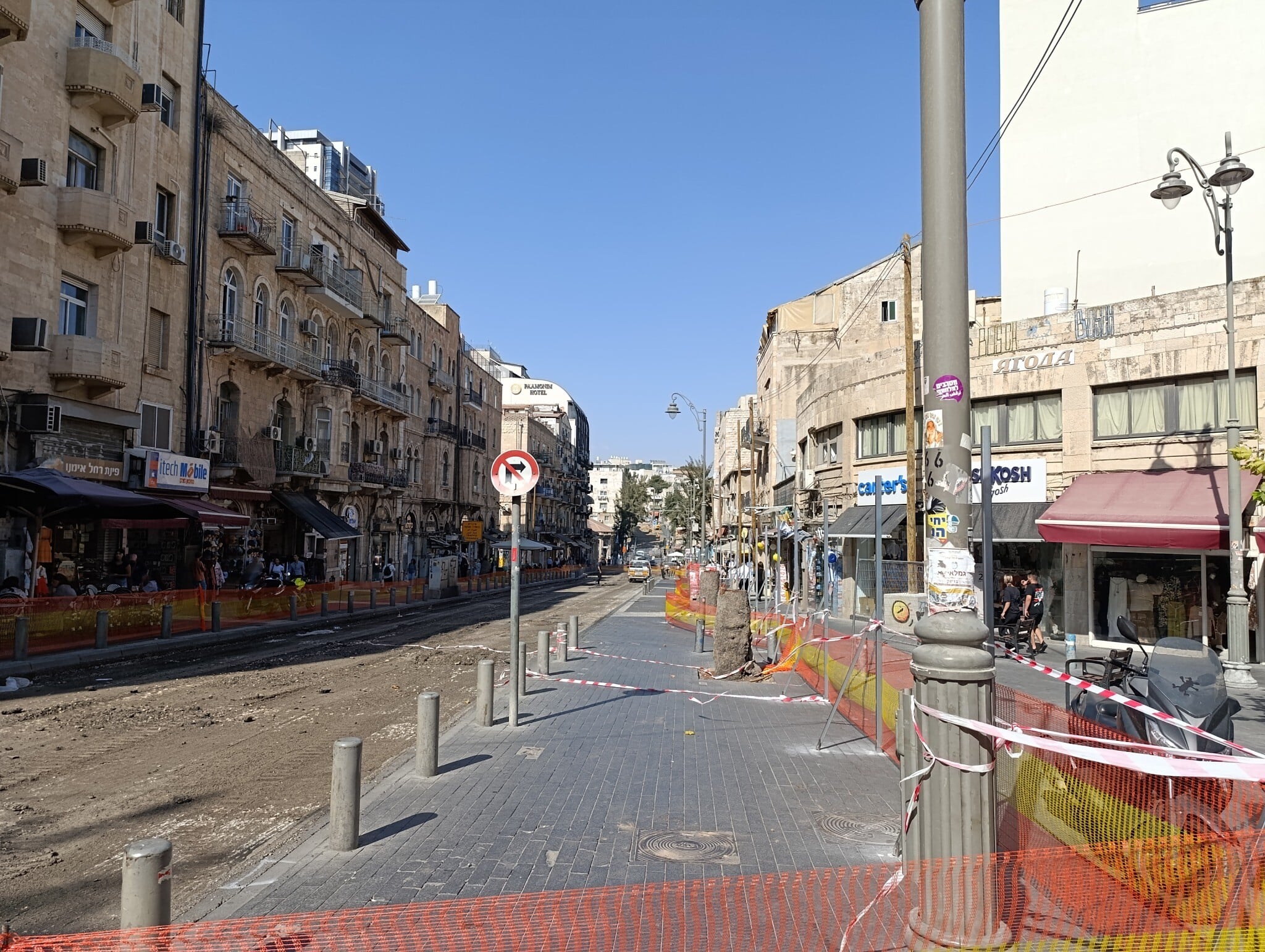
Sometime in the future — hopefully no more than four years away — the most iconic corner of downtown Jerusalem will be a vibrant pedestrian mall free of traffic in all directions. A steady stream of light rail trains arriving every few minutes will bring people from all over the city to shop, eat and stroll in leisurely fashion through the city’s ultra-modern entertainment and commercial center, without the hassles of parking and congestion.
But until then, getting around downtown isn’t going to be easy.
Earlier this month, the city began a massive construction project on a section of the light rail running through King George and Strauss streets, closing the street to cars permanently. The historic street, which marked 100 years since its founding last year, is now being dug up and blocked off with fences, while traffic coordinators in yellow vests direct cars down side streets.
King George is the latest thoroughfare in the city to be sacrificed to the development of Jerusalem’s light rail, which city planners believe will eventually solve much of the capital’s traffic problems. Earlier this summer, construction also started on Emek Refaim and Pierre Koenig streets, and work is ongoing on Hebron Road and elsewhere.
The Jerusalem Municipality and the Transportation Master Plan team in charge of planning “fully recognize the complexity involved in the work and are aware of its impact on business owners in the area,” the municipality said in a statement prepared for The Times of Israel. “We are working to complete the work as quickly as possible, understanding the great importance of the network to the growth of Jerusalem and the entire metropolis.”
Whether or not the light rail will one day substantially improve life in those areas, people who work and live there are not happy now.
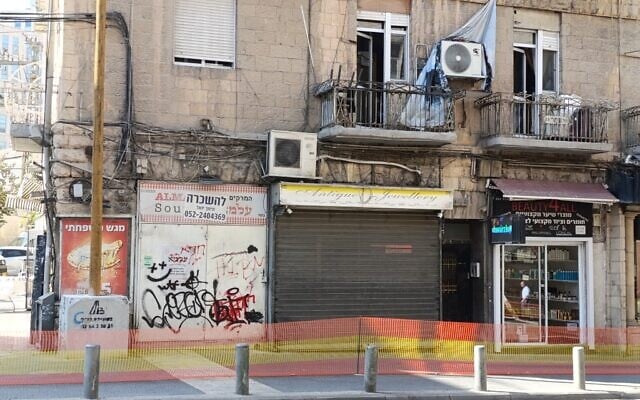
“What’s happening is a catastrophe,” said Yossi Ben Yosef, owner of the Rami Ron electronic store in Jerusalem. “They’ve put up fences everywhere, and now the sidewalk doesn’t even have room for someone with a stroller or wheelchair. My storefront is covered with a fence, and I feel like I’m in a prison here. Sales have fallen by about 80% in the past few days, because no one can get here.”
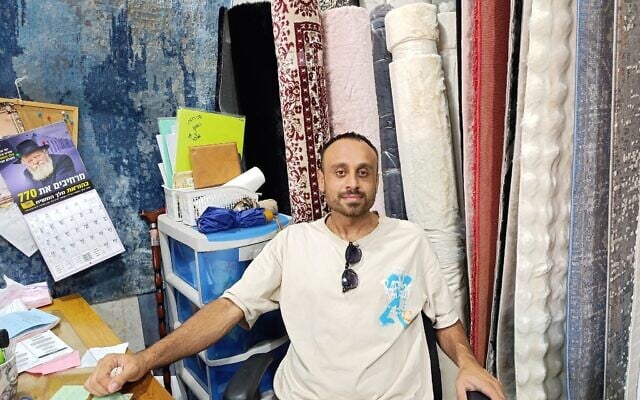
A bit farther down, Eyal Malka was closing down the rug store his father had opened 53 years ago. His store, on the other side of Jaffa Street, is being ordered closed, because a 2-kilometer (1.25-mile) underground tunnel will open on the street he now faces. For that, he will receive compensation from the municipality, although the exact sum has not been finalized yet.
“My father put his life’s work into this store, and this whole story is harming his physical and mental health,” Malka said. “They say we’ll have to move out in three or four months, but it’s kind of a joke, because you can barely get to this side of the street now.”
To build the light rail’s Blue Line, which will eventually reach from the Gilo neighborhood to Ramat Eshkol, traffic on King George (and its continuation on Strauss) is now closed from Shmuel Hanagid Street to HaNevi’im Street. Cars and buses have been rerouted, adding to a general sense of confusion on the street. The area is still accessible via the light rail on Jaffa Street, and pedestrian crossings remain open.
Employees at other stores described scenes of chaos in the streets, confusion about public transportation lines, and significant declines in revenues.
“It’s really horrible here,” said Mira, an employee at the Sport Li VeLach clothing store. “It’s not clear where the bus stops are, and people are having trouble walking through the streets. People know us because we’ve been in this spot for almost 50 years, but sales have fallen a lot.”
Light at the end of the tunnel?
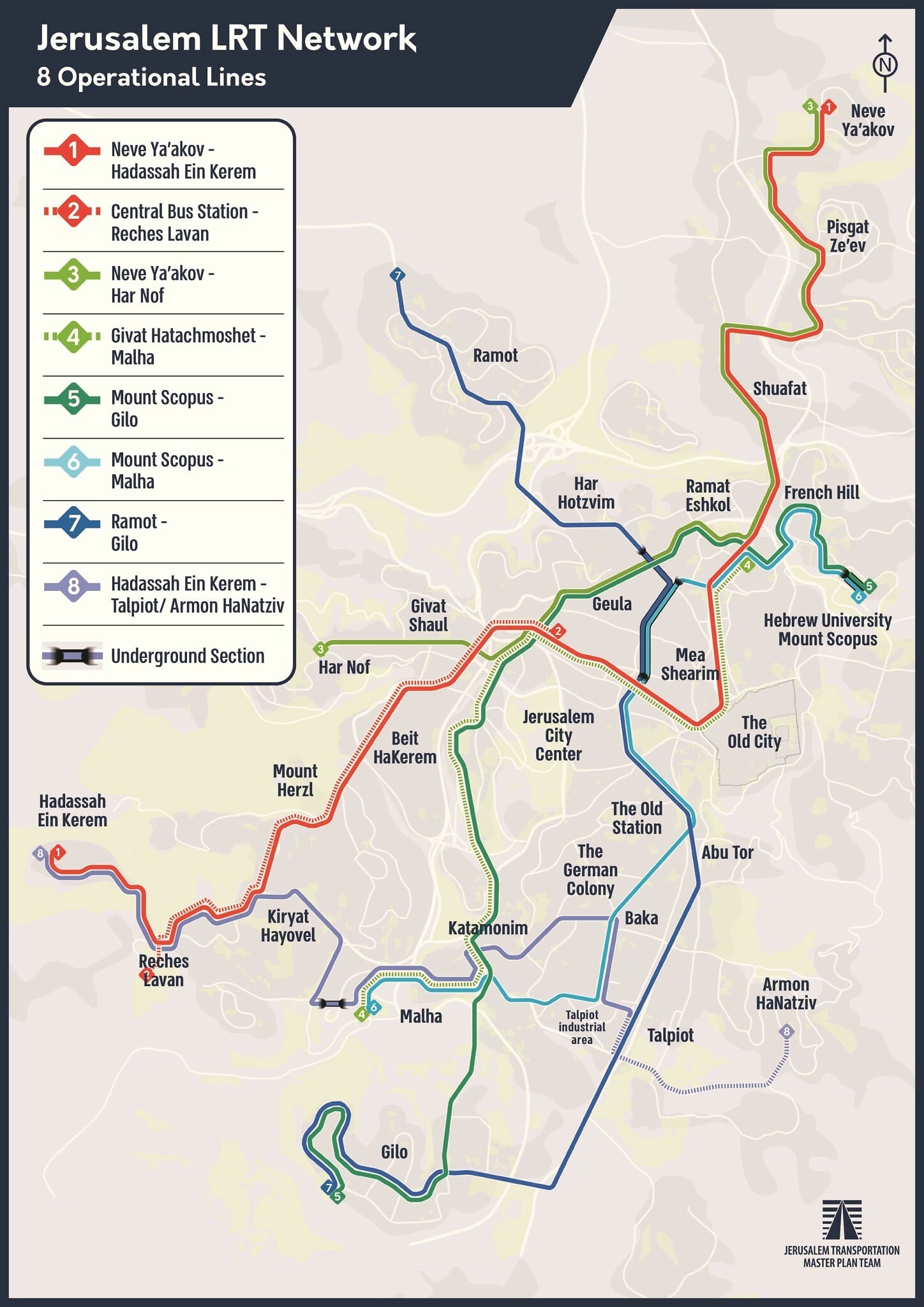
City officials say the changes will cause inevitable disruptions but are necessary to advance the new light rail line, which they hope will transport 250,000 people a day by 2030. It is part of a planned network of three light rail lines (see map) that form the transportation backbone of Jerusalem’s massive expansion plans for the coming years.
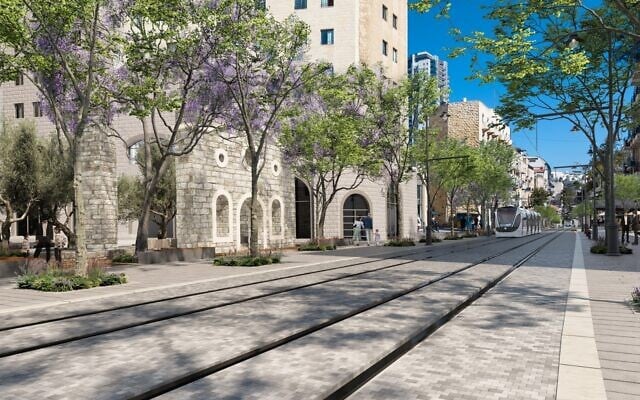
The first line, known as the Red Line, was launched in 2011 and is seen as highly successful, with more than 200,000 daily riders on the route from Ein Kerem to Neve Yaakov. Parts of the second line, known as the Green Line, are expected to be operational at the beginning of 2026, stretching from Mount Scopus in the north of the city to the Gilo neighborhood in the south. That will eventually allow easy access to both Hebrew University campuses, three hospitals, sports stadiums, and many neighborhoods, the city says.
The last line, the 31-kilometer (19-mile) Blue Line, is expected to open in 2030, with an underground tunnel, access to a new Israel Railways train station that reaches the center of the country, and tracks on Emek Refaim Street that faced nearly a decade of protests and legal challenges.
City officials say they know residents are suffering, and they are taking steps to minimize the pain. Traffic is constantly being monitored, and inspectors are in constant dialogue with businesses to minimize disruption, the city says. In cases where workers have uncovered archaeological artifacts during their digs, there are procedures to excavate them quickly in cooperation with the Israel Antiquities Authority, the city noted.
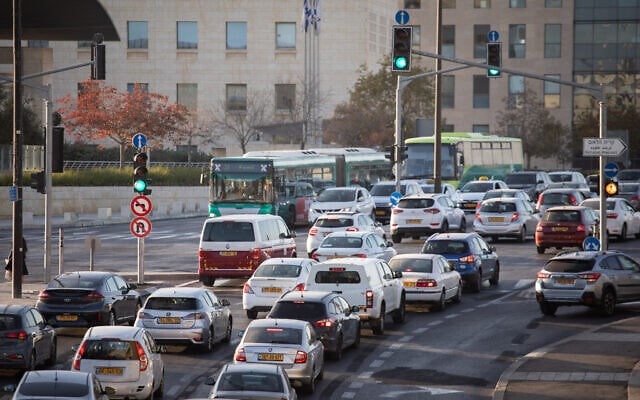
But ultimately, Jerusalem’s planners believe the light rail network will eventually solve traffic woes in the country’s largest city for good.
“Within a few years, Jerusalem will be the first city to get rid of traffic jams,” Mayor Moshe Lion said in August, a refrain he has repeated frequently.
Lion revealed in August that he plans to implement a congestion charge for cars driving into the city once its expanded light rail network is fully operational. That plan is still years away, however, and would only be implemented when city planners are confident that the public transportation infrastructure is operating at an optimal level, a spokesperson for the municipality clarified.

Rebuilding Jerusalem — all at once
For many Jerusalemites, King George is only the tip of the traffic iceberg as they struggle to navigate a situation where centuries of prayers to rebuild the Holy City seem to be getting answered all at once.
From the huge buildings under development at the Jerusalem Gateway project at the city’s main entrance to the northwest, to urban renewal projects that seem to be underway on virtually every street in the city, the city is undergoing an unprecedented building spree that will significantly change the face of Israel’s capital city for years to come.
Construction of the Blue Line, in addition to the work on King George Street, involves extensive work in the southern part of the city. On Emek Refaim Street, once one of the city’s trendiest drags, traffic is sparse since the city began upgrading infrastructure there in July. Now a one-way street, traffic runs slowly southbound from the Beit Lehem Road to Rachel Imeinu Street, and northbound from the Oranim junction to Rachel Imeinu. As on King George, endless construction vehicles and fences make daily tasks and errands a mess for residents and local businesses.
“The construction has become impossible, and it is made even worse because it pushes traffic onto side streets, cutting them off,” said Ben Lipshitz, a resident of the neighborhood. “I tried ordering a cab the other day, and the driver canceled the trip because he couldn’t come down the street.”
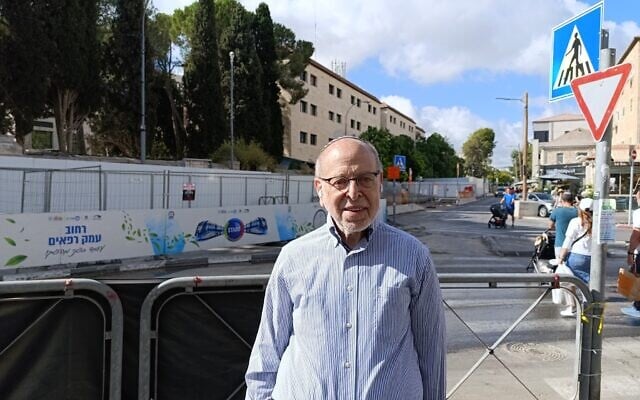
On a recent Friday morning, traffic was relatively light on Emek Refaim, but got much heavier on Pierre Koenig, after the Oranim interchange, where similar roadwork is underway.
“The difference is that on Emek Refaim, people can try to bypass the traffic by taking different side streets inside the neighborhoods, which are also congested,” explained one resident of the neighborhood who asked not to be named. “But here, there is no other good way to get to Talpiot, so you have no choice but to sit and wait in traffic.”
Commuting to school can now take more than an hour, even for those who live nearby, causing havoc for parents and teachers in local schools, the resident noted.
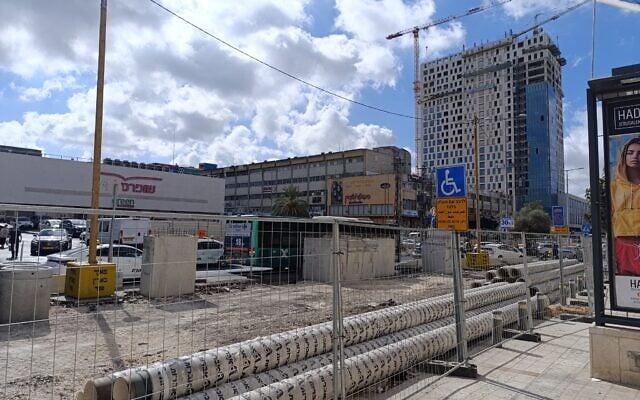
Further east, Hebron Road is also under heavy construction, in preparation for the Blue Line. The First Station entertainment complex, at the north end of the street, is being expanded to create a new residential, business, tourism and transportation hub that will include train stations and a controversial cable car to the Old City and the Western Wall.
The Talpiot neighborhood is also under heavy construction, with a master plan that calls for the building of approximately 2 million square meters (21.5 million square feet) of residential, commercial and public space.
Add to all that frequent road closures on Azza Street, a preventative measure taken to protect Prime Minister Benjamin Netanyahu’s house from protesters, and residents are wondering where it will all end.
“I know that in the long term, this construction is supposed to be a good thing for the city,” said Lipshitz. “But for right now, this is really hard for everybody.”
Ben Yosef, the electronics store owner, agreed.
“It’s like doing surgery to save someone’s life by taking out his spinal cord,” he said. “A person can’t live like that. That’s what they are doing to everyone here.”






The Times of Israel Community.