

 From the Liveblog of
Monday, September 15, 2025
From the Liveblog of
Monday, September 15, 2025
Construction work on Jerusalem’s King George Street begins, upending traffic arrangements
 Add ToI as a Preferred Source on Google
Zev Stub is the Times of Israel's Diaspora Affairs correspondent.
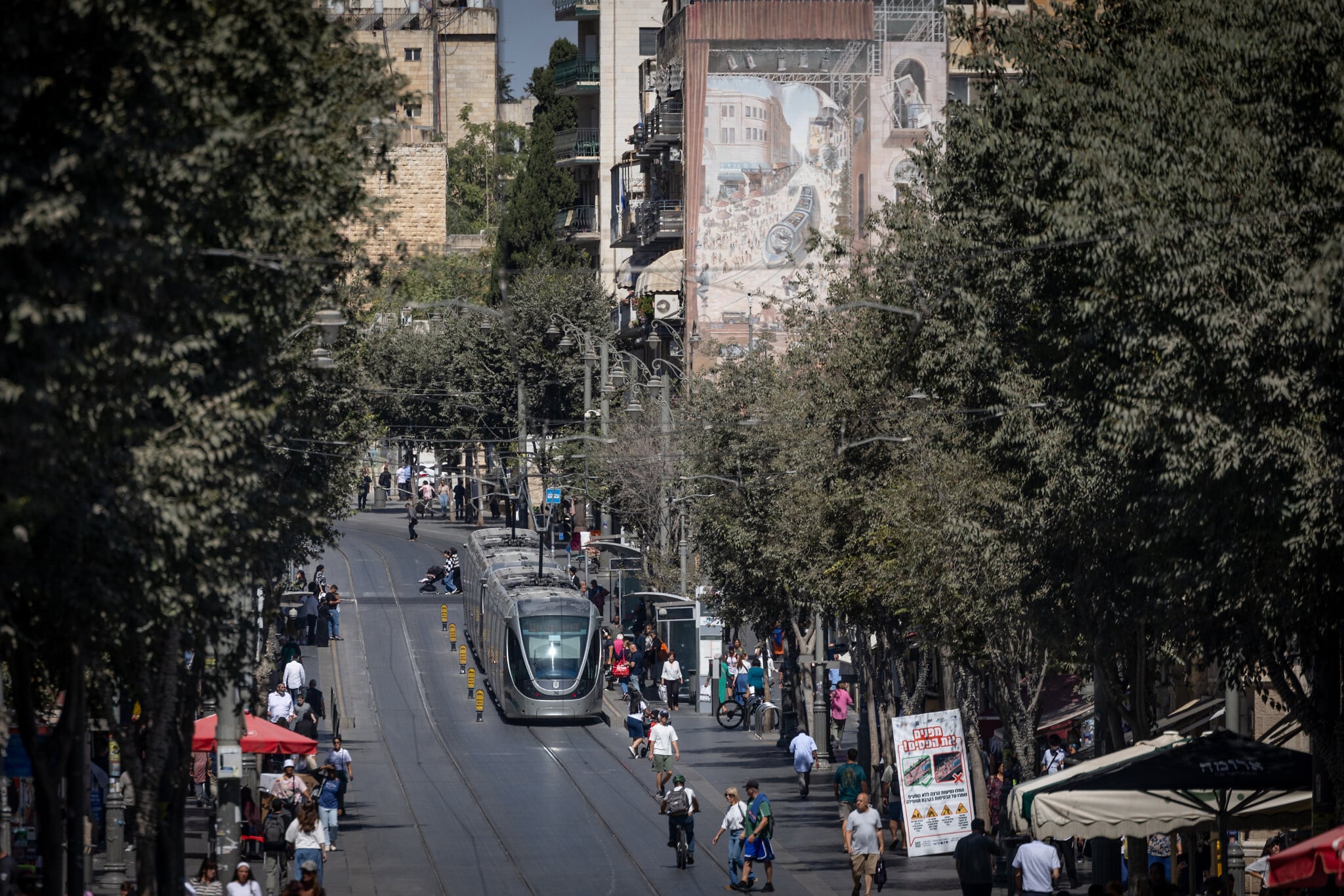
Construction begins today in Jerusalem on a new section of the city’s light rail network that will shut access to some of the capital’s most central streets for several years.
As part of the construction of the Blue Line, which will eventually reach from Gilo to Ramat Eshkol, traffic between King George Street and Strauss Street (in the section between Ben Yehuda and HaNevi’im streets) will be redirected to alternative routes in the City center.
“We are doing everything possible to minimize the impact of the works on your routine,” the city says in a statement.
Private vehicles heading north on King George will be diverted at Shmuel Hanagid Street, while a new southbound bus lane has been introduced on the road. Parking spaces along that stretch will be removed, with alternative parking provided at the Ma’alot lot for residents. Bus routes will also be diverted.
City officials say the changes will cause inevitable disruptions but are necessary to advance the new light rail line, which they hope will transport 250,000 people a day. When complete, King George and Strauss streets will reopen exclusively for trains and pedestrians, creating a car-free promenade similar to Jaffa Street, while the light rail will run underground in a 2 km- (1.25 mile-) long tunnel that begins at the intersection of Jaffa and Strauss Streets.
Pedestrian crossings and businesses in the area will remain open, the city says.
If all goes according to plan, the southern portion of the Blue Line, from Gilo to the city center, will be operational by 2028, and the entire 52-station track, extending to Ramat Eshkol in the northern part of the city, will be operational by 2030, the city has said.







The Times of Israel Community.