

Ex-PM aide crafted pro-Qatar messages, sent them to Urich, Feldstein to publish in media
Leaked WhatsApp messages by Yisrael Einhorn said to reveal inner workings of ‘Qatargate’ scandal; Einhorn says he and Feldstein operated independently, ‘had no connection’ with PMO
 Add ToI as a Preferred Source on Google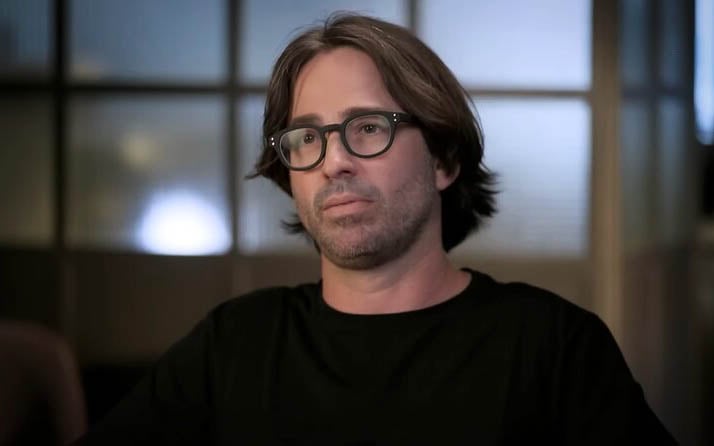
Yisrael Einhorn, a former campaign adviser to Prime Minister Benjamin Netanyahu, crafted pro-Qatar messages and sent them via WhatsApp to the premier’s top aides to give to the media to improve Doha’s image in Israel, according to a Hebrew media report published Friday and detailing the inner workings of the so-called Qatargate scandal that has embroiled the Prime Minister’s Office in police investigations.
WhatsApp messages obtained by the Ynet news site show that Einhorn drafted pro-Qatar talking points and sent them to Eli Feldstein, who was serving as military spokesperson for Netanyahu. Feldstein then forwarded these messages to Jonathan Urich, a top aide to Netanyahu, who then disseminated the messaging to journalists, without them knowing the information was coming from Einhorn.
Einhorn and Urich had both spearheaded a pro-Qatari public relations campaign to cast the Gulf state in a positive light ahead of the 2022 FIFA World Cup, hosted in Doha, and reportedly continued their PR work for Qatar well into the Israel-Hamas war that was sparked by the October 7, 2023, onslaught by the Palestinian terror group.
Einhorn, Urich and Feldstein are all key suspects in the “Qatargate” investigation, which primarily revolves around suspicions that they committed multiple offenses tied to their alleged pro-Qatar lobbying, including contact with a foreign agent and a series of corrupt actions involving lobbyists and businessmen, all while working for the prime minister.
Urich and Feldstein have both been arrested and questioned for their suspected role in the case. Einhorn, who resides in Serbia, was recently questioned by Israeli investigators in Belgrade after he refused to come to Israel for fear of arrest upon arrival.
According to Ynet, Einhorn sent Feldstein a message on WhatsApp telling him that senior US officials had told Israeli counterparts they no longer trust Egypt, especially its intelligence service, and now view Qatar as the lead negotiator and as a strategic US partner.
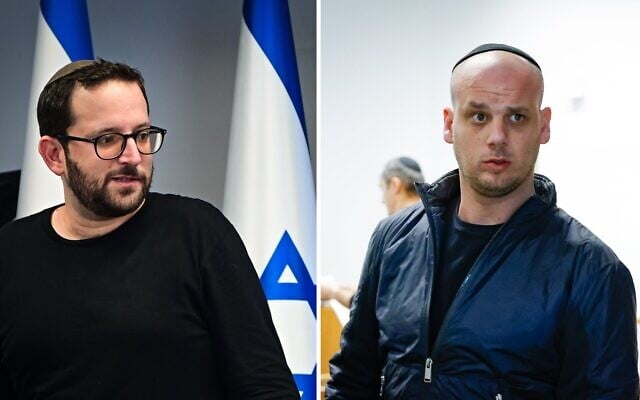
Feldstein then asked Einhorn if he should forward the message, to which Einhorn replied: “Yes.”
Feldstein then forwarded the message to Urich, and the two spoke on the phone. The report did not say when the exchange took place.
In another exchange published in the report, Einhorn sent Feldstein a message about US National Security Adviser Jake Sullivan meeting Netanyahu and agreeing that Qatar should lead postwar efforts in Gaza.
Feldstein then sent it to Urich, saying: “CNN. Front page,” suggesting that the American cable news giant use it as a headline. Urich replied: “They’ll deny it.”
According to Ynet, the three advisers were not only involved in crafting and passing along pro-Qatar messages — they also monitored media coverage of Qatar-Israel relations and updated one another when such reports surfaced.
In one instance, Feldstein shared a news report with Urich stating that “Qatar expressed displeasure over statements made by Israeli ministers against Qatar. Qatar asked not to be insulted and said it would work toward a hostage deal. Meanwhile, Israel is asking the US to pressure Qatar to do more.”
In response, Urich replied: “That was us,” suggesting that the media report was the result of their own messaging campaign.
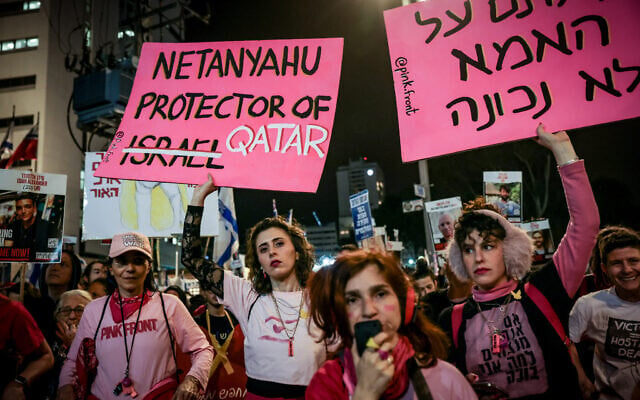
According to the report, the Israeli public and media were unaware these pro-Qatar talking points and messages were crafted by Einhorn, who had previously done PR work for Doha, rather than organically by the Prime Minister’s Office, raising concerns about covert foreign influence in public discourse.
The report added that during police investigations, Feldstein stated that he had not known he was part of a Qatari PR campaign, as police suspect he was. He claimed that the messages he passed along were consistent with Netanyahu’s own talking points, both in briefings with journalists and in public statements. Because of this alignment, he said, the messages did not raise any suspicions of foreign influence.
“At the time, I didn’t suspect anything. In hindsight, I realize I was naive and foolish,” Feldstein reportedly said.
Urich, for his part, denied during his questioning that he was involved in any Qatari campaign or even that he was aware of one taking place within the Prime Minister’s Office.
‘The alternative was Tehran or Beirut’
Responding to the Ynet report, Einhorn said he and Feldstein, along with pro-Qatari American lobbyist Jay Footlik, had “sought to share the truth with the Israeli public — even when it was uncomfortable.
“The activity was based on simple and clear facts: the suitcases of money to Gaza were transferred at Israel’s request — and the money was distributed with the approval and supervision of the IDF,” Einhorn continued. “It was Israel that turned to Qatar to prevent a humanitarian disaster, and then attacked it for political reasons.”
“Senior Hamas officials are staying in Doha at the request of Israel and the US, who asked Qatar to host them to allow for supervision and a communication channel,” he claimed. “The alternative was Tehran or Beirut.”
“Qatar is a strategic partner of the US and hosts the largest American airbase in the Gulf. As two US allies, Israel and Qatar often have shared interests,” Einhorn added. “Qatar is an important geopolitical mediator that has earned international trust.”
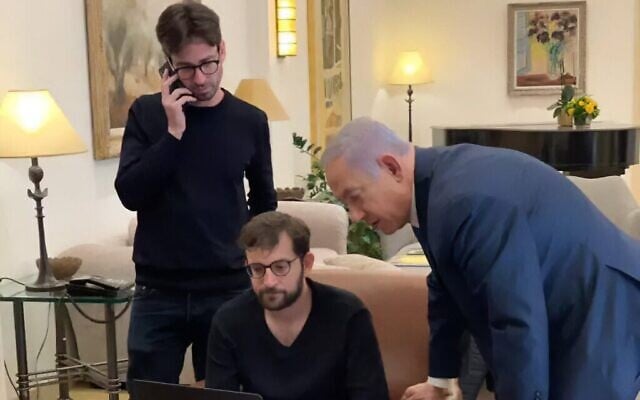
In addition, Einhorn insisted that Feldstein “operated as an independent consultant” and that their PR campaign “had no connection whatsoever to Urich or to the Prime Minister’s Office.”
Also responding to the report, Feldstein’s lawyers said that “every action taken by Feldstein that was examined during the investigation — without exception — was carried out under the instruction or approval of his superiors in the PMO.”
The statement directly contradicts Einhorn’s claim that the former spokesman was operating “independently” from the PMO while taking part in the messaging campaign.
“It is deeply unfortunate that, instead of taking responsibility and explaining their actions, those superiors have chosen to disavow them and turn Feldstein into a scapegoat,” Feldstein’s representation added. “Their refusal to accept responsibility won’t help them.”
Urich did not provide a response to the report.
In a separate case, Feldstein said to contradict Netanyahu’s stance
Feldstein has also been charged with leaking classified military information to foreign media in a separate case, which alleges that he illegally obtained a document from a reservist IDF noncommissioned officer (NCO) and transferred it to Bild, a German tabloid, with the intention that the paper would publish the document even though he was aware that it had been obtained illicitly and that the military censorship had barred the information from publication.
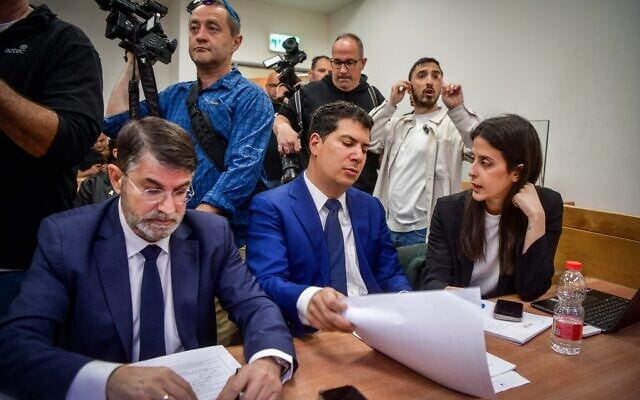
The document, which pointed to Hamas’s apparent intransigence in talks for a hostage release deal, was allegedly used as part of an effort to tamp down pressure for Netanyahu to negotiate for the release of the hostages held by Hamas in Gaza, and instead sway public opinion in a more favorable direction for the premier. The leak occurred in August 2024, several days after six hostages were murdered by the terror group, and amid intense public protests against the government’s handling of the crisis.
According to a separate German report, Bild had seriously distorted the file to serve the interests of the Netanyahu government, and the premier “enlisted Bild to serve his goals” of thwarting the ceasefire-hostage release talks.
Feldstein and the NCO, named as Ari Rosenfeld, a reservist in the Military Intelligence Directorate, have since been indicted for leaking classified information with the intent to harm state security.
According to messages obtained by Ynet, Rosenfeld conveyed four pieces of classified intelligence to Netanyahu through Feldstein, including about possible Hezbollah attack plans, which Feldstein sent directly to Urich.
According to a separate report in the Haaretz daily, Feldstein told investigators that he personally handed classified material to both Netanyahu and his military secretary, Maj. Gen. Roman Gofman.
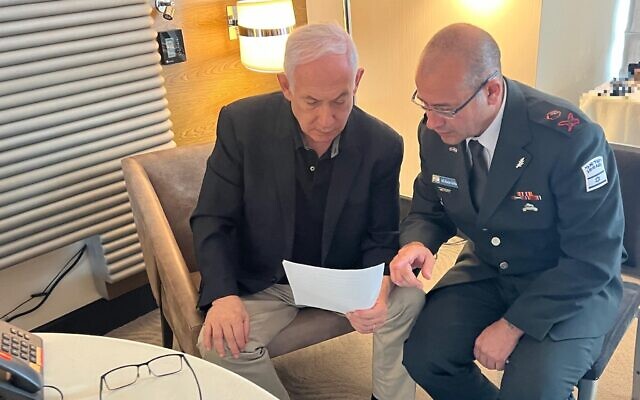
This claim directly contradicts Netanyahu’s own statement from November, in which he denied knowing about the document before it was published in the media.
Feldstein claimed that Urich arranged a secret meeting between the former spokesman and Netanyahu, during which he showed the premier several classified documents that he had received from Rosenfeld. Netanyahu then arranged for Feldstein to meet with Gofman regarding other intelligence information, specifically about Hezbollah.
The two then met in a bunker room at the IDF’s headquarters in Tel Aviv, according to Feldstein, and the secretary was briefed on the documents in question.
Feldstein, who was working for the PMO on an ad-hoc basis, did not hold the necessary security clearances to speak directly with the military secretary, especially not about intelligence matters, a former senior official told Haaretz.
Responding to the Haaretz report, Gofman categorically denied Feldstein’s claims: “There is no truth to this. The military secretary to the prime minister did not receive any information or intelligence document from Eli Feldstein.”









The Times of Israel Community.