

From posters to protests, pro-Israel US campus leaders take varying paths to shared goal
American Jewish college students, in Jerusalem to learn about reality on the ground and gain tools, speak out about navigating school while trying to defend Israel
 Add ToI as a Preferred Source on Google
Zev Stub is the Times of Israel's Diaspora Affairs correspondent.
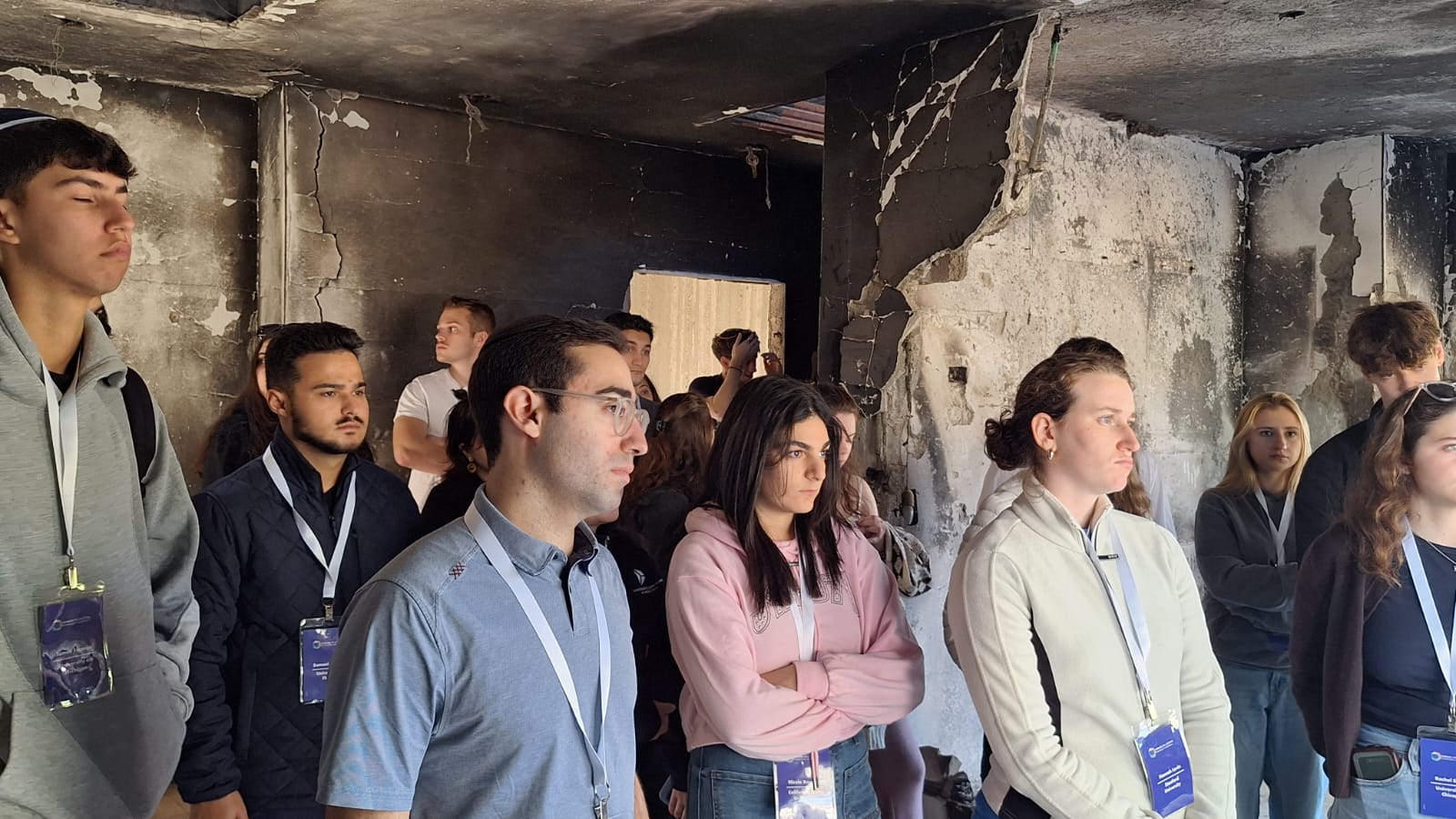
With antisemitic and anti-Israel activities rising on university campuses, 40 leading pro-Israel student activists from 30 North American universities spent their winter breaks in Israel, where they hoped to learn how to fight back.
The Pro Israel Student Leadership Mission is designed to bring student leaders together to see the reality in Israel on the ground and gain tools to combat pro-Palestinian organizations like Students for Justice in Palestine and Jewish Voice for Peace.
The program is sponsored by Hasbara Fellowships in partnership with IsraelAmbassadors.com. The former is an Israel advocacy outfit started over two decades ago by Jewish Orthodox outreach group Aish Hatorah with the Israeli Foreign Ministry.
“We’re talking about the best of the best pro-Israel leaders on college campuses,” said Michael Eglash, founder of IsraelAmbassadors.com. “These are all founders or leaders of student organizations that we vetted based on their leadership positions and activities. We want to give them better tools to understand the reality and tell Israel’s story.”
On the first night of their seven-day visit, The Times of Israel sat down with five students to hear about their experiences on campus since Hamas attacked Israel on October 7, 2023, sparking war in Gaza and fueling anti-Israel sentiment on North American campuses.
These are their words, edited for clarity, during a roundtable discussion in Jerusalem.
Angelina Palumbo — junior, Binghamton University
Founder of Students Supporting Israel at SUNY New Paltz
“For me, getting involved in campus activism sort of happened by accident. I didn’t ask to be put in this place, but I saw a void on campus that wasn’t being filled, and I waited for someone else to come and fill it. When I realized no one was coming, I stepped up into that position.
“I remember that when I first started college at SUNY New Paltz in 2022, I was wearing an Israel pendant around my neck, and some boys cornered me in the elevator and started chanting ‘Free Palestine’ in my face. I didn’t grow up in a Zionist household, so I wasn’t exposed to a lot of what was out there. At that point, I realized that I was in for a much bigger fight than I ever thought I would face.

“After October 7, I posted a picture on Instagram of me and a friend with an Israeli flag over us. Within an hour, everyone I knew had reposted that picture singling me out as an ‘oppressor.’ I had unknowingly thrown myself into the middle of this conflict because I was the only one posting about it.
“The Jewish student union didn’t want to speak out for Israel because they didn’t want to alienate any students who thought differently. So one day, some friends and I put up about 100 flyers around campus, but within an hour, they were all torn down.
“I appeared on the news after this happened, and I continued to speak out about it on campus. But soon I was being threatened and publicly doxxed, and people on a local chat group started to talk threateningly about finding ‘Little Miss Zionist.’ I couldn’t walk alone on campus, and I had to have weekly meetings with the campus police department where they would advise me on where I couldn’t go. I carried pepper spray and a pocket knife and I never knew what was going to happen.
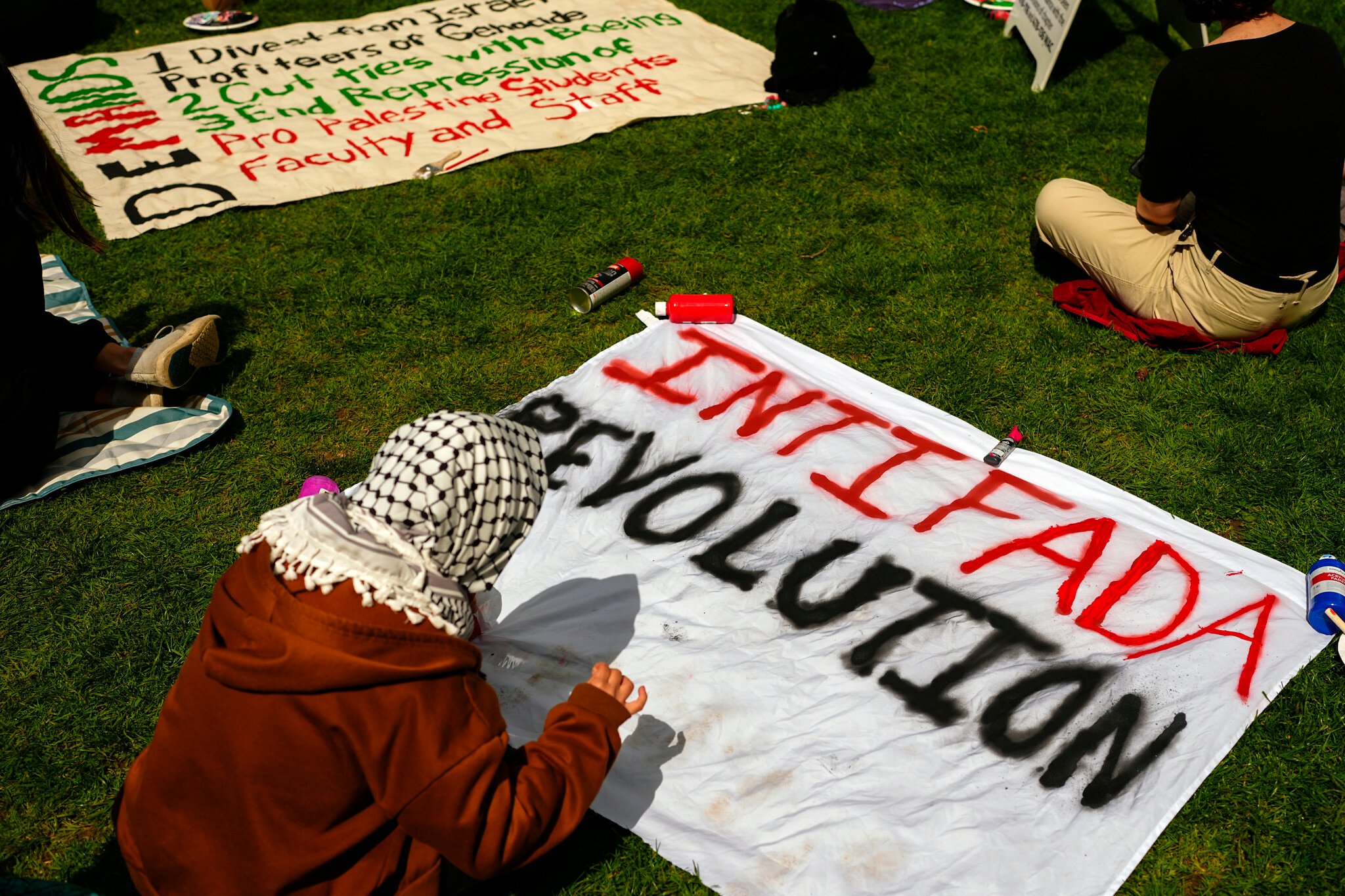
“At a certain point, I decided to embrace my role as ‘Little Miss Zionist’ and started a chapter of Students Supporting Israel, because there was no one on campus doing what needed to be done. We hosted giant Israel events and brought IDF soldiers to campus to speak.
“One of the hardest parts of this for me is that I grew up in a liberal home where we would protest for different marginalized groups. In New Paltz, I was a bartender in town, and everybody knew me. But when the script flipped, I was alone, and the people we had supported turned against us.
“My name doesn’t sound very Jewish, and I could have gone undercover and hidden my identity. But my decision to embrace it came from a place of feeling helpless and realizing that the one thing people can’t take away is our voices.
“Unfortunately, due to the constant threats against my safety, I had to transfer to a different school after that semester to protect my safety, and I now study at Binghamton University and continue to advocate for Israel there.”
David Lederer — junior, Columbia University
Co-chair of pro-Israel group Aryeh
“I knew before I started at Columbia that I would experience antisemitism, and I did a program to prepare and learn the facts about Israel ahead of time. But I had assumed I’d be arguing about facts with rational people. One of the most jarring things for me is how radical the student population is here.

“Two days after the October 7 attack, SJP put out a statement celebrating it, and on October 12, 400 students came to the campus lawn to celebrate. The Jewish groups on campus didn’t know how to do a counter-protest, and thought it would be best to do a silent protest.
“The Hillel organization would tell us not to engage them because we legitimize them, but that mentality is from the last decade. So we stood there silently for 20 minutes while they were shouting ‘Palestine will be free’ five days after the massacre of 1,200 Jews, and it infuriated me. I decided at that point that I was never going to let SJP have a rally on our campus again uncontested.
“I started organizing counter-protests every time they held an event. We bring hostage posters to their events and chant with our megaphones. These people are a hate group, and we will not let hate go unchallenged. We hold these rallies so Jewish students on campus know they can feel proud and have a voice.
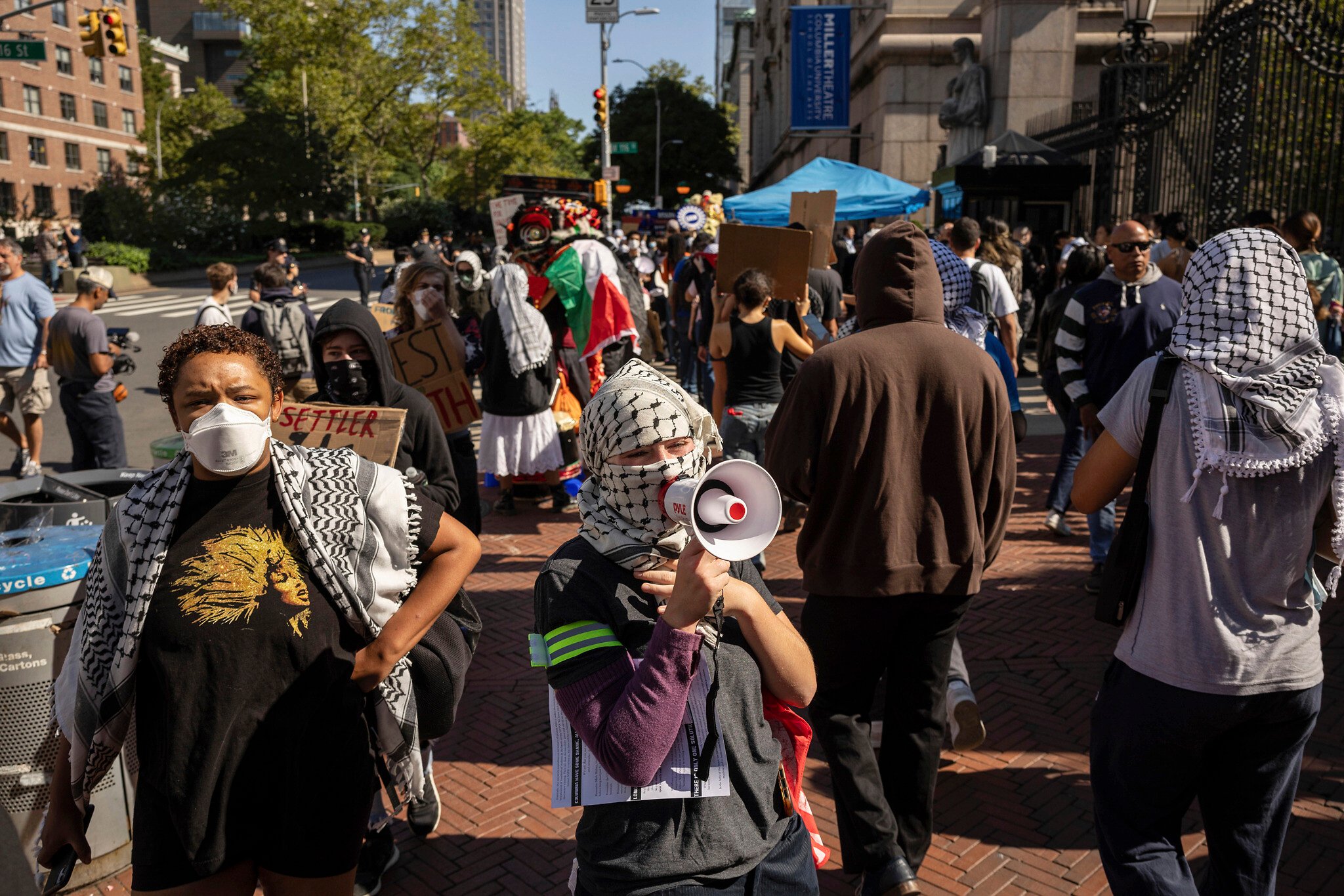
“We’ve done about 20 rallies since October 7, and we get 40-50 people to come on a good day, out of hundreds of Jewish students on campus. Non-Jewish students tell us that seeing us changes their perspectives. If before it was clear to them that the Palestinians are the good guys, now they realize that it’s complicated.
“Sometimes it gets scary. We’ve had encounters where people have been assaulted, punched in the face, had water thrown at us. But that’s not going to stop me. I take my pepper spray and go out. But I understand that other people prefer not to have to deal with that.
“I think part of the reason so many people don’t understand the Jewish story is that while the Palestinian story speaks in terms of decades, we speak in millennia. The Hanukkah holiday we are celebrating now is a 2,000-year-old celebration of Jewish sovereignty in the land of Israel, but most college students can’t understand that. I’ve seen a lot of unaffiliated Jewish students wake up to their Jewish identities in the past year in response to all the hatred and lies.”
Rachel Suggs — senior, University of Chicago
Sits on board of Maroons for Israel
“I had the opposite experience from David. I come from a very Jewish neighborhood in Connecticut where public school classes are canceled on Jewish holidays but no one has any Jewish education. It’s a Reform community that lacks basic Jewish literacy. I think Jews need to understand where they come from, especially in the current environment. People think religion is just about feeling spiritual, but Judaism is a very land-based belief system.

“My university says it is committed to free speech, and I commend that, but it means that they tolerate hate speech on campus and shirk their responsibility to educate their students on the facts. People are being radicalized on social media, and schools need to address that.
“Many Jews have been trained from birth to spot antisemitic tropes from a mile away, but the non-Jewish population doesn’t have that awareness. So when they see lies being shared online, they think this is a story of David and Goliath and that the Palestinians are the ones on the right side of history.
“At our campus Israel group, Maroons for Israel, our approach has been to stand up for ourselves, but not be too aggressive. We run events and have brought in several speakers. We’ve responded when our banners are taken down by putting up more banners, but we have a policy that we are not allowed to go out and counter-protest.

“I’m visibly supportive of Israel, and I’m always afraid that my professors will penalize me with my grades. Many of them have unfavorable views of Israel. But I’ve also had very rewarding experiences. I’ve been in classes about Israel with the same teacher, a Palestinian student, and an Egyptian student for four years. We’ve spent a lot of time learning together and discussing different issues, and we’ve learned to respect each other and see different sides to the story. But we also learned that you don’t have to apologize for having your own opinion.”
Romie Avivi Stuhl – senior, University of Oregon
President of Ducks 4 Israel
“I grew up in Israel, but my family moved to the US when I was 12. I was totally secular and didn’t know that Judaism was important to me until I came to college. I was educated about Israel and the conflict, but in the US, it’s very hard to be Jewish if you don’t put in the effort.
“Oregon is a very liberal and anti-Israel campus — we had an anti-Israel encampment for more than a month. After October 7, it was important for me to be outspoken, because there aren’t a lot of Israeli students at my campus, and most of the Jewish students aren’t very knowledgeable.

“I was very involved with Jewish organizations on campus, and the director of Hillel reached out to me about restarting a pro-Israel club on campus. We started running events celebrating Israel’s culture. We organized huge Shabbat tables, handed out Israeli snacks to students, and had a big vigil on the anniversary of October 7.
“But our focus has been mainly on creating a safe positive space. We’re not holding counter-protests at rallies. Part of that is because we want to create a positive experience, but part of it is out of fear — what if they have 100 people protesting against Israel and we can only bring a handful?
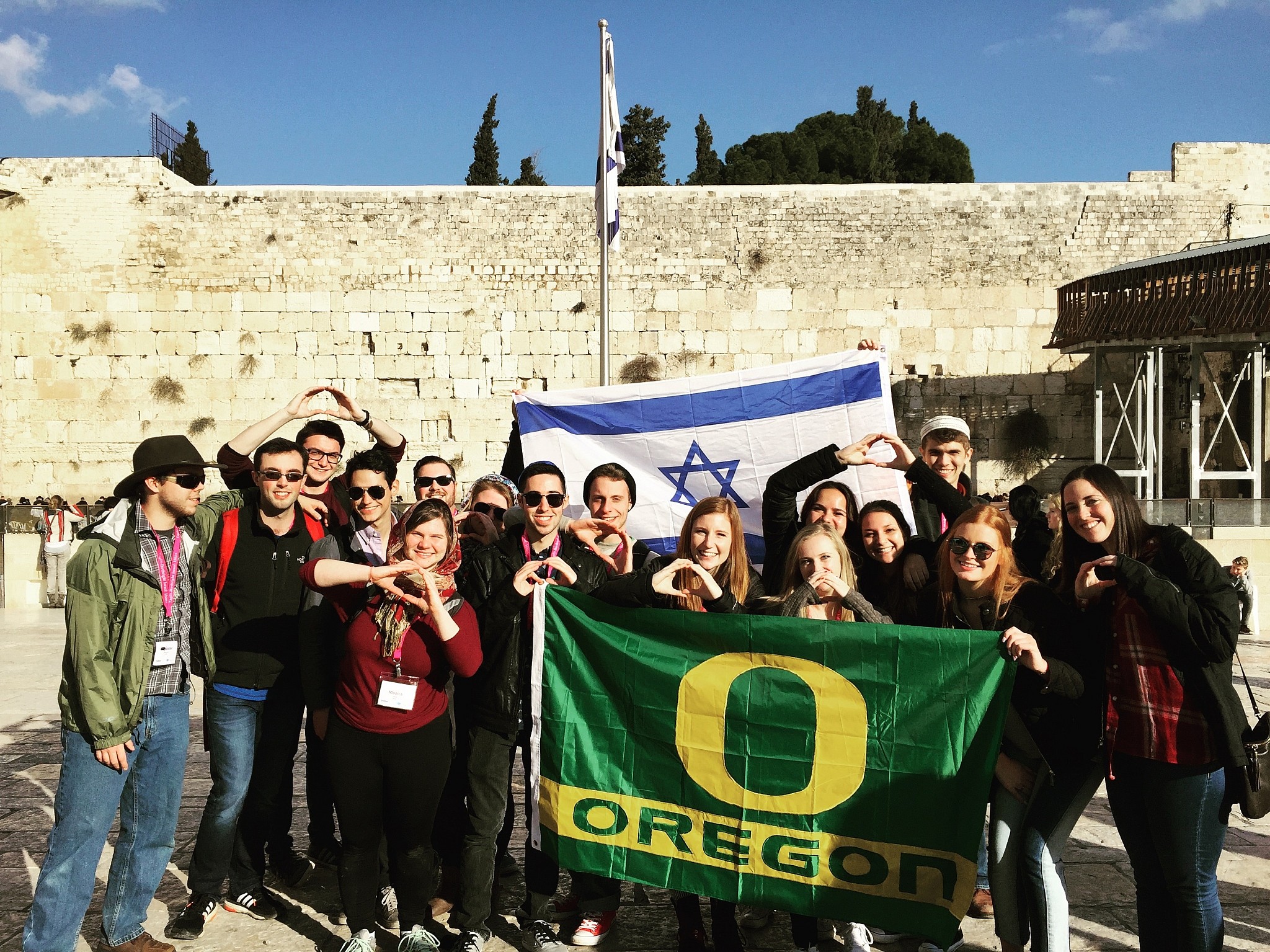
“I’ve never run a club before, but it is exhausting being on the defensive and feeling like you aren’t doing anything. Last year, we didn’t have the space to do long-term planning, but this year, we are more organized, and we are trying to create a balance of serious events that are also fun. We don’t have a big community, so we need to help students get educated and stand up for their values.”
Hollis Coker – second year, Seattle University School of Law
President of the Jewish Law Student Association
“I never wanted to be an activist, but after October 7, it became a necessity.
I go to a small private school, so the anti-Israel protests on campus were relatively small. But shortly after October 7, one of my professors announced that she would be moderating a discussion forum about Israel that would have no Jewish perspective.

After class, I approached her to ask about this, and she said, ‘I’m not so educated about Israel, but I’m against white colonialism. These are my core values.’ I said, ‘Maybe you should get educated.’
After that, I decided to get involved with the Jewish Law Student Association, and I make an effort to speak with my fellow students so they can understand the realities. Law students are very busy, and I’m not sure what else I can do yet, but I’m looking to do more in the future.”





The Times of Israel Community.