

Helmut Kohl’s politician grandson is ‘ashamed’ of Germany’s response to antisemitism
Johannes Volkmann, 28, up-and-coming lawmaker and scion of the longtime chancellor, urges tougher laws against Jew-hatred, warning fear has ‘become normalized’ for German Jews
 Add ToI as a Preferred Source on Google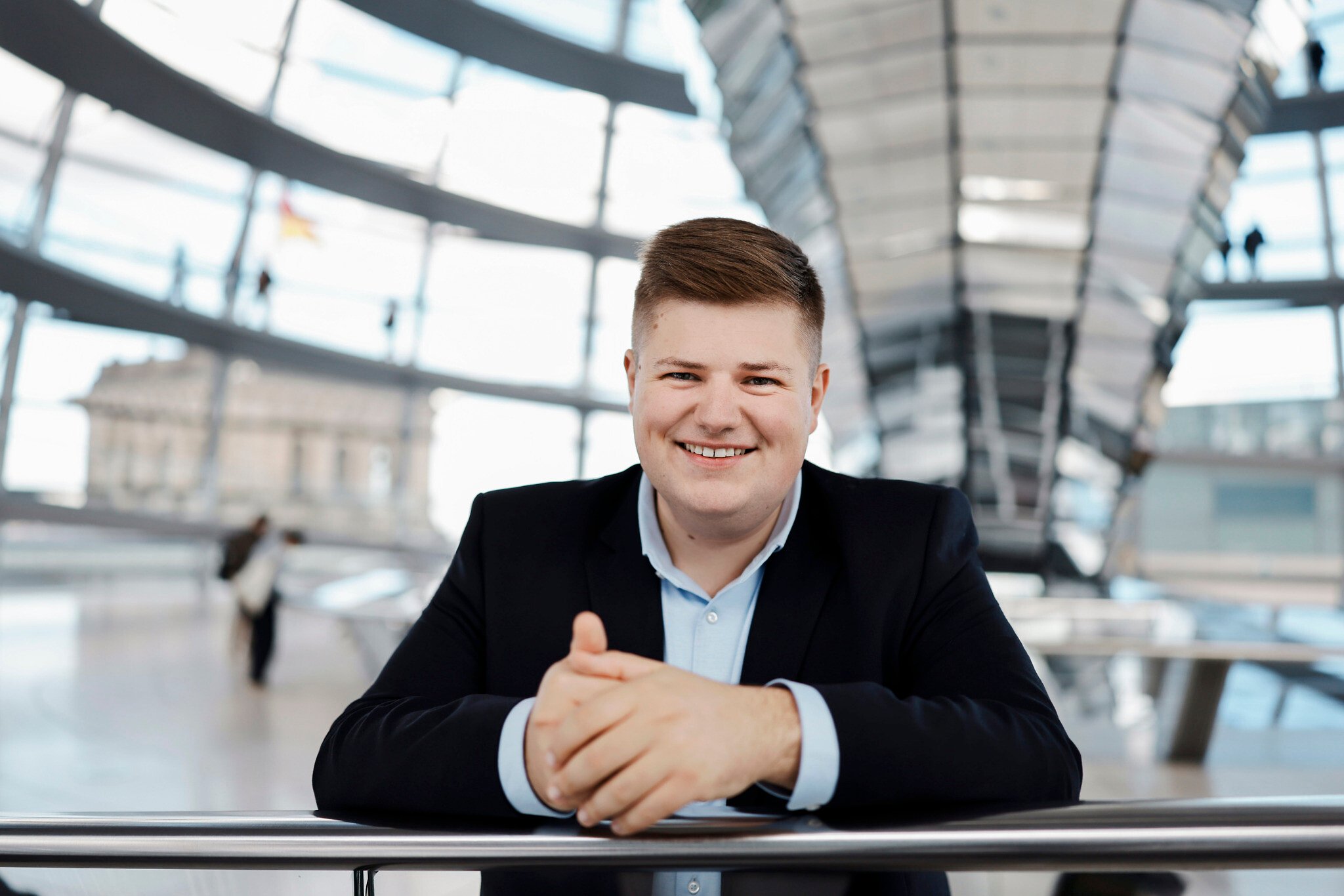
Johannes Volkmann, an up-and-coming young conservative German lawmaker with a prominent political pedigree, says he is embarrassed by what he calls many Germans’ acceptance of surging antisemitism since Hamas’s October 7, 2023, attack on Israel, which has led his country’s Jews to “exist only in fear.”
Volkmann, 28, is one of the youngest lawmakers in the Christian Democratic Union, the party once led by his grandfather, former longtime German Chancellor and pro-Israel stalwart Helmut Kohl.
“I’m ashamed of how willingly large parts of our society, especially supposedly progressive circles, have tolerated this development,” Volkmann told The Times of Israel last week.
“Eighty years after the Shoah, we have learned that what should be self-evident in Germany is not, that Jewish life in our cities must be possible without fear,” he said. Instead, “it has become normalized that visible Jewish life in many places can exist only in fear or under police protection.”
The remarks come amid a dramatic spike in antisemitic incidents in Germany. The Research and Information Center on Antisemitism, an independent watchdog known by the acronym RIAS, documented 8,627 incidents in 2024, a 77 percent rise from the previous year, including eight instances of extreme antisemitic violence, such as attacks resulting in physical injury, and another 186 physical assaults.
Between 2022 and 2023, according to police data, the number of antisemitic crimes doubled, with a spike following the Hamas-led October 7 attack. Between 2023 and last year, the number rose by another 20%, with a total of 6,236 cases recorded in 2024.
Volkmann is calling for a far more forceful government response. That includes tighter immigration policies and residency rules, enhanced disciplinary powers for universities, and laws against providing arts funding to antisemitic endeavors.
“We have a duty to confront antisemitism in our cultural landscape, at universities, and particularly in some migrant communities,” he said.
Volkmann, one of the youngest lawmakers in the CDU, has quickly risen within the party once led by his grandfather, which has governed Germany for most of its postwar history. He became active in the Christian Democrats while still in school and joined the party’s federal board in 2024 at age 27, making him its youngest member.
Earlier this year, he entered the Bundestag and joined the CDU’s “Young Group,” considered an influential force within the parliamentary faction. He has also been a frequent guest on German talk shows and has become one of the more visible faces of the party’s younger generation.
In that role, he hasn’t shied away from speaking out when it comes to antisemitism in Germany. He drew attention earlier this year by accusing the left-wing Die Linke party of promoting antisemitism and downplaying Islamist terror.
In August, he visited an anti-Israel tent protest in Frankfurt, and attempted to engage demonstrators in debate on camera.
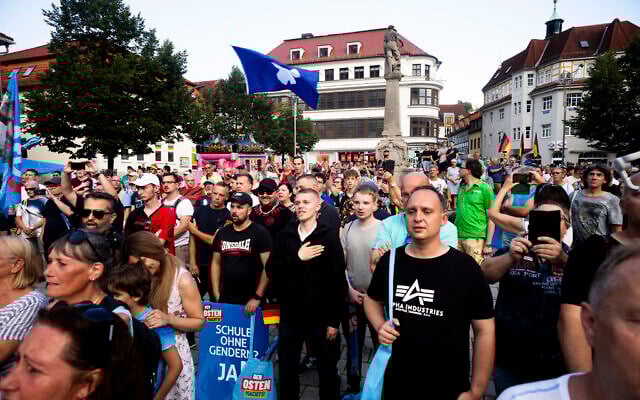
But he made clear that rising antisemitism is a danger on the far-right as well as the left. He said he rejects praise for the far-right Alternative for Germany, or AfD, which has surged in popularity in recent years, even though that party has also raised the alarm about migrants in the country.
“In my personal environment, I frequently hear statements that see the AfD as a beacon of hope out of concern about migrant and Islamist antisemitism,” he said. “I can only warn against this. There are strong völkisch [German ethno-nationalist] elements in the AfD that at least show openness to traditional right-wing extremist antisemitism and freely use corresponding linguistic codes.”
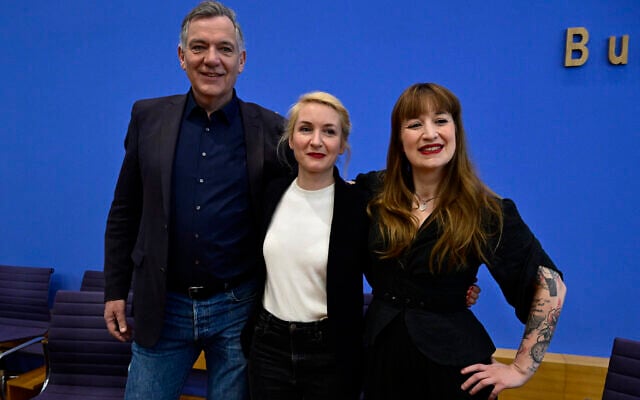
He also said that the left-wing German party, Die Linke, tolerates “structural Israel-related antisemitism within its own ranks.” He pointed to harsh criticism of Israel from its members, including a spokesperson for the party’s youth organization, who said of the war in Gaza, “This is a genocide. This is a fucking Holocaust. This is the Holocaust!”
He said such “currents” are ones that “move outside the boundaries of our liberal-democratic basic order.” He added, “A party that tolerates such things is a political opponent for me and not a cooperative competitor.”
Volkmann has argued that Germany must be more willing to deport non-citizens who commit antisemitic offenses online or at demonstrations.
“Immigration law also serves to protect public safety,” he said, suggesting that he would like to change laws so that courts can allow more deportations than they do at present.
He also proposed changes to higher education laws to allow the expulsion of students who harass Jewish classmates or participate in violent campus occupations.
And he said government arts funding policies should explicitly hew to the International Holocaust Remembrance Alliance (IHRA) working definition of antisemitism, which includes certain types of anti-Israel rhetoric among its examples, such as calling the country a “racist endeavor.”
Many German artistic projects receive government support; Volkmann would like to see those that run afoul of the IHRA definition lose their public funding.
“A large part of the electorate rightly expects that we do not subsidize Israel-related antisemitism with German taxpayers’ money,” he said.
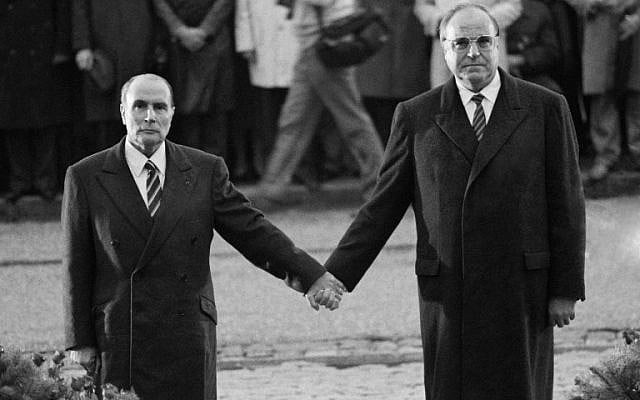
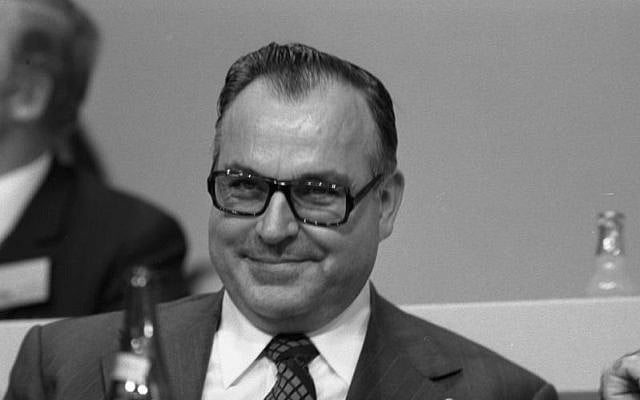
Volkmann is generally reserved when it comes to public statements about his grandfather, but Kohl — who served as German chancellor from 1982 to 1998 and oversaw the country’s reunification — was also known for his friendship with Jews and Israel.
Under his leadership, German-Israeli relations grew closer. Avi Primor, Israel’s ambassador to Berlin from 1993 to 1999, said in a 2017 interview with a radio station affiliated with Deutsche Welle that Kohl greatly valued Israel and saw it as “a blessing for Germany in science and research.” Primor added that a personal friendship grew between Kohl and then-prime minister Yitzhak Rabin, before Rabin’s 1995 assassination.
As chancellor, Kohl also allowed the immigration of about 200,000 Jews from the former Soviet Union. As a result, the official membership of German Jewish communities grew from around 30,000 in 1990 to more than 100,000 at the beginning of the 2000s. Since then, the number has slightly declined to around 90,000. In total, estimates suggest that today roughly 200,000 Jews live in Germany, compared to over 500,000 before the Holocaust.
Last year, especially citing his grandfather’s commitment to a united Europe, Volkmann told the newspaper Zeit, “Many of his political values are more important today than at any time since the end of the Cold War.”



The Times of Israel Community.