

In multi-hued whirl of rebellion, Iranian women toss hijabs to the wind
Dutch photographer Marinka Masséus snaps a purely feminist protest of the current regime
 Add ToI as a Preferred Source on Google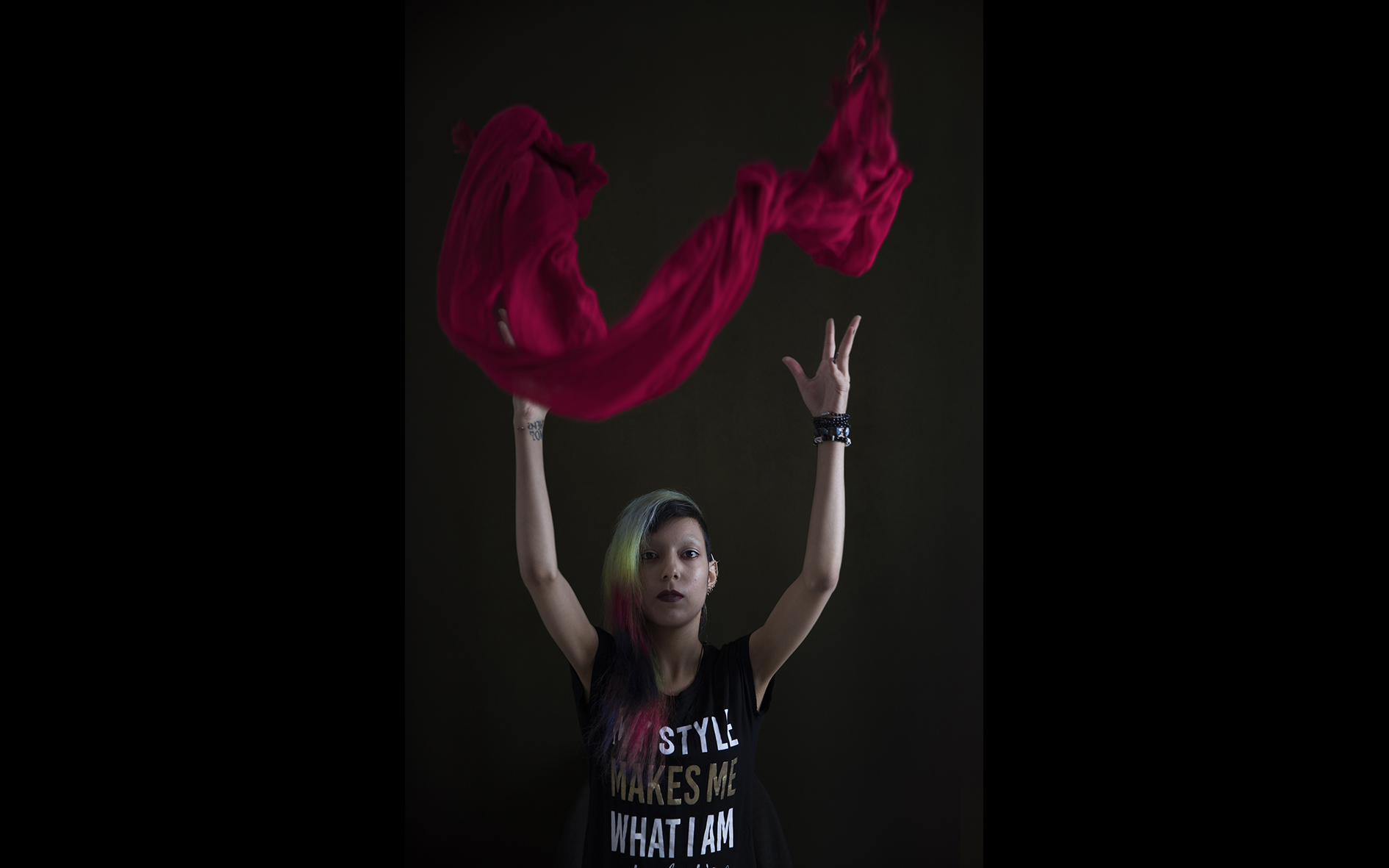
!['Revolution happened in Iran before I was born, so when I grew up I thought this is how it must be, women should look [a certain way]. But when I checked my mom’s photos or I saw movies I found a paradox, why there is difference between us and the other little girls in other countries?'
(© Marinka Masséus)](https://static-cdn.toi-media.com/www/uploads/2018/01/Marinka_Masseus-MyStealthyFreedom-Iran09.jpg "'Revolution happened in Iran before I was born, so when I grew up I thought this is how it must be, women should look [a certain way]. But when I checked my mom’s photos or I saw movies I found a paradox, why there is difference between us and the other little girls in other countries?'
(© Marinka Masséus)")
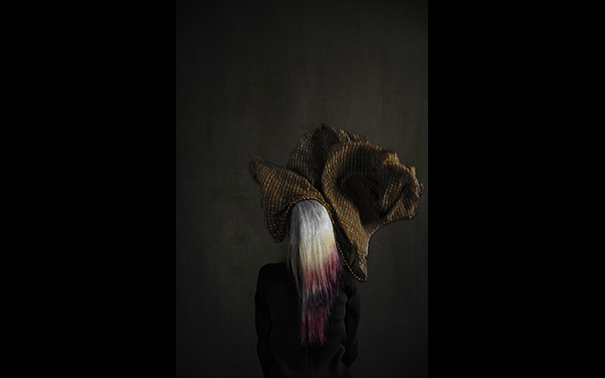
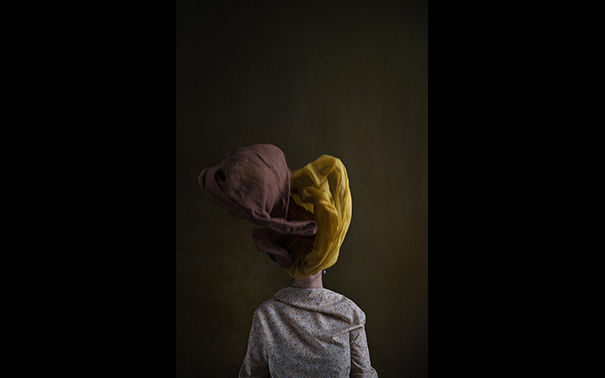
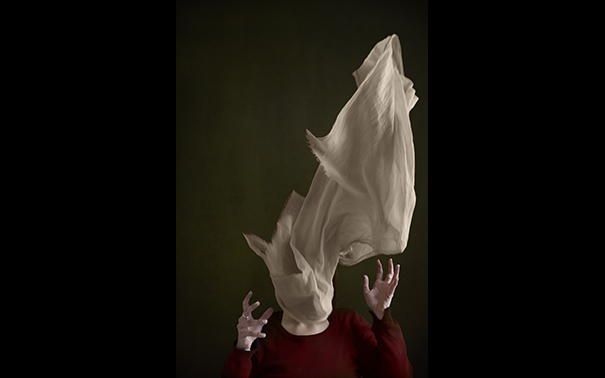
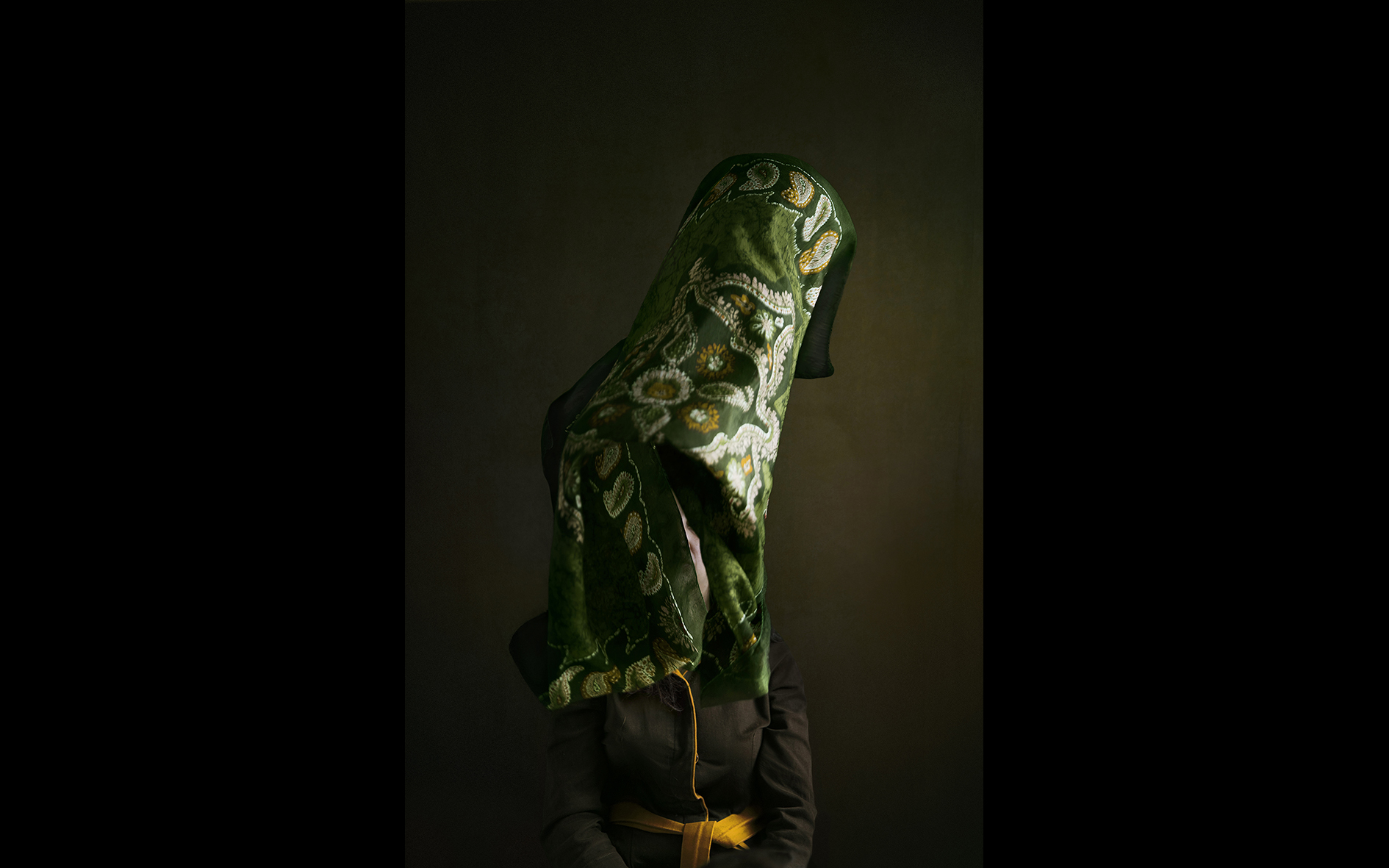
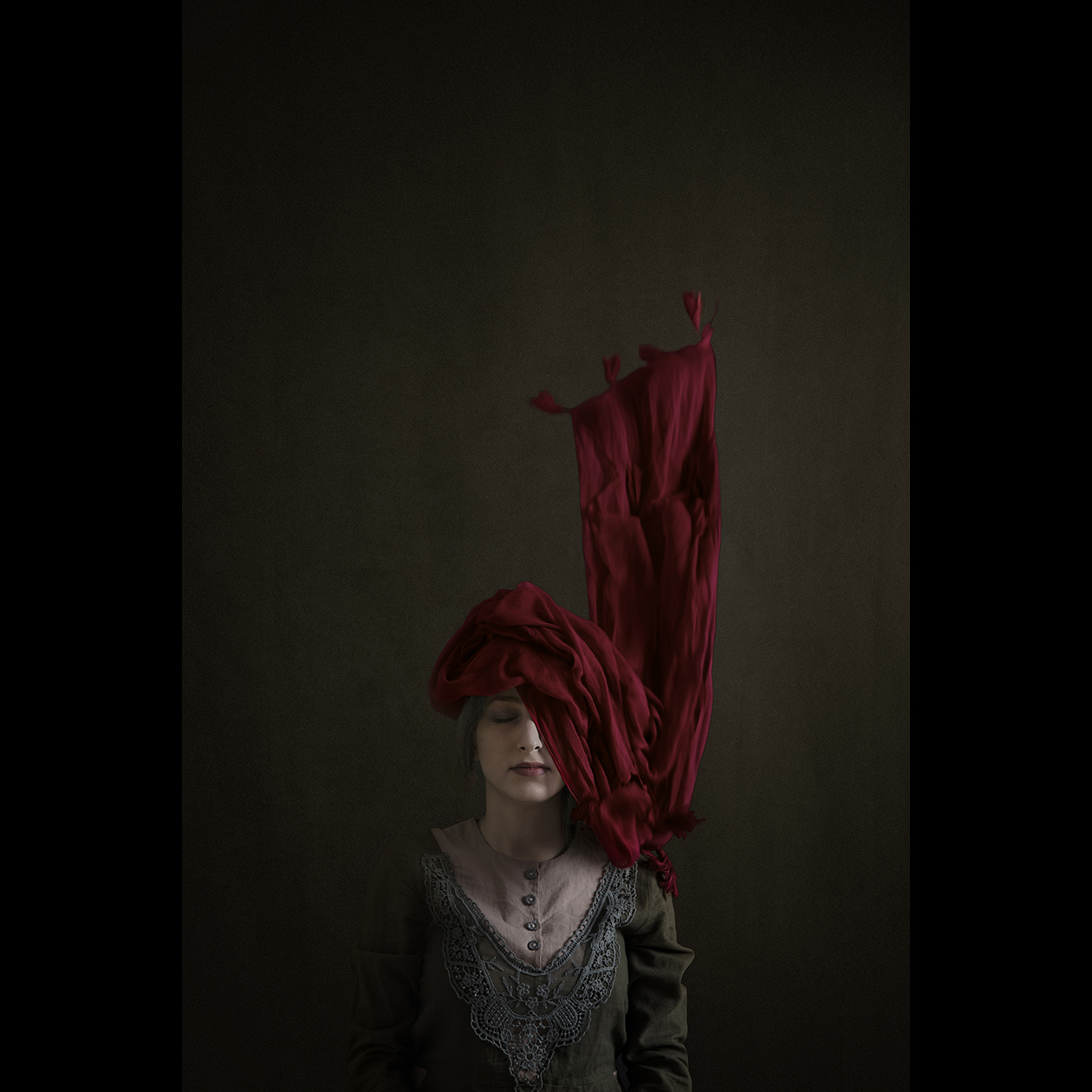
Inside the tinfoil-covered windows of a Tehran apartment, Iranian women flung their hijabs in the air. Dutch photographer Marinka Masséus was there to capture the moment when the richly textured scarves hit their faces.
This shoot was a part of a recent photo essay made in cooperation with My Stealthy Freedom, an online movement started in 2014 by journalist Masih Alineja to encourage Iranian women to post pictures of themselves online without their hijab, the traditional scarves which cover women’s heads and chests.
With over 1 million followers on its Facebook page, My Stealthy Freedom is a subtle protest in response to the “literal and metaphorical boundary” imposed against Iranian women, Masséus told The Times of Israel via email.
Whereas the hijab itself is meant to be a personal and religious symbol for Muslim women who choose to take it on, it has instead been forced upon them as a badge of the inequality and systemic discrimination women face in Iran, she said.
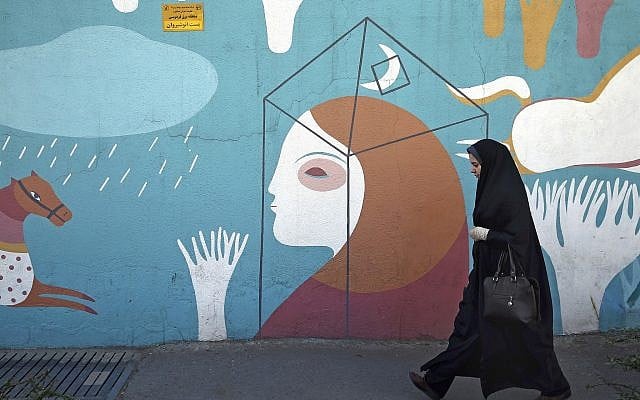
In a particularly poignant moment in the recent wave of unrest in Iran, an Iranian woman took off her hijab and waved it as a flag in protest of Iranian women’s enforced dress code. The image quickly became a symbol of the protests that started in late December and are the largest seen in Iran since the disputed 2009 presidential election.
This woman in #Iran took off her #Hijab to protest the mandatory Islamic dress code imposed on Iranian women. #IStandWithHer #IranProtests #Islam pic.twitter.com/G6oKHIPA68
— Armin Navabi (@ArminNavabi) December 29, 2017
In late September, Masséus arrived in Iran during Muharram, the annual month-long mourning of Hussein ibn Ali, the grandson of Muhammad, an important holiday for Shiite Muslims.
After taking in life on the streets, Masséus got to work on her photo project with the help of a female Iranian photographer.
“By chance I met a female photographer and immediately she offered to bring her lighting equipment to my apartment for me to use for the whole time I was there. I had only brought my camera, as to not draw attention to myself while entering the country,” she said.
“Without her equipment, I could never have executed this particular technique and for me, her kindness represents my experience in Iran,” said Masséus. “With the windows of my Tehran apartment covered with tinfoil to ensure that the flash would not be visible from outside, we were safe to create and let creativity flow.”
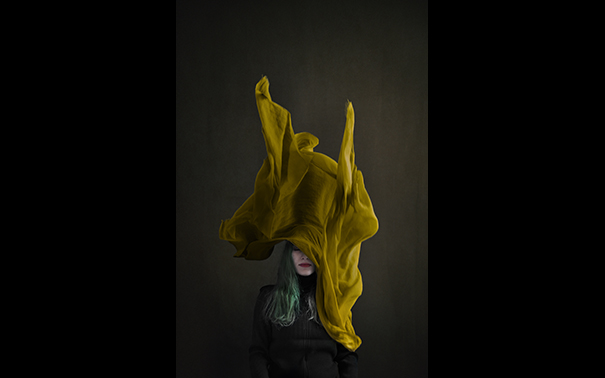
“We [women] should stick together and work hard in order to find our place and survive our hardship. Maybe in the time of our children the situation will be fixed, maybe not. The only thing that matters is that we were the ones to take the first steps,” said a woman with green hair and gold hijab.
The photo series provides the viewer with a striking peek into each woman’s individual sartorial expression — something which is usually hidden from the world underneath their veil.
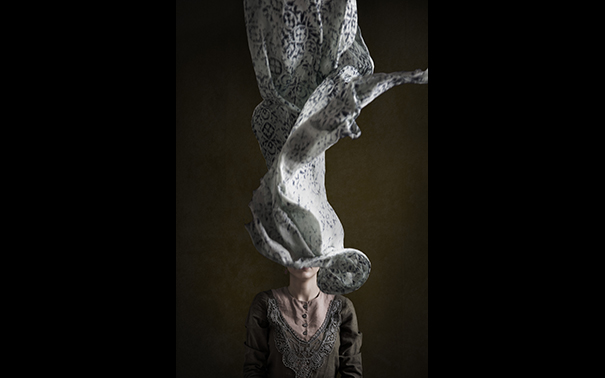
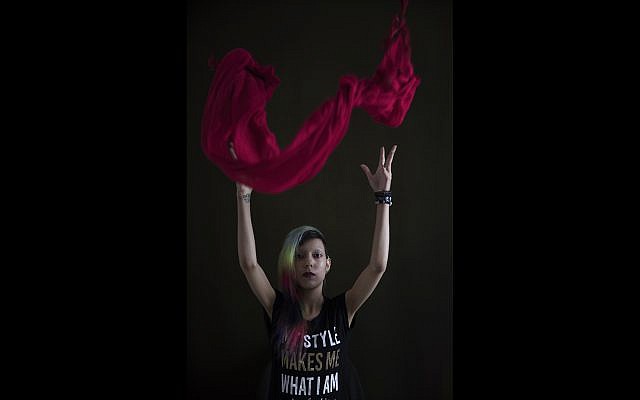
“The women threw their brightly colored headscarf in the air and as it inescapably floated back to them, I captured their act of defiance,” Masséus said.
While most women’s faces are completely covered to protect their identity in the photos, many show off their brightly colored and perfectly coiffed hair and stylish clothing, elements that are usually seen only in the company of other women or in one’s own home. One woman whose face is fully revealed wears a shirt saying “My Style Makes Me What I Am.”
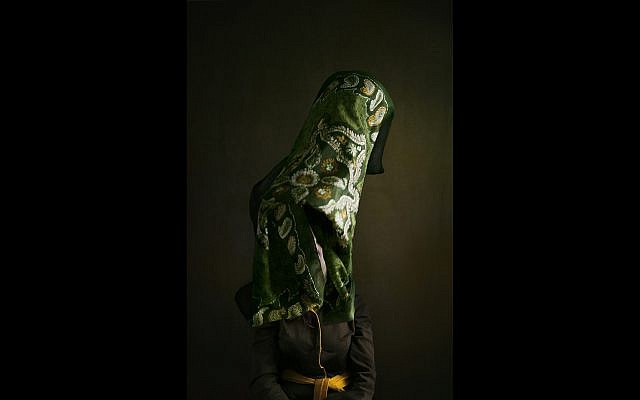
The vibrant colors in the hijabs themselves hold significance. “Even five years ago it was all brown and black, like the regime wants. But now colors, colors, colors! So every day I wear my bright colored hijab and get on my bike [which is against the law now] to defy the regime,” said a woman whose face was covered by a green, white and gold floral-patterned scarf.
In 2016, Ayatollah Ali Khameini issued a religious decree banning women from riding bikes in public.
For the majority of her trip, Masséus refrained from wearing the hijab in public.

As she navigated the streets without a head covering, she said, women came up to her, hugging and thanking her, some casually letting their hijabs slip at the sight of her in solidarity.
Masséus wants Israelis and the rest of the world to know this about Iranians: “They are you.”
“My visit to Iran has made me realize all the more that the differences between countries are the differences between governments. Most people I met in Iran do not care about religion at all. They are modern, and think just like you and me,” she said.
Masséus made it clear that the campaign isn’t against the hijab per se, “a very delicate and sensitive topic.” Instead, she is promoting the choice to wear it or not.
“I applaud the right for any woman to wear [it] as she chooses. And that is what this project is about, the freedom to choose,” said Masséus.





The Times of Israel Community.