

In West Bank Area C village, Bedouin locals fear settler violence will push them out
Residents of Ein Rashash say that their hamlet, like many others in Jordan Valley, is on its last legs due to harassment from a nearby outpost, soon to be legalized

 Add ToI as a Preferred Source on Google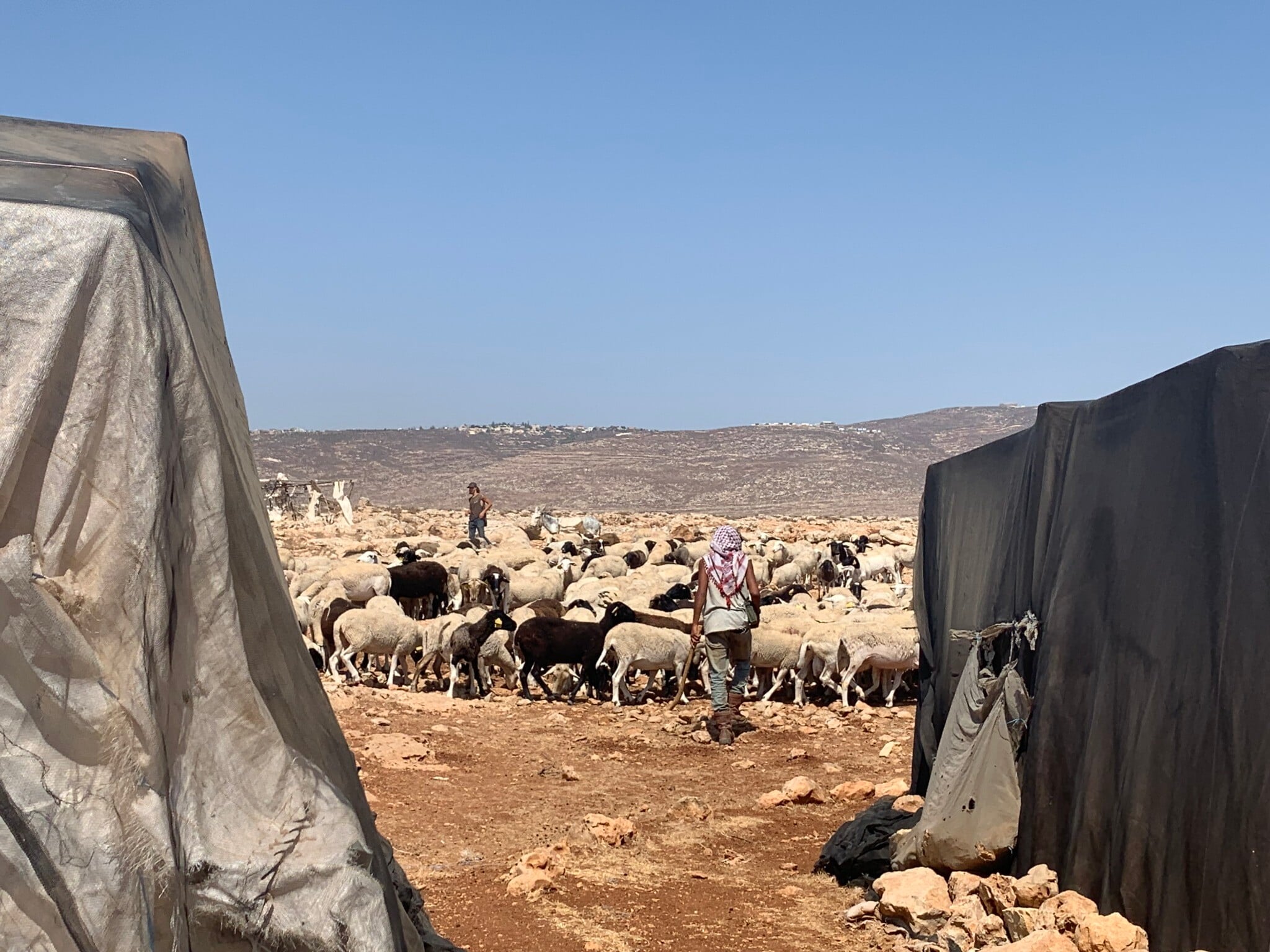
One morning this summer, Zawahra family patriarch Hajj Salameh awoke to three young men he did not know walking nonchalantly between the tents in his tiny village, the Bedouin shepherding community of Ein Rashash in the West Bank.
Although the 85-year-old Salameh had grown used to harassment over the past few months by settlers from the nearby Malachei Hashalom outpost, he wasn’t prepared on June 24 when dozens more Israelis, some armed, arrived in ATVs.
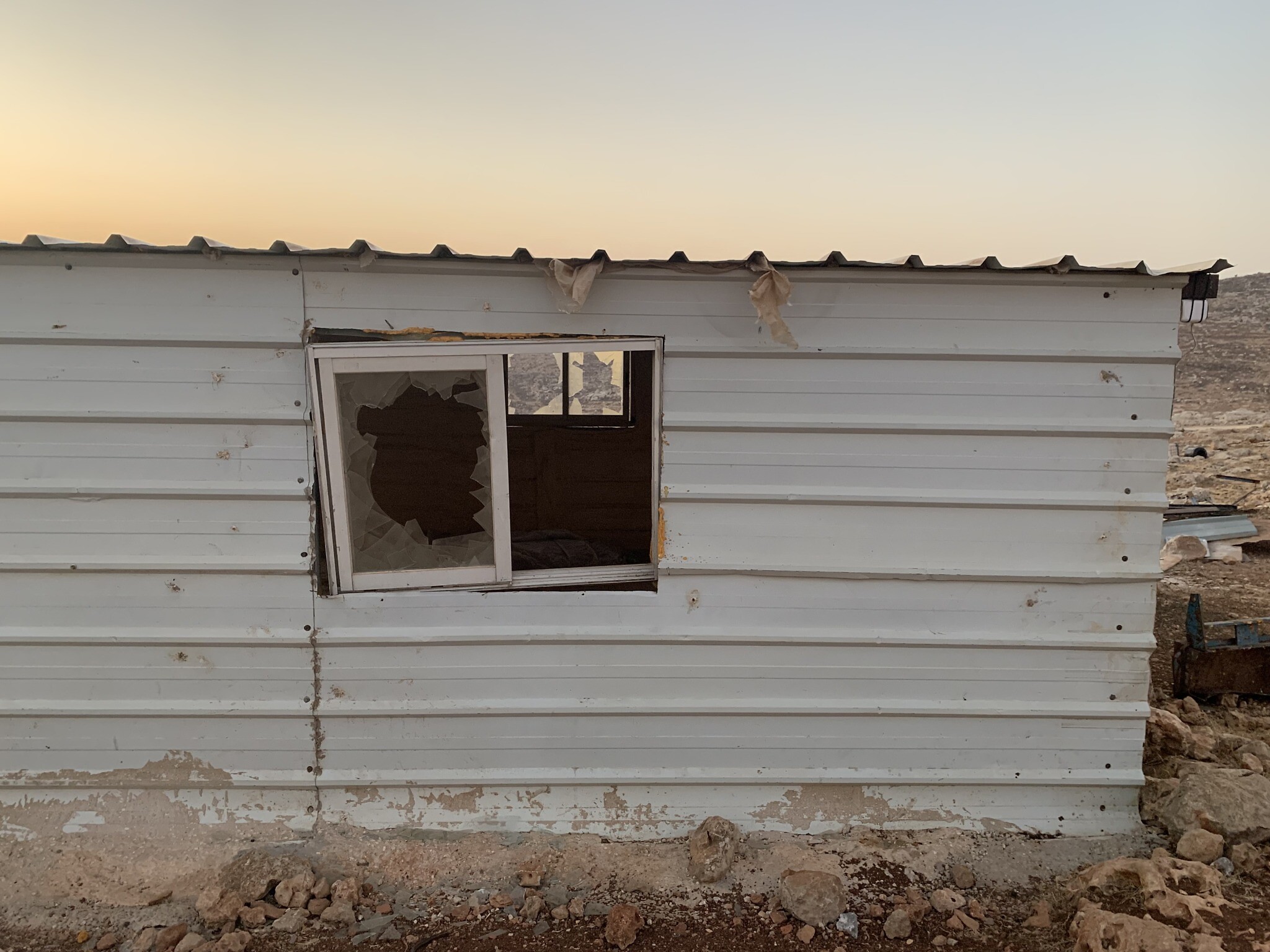
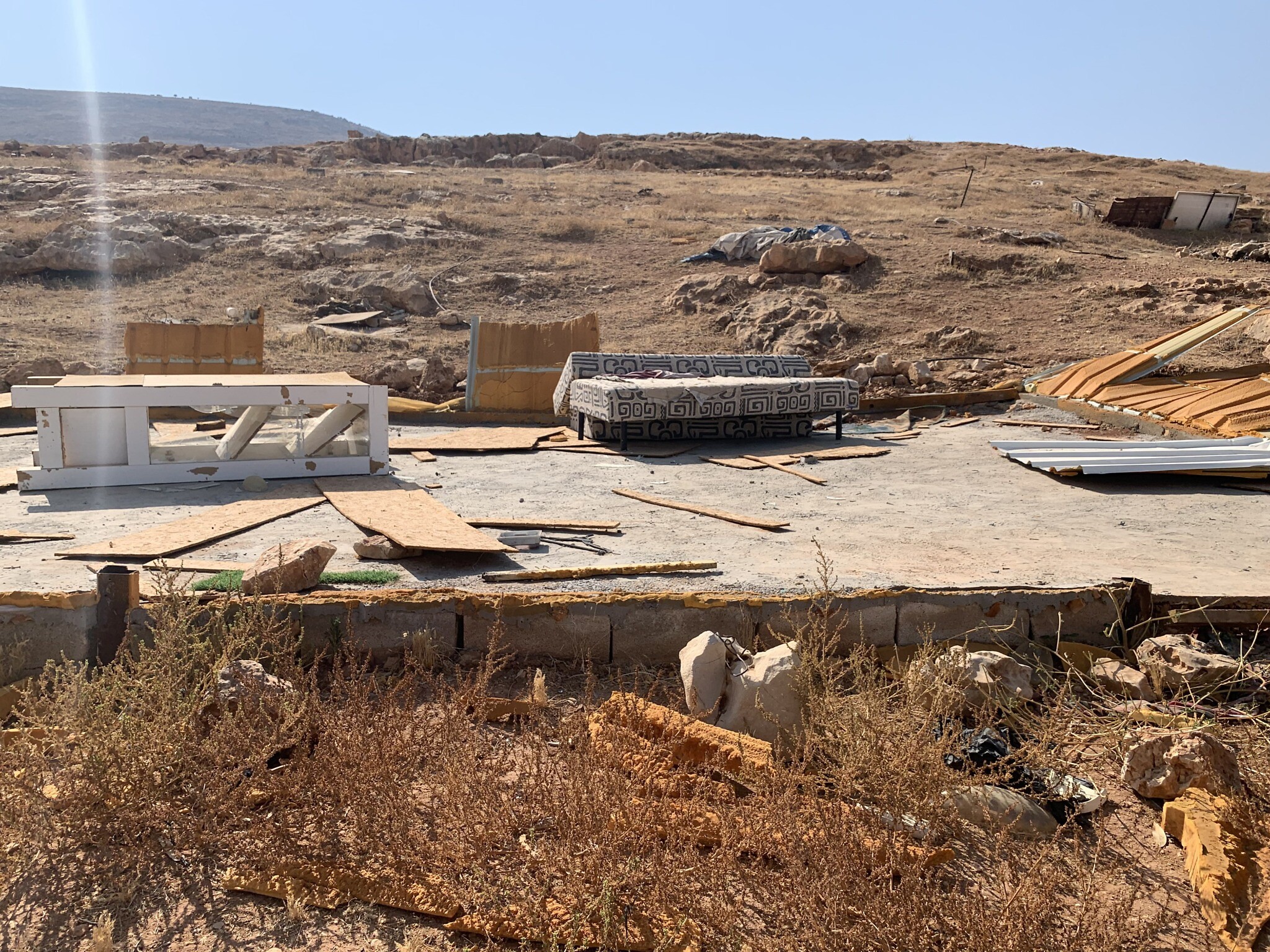
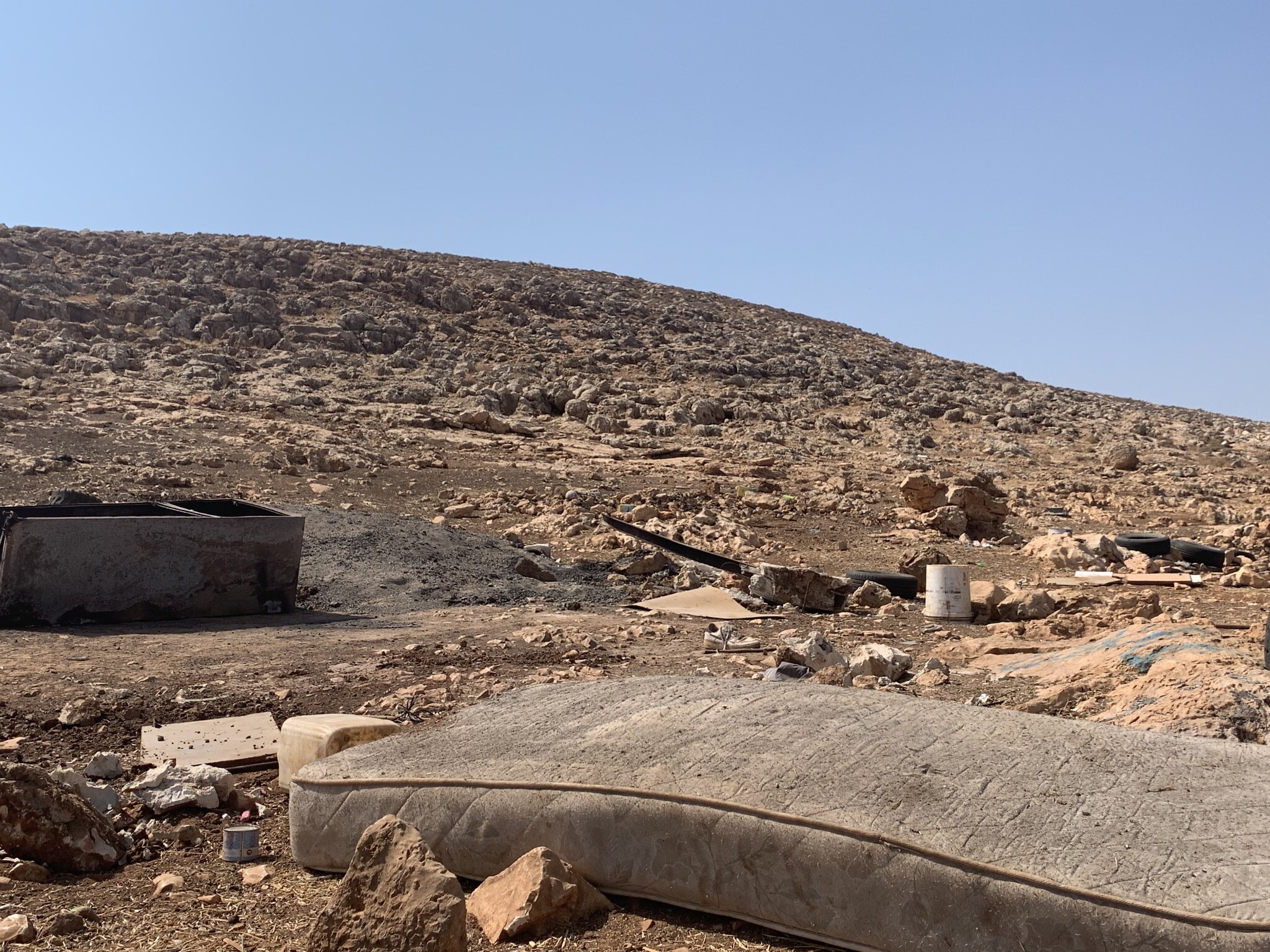
The palpable tension swiftly transformed into outright violence. The Israeli settlers threw rocks at the villagers, fired bullets into the air, burned a tent, broke a latrine sink and smashed windows, residents recalled.
Although the army arrived at the scene later, soldiers only focused on arresting three young local men who had thrown rocks back at the settlers, said Muhammad Zawahra, a shepherd from Ein Rashash. At the same time, others from Malachei Hashalom beat the elderly Salameh.
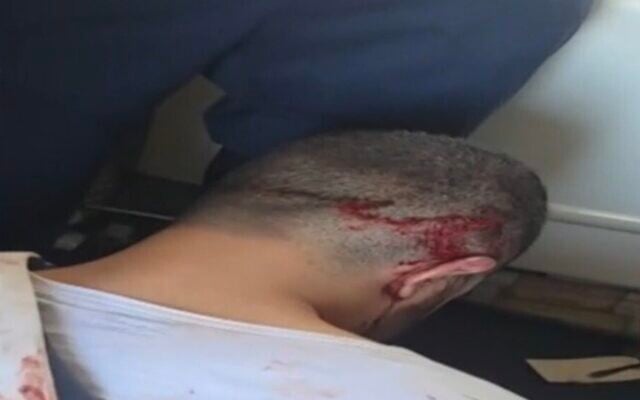
“One of them held a stick and the other one held stones. He threw a stone at me and the other hit me with the stick on my back and head, spilling blood,” Salameh said, pointing to the injuries. After the violence ended, he had his head stitched at a hospital in Ramallah.
A spokesperson for the Israel Defense Forces said the army was “dispatched to the area of Ein Rashash to break up a conflict,” without elaborating.
Over the past four years, intimidation by young settlers from Malachei Hashalom, which translates to Angels of Peace, had become the new normal for the extended Zawahra clan, whose 80-odd members comprise the entirety of Ein Rashash.
The Zawahras are not alone. Scattered across the Jordan Valley, small Palestinian communities are on the verge of collapse, their residents either fleeing or preparing to do so due to what they and activists say is escalating harassment by Israeli settlers.
Rabbi Arik Ascherman, a longtime peace activist who has been organizing protection for various Bedouin communities in the Jordan Valley for years, counts “three blows” driving Palestinian communities from their villages: “There’s the blatant — the violence and intimidation by settlers; the economic — preventing Palestinians from accessing grazing areas; and there’s government support” through land appropriation and evictions.
The decimated hamlets are all in Area C, the 61 percent of the West Bank that falls under full Israeli control, which includes the entire Jordan Valley. The zone is home to all of Israel’s 400,000 West Bank settlers, and as many 300,000 Palestinians, according to estimates.
Though reliant on Israeli authorities for civil governance, many Palestinian towns within the zone are neglected or unrecognized by the state, especially smaller agricultural communities that lack the trappings of more developed towns, like Ein Rashash.
In the summer months, most village residents live in open-air tents which they fortify in the winter to stay warm. The tents are interspersed along dirt roads on a hillside that falls sharply to the east into the Jordan Valley.
This is how we are ethnically cleansed from our homes Today, the settlers attacked the residents of the Ain al-Rashash. settlers broke houses, damaged water tanks, broke solar energy, and wounded the elderly Abu Khaled, 80 years old. the army arrived, and arrested 4 Palestinians. pic.twitter.com/5bOWWh6Axc
— Basel Adra (@basel_adra) June 24, 2023
On the west, the hamlet’s agricultural lands rise toward Allon Road. The north-south artery, used by both Palestinians and settlers, marks the border between Areas C and B, the part of the West Bank where Israel maintains military but not civil control.
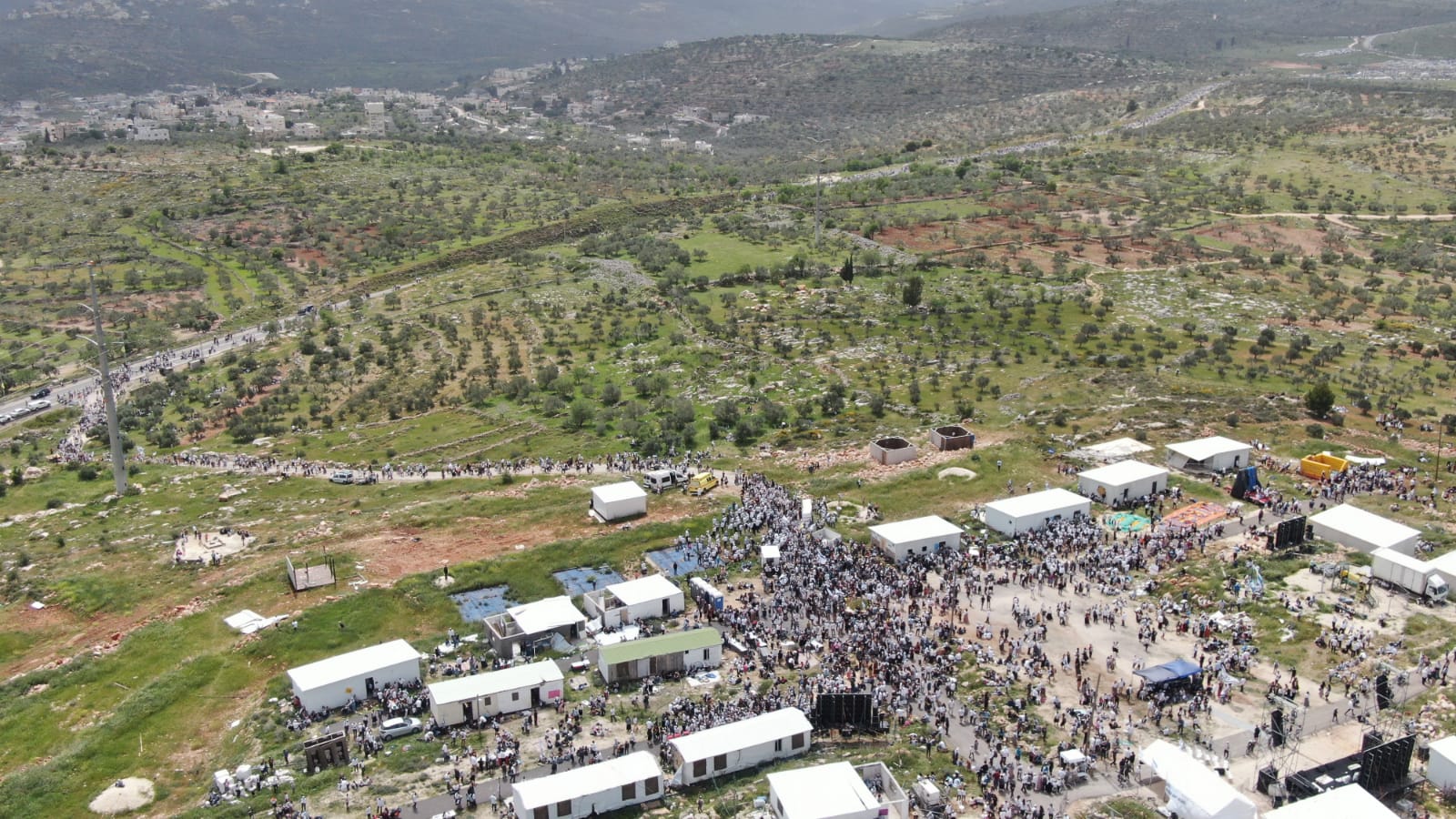
Atop a hill about a kilometer (0.6 miles) south of Ein Rashash sits Malachei Hashalom, a collection of about a dozen makeshift structures set up in 2015. It was named for Malachy Rosenfeld, a 27-year-old Israeli shot to death in the area by a Palestinian terrorist that year.
The army has at times instructed Malachei Hashalom’s residents to stay away from Ein Rashash, but residents say that doesn’t prevent settlers from encircling and entering the village at will multiple times a week.
The army says it intervenes when Israelis break the law in Area C “with an emphasis on violent incidents or incidents directed at Palestinians and their property.”
“The forces act to stop the incident, and if necessary to delay or arrest the suspects, until police forces arrive at the scene,” the IDF Spokesperson’s Unit said.
At the start of the summer, the Zawahra family reached out to Israeli anti-settlement activists for help in fending off invaders and repairing damage. Ascherman, director of the Torat Tzedek human rights organization, took up the request and started recruiting activists to come to Ein Rashash.
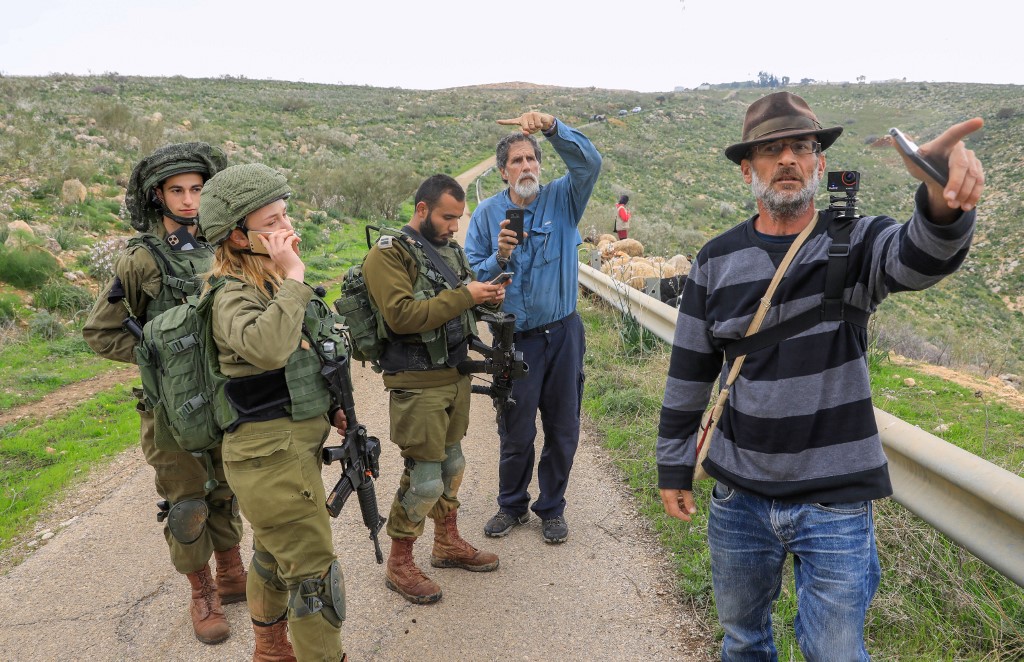
While activists had little trouble visiting the village at other times, on September 2, around 15 of them who tried to reach Ein Rashash to help repair the hamlet’s sole access road were stopped by the army as they made their way down the mountain into the village, said Guy Hirschfeld, who was leading the group.
“The army basically waited for us there with a closed military zone order, but didn’t explain why,” said Hirschfeld, who also runs the anti-settlement organization Looking the Occupation in the Eye.
The closed military zone order, according to an army spokesperson, was imposed in light of recent “conflicts” in the area, “to prevent the recurrence of similar cases.”
Other villages in the same area have faced similar or worse settler harassment. A kilometer south of Malachei Hashalom, the 86 residents of Qabun abandoned their village on August 8, also citing intimidation from the outpost.
About four kilometers (2.5 miles) further south is what remains of Ein Samia, a larger community that lost the vast majority of its residents in May after reporting 10 attacks by an unnamed outpost on their village since the beginning of 2023.
Israeli authorities demolished Ein Samia’s elementary school in August, which by then only served a handful of students from the few families remaining. Most of the families from Ein Samia now live just west of Allon Road in Area B, where the relatively sparsely settled scrubland gives way to a more crowded network of Palestinian towns and Israeli settlements east of Ramallah. Although they can now build without threat of demolition, the former residents say they are still struggling financially, with less space to graze their sheep.
“I feel like I’m a refugee here, and settlers are the owners of our land,” former Qabun resident Ali Abu Kbash told The Associated Press last month.
Yisrael Gantz, head of the Binyamin Regional Council which provides municipal services to settlements over a wide swath of the central West Bank, including where Malachei Hashalom is located, insists that harassment by settlers is nonexistent in the West Bank.
“There is no terrorism by Jews against Arabs. The Jews on the ground are the side under attack,” he said. “In recent months, many Jewish settlers were injured and taken to hospitals. There was no one injured on the Arab side.”
While alleged harassment by settlers is not new, it has intensified in recent months, activists say. At the same time, Prime Minister Benjamin Netanyahu’s hard-right government has drastically expanded settlement building and formal recognition of wildcat outposts.
In February, the premier announced that his government would legalize nine outposts, including Malachei Hashalom. This entails not only recognition, but connecting them to Israeli water and power grids.
More recently, Finance Minister Bezalel Smotrich, who also controls the settlements division in the Defense Ministry, laid out a plan to legalize all 155 outposts in the West Bank.
While settler leadership denies responsibility for Palestinians departing from Area C villages, and claim instead that these communities “chose to leave,” the accelerating trend serves the movement’s long-term aim of expanding Israeli control over Area C.
“Until we [Malachei Hashalom] began, there was a Bedouin farm here. Slowly, with a lot of hard work, the land is today returning to the army for training, and also to our shepherding and farming,” Malachei Hashalom founder Elhanan Lerner says in a video promoting the outpost.
Grazing and razing
Parts of both Ein Rashash and Malachei Hashalom fall within a military firing zone, where the Israel Defense Forces sometimes holds drills. Palestinians who live in West Bank firing zones often face eviction by authorities, while Israelis rarely do.
“It’s forbidden for me to go there with my flock, but the settlers can take their flock there,” Muhammad Zawahra said, pointing east to a hill near the village where he used to take his sheep for grazing. Now the hill is part of the firing zone and if he were to try to ascend it, he says, settlers would stop him.
One day in late August, Ein Rashash residents and activists watched as twenty figures spread out across a nearby hill within the firing zone, where settlers often graze their sheep. The group feared that the figures were Malachei Hashalom residents descending from the outpost for a fresh confrontation, but were relieved when cracks of gunfire burst through the early morning air: army shooting practice.
The live fire continued for an hour or so, blending into the rugged valley’s ambiance, while two settler youths came down the other side of the hill with their flock to graze adjacent to Ein Rashash’s tents. They grazed their flock from 8 a.m. to early afternoon, until more settlers arrived in an ATV at the village entrance, strolled around, filmed its residents and then left.
טיהור אתני:
עיין רשאש. כל יום והפלישות שלו. זו השיטה: הרועים ה״תמימים״ מגיעים עם העדרים לפאתי היישוב לעיתים מסתובבים בינות לבתים. ואז חוזרים בתואנות וטענות, עם הצבא חד-הם, חמושים ומזויינים. עזרו לנו לעצור את גירוש הקהילות. עיזרו לנו לעצור את הטיהור האתני שנעשה ע״י המחבלים היהודים pic.twitter.com/mpApyZHS6g— מסתכלים לכיבוש בעיניים (@Mistaclim) August 22, 2023
On top of harassment, Ein Rashash’s residents say they are losing out to Malachei Hashalom shepherds slowly encroaching onto their traditional grazing lands, forcing them to supplement the sheep’s diet with purchased food.
“We used to have around 3,000 sheep in our flock. At this point we have around 500,” Zawahra said. “Before a few years ago, we wouldn’t pay much money for additional food; we could take them to graze and that was enough. We used to pay around 5,000 shekels for additional food per year, but now the cost is around 40,000.”
Although it happens on their watch, Israeli authorities have done little to stop settlers from bringing their flocks to graze on land used for years by Bedouins, or from walking into their homes. This is partially because the Civil Administration, a Defense Ministry unit that implements civilian policy in the West Bank, rarely recognizes Palestinian residents as the legal owners of the land they are on.
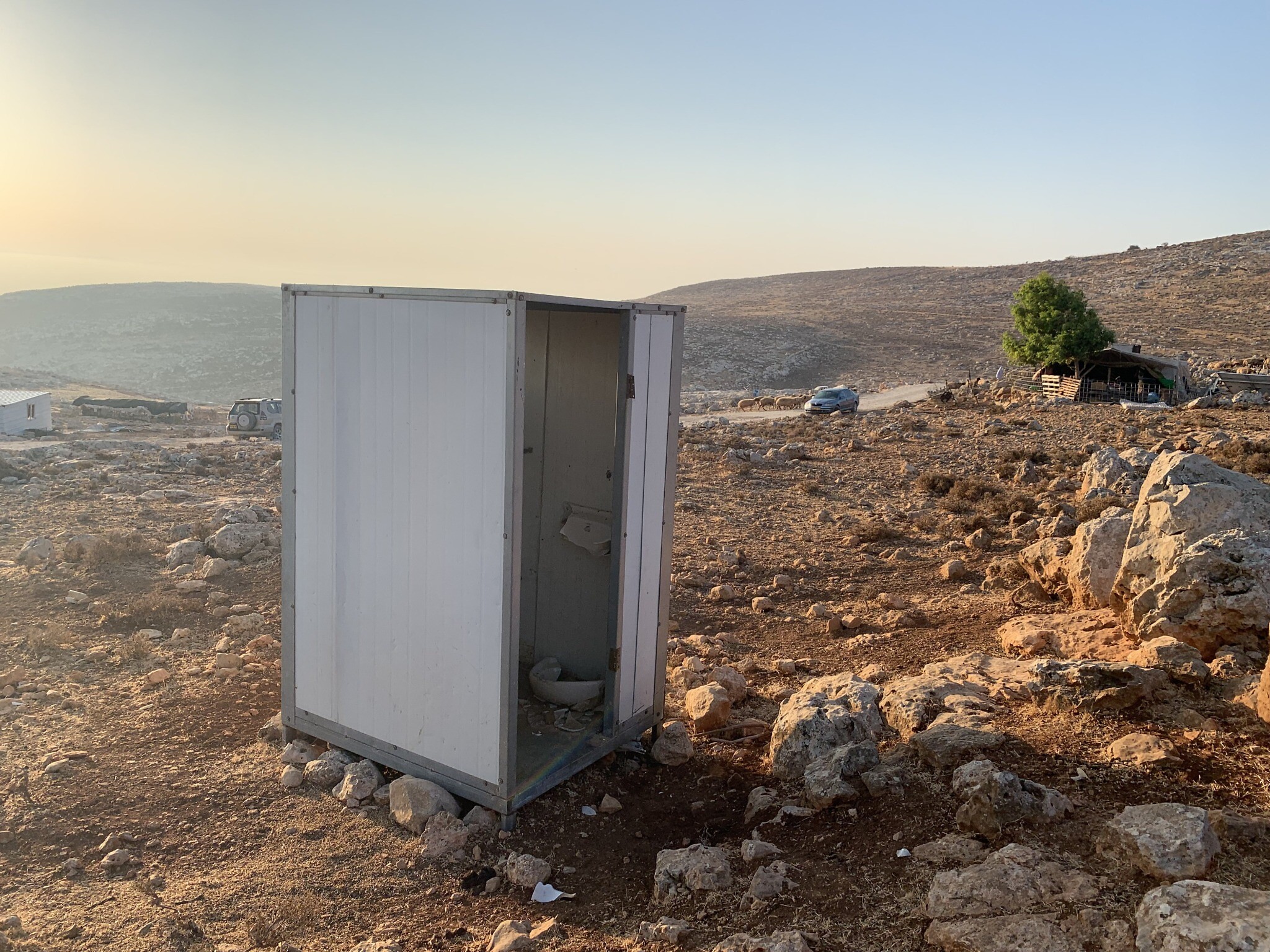
The Zawahra family claims to have bought the 10 dunams (2.5 acres) of land Ein Rashash is built on, and say land in their vicinity is owned by Talfit and Qaryut, larger Palestinian villages further north. They lack a deed to prove their claim, though Muhammad Zawahra says he is in the process of acquiring one.
In a statement to The Times of Israel, Gantz denied that any part of any outpost was on private Palestinian land. “All the agricultural farms are located on state land,” he said. The same claim was made by Lerner in the promotional video.
Lerner and other residents of Malachei Hashalom declined to speak to The Times of Israel.
But the Civil Administration has never declared the area to be state land, according to Kerem Navot director Dror Etkes, whose organization monitors Israeli land policy in the West Bank.
Settler proponents claim that Palestinians are illegally expanding their presence in Area C, moving into new areas, and largely building without the necessary authorization from Israeli authorities.

“Illegal construction in the area is part of the Palestinian Authority’s project of Arab takeover of Israeli state lands,” Gantz said.
However, Israel rarely issues permits for legal Palestinian construction in Area C, experts say, forcing residents to break the law to keep up with population growth.
Zawahra, who was born and raised in Ein Rashash, rejected the idea that they are encroaching on the settlers, noting that he and his family have been living in the same place for 33 years.
The family patriarch, Hajj Salameh, was born in the Tel Arad region, which today is inside sovereign Israel, but fled in 1948 to the West Bank, which was then under Jordanian rule.
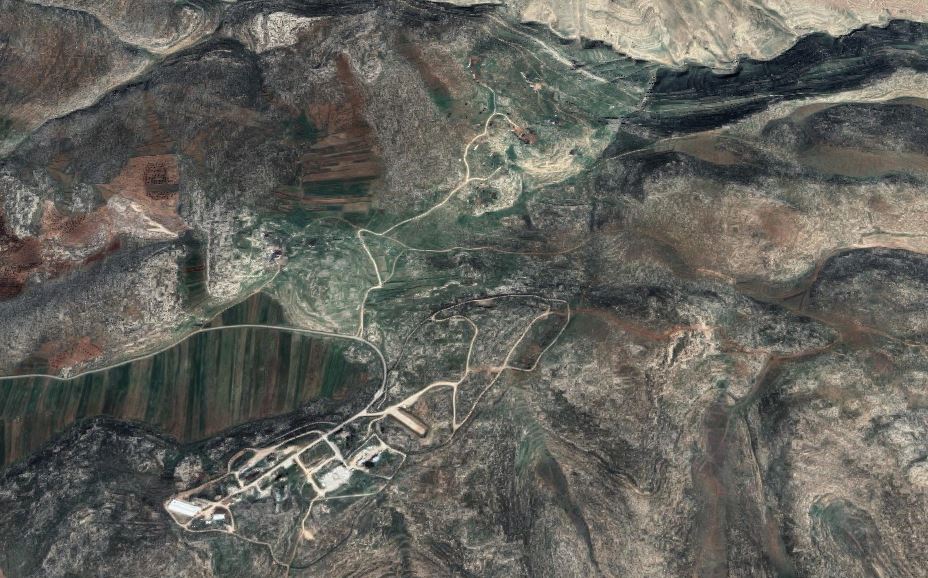
Since the land under Ein Rashash is unregulated and not intensively cultivated by its inhabitants, Etkes believes the Civil Administration has designated it as “survey land” — areas that are under review for potential designation as state land, based on Israeli interpretation of Ottoman-era land codes.
The Civil Administration does not disclose to the public which areas in the West Bank it classifies as survey land.
If authorities declare Ein Rashash to be state land, the Zawahra family will likely be forced to eventually relocate. Of the declared state land which the Civil Administration allocates in the West Bank, a mere 0.2% has gone to Palestinians.
Ascherman argues that the debate around land ownership dodges the larger issue of Israel’s unequal policies in the West Bank.
“According to international law, Israel should have nothing to do with all this,” he said. “The fact we’re talking about if it’s this land or this land or this land, these are rules of the game that Israel has created, in violation of international law. If I put up my tent in a public park, that doesn’t mean that someone can just come into my tent with a gun.”
Despite their illegality under both international and Israeli law, outposts have continued to flourish, expanding Israeli control of land in the West Bank. For years, settler leadership has touted shepherding outposts in particular as a cost-effective, speedy method of securing Jewish control over more land in Area C.
At an online conference in 2021, settlement leader Ze’ev “Zambish” Hever complained that expanding Israel’s hold on the West Bank by building settlement homes and other infrastructure was too slow and expensive.
“We reached 100 square kilometers after 50 years,” said Hever, who runs the settlement housing construction firm Amana.
Shepherding outposts, which have increased substantially over the past three years, “have almost two times the area of the built-up settlements… One farm can, and indeed does, keep thousands of dunams of land,” he said.
Although Zawahra and the rest of his family are not inclined to leave Ein Rashash, he worries about the psychological toll that staying there will have on his seven children, the youngest just a month old.
“Sometimes when I sleep at night, I see these settlers in my dreams. I dream what’s already happened, what they’ll do next,” Muhammad said. “My children are scared now, they didn’t used to be, but I worry this fear in their hearts will stay with them.”







The Times of Israel Community.