

Israeli, Chinese firms announce testing lab for Palestinians in West Bank, Gaza
BGI Group, a genome sequencing company based in southern China, partners with Rehovot-based AID GENOMICS to build facility that can carry out around 3,000 coronavirus tests per day
 Add ToI as a Preferred Source on Google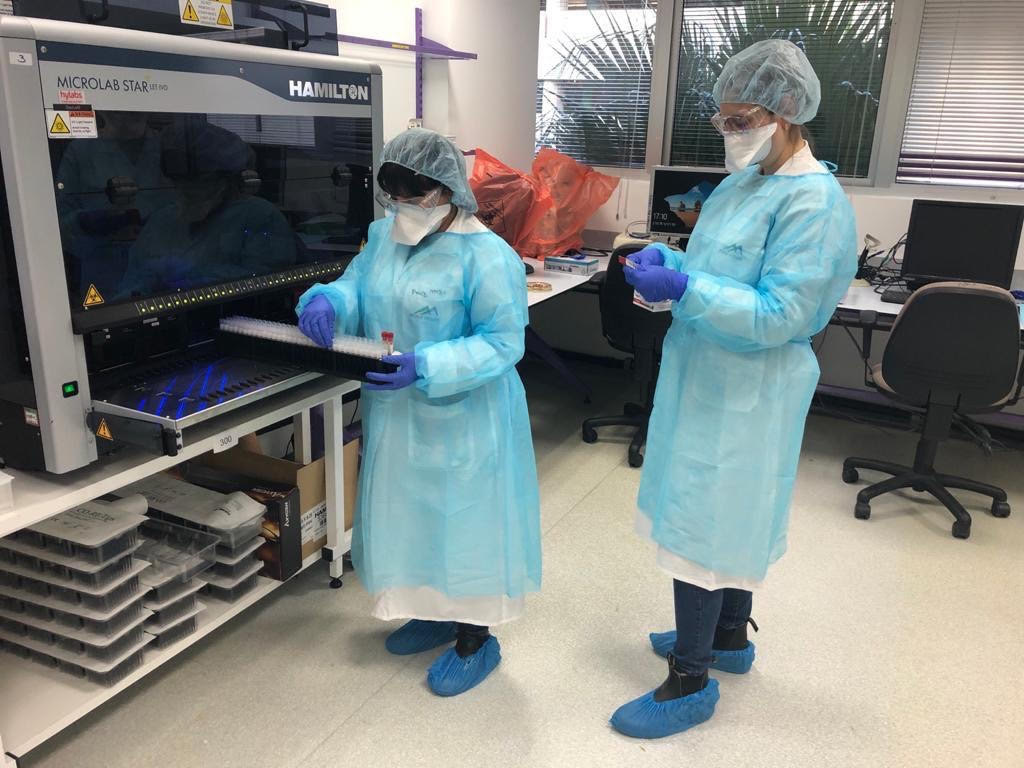
A Chinese and an Israeli company on Monday announced they were setting up a laboratory to process around 3,000 coronavirus tests per day for Palestinians in the West Bank and Gaza.
There was no announcement of where the facility, which would be funded through donations, would be located.
BGI Group, a genome sequencing company based in southern China, opened labs in Wuhan at the height of the crisis there. It is partnering with AID GENOMICS, a genome testing company based in Rehovot, and charitable foundations.
“The worst of times reveals the best in people, [and] saving lives is of paramount importance”, said Dr. Ye Yin, the CEO of BGI. “We must work together to surmount whatever difficulty that lies ahead.” BGI said it was bringing a solution for China’s HuoYan Lab, and Mammoth Foundation, a charity in Shenzhen, China, also announced fund-raising in China for the effort.
The Health Ministry recently froze plans by Israeli firm MyHeritage to set up a coronavirus lab in Israel alongside BGI Group.
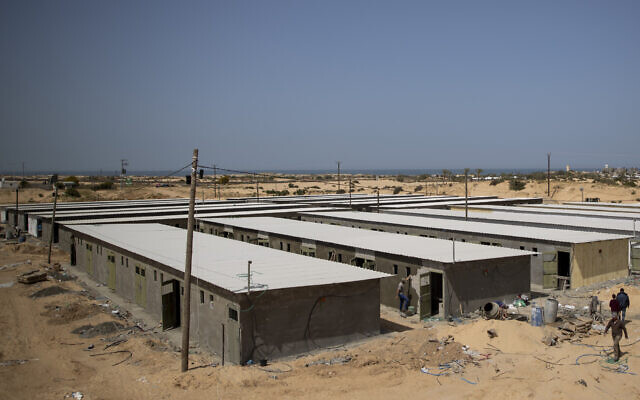
There is concern that an outbreak could quickly spread and overwhelm already precarious health systems in the West Bank and Gaza. Thus far, Palestinian authorities have said 226 people in the West Bank and Gaza Strip have been infected by the virus, including 21 who recovered and one who died.
A spokesman for the Hamas-run Health Ministry on Sunday said authorities in the Gaza Strip have nearly run out of kits to test for the highly contagious coronavirus.
Medical professionals in Gaza had conducted, as of Saturday, 1,157 tests on people for COVID-19, according to a ministry document. There were also 1,897 people in quarantine facilities in the coastal enclave, the document stated.
Both the World Health Organization and the Palestinian Authority have provided authorities in Gaza with the testing materials.
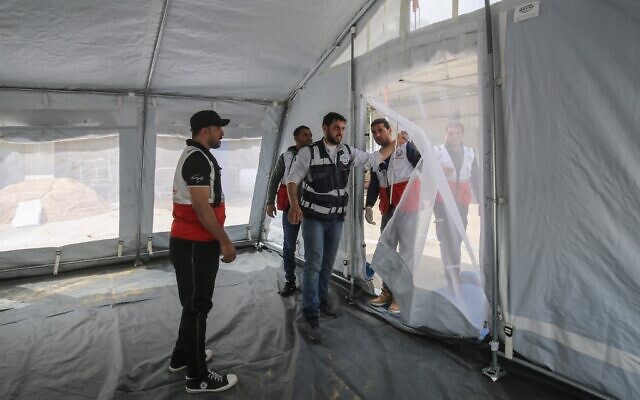
The Gaza Health Ministry has said that all those infected by the virus in Gaza have been held in quarantine and have not mixed with the broader population.
In early March, Abdelnasser Soboh, the head of the World Health Organization’s sub-office in Gaza, said that the coastal enclave’s health infrastructure would not be able to handle hundreds or thousands of cases of the virus.
“The health system in Gaza is already shaky and barely functioning. It cannot take on the burden of a large number of cases,” he told The Times of Israel, warning that such a scenario could contribute to its collapse.
Hospitals in Gaza frequently lack sufficient medications and medical equipment and often rely on backup generators to maintain a consistent flow of power.
Israel’s blockade on Gaza, which has been aided by Egypt, has significantly undermined the territory’s health sector. Israeli officials maintain that the blockade, a series of restrictions on the movement of goods and people, is in place to prevent Hamas and other terror groups from importing weapons, or the means to make them, into Gaza.
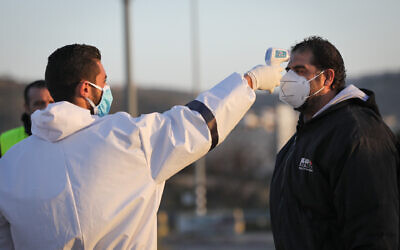
Last Thursday, Gerald Rockenschaub, the head of WHO’s mission to the Palestinians, said there were only 87 ventilators in Gaza, while noting up to 80 percent of them were already in use. Patients with serious cases of COVID-19 around the world have required ventilators to stay alive.
In the past month, the PA has taken a number of drastic measures to prevent the spread of the virus in the West Bank, including heavily restricting freedom of movement.
For more than a week, Palestinian officials have cautioned that the number of cases in the West Bank could rise dramatically if Palestinians returning from jobs in Israel do not properly quarantine themselves.
Adam Rasgon contributed to this report.








The Times of Israel Community.