

Liberman’s exit puts election ball in Netanyahu’s court, but not on his terms
The prime minister now has to choose between a Yisrael Beytenu-pushed national election or capitulation to Bennett’s Jewish Home

 Add ToI as a Preferred Source on Google
Raoul Wootliff is a former Times of Israel political correspondent and Daily Briefing podcast producer.
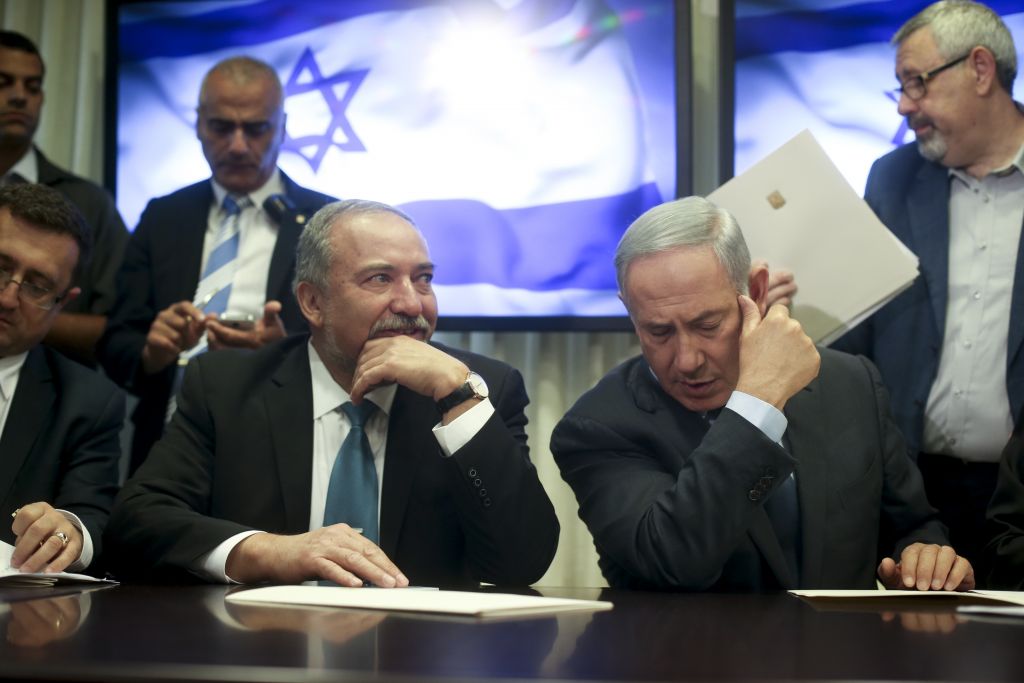
The key factor in whether recent coalition crises were going to bring down the coalition and force new elections was almost always whether Prime Minster Netanyahu wanted them to.
Avigdor Liberman’s Wednesday resignation as defense minister, as full of political drama as it may have been, did not change that fact. With Liberman’s Yisrael Beytenu holding just five of the 120 seats in the Knesset, his pulling the party out of the coalition will not bring it down, but rather leave it with a paper-thin majority of just 61.
The government could in theory continue for another year until the mandated November 2019 date of the next elections, with or without Yisrael Beytenu.
But unlike in the previous instances of coalition infighting, the decision over calling elections, while still currently in the hands of the prime minister, is certainly not on Netanyahu’s terms.
With his Likud maintaining a nearly unchallenged and steadily climbing lead in the polls since winning 30 Knesset seats in 2015, Netanyahu’s rivals, both in and out of the coalition, have repeatedly shied away from elections. Even as some have at times set ultimatums over contested policies, he has repeatedly been able to face off opponents in a game of political chicken, leaving them bracing for his decision to turn around at the minute.

Liberman’s party has suffered in recent opinion polls, with some predicting it could even struggle to gain enough votes to clear the electoral threshold and retain any Knesset seats. His resignation, however, coming amid sharp criticism of the government’s restrained response to this week’s intense Gaza escalation, seeks to position him to the right of Netanyahu and aims to galvanize support via public anger.
Liberman said Wednesday that his decision to quit came in light of the ceasefire reportedly agreed on Tuesday between Israel and Palestinian terror groups in Gaza following an unprecedented two-day barrage of over 400 rockets fired by Hamas and other terror groups toward Israel.
“What happened yesterday, the ceasefire, together with the deal with Hamas, is a capitulation to terror. There is no other way of explaining it,” Liberman charged, saying that he had disagreed with the prime minister’s decision to accept the truce and argued for a tougher response.
During a subsequent question-and-answer session he even predicted that right-wing voters would “see through the other parties’ hypocrisy” and reward his Yisrael Beytenu party with 20 Knesset seats.
On Tuesday evening, hundreds of people demonstrated against the ceasefire at the entrance to the town of Sderot, blocking roads and burning tires, with some chanting “Bibi go home,” using a nickname for Netanyahu.
The prime minister will not like the prospect of those right-wing voters from a Likud stronghold viewing Liberman as their savior, instead of him.

And if Liberman’s resignation puts Netanyahu on the back foot, the Jewish Home’s “ultimatum” to Netanyahu — to give leader Naftali Bennett the vacant defense portfolio or face its own exit from the government — potentially knocks his feet out from underneath him.
“It’s either the Defense Ministry or we are out,” party officials told The Times of Israel Wednesday. “This is our ultimatum to stay in the government.”
It is well known political wisdom that you can back down from an ultimatum as long as you don’t use the word ultimatum. This bold ultimatum would be hard for the national-religious party to walk back.
That leaves Netanyahu with two options, and he won’t like either of them: Go to elections on Liberman’s terms, or maintain the coalition on Bennett’s.








The Times of Israel Community.