

 From the Liveblog of
Monday, May 19, 2025
From the Liveblog of
Monday, May 19, 2025
Bill to allow gender segregation in advanced degrees passes 1st Knesset vote
 Add ToI as a Preferred Source on Google
Sam Sokol is a former political correspondent at The Times of Israel. He was previously a reporter for the Jerusalem Post, Jewish Telegraphic Agency and Haaretz. He is the author of "Putin’s Hybrid War and the Jews"
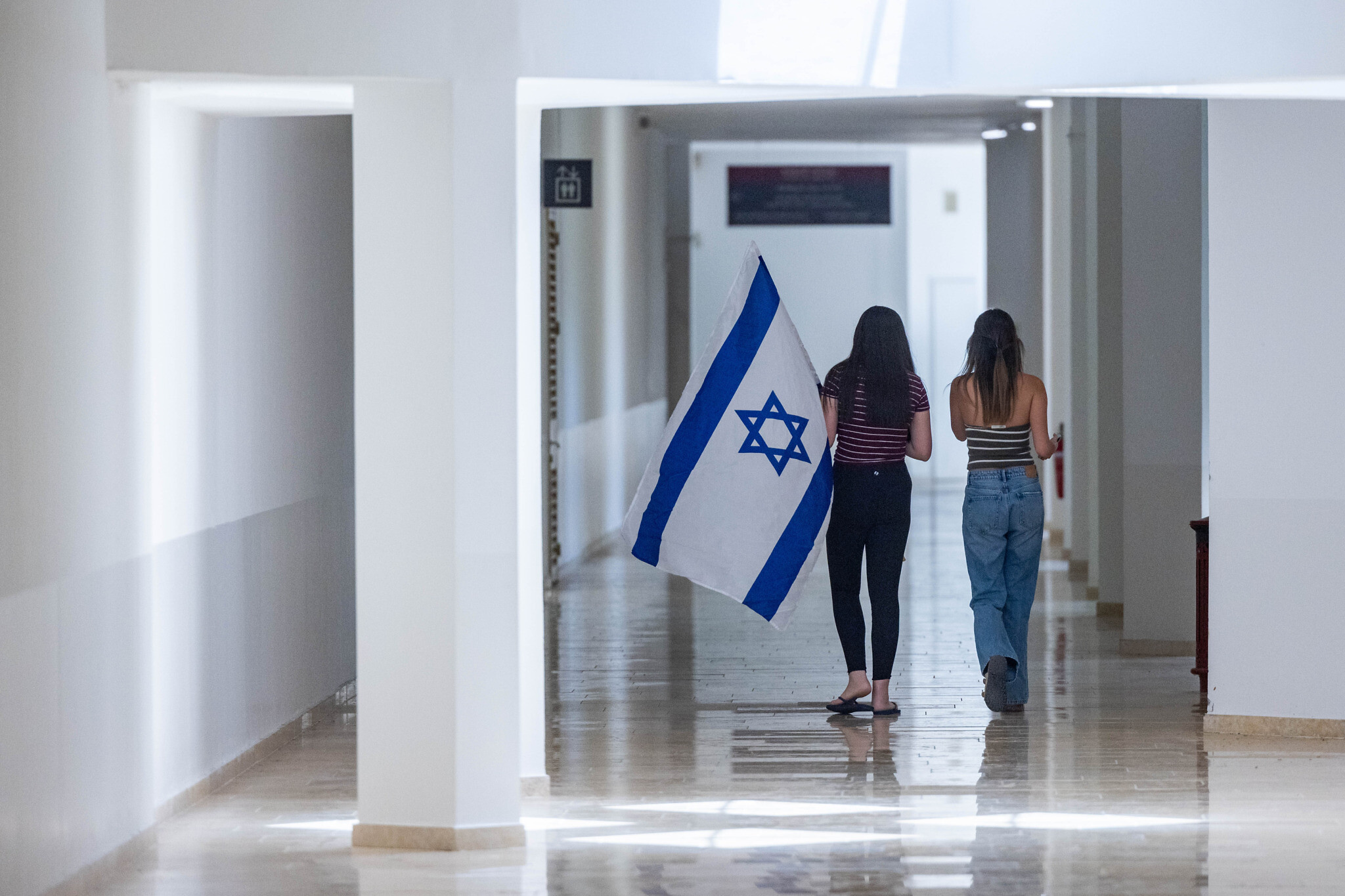
The Knesset passes in a 48-40 vote the first reading of bill establishing the legality of gender-segregated study tracks on religious grounds for those studying for their for masters and doctoral degrees at Israeli universities.
According to the bill’s explanatory notes, the maintenance of such tracks is currently permitted for undergraduate degrees only and the legislation stipulates that creating separate tracks for men and women studying for more advanced degrees will not be considered discriminatory.
“This is to allow even those who, due to their religious beliefs, are prevented from participating in mixed academic studies, to study for advanced degrees in a wider variety of fields,” it adds.
Otzma Yehudit MK Limor Son Har-Melech, welcomes the vote, calling it a “revolution in academia.”
“I ask that institutions be allowed, at their discretion, to reach out to a large public — a public that wants to learn, contribute, and advance — but not at the expense of its values. True equality, for everyone,” she tweets.
Labor MK Merav Michaeli slams the law as discriminatory.
“Gender segregation for men in academia, gender segregation for men at springs, gender segregation for men in the military, blocking Haredi women from representation in the Knesset for the men in the Knesset and in the government,” Michaeli tweets. “There is no such thing as separate but equal. Segregation is discrimination and racism against women. [This is] a government of segregation and neglect.”
In 2021, the High Court upheld the Council for Higher Education’s policy of offering gender-segregated college courses in order to encourage the integration of ultra-Orthodox students but prohibited the practice of barring female lecturers from teaching male-only courses.
The court also ruled that a prohibition on segregation between men and women in public spaces on campuses must be enforced immediately.









The Times of Israel Community.