

 From the Liveblog of
Friday, October 17, 2025
From the Liveblog of
Friday, October 17, 2025
Egypt says resolving Palestinian issue is key for progress in India-Europe transit corridor
 Add ToI as a Preferred Source on Google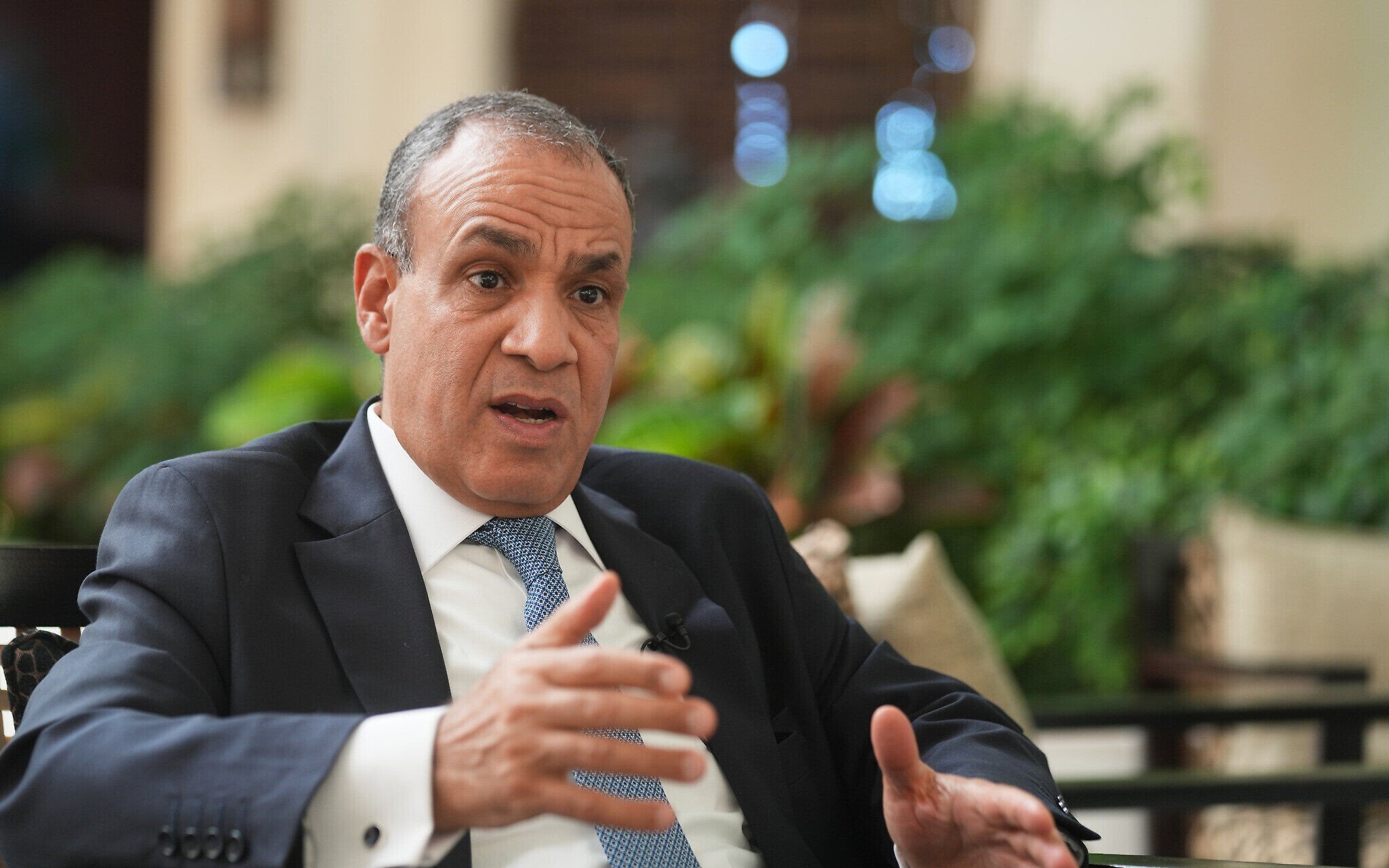
Egypt’s foreign minister says that resolving the Palestinian question is key to making progress in a US-backed transport project to connect India to Europe via the Middle East by sea and rail.
The project known as the India-Middle East Economic Corridor (IMEC) was announced on the sidelines of a summit of the leaders of the Group of 20 major economies in September 2023 and was seen as a US alternative to China’s Belt and Road push on global infrastructure.
War broke out a month after the announcement, following the Palestinian terror group Hamas’s October 7, 2023, attack on Israel.
“We have to bear in mind that connectivity is very important as part of a final settlement of the Palestinian cause,” Egypt’s Foreign Minister Badr Abdelatty tells reporters during a visit to New Delhi.
He says he discussed the IMEC during talks with his Indian counterpart and adds that Egypt is open to being a part of the project.
The corridor aims to extend from India across the Arabian Sea to the United Arab Emirates and through Saudi Arabia before connecting through Jordan and Israel to Europe. India and the UAE signed a framework agreement for the project last year.
“The IMEC is an important project, but we have to understand that what happened over the last two years is that if you have escalation, that could hinder the cooperation, the connectivity,” Abdelatty tells reporters.
He also says that Egypt has had a loss of more than $9 billion since the Iran-aligned armed group Houthis started its attacks on ships in the Red Sea, which the group says it has carried out in solidarity with the Palestinians.
“We are paying a heavy price,” he says. “We used to have, every day, at least 75 ships crossing the Suez Canal both ways. Now, 25 maximum 50, so it dropped by at least 60%.”
Times of Israel staff contributed to this report.








The Times of Israel Community.