

 From the Liveblog of
Saturday, November 16, 2024
From the Liveblog of
Saturday, November 16, 2024
IDF’s former top intel analyst: Oct. 7 was strategic, multi-year failure, won’t be fixed by replacing people
 Add ToI as a Preferred Source on Google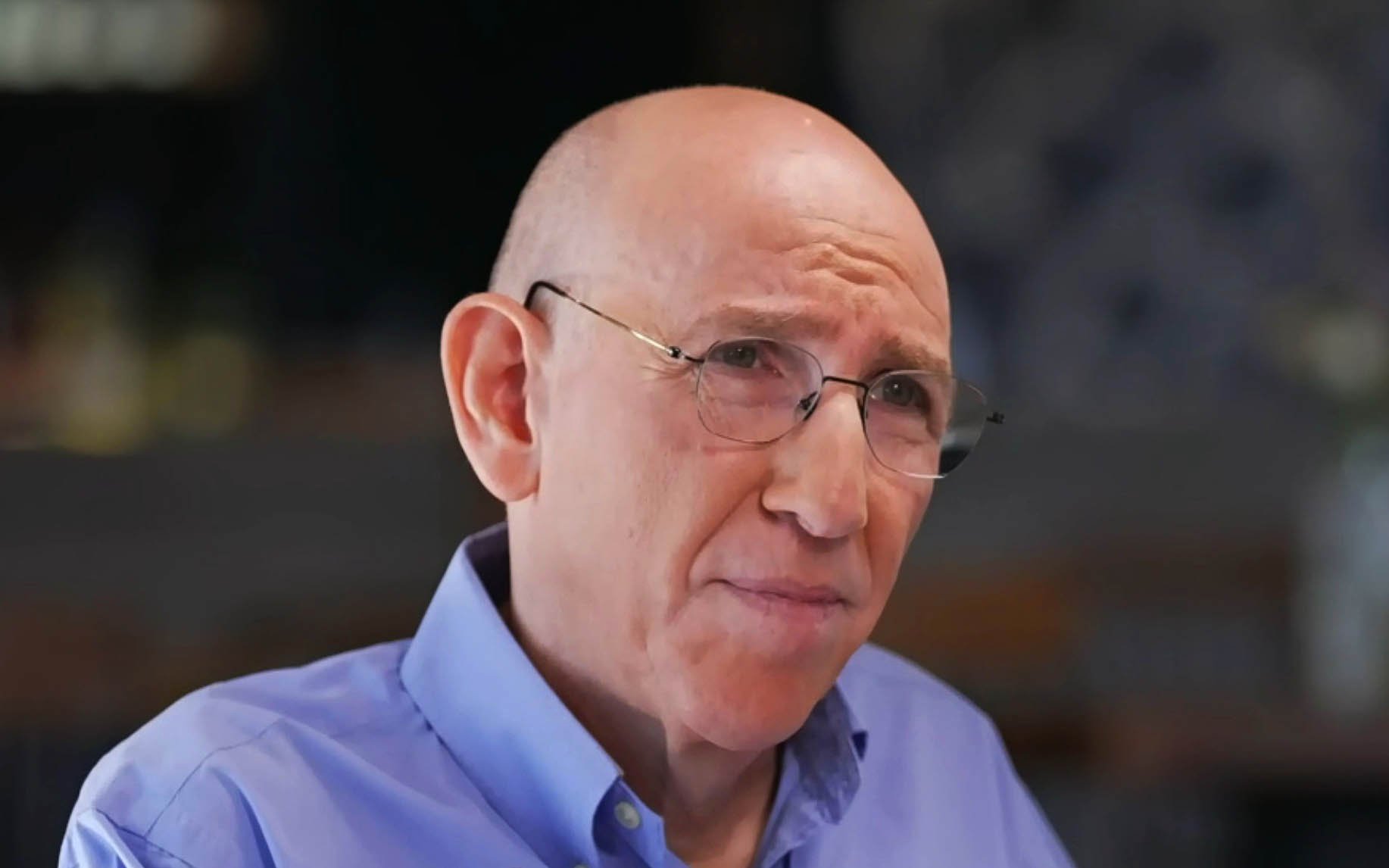
Brigadier General (res.) Itai Brun, the former head of the IDF’s Military Intelligence research and analysis division, warns in an interview that Israel’s inability to recognize that Hamas was preparing to invade shows a far-reaching systemic failure that cannot be fixed simply by replacing key officers and officials.
Rather, says Brun, it requires a fundamental change in the approach and culture of intelligence gathering, the processing of intelligence by the security establishment, and the interaction with the political leadership.
Brun, who left the IDF in 2015, was asked to return on October 8, 2023, and speaks to Channel 12 having now returned to civilian life.
He says the IDF intelligence community he encountered on October 8 understood it had failed — “an entire network of understandings had collapsed in seconds,” he says.
But while it recognized that it had refused to even consider that Hamas could and would burst through the border fence, and “they realized that they needed to rethink” as regards Gaza, some fundamentally false conceptions continued to be held even after the invasion and slaughter.
Israeli intelligence had failed to recognize that the Iran-led axis believed it could destroy Israel, he specifies. “They didn’t understand this change.”
He says Israeli intelligence had so much data, all indicating that Hamas was deterred and was not seeking a war, that there was a refusal to so much as countenance the possibility that this conception was erroneous — not even when the IDF obtained documentation such as the Jericho Wall material showing Hamas’s attack plans.
The conception held that Israel was strong and Hamas was weak, and thus there could be no logic for Hamas to attack, he notes. The whole network “was not listening, because it was convinced it knew… It could not accept the possibility that it was wrong.”
Brun says Hamas came to be dominated by people who believed they should carry out an October 7-style attack from about 2017, and that by 2021 there was a growing belief in the Iran-led axis that they could destroy the Israeli army. Israeli intelligence, however, continued to believe “that they thought we were undefeatable.”
The growing confidence among Israel’s enemies was a “historic change” that Israeli intelligence missed. It was born of several factors, says Brun, including Hezbollah’s much-improved rocket and missile capabilities, a greater unity of purpose within the axis, an assessment that the US was not as strong as previously believed, and a recognition that they could do more harm to Israel than they’d previously thought.
Brun decries what he says was “a lack of trust” among the Israeli political and military leadership that prevented leaders “sitting in a room and clarifying” the intelligence community’s assessments of the enemies’ intentions.
But the “central lesson” of the October 7 tragedy, says Brun, is that it was not a failure of “one night, one front, one group of people…It’s much wider.”
“The even more significant thing is the gulf [between assessment and reality] in the years before,” he elaborates. “We were blind for years before that night.”
Brun says he won’t answer questions about political culpability, but stresses: “The entire Israeli apparatus was part of that misconception that Hamas was deterred.”
He distinguishes between the immense recent successes against Hezbollah, including locating and eliminating its leader Hassan Nasrallah, and the failures exposed by October 7, citing “two very different [sets of] capabilities.”
October 7 showed a strategic, multi-year failure as regards factors such as “the skill to understand strategies… and recognize changes in the other sides’ views and understandings.”
“Specific people could have functioned better,” he notes, “but I’m describing something deeper… The notion that we’ll replace the people and the problem will be solved is not correct.”
“Some of them are no longer in their positions and have acknowledged their responsibilities, but the idea that switching them fixes it — no… The problem is in the culture and the problem is in the system.”
Asked whether what happened in 1973 and again in 2023 can happen again, Brun says: “The conclusion is yes, it can happen to us again — and that has to be the fundamental assumption… We need to change the culture and the entire approach, in order to ensure that it won’t happen again.”
Asked whether he believes this fundamental change in approach will indeed now take place, he says, “I do yes.”







The Times of Israel Community.