

 From the Liveblog of
Monday, December 22, 2025
From the Liveblog of
Monday, December 22, 2025
Netanyahu reportedly says Oct. 7 inquiry must probe Oslo Accords, Gaza Disengagement, judicial overhaul opponents
 Add ToI as a Preferred Source on Google
Jeremy Sharon is The Times of Israel’s legal affairs and settlements reporter
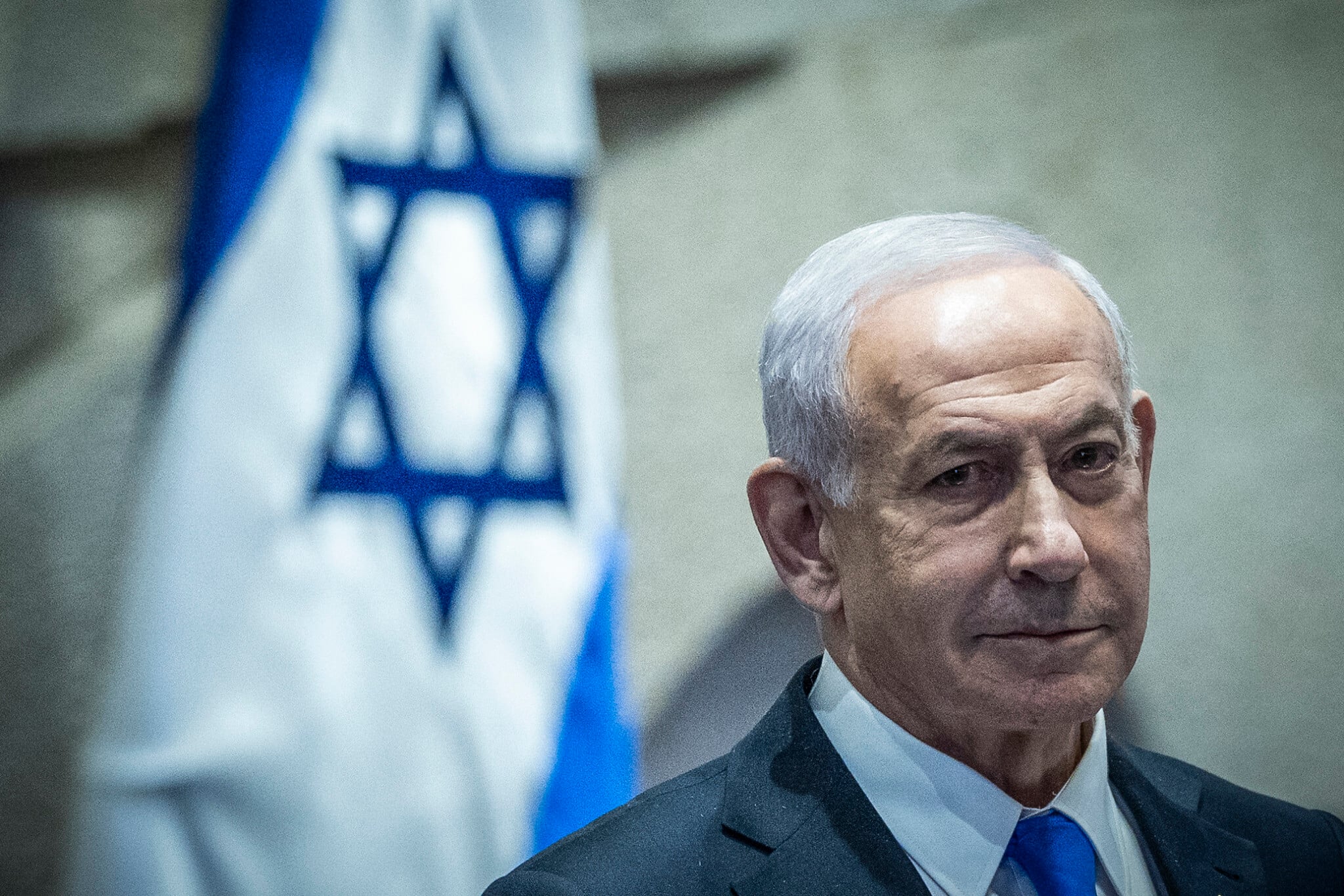
Prime Minister Benjamin Netanyahu reportedly said today that the planned government-backed commission of inquiry into the failings surrounding the Hamas onslaught of October 7, 2023, must include an examination of the 1993 Oslo Accords, the 2005 Disengagement from Gaza, and the 2023 protest movement against the government’s judicial overhaul agenda.
Netanyahu made his comments during the meeting of a ministerial committee he is heading that will determine the mandate of the government’s inquiry, which is being advanced instead of a widely demanded independent state commission of inquiry.
According to a report by Channel 12, Netanyahu told the ministerial committee that the investigation into the events of October 7 must go back decades, “from Oslo, through to the [Gaza] Disengagement, and up to [reserve duty] refusal.” The latter part refers to the declaration of some opponents of the government’s judicial overhaul agenda that they were discontinuing their service in the IDF reserves.
Netanyahu says he wants an “balanced” commission of inquiry — meaning, with half of its members selected by the coalition and half by the opposition — to conduct the investigation, adding that “I am prepared to be the first person to be investigated,” according to Ynet.
Netanyahu, who ruled Israel for roughly 14 of the 15 years preceding the Hamas onslaught, has adamantly refused to take responsibility, instead attempting to cast the blame on his predecessors, his political opponents, the security establishment and the judiciary.
Netanyahu, as finance minister in Ariel Sharon’s government, voted several times in favor of key steps advancing the 2005 Disengagement from Gaza in 2004 and 2005, although he ultimately resigned in August 2005 in protest against the plan, just a week before its implementation.
Although Netanyahu opposed the Oslo Accords before they were signed with the PLO, he never acted to reverse them after he took office as prime minister in 1996 and again in 2009, and he signed and partially implemented additional components of the Oslo process, including the Hebron Protocol and the Wye River Memorandum.
Earlier today, the Ministerial Committee for Legislation voted to back a contentious bill to create the new form of commission of inquiry whose members would be picked by the Knesset, instead of by the Supreme Court president as mandated under the current law for state commissions of inquiry.
Ze’ev Elkin was the only minister to oppose the bill, expressing concern over a clause in the bill stipulating that the Knesset speaker will choose the remaining members of the commission if the opposition boycotts the process, as its members have vowed to do, which would mean that the ruling coalition would appoint all members of the commission.








The Times of Israel Community.