

 From the Liveblog of
Wednesday, July 29, 2026
From the Liveblog of
Wednesday, July 29, 2026
Netanyahu used map to help dispel Trump’s assumptions about Israeli presence in Syria — official
 Add ToI as a Preferred Source on Google
Jacob Magid is The Times of Israel's US bureau chief
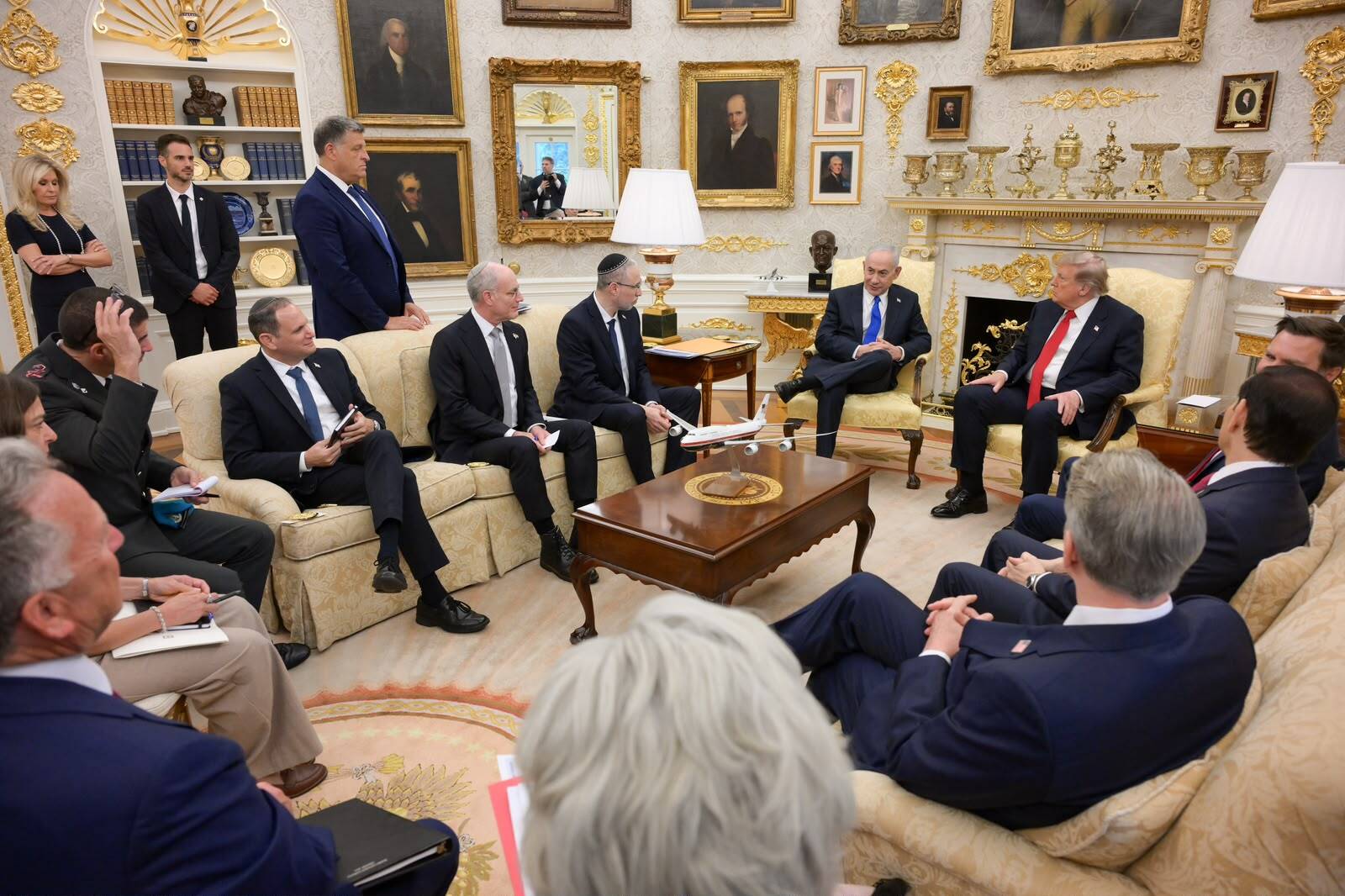
WASHINGTON — While the bulk of the 90-minute meeting yesterday between Prime Minister Benjamin Netanyahu and US President Donald Trump focused on Iran, Netanyahu did raise the issue of Israel’s presence in Syria, in light of Trump’s private demands that the IDF withdraw from the country and from neighboring Lebanon, says a senior Israeli official briefing reporters.
Trump “has certain assumptions — that if you don’t find a way to change them, they become fixed. So you have to show [him the] facts — preferably in a visual manner. Such presentations have a cumulative weight against the things he hears from other sources,” the senior Israeli official says.
Accordingly, Netanyahu showed Trump a map during their meeting, which showed the Syria territory occupied by Turkey and Israel respectively, the official says, claiming that the former area is five percent of the country, while the IDF-controlled area is 0.1% of the country.
However, the territory controlled by Turkey is at the approval of the Syrian government, while the territory controlled by Israel is not.
The senior Israeli official says Netanyahu’s ties with Turkish President Recep Tayyip Erdogan came up during the meeting, with the premier telling Trump that Erdogan is seeking to restore the Ottoman Empire and again raising his objection to the sale of F-35 fighter jets to Ankara.
Trump did not take well to Netanyahu’s public messaging against the sale — which he has indicated he is inclined to authorize — telling reporters the day before the meeting that nobody can tell him who to sell weapons to.
As for Israel’s six-mile-wide buffer zone in southern Lebanon, Trump didn’t demand that the IDF withdraw further after Netanyahu explained that the troops are there to protect towns across the board, the senior official claims.
The IDF withdrew from the first pilot zone earlier this month and was replaced by members of the Lebanese Armed Forces, who are tasked with advancing the disarmament of Hezbollah.
However, the State Department said on Monday that it is looking to establish additional pilot zones in southern Lebanon and that the issue will be discussed in the next round of US-brokered talks between Israel and Lebanon in Rome next week.









The Times of Israel Community.