

 From the Liveblog of
Sunday, January 8, 2023
From the Liveblog of
Sunday, January 8, 2023
Report: Judicial overhaul will give government absolute control over selection of judges
 Add ToI as a Preferred Source on Google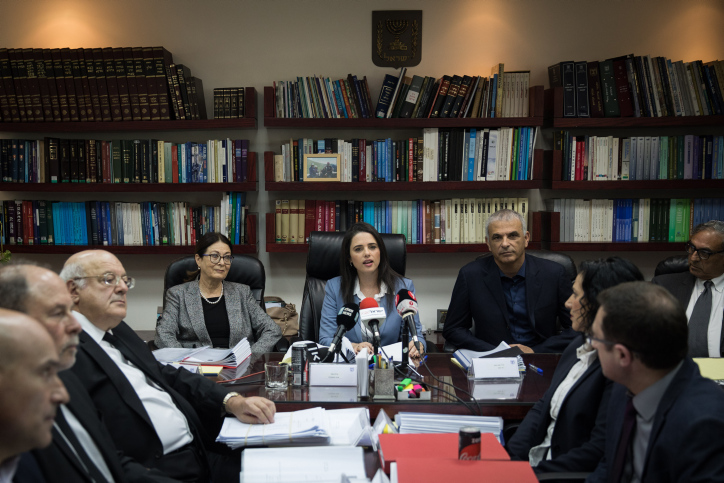
The government’s far-reaching judicial reform will reportedly overhaul the Judicial Selection Committee, giving the coalition absolute control over the selection of Israel’s judges, including those appointed to the Supreme Court.
According to an unconfirmed report by Channel 12 news, the plan is to expand the committee from its current nine members, adding another minister and another lawmaker selected by the government, while also replacing the two Bar Association representatives with two “public representatives” to be appointed by the justice minister.
As before, a majority of seven panel members will be required to nominate a judge, which means that in the new situation, the government will have a free hand to select whoever it wants using the three ministers, two coalition-appointed MKs and two public representatives.
As it stands, before the change, the three Supreme Court justices on the panel have an effective veto over candidates, and judges must be selected via agreement between them and the coalition representatives. The other panel member is an opposition member.
In addition, the report says the High Court of Justice will only be able to strike down laws passed by the Knesset with the support of 12 of its 15 justices.
The majority needed to override such a decision will be only 61 lawmakers in the 120-member Knesset; this override would not be possible only if the High Court decision was made unanimously.










The Times of Israel Community.