

 From the Liveblog of
Tuesday, April 28, 2026
From the Liveblog of
Tuesday, April 28, 2026
Reports: Yesh Atid, struggling in polls, to get boosted power in merged slate with Bennett
 Add ToI as a Preferred Source on Google
Sam Sokol is a former political correspondent at The Times of Israel. He was previously a reporter for the Jerusalem Post, Jewish Telegraphic Agency and Haaretz. He is the author of "Putin’s Hybrid War and the Jews"
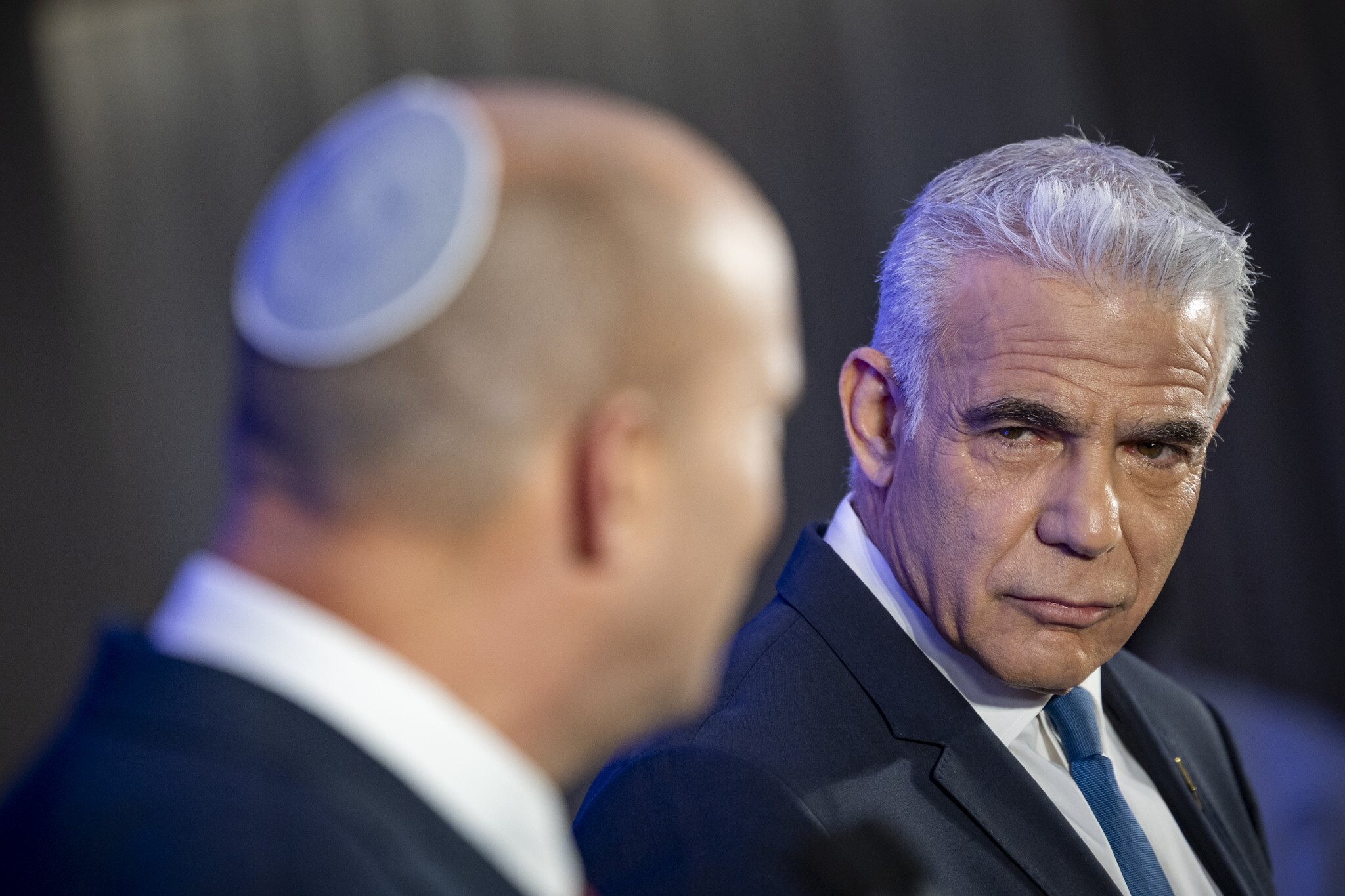
Opposition Leader Yair Lapid’s Yesh Atid party is set to receive 12 out of the first 29 spots on his joint electoral slate with former prime minister Naftali Bennett, with the rest reserved for representatives of Bennett’s party, Channel 12 reports.
The Kan public broadcaster says Yesh Atid will receive 10 out of the list’s first 24 spots.
This would likely greatly increase Yesh Atid’s power over a scenario in which it runs alone, as the party has been getting a single-digit number of seats in recent polls.
Lapid is planning on splitting from Bennett right after the election, Kan says.
On Sunday evening, Lapid and Bennett announced that they were uniting their two parties into a combined ticket called “Together – Led by Bennett.”
According to Channel 12, there are currently no agreements regarding the allocations of Knesset or cabinet positions, and the currently expected division of spots on the joint electoral list is dependent on Yashar! party chairman Gadi Eisenkot declining to join their alliance. Should Eisenkot become part of Together, Yesh Atid may only receive 12 out of the top 40 spots on the list, the network reports.
Lapid told Bennett this morning that he was willing to take third place, rather than second, on their joint electoral slate if it would help secure a broader merger with Eisenkot, a source close to Lapid said.
A source close to Eisenkot dismissed Lapid’s offer to join the new union despite the fact that Eisenkot was first reported to have proposed a merger in January.
“That’s not the point at all. We’re only interested in what will bring victory to the bloc,” the source told The Times of Israel this morning.
Kan also reports that Eisenkot had recommended that Lapid and Bennett engage in in-depth talks to resolve their policy disagreements — presumably in order to create a true unified party rather than just a technical alliance — but that they preferred to merge quickly rather than engage in protracted negotiations.








The Times of Israel Community.