

 From the Liveblog of
Monday, September 9, 2013
From the Liveblog of
Monday, September 9, 2013
Syria renouncing arms shows strength, official says
 Add ToI as a Preferred Source on Google
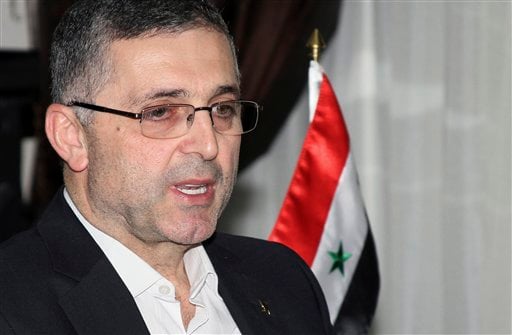
Syria’s acceptance of a proposal to relinquish its chemical weapons stockpile should not be interpreted as a concession or sign of weakness, a senior government official said Wednesday. Damascus’ agreement, he added, has removed one of the pretexts for foreign airstrikes against Syria.
Cabinet minister Ali Haidar said Syria’s chemical weapons, which he described as “the nuclear of the poor,” was meant to achieve strategic balance against Israel, “an enemy that we’ve been fighting for more than 60 years.”
He said there was now “a new kind of strategic balance” in place, and consequently Syria can afford to relinquish its stockpile as part of an overall plan and “not out of fear of any enemy.” He declined to elaborate.
Haidar spoke in an interview with The Associated Press in Damascus as tense negotiations began on a proposed UN resolution that would put Syria’s chemical weapons under international control and end a diplomatic stalemate over a deadly Aug. 21 suspected poison gas attack.
The plan for Syria to give up its arsenal, believed to be one of the deadliest in the world, appeared to ease the crisis over looming Western strikes against Bashar Assad’s regime in Damascus, only to open up new potential for impasse as Moscow rejected US and French demands for a binding UN resolution with “very severe consequences” for non-compliance.
Haidar said the proposal, put forward by the Russians, is still a “broad headline” that needs to be developed. He added that Syria was ready to sign the chemical weapons convention but not if such a move is imposed.
“In broad terms it is ready, but as I said as part of an overall solution and not if it is imposed on us,” Haidar said.
“Syria does not accept to have anything imposed on it and all the steps that some interpreted as concessions are Syrian victories, in the end,” he said.
Asked about the difficulties of implementing the transfer and relinquishment of Syria’s chemical weapons to the backdrop of a raging civil war in the country, he replied: “There was no talk about moving and transferring control. There was talk about putting these weapons under international supervision,” he said.
Haidar said the Syrian leadership has succeeded in taking away a pretext for war but that the treat remains.
“It is a battle of wills between the will for peace and protecting the Syrian people and the will for war against the Syrian people and the region for the sake of Israel,” he said. He added, however, that such details would be left to the experts.
Copyright 2013 The Associated Press




The Times of Israel Community.