

 From the Liveblog of
Tuesday, November 23, 2021
From the Liveblog of
Tuesday, November 23, 2021
UN: Many Lebanese children going hungry, lack good medical care amid crisis
 Add ToI as a Preferred Source on Google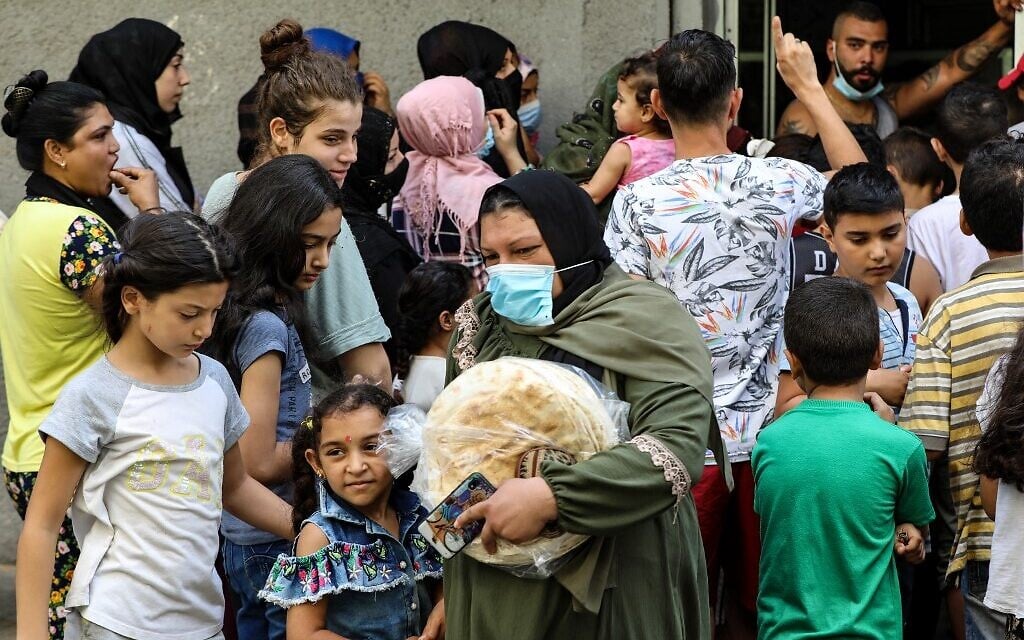
Lebanon’s severe economic crisis has left some children hungry and without good medical care, and forced others to drop out of school to help their families, the United Nations says.
The UN children’s agency report comes as the Lebanese pound trades at 23,500 to the dollar — close to lows briefly reached in the summer — further eroding the purchasing power of families in the small nation. Nearly three-quarters of Lebanon’s 6 million residents, including a million Syrian refugees, now live in poverty, according to the UN.
“Unless we act now, every child’s future in Lebanon is at stake,” saysUNICEF’s representative in Lebanon, Yukie Mokuo.
Lebanon’s two-year economic meltdown is rooted in decades of corruption and mismanagement and has been described by the World Bank as among the worst the world has witnessed since the 1850s. Tens of thousands have lost their jobs since October 2019 while the pound has lost more than 90% of its value.
The situation has been made worse by the coronavirus pandemic and a massive explosion at Beirut’s port in August last year that killed 216 people, including six children, and injured more than 6,000, including about 1,000 children.
“Lebanon is very sadly in free fall and it’s quickly hitting rock bottom,” Mokuo says at a news conference. “This is a crisis of children that threatens to leave almost every child in the country very vulnerable and very much in need.”
New figures released by UNICEF show a dramatic deterioration in living conditions over six months, with more than half of families having at least one child who skipped a meal in September. That compares to about 37% in April.
The agency adds that more than 30% of surveyed families reported cuts in education expenses, compared with 26% in April.
Almost 34% of children who required primary health care did not receive it, up from 28% in April, UNICEF says.
The report is based on child-focused assessments conducted by UNICEF in April and again in October among the same families.









The Times of Israel Community.