

Netanyahu urges ‘national reconciliation’ after ‘challenge’ by Rabin’s son
At memorial marking 22 years since prime minister’s assassination, PM says he is continuing in footsteps of slain leader
 Add ToI as a Preferred Source on Google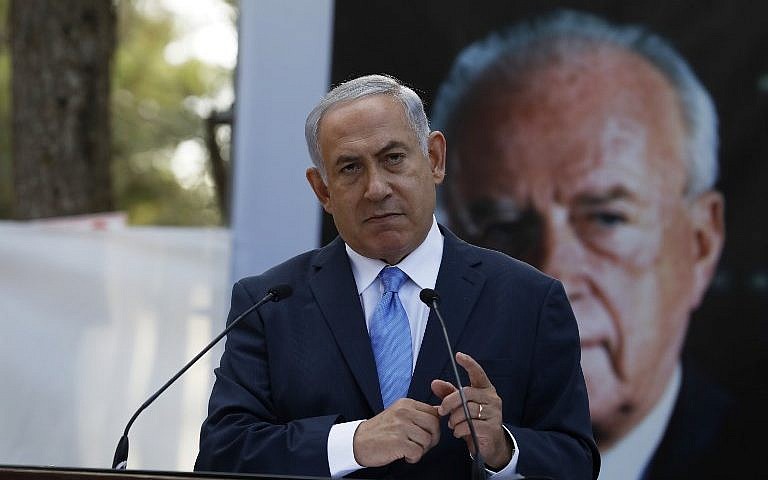
Prime Minister Benjamin Netanyahu on Wednesday called for national reconciliation and unity in response to harsh criticism leveled against him by the son of murdered prime minister Yitzhak Rabin on the anniversary of his father’s assassination.
Netanyahu, speaking in the Knesset at a memorial service marking 22 years since the Rabin’s assassination, directly addressed Yuval Rabin.
“You challenged me, and I took up the gauntlet,” Netanyahu said. “I call for national reconciliation and brotherhood. I have done it many times before, but in light of your moving call, I repeat this message with all my might. I call for unity, based around the security and political principles shared today by the majority of the nation.”
At an earlier memorial for the late prime minister, Yuval Rabin launched a scathing tirade of criticism against Netanyahu, without mentioning him by name.
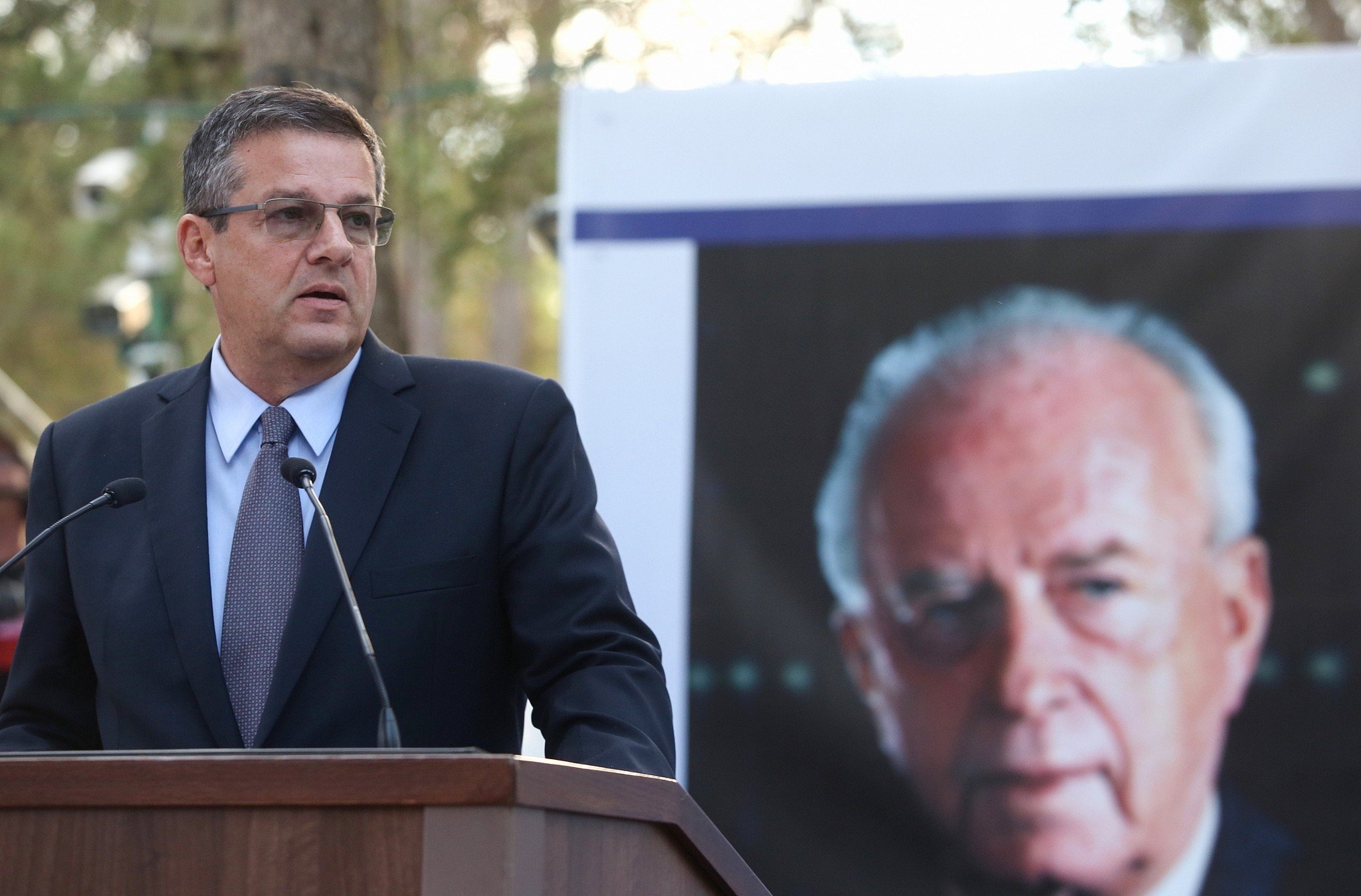
“Yitzhak Rabin did not work against the democratic rights of those who opposed him, or tried to silence those who opposed him,” he said. “He never fled from responsibility and never whined. Those who opposed him most strongly always found his door open when they came to him.”
“Even when he was exposed to waves of the most terrible incitement he was the prime minister for everyone,” he said. “That is not how things are today.
“The list of traitors grows longer every day — from heads of the military, heads of police, heads of institutions whose opinions are uncomfortable to those individuals [in power],” he said. “And there is no one to say, ‘Stop this madness.'”
“It is time for a statement from the house on Balfour Street [the Prime Minister’s Residence] that calls for the total eradication of violence and hatred from our [national] home,” Yuval Rabin said.
Netanyahu has often attacked the media and others for statements perceived as critical of him. Earlier this month, the prime minister claimed that Police Commissioner Roni Alsheich was responsible for leaking information to the media about criminal investigations against him for alleged corruption. The prime minister has also come out strongly against left-wing NGOs critical of Israel, vowing to pass harsher legislation restricting their funding.
Critics have claimed that Netanyahu stoked tensions in criticizing Rabin in the run-up to the assassination.
At the Knesset memorial to the slain prime minister, Netanyahu maintained that his political path is one which Rabin would also have supported, as do the majority of Israelis.
“The fear of both Rabin and myself was that the Oslo agreement would lead to the easing of security and the rise of terror directed at us from the Palestinian territories,” he said.

At the earlier memorial held at Mount Herzl cemetery in Jerusalem where Rabin is buried, Netanyahu blamed the Palestinians for failure to reach a peace deal, saying it was not because of Israel’s actions.
“The reason the Palestinians are not willing to reach an agreement is not because of our positions — because with creativity, it is possible to reach an agreement with them,” he said. “The reason lies in one basic fact — they have not yet accepted the right of the State of Israel to exist.”
The prime minister quoted Rabin, who in his last speech to the Knesset said, “We will not return to the June 4, 1967 lines,” adding that “The Palestinians will be able to lead independent lives in their own ‘entity’… an entity that is less than a state.”
Netanyahu said that Rabin, along with the majority of Israelis today, agreed that Israel must uphold security control in the Jordan Valley and believe Jerusalem must remain under Israeli sovereignty. He added that there was general agreement with a principle formulated by Rabin that no Jews or Arabs should be uprooted from their homes in any final peace agreement.





The Times of Israel Community.