

PA threatens to boycott Israeli produce in response to possible Israeli ban
Agriculture Minister Uri Ariel said to freeze Palestinian fruit and vegetable imports until further notice; PA official denies political motivation to embargo on lamb from Israel
 Add ToI as a Preferred Source on Google
Adam Rasgon is a former Palestinian affairs reporter at The Times of Israel
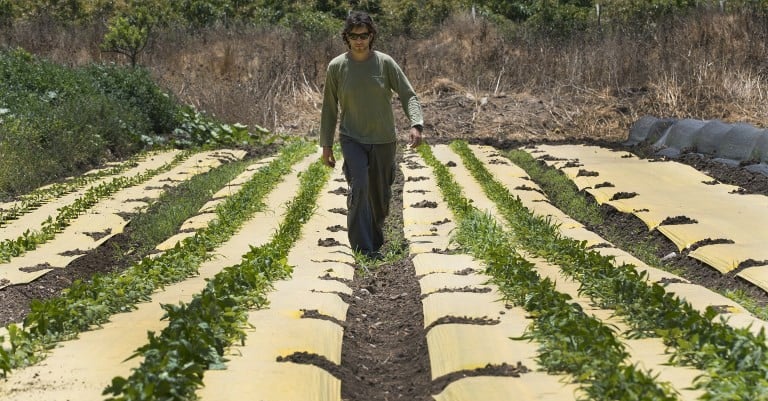
The Palestinian Authority threatened Wednesday to boycott Israeli produce if Israel moves ahead with a reported ban on Palestinian fruits and vegetables.
On Tuesday, Israel’s Hadashot TV news reported that Agriculture Minister Uri Ariel had decided to indefinitely freeze imports of Palestinian produce into Israel.
It was unclear if Ariel’s decision is final and whether it requires the cabinet’s approval for implementation. He made it without notifying the cabinet, security sources told Hadashot.
“If it is proven there is an official Israeli decision to ban [Palestinian fruit and vegetable imports], the Agriculture Ministry will deal with [Israeli fruit and vegetable imports] in kind,” the PA Agriculture Ministry said in a statement posted on its Facebook page.
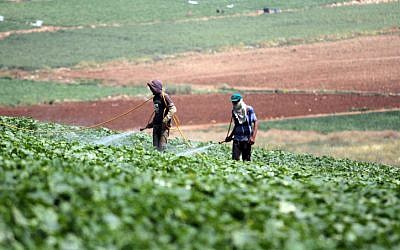
Ariel’s decision, if final, would mean Palestinian farmers would no longer be able to send 280-300 tons of produce each day to Israeli sellers, costing the Palestinian economy as much as NIS 1 million daily, the Hadashot report said, without citing a source.
The move constitutes a “death blow” for the Palestinian economy, a source in the Israeli Agriculture Ministry said to the television station.
Security officials have warned Ariel that his decision could lead to an escalation in violence against Israelis, defense officials told Hadashot.
“This is an irresponsible and populist decision that flows from purely political considerations, and comes at the expense of the public’s safety, including the safety of settlers,” an unnamed defense official told the television station. “It also will encourage smuggling and lead to an increase in prices in Israel.”

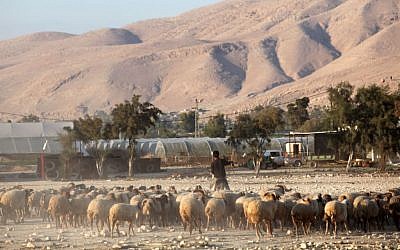
Ariel made the decision after the PA ordered Palestinian meat-sellers to stop buying lamb from Israel — a move that violates standing agreements between Israel and Ramallah, Hadashot reported, without citing a source.
The Civil Administration, a Defense Ministry body that oversees civil affairs in the West Bank and Gaza Strip, told Ariel he was correct that the PA’s ban on lamb imports violated agreements, but informed him of Ramallah’s readiness to discuss the matter, an unnamed official in the Civil Administration told Hadashot.
The Defense Ministry body urged Ariel to give talks with the PA a chance and not to harm the Palestinian economy “at this sensitive time,” the official added.
Last week, Palestinians carried out a string of terror attacks in the West Bank and Jerusalem, resulting in the deaths of two Israeli soldiers and of a baby boy delivered prematurely after his mother was shot, as well as the injuries of several other Israelis.
In its statement, the PA Agricultural Ministry said it banned Palestinian meat purveyors on December 2 from purchasing lamb from Israeli importers.
The ministry said it made the decision after the price of lamb in the Palestinian market fell below its local cost of production.
Tareq Abu Laban, the PA Agriculture Ministry’s director of marketing, said the decision only affected lamb products Israeli merchants import from abroad, emphasizing it did not impact lamb produced in Israel, and was made for economic reasons.
“We made the decision after many local lamb farmers asked us to stop foreign lamb imports. We did it to protect our farmers,” he said.
Abu Laban also denied the decision was in contravention of agreements between Israel and the Palestinians.










The Times of Israel Community.