

Playing from behind, Israeli flag football draws up a Hail Mary for Olympic kick-off
With limited resources and growing anti-Israel hostility in sports amid ongoing war, the men’s and women’s squads are training hard for a coveted spot at the 2028 Games in LA
 Add ToI as a Preferred Source on Google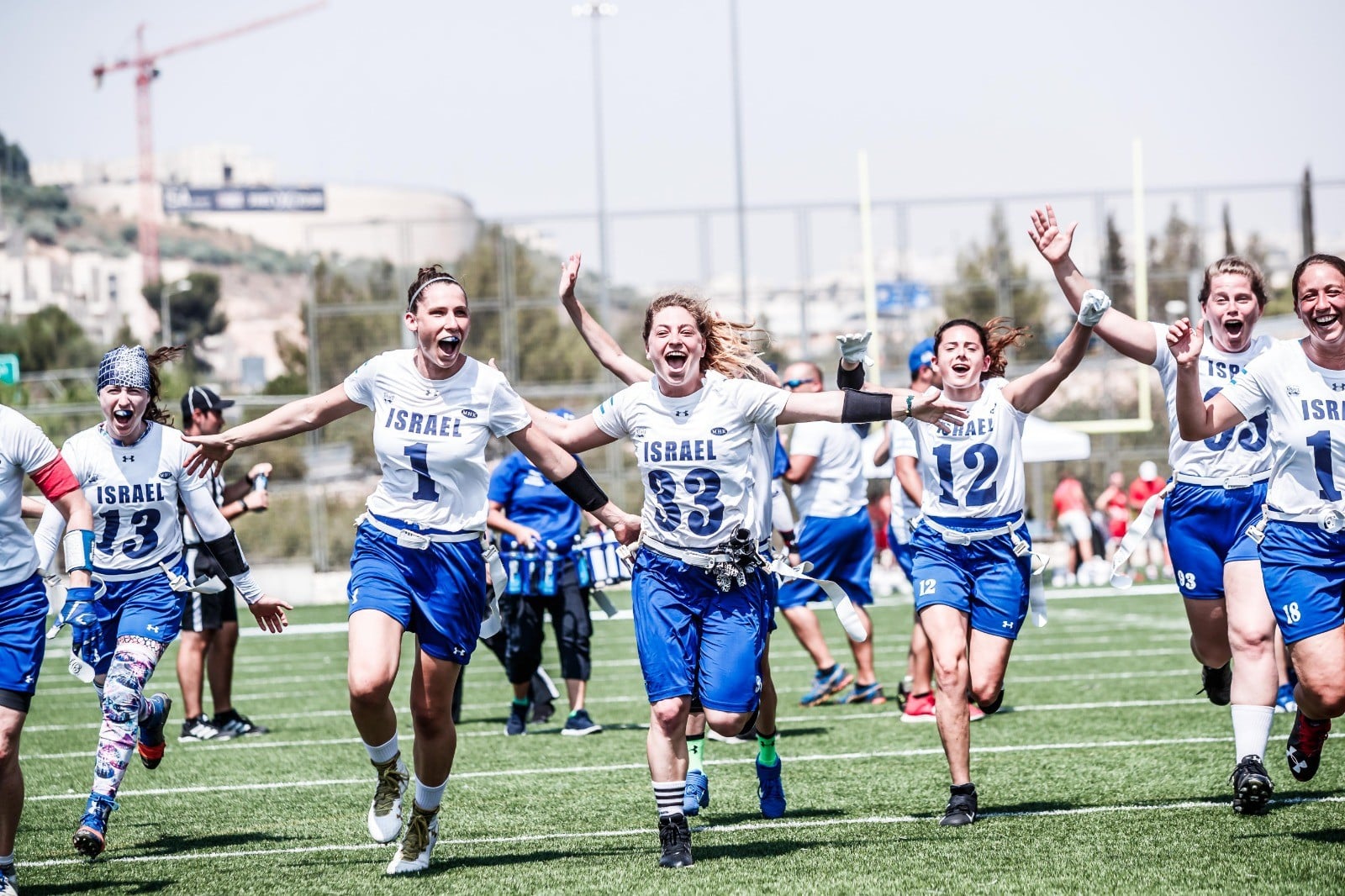
With flag football set to make its debut at the 2028 Olympic Games, Israel’s national teams have their eyes on competing in the inaugural tournament on the world’s biggest stage.
But with the United States as the host country automatically qualifying in both the men’s and women’s competitions, that leaves only five spots for the rest of the world in each six-team tournament — making the road to the Olympics quite the challenge for the blue-and-white.
As of now, the Israeli men’s team is ranked eighth in the world. The women’s team ranks 17th.
“We’re aiming at 2028, so we have to pour everything into our men’s and women’s teams for now,” says Steve Leibowitz, co-founder and president of American Football in Israel (AFI).
For Leibowitz, reaching the Olympics would be the ultimate achievement after promoting the sport in Israel for over four decades. In 1988, Leibowitz co-founded American Touch Football in Israel. What began as a grassroots project has since evolved into AFI — a nationwide flag football program with multiple tackle and flag leagues for men and women, over 2,000 players, and dozens of certified coaches and trained referees.
Flag football is just what it sounds like — a fast-paced, non-contact version of American football in which, instead of tackling a player, opponents pull one another’s flags. While relatively not well known in Israel, where the most popular sports are soccer and basketball, gridiron football is played by 20 million people in 76 countries.
This means that Israel’s national teams are up against some competition in the race to the Olympic Games.
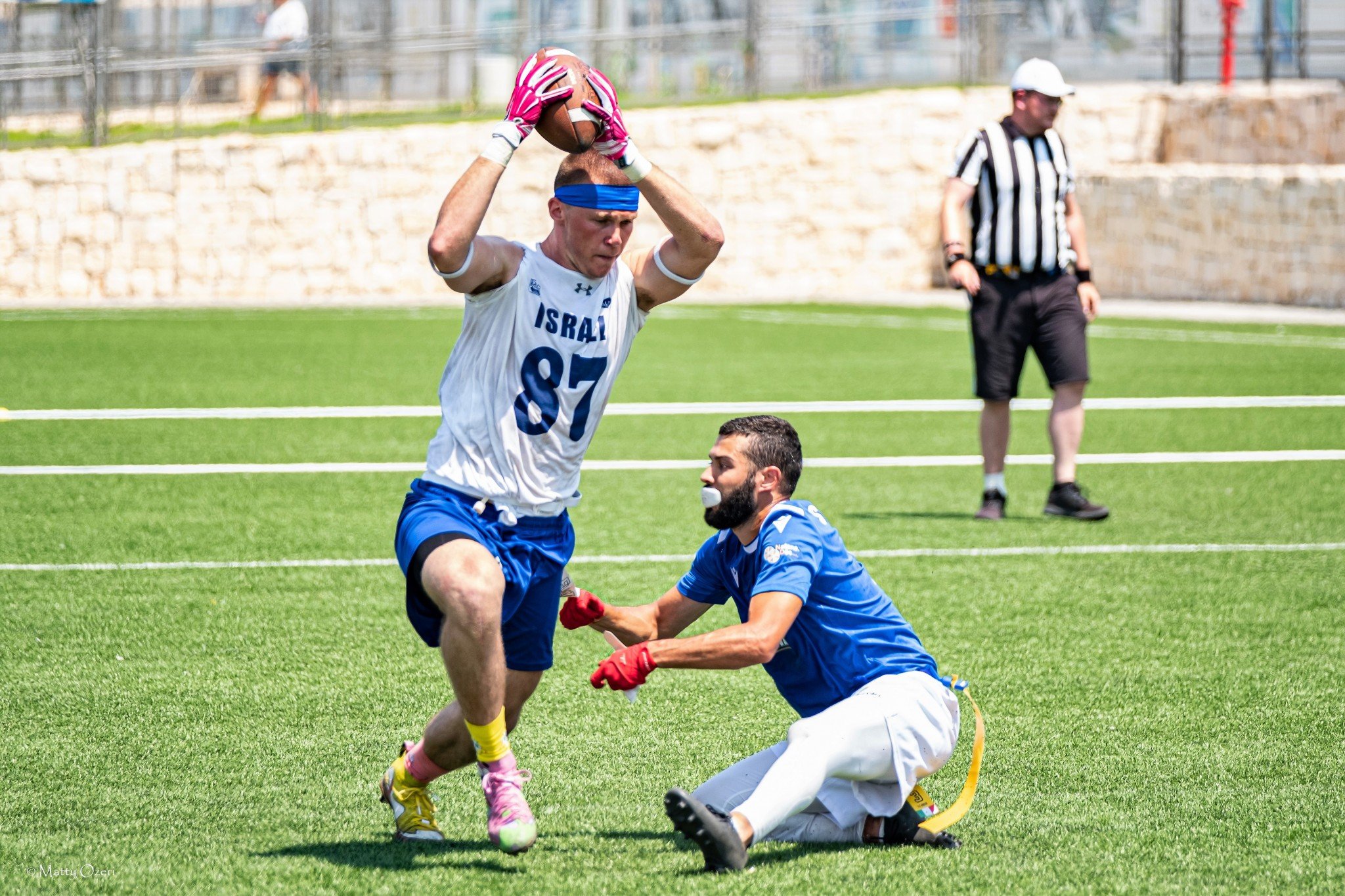
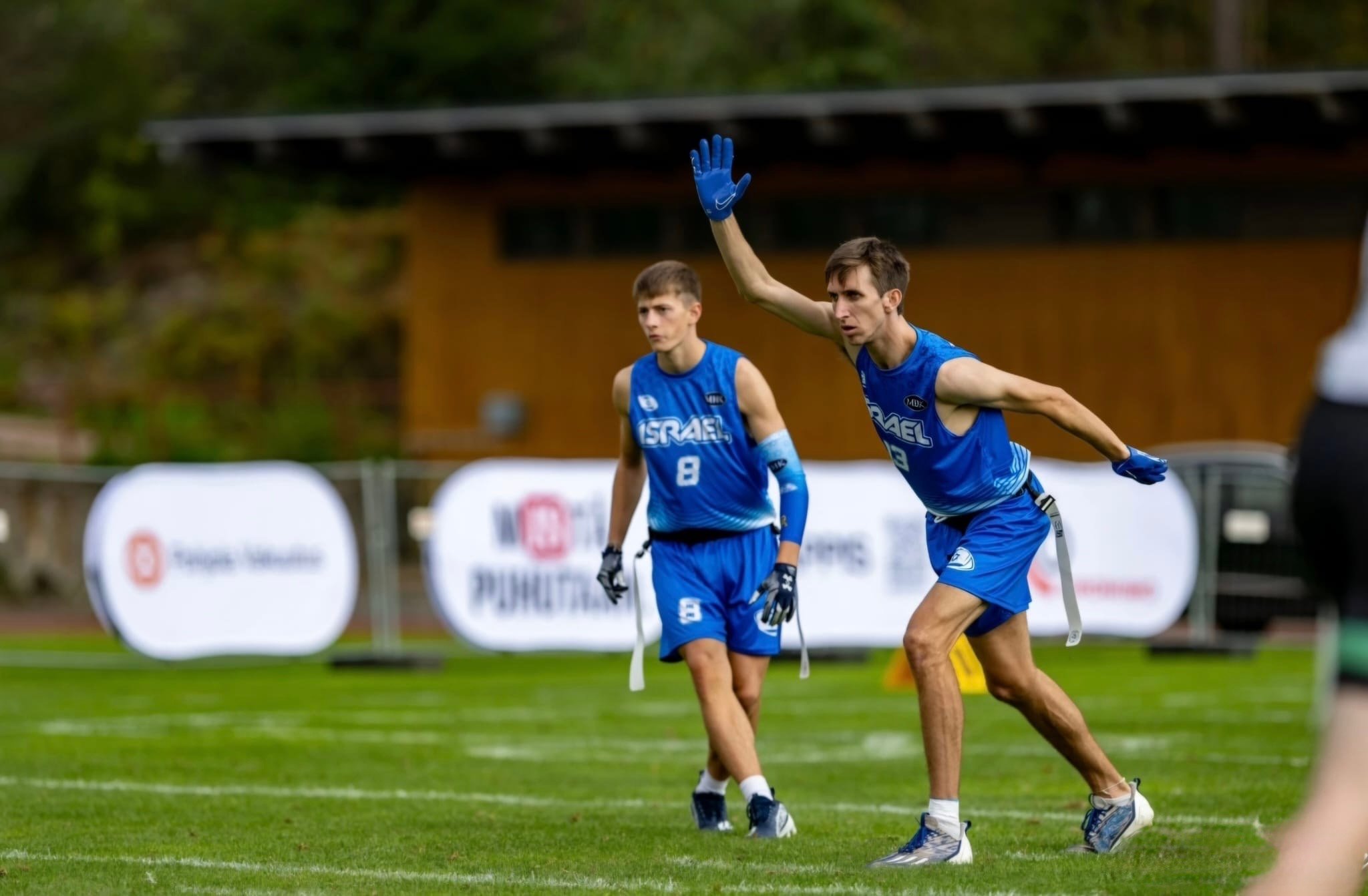
The men’s and women’s national teams are now gearing up for the Euro Flag competition in Paris, set to take place in late September. Making the top five at the Euros would boost Israel’s chances at the World Championships next year and, ultimately, at the Olympics.
“Every opportunity that we have is a shot for us to continue to rack up points and seed higher, which is what we need to qualify for the Olympics in 2028,” says 35-year-old Jordana Weinberg, defensive captain of the women’s national team.

In addition to qualifying for the Olympics — a challenge faced by all teams worldwide — the Israeli squads have another challenge facing them: political instability and a global rise in anti-Israel sentiment.
“Sports are supposed to transcend politics and are supposed to be a place where we can represent the best of the world and the best of society,” says Weinberg, a Dallas, Texas-born personal trainer who is based in Tel Aviv when she isn’t representing Israel on the flag field.
But the politicization of sports dates back to ancient Greece, and Israeli teams have long felt its impact through exclusions, boycotts and anthem-related controversies at international competitions.
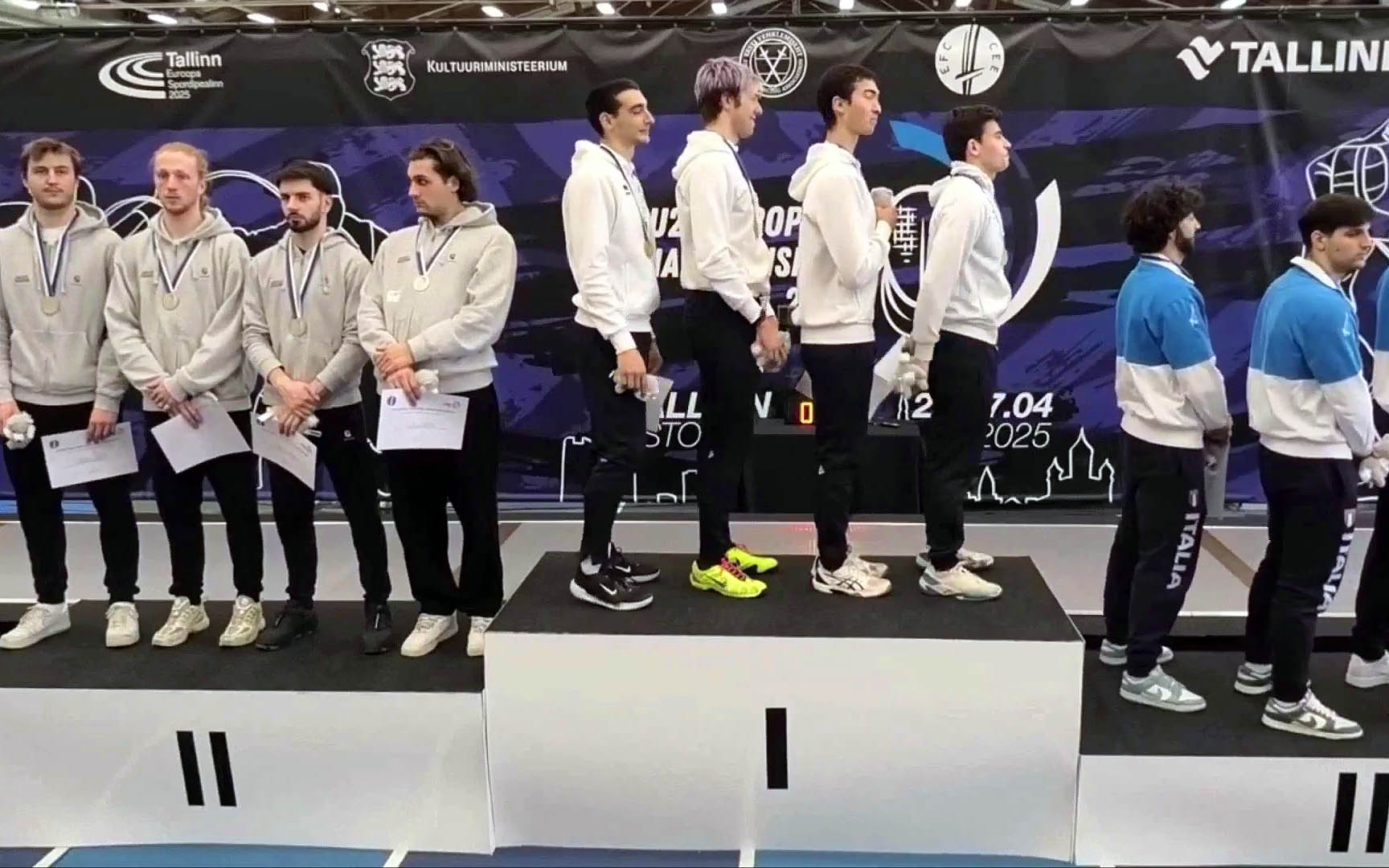
Israel’s youth frisbee team was barred from competition in Ghent, Belgium, in August 2024, reportedly due to concerns of safety for all competing teams; this past April, the second-place Swiss fencing team turned its back on gold medal-winning Israel while the Israeli national anthem was played in Tallinn, Estonia; and Israel’s LGBTQ inclusive rugby team, comprised of both Arabs and Jews, was banned from participating in the International Gay Rugby Union Cup in Oslo earlier this summer because the Norwegian team refused to compete against players who they claimed served as military reservists in Gaza.
Most recently, after the women’s water polo team beat Sweden at the European Championship qualifiers in Slovakia, organizers claimed they couldn’t find the recording of Israel’s national anthem, prompting the team to sing the anthem themselves.
“Politics inevitably mixes in sports,” says Leibowitz, adding that “the involvement has to do with raising our flag.”
While the Israeli flag football teams haven’t directly experienced antisemitism at tournaments, the tension is real. At a June 2024 flag competition in Walldorf, Germany, the women’s national team felt ill at ease.
“It certainly was difficult to be there looking up at all the flags and seeing where there was an obvious gap in the flags when they took Israel down,” says Weinberg, who joined the national team in 2021.

In addition to tensions at competitions, training during war has added another challenge for the Israeli flag players. This June, both teams were supposed to train in Los Angeles alongside other national teams. Then, Israel’s 12-day war with Iran broke out, and flights were canceled as the country’s airspace closed.
“That would have been a great opportunity for our team, our players, who are just really starting to get this experience, to just add to that and learn more,” says Elissa Sagoskin, head coach of the women’s national team.
Blue-and-white football
The road to the Olympics has been in the making for almost 40 years. It didn’t start with stadium lights or roaring crowds, but with a group of American immigrants and a little bit of chutzpah.
In 1988, Leibowitz was working at the Government Press Office, which shared its building with much of the foreign press, when the Armed Forces Radio and Television Service (AFRTS), a broadcast service for American soldiers stationed overseas, put a satellite dish on the roof.
Leibowitz, an avid NFL fan who had difficulty catching the games in Israel, saw an opportunity knocking.
“A buddy, Danny Gewirtz, and I decided to pirate a signal and rent an office space in the building,” says Leibowitz.
What started as a small group charging admission to watch games together sparked the idea for a league.
“Nobody in the country knew how to attach the strap to the helmet. Nobody knew how to put on shoulder pads,” Leibowitz says, laughing at the memory. With a little help from Israel’s future president, Reuven Rivlin — who, prior to his parliamentary career, had served in various management positions with the Beitar Jerusalem soccer club — the group found a field in Jerusalem.
But if Leibowitz was the architect, Robert Kraft, owner of the New England Patriots, was the benefactor who helped turn the dream into reality. The Kraft family’s involvement began by chance. A player who worked as a concierge at the King David Hotel spotted Kraft and told him there was football in Israel, says Leibowitz. Kraft told him to “have the guy in charge get in touch with me.” That simple invitation opened the door to a partnership that would change the future of the sport in Israel.
In 2000, the first official field opened next to Jerusalem’s Gan Sacher Park with the help of a donation from Kraft.

Around that same time, word got out about a group of men in Tel Aviv and Haifa trying to play tackle football.
“They were playing without equipment. No helmets, no pads, no brains,” Leibowitz says, during a recent interview at the renovated Kraft Field in Jerusalem, which will host AFI games beginning this fall.
American high school football coaches visiting Israel stepped in to help run clinics by invitation from the AFI.
“They were Christian, and they were pro-Israel and wanted to, and they were football guys,” says Leibowitz. “And they could. So, they did.”
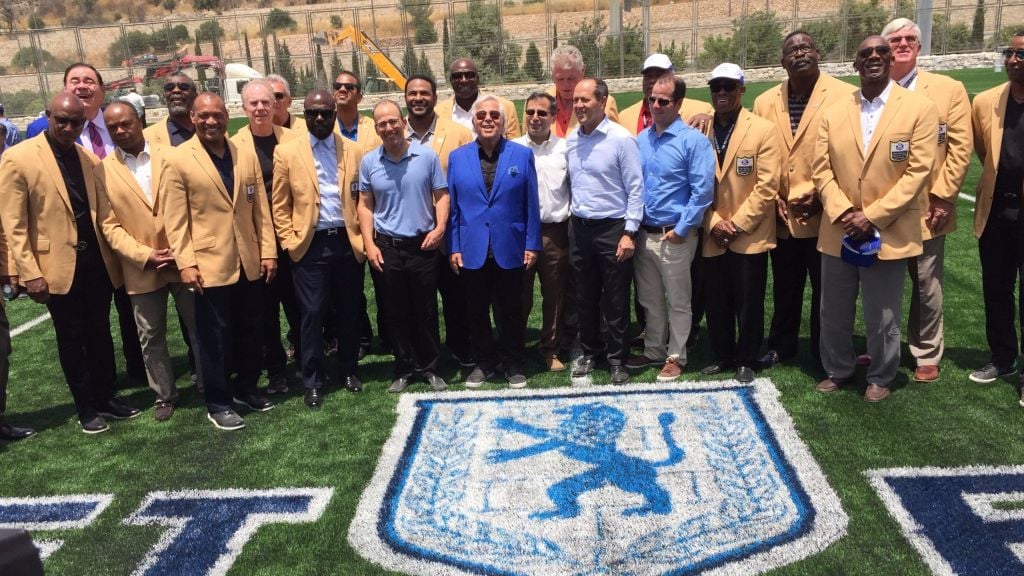
Leibowitz says he approached Kraft again for funds for league operations.
But Kraft’s reply, according to Leibowitz, was: “I’m not sponsoring this. Do it yourself for a year.”
A season later, with pictures and progress to show, Leibowitz was able to get Kraft back on board. Kraft’s support led to new turf to improve the facilities.
Taking pride in the blue-and-white jersey
For players, wearing the Team Israel jersey is a meaningful way to express their Jewish and Israeli identity.
“I think they’ve always appreciated the pride and passion that we represent the country with,” says Sagoskin, who joined the national team as a player in 2006, two years after the women’s team was created. Today, she coaches and works as a personal trainer.
She says pursuing athletic excellence in Israel is not always easy, as the country’s flag football infrastructure doesn’t match the giants of Europe or North America, making Israel quite the underdog when it comes to the sport.
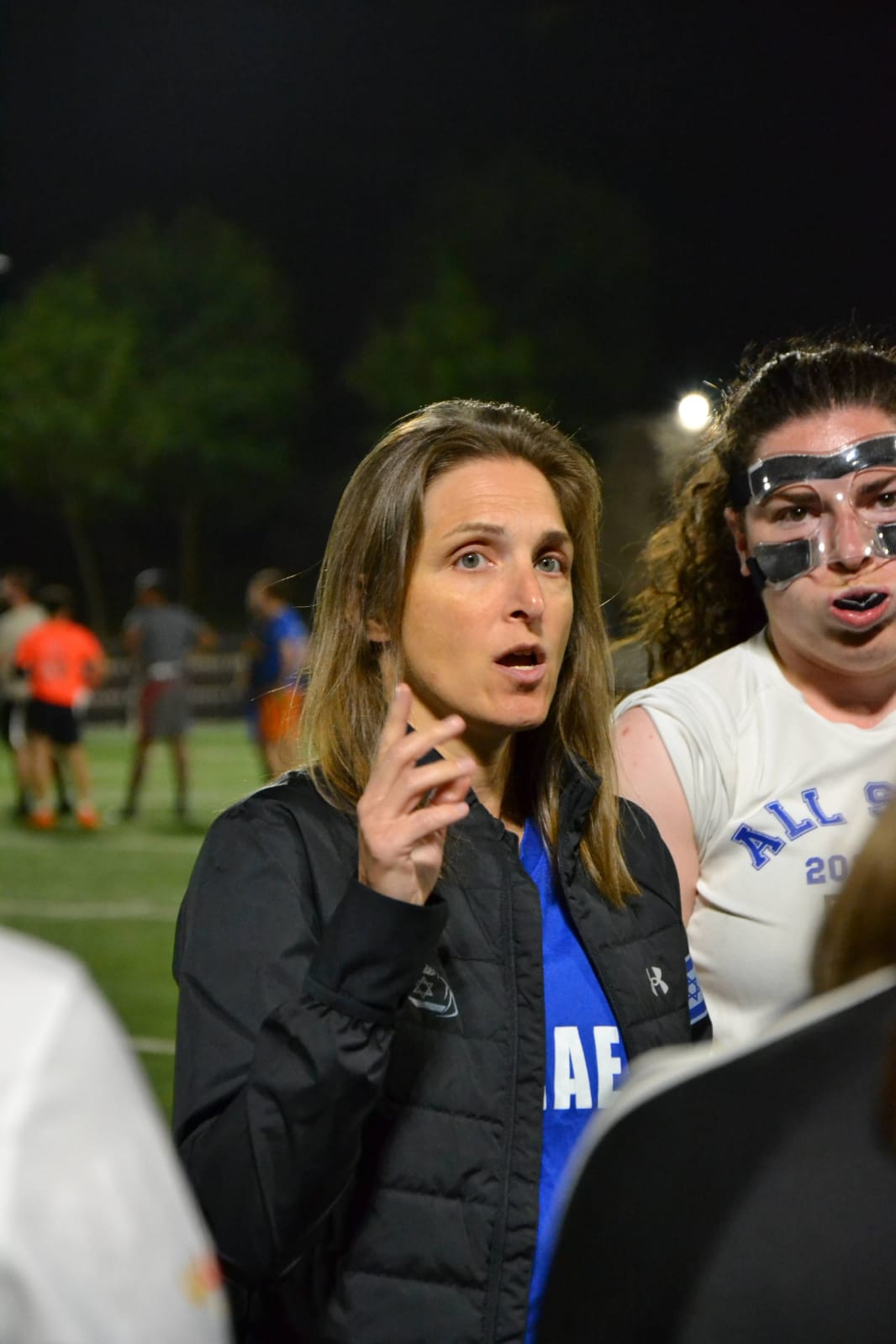
“The development… isn’t on par with the rest of the world,” Sagoskin says, noting that while domestic leagues like the Women’s American Football in Israel (WAFI) and the Jerusalem Men’s League exist, they’re mostly amateur and don’t reach the level of professionalism seen in other countries.
That said, both teams have had successes over the years.
The men’s team won gold in Germany in 2013, silver in Copenhagen in 2017 and bronze at the European Championship in Ireland in 2023.
In 2005, the women’s team won gold in their first-ever international tournament. In 2009, they won bronze at the European Championship in Belfast and another bronze in 2013, in Germany.
For Leibowitz, bringing American football to Israel was his dream project. Now, to see Israel play flag football at the 2028 Olympic Games would be “something that would be written and recorded and kept as my legacy that I’ll be proud of.”
For the Israeli teams, every international tournament counts.
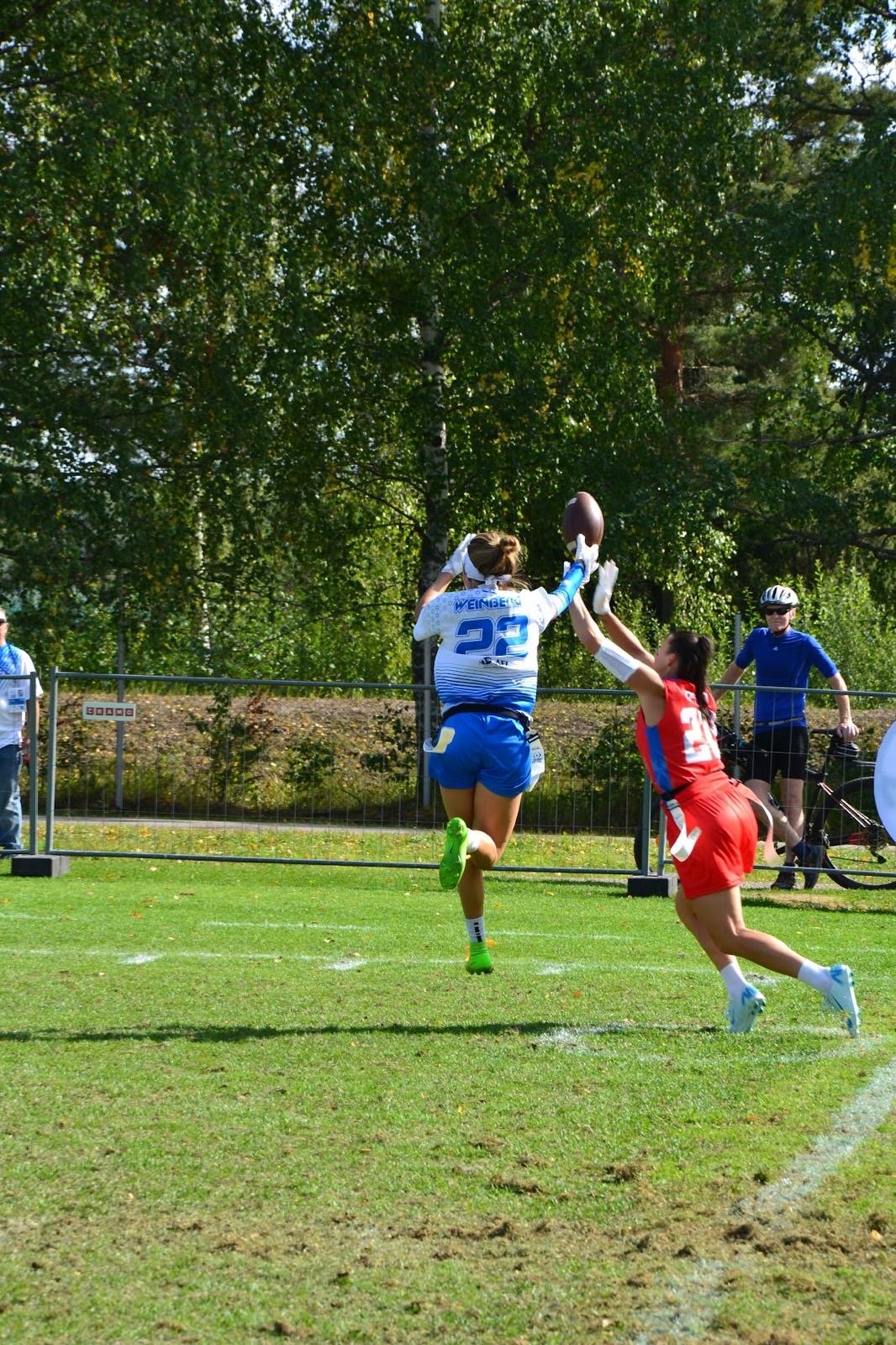
While the women’s and men’s teams are both vying for an Olympic spot, “the men’s shot is better because the amount of improvement that’s needed in a short period of time is going to be tough to overcome for the women,” says Leibowitz.
“As good as they are, we can’t win internationally with only religious players from Efrat [who cannot play on the Jewish sabbath]. We reached out and recruited a number of strong female athletes from other sports,” he adds.
But there’s hope.
“The positive thing is that we’re on our way up,” says Sagoskin, whose team is made up of athletes with backgrounds in multiple sports, such as basketball, soccer, rugby and CrossFit.
“We are a small country with limited resources and limited exposure to this specific sport,” she says. “But when you light the fire of, ‘Is this possible,’ the country that we live in always answers yes.”
This report was written as part of the Art of Journalism seminar at the Communications School, Reichman University.





The Times of Israel Community.