

2 men whose remains were found in north said to have been killed in gangland murder
Media identifies victims as Amid Abu Rukun and Tamer Khayuf, allegedly linked to Abu Latif crime family; pair missing since relatives killed by rivals in Isfiya on April 13
 Add ToI as a Preferred Source on Google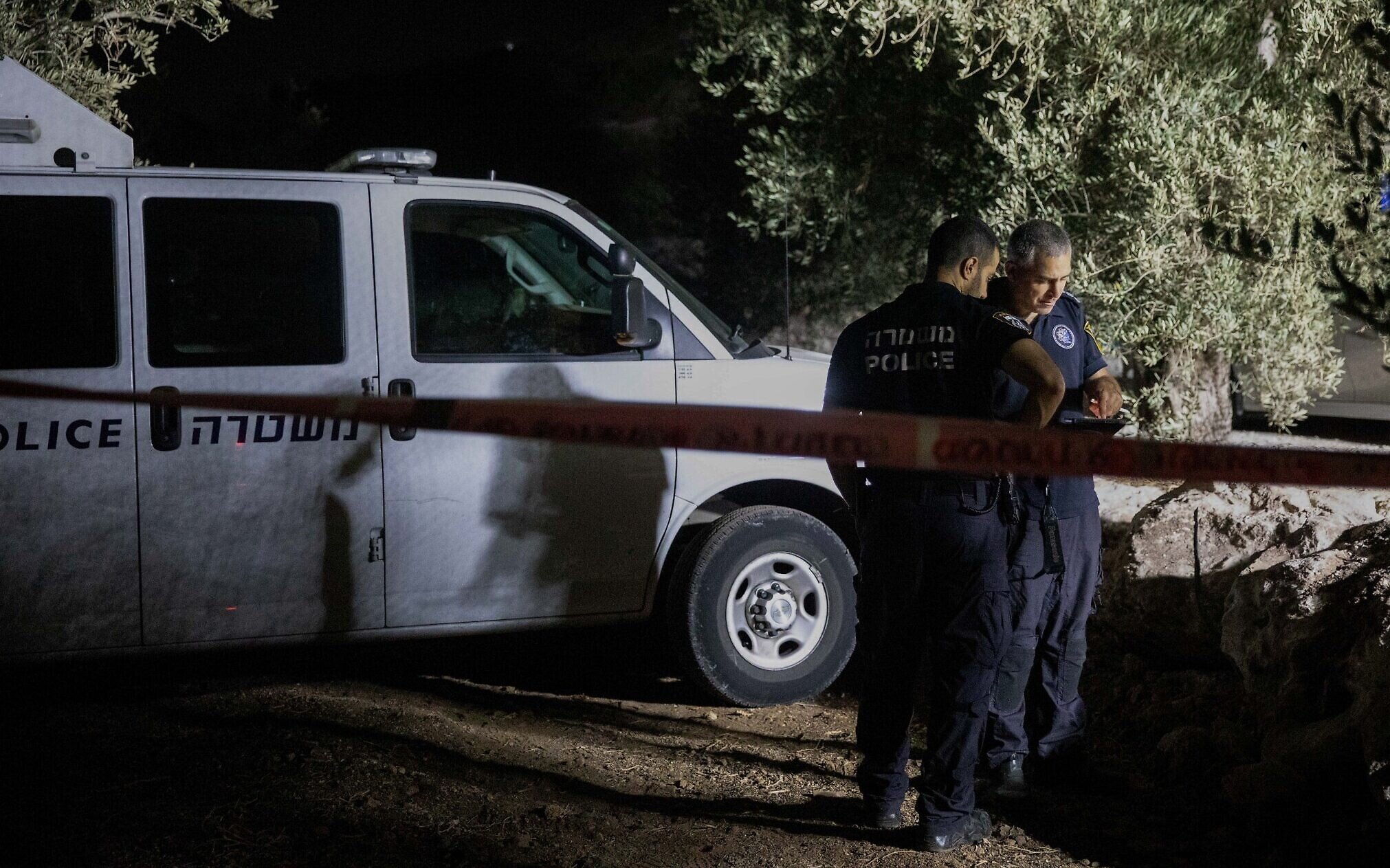
Police said Sunday that they had identified the remains of two men found two days earlier in an olive grove near the northern Arab town of Rameh.
The police statement did not identify the victims by name, saying only that the two men, aged 32 and 34, were from the northern Druze-majority village of Isfiya, near Haifa, and that their remains had been sent for forensic examination.
Hebrew-language media reports identified the two as Amid Abu Rukun and Tamer Khayuf, who had gone missing soon after the April 13 killing of two Abu Latif crime family members in Isfiya.
Abu Rukun and Khayuf were reportedly relatives of the victims and allegedly also associated with the family’s criminal endeavors.
According to the Ynet news site, the two were thought to have been murdered by members of the rival Naimi brothers syndicate, and another gang.
The news site said that police suspected Abu Rukun and Khayuf had been spying on their relatives’ assailants before being themselves abducted and killed.
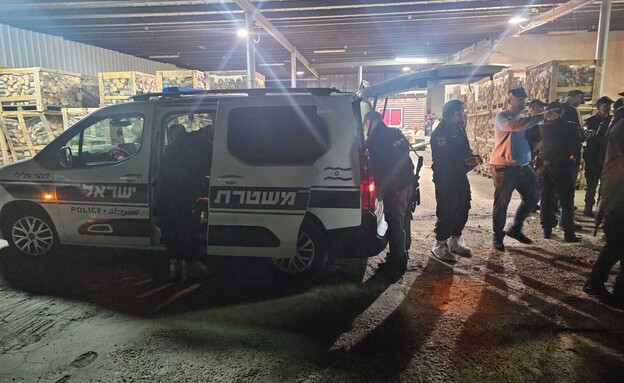
The Kan public broadcaster said that police were investigating the possibility that Abu Rukun and Khayuf had decided to join a rival gang, and were killed by the Abu Latif family in a violent reprisal.
The pair’s remains were discovered Friday in a Rameh-area olive grove, whose owner first noticed a pungent odor coming from what he at first thought was an animal carcass, which he tried to burn, Ynet reported.
When the olive grove owner realized they were human remains, he alerted police, the report said.
The Abraham Initiatives, a coexistence watchdog that tracks violence in the Arab community said in a statement that Abu Rukun and Khayuf’s death raised to 66 the number of Arabs who have lost their lives in violent circumstances since the start of 2024. Of these, Kan added, 19 were killed in April.
The increase in homicides, particularly in northern Israel, has been attributed to power struggles among gangs that were previously hobbled by aggressive policing following two wide-ranging plans implemented by the last government under then-prime minister Naftali Bennett.
Many Arab Israeli community leaders put the blame for the rising murders on police, who they say have failed to crack down on powerful criminal organizations and largely ignore the violence, which includes family feuds, mafia turf wars and violence against women.
The communities have also suffered from years of neglect by state authorities. More than half of Arab Israelis live under the poverty line, and their cities and towns often have crumbling infrastructure and poor public services. The government issues economic rankings to all the country’s cities from 1 to 10. Almost no Arab city scores higher than 5.
Meanwhile, authorities have blamed burgeoning organized crime and the proliferation of weaponry, while some have pointed to a failure by communities to cooperate with law enforcement to root out criminals.
More Arabs were murdered in 2023 than in any previous year, according to a year-end report published by the Abraham Initiatives.
The report by the Abraham Initiatives, which has worked extensively on relations between Israel Police and Arab Israelis, roundly blamed the sharp uptick in homicides on far-right National Security Minister Itamar Ben Gvir, who has been convicted of incitement to racism and supporting a terror organization over anti-Arab placards, and whose ministry is responsible for policing.







The Times of Israel Community.