

Report: US military has plan to deploy largest bomb against Iran if fighting resumes
GBU-43/B, dubbed ‘mother of all bombs,’ could be used, CNN reports; Trump jokes he may have killed ‘too many’ Iranian leaders as Tehran accuses US of fomenting unrest
 Add ToI as a Preferred Source on Google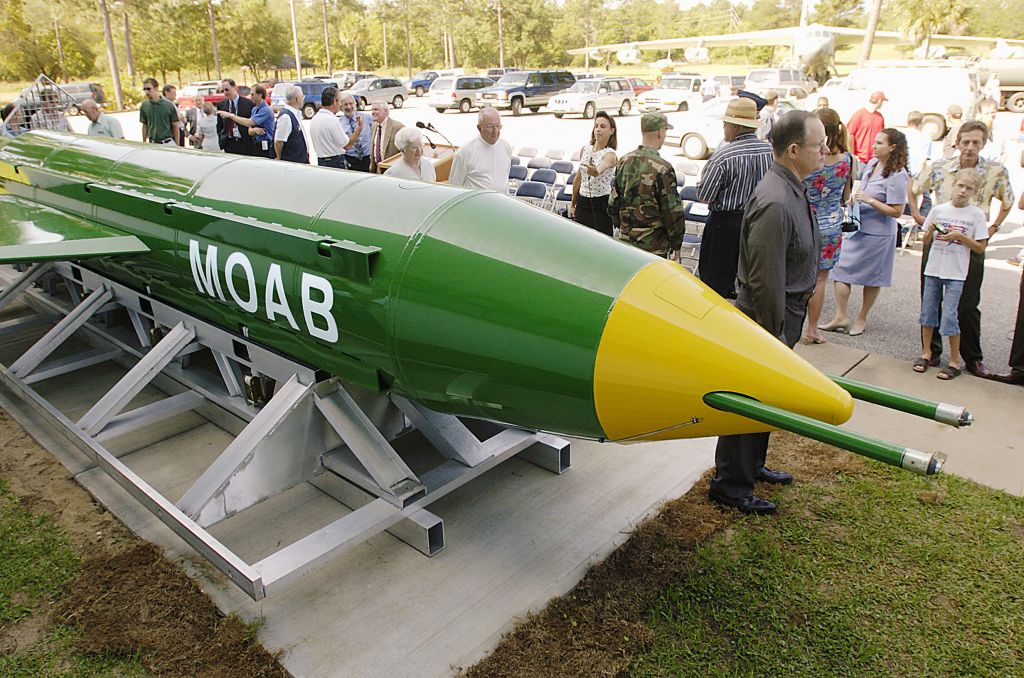
The United States is considering using its biggest non-nuclear bomb against Iran if US President Donald Trump should decide to renew combat in the war that has hit a deadlock, CNN reported Thursday.
The military is planning for the potential use of the GBU-43/B Massive Ordnance Air Blast (MOAB) bomb — better known by its nickname, the “Mother Of All Bombs” — to target Iranian energy infrastructure and nuclear sites, according to the news outlet, which quoted officials familiar with the matter.
Weighing 9,500 kilograms (10 tons), the bomb is deployed by rolling it out of the back of a cargo plane.
The potential use of the largest non-nuclear bomb in the US arsenal would mark a significant escalation in the conflict, although officials familiar with military planning discussions told CNN questions remain over its effectiveness in achieving Washington’s strategic objectives.
Trump is trying to boost his low approval ratings ahead of November’s midterm elections, with polls showing the unpopular war in Iran and the rising fuel costs and other price hikes it has caused are hurting his Republican Party.
Diplomatic efforts to end the conflict, which erupted with US-Israeli strikes on Iran in February, have been at an impasse since the summer.
The GBU-43/B MOAB, known as the “Mother of All Bombs,” is seen detonating in Afghanistan on April 13, 2017, during its only known combat use.
The 21,600-pound conventional bomb was dropped on an ISIS-K cave complex in Nangarhar Province, targeting tunnels and hideouts used by… https://t.co/UrY1D0PNGT pic.twitter.com/AkAzmscled
— War Monitor (@WarMonitors0) October 15, 2026
But officials have raised doubts over the efficacy of the bomb if it were deployed, particularly its ability to destroy suspected underground nuclear sites in the Islamic Republic.
“The MOAB is a massive information operation type weapon that is great for huge area clearance but not much else,” a source familiar with the plans told CNN. “It is definitely not designed as a deep penetration warhead.”
In 2017, the US military in Afghanistan dropped the “MOAB” to target Islamic State group hideouts in a complex of tunnels and bunkers, killing more than 90 militants. It also destroyed some deep underground tunnels, according to Afghan army officials at the time.
There are also concerns over the possibility of civilian casualties from such a huge weapon.
Washington has in recent weeks dialed back military operations against Iran in favor of economic pressure.
The US and Israel have said the war was necessary to prevent Iran from acquiring nuclear weapons. Tehran has long denied pursuing such a goal, but has enriched uranium to levels a short step from weapons-grade and which have no civilian use.
A ceasefire in April and an interim deal in June have fallen apart, but a return to full-scale fighting has yet to occur.
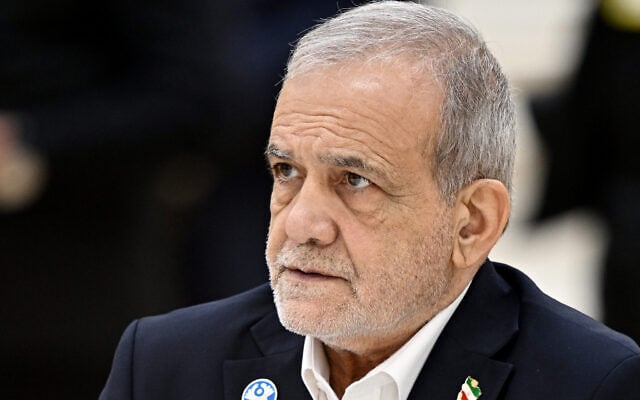
Iranian President Masoud Pezeshkian said Thursday that the country was facing its most intense blockade since the 1979 Islamic Revolution, accusing the US of seeking to provoke public protests.
“Over the 48 years since the Revolution, we have never faced such an intense blockade, war and difficulties as we are facing now,” Pezeshkian said in a speech broadcast by state television.
He accused Washington of seeking to make life difficult for Iranians in order to fuel public anger and trigger unrest.
Pezeshkian said the US was focusing its efforts on making “the people become upset and face difficulties, and then for social protests to emerge so that they can achieve their sinister objectives.”
The US imposed a blockade on Iranian ports in response to Tehran’s closure of the strategic Strait of Hormuz after the fighting started, diverting or stopping vessels traveling to and from Iranian ports.
Iran has repeatedly accused the US and Israel of fomenting unrest inside the country, and in recent months has executed several Iranians accused of collaborating with its foes.
In late December last year, protests over the cost of living erupted in Iran, spreading nationwide and evolving into a wider anti-government movement. Iran’s rulers blamed the US and Israel for the unrest and cracked down hard on the demonstrations, killing thousands and potentially tens of thousands in the streets.
Trump joked Wednesday that he had taken out too many of Iran’s leaders during the war with the Islamic Republic during an appearance at a campaign rally in Arizona ahead of the midterm elections next month.
President Trump said he "probably went a little too far" by taking out Iranian leaders during the war and Iran made him promise "not to take out any more."
"I might've gone too far," he told rallygoers in Arizona on Wednesday. "I don't know who the hell to deal with." pic.twitter.com/4Cn3Dw0yia
— CBS News (@CBSNews) October 14, 2026
While talking about the Iran war, the president started polling the crowd, asking facetiously if any of them would like to be the new leader of Iran.
Joint US-Israeli strikes early in the war took out Iran’s supreme leader Ayatollah Ali Khamenei and much of its top echelons of leadership.
“So I probably went a little too far. I’m sorry, because I don’t know who the hell we’re dealing with anymore, but that’s going to end very soon,” Trump said.
He also suggested during the rally that people who leak information about the government, including about the timing of strikes in Iran, “should be shot.”
“In my opinion, leakers should be shot,” he said. “In the old days, we used to shoot leakers, you know?”
He went on to call people who leak “the scum of the earth” and said they should be “dealt with very, very strongly.”
Iran’s parliament speaker said Wednesday that the country must be prepared for war even as it negotiates with the US.
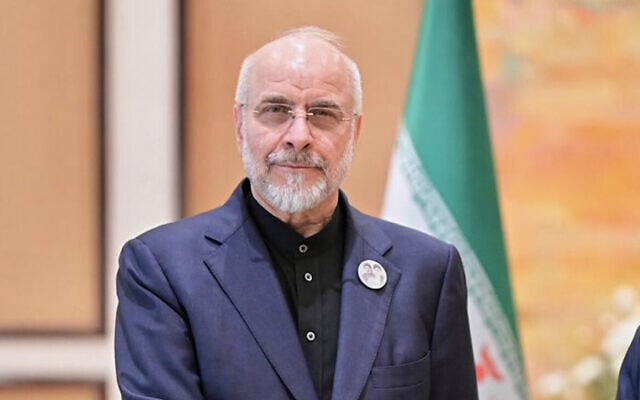
Mohammad Bagher Ghalibaf said in a televised speech that his country’s main concern is preventing the United States from attacking again. But he added that a signed agreement with Washington is no guarantee.
“They break their promises,” said Ghalibaf. As a result, he said Iran must be prepared to fight “against a bullying enemy,” and “we must truly fight courageously on the battlefield.”
“That is when we will have achieved sustainable deterrence,” he said. “America must be punished. America must change its behavior. It must understand that it has to come to terms with the Iranian people.”



The Times of Israel Community.