

Rescue efforts in Nepal resume amid fears of higher Israeli death toll
Three Israelis confirmed killed after blizzards and avalanches hit Himalayas; Nepalese report says more missing
 Add ToI as a Preferred Source on Google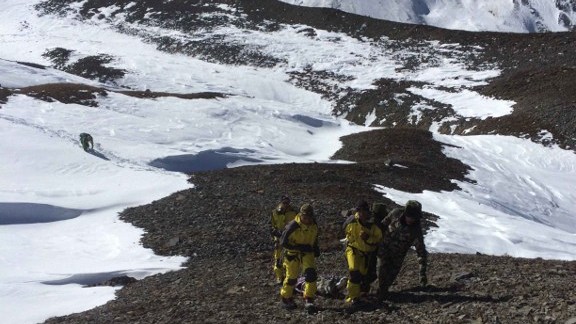
KATHMANDU, Nepal — Rescuers widened their search Friday for trekkers in Nepal’s northern mountains who were stranded since a series of blizzards and avalanches battered the Himalayas early this week leaving at least 29 people killed, officials said.
Among the dead are three Israelis, though Nepalese reports bolstered fears that more Israeli trekkers may have been killed in the snow.
The chief government official of Mustang district, Baburam Bhandari, said helicopters resumed searches Friday to find the stranded trekkers and were covering a wider area. Trekkers were still stranded in small lodges and huts dotted along the Annapurna trail and hiking was difficult because of up to waist-deep snow and difficulty in following the trail.
The three Israelis confirmed killed were named Thursday as Agam Luria, 23; Nadav Shoham, 30; and Tamar Ariel, 24. Ariel was the first religious woman to become an Israeli Air Force combat navigator.
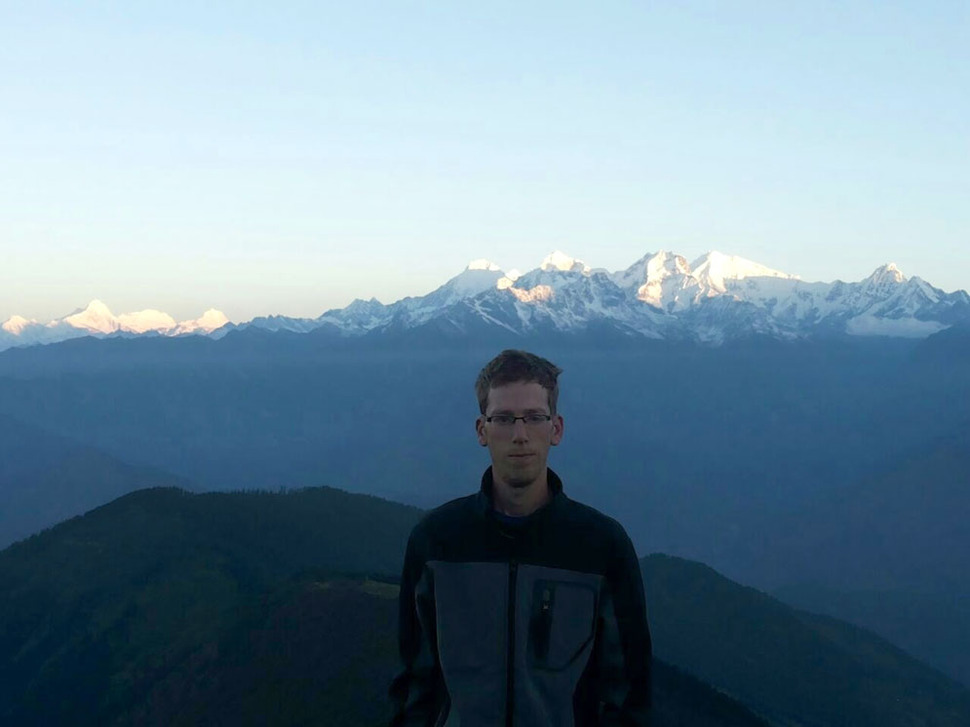
There were fears for a fourth Israeli, who had not been heard from since Tuesday’s avalanche.
Nepalese daily the Himalayan Times put the death toll of Israelis at 6, Friday morning, and said a dozen more were unaccounted for, citing an Israeli-run tour company.
However, the Israeli Foreign Ministry did not confirm the report, Israel radio reported.

Rescuers have already pulled out 78 trekkers from Mustang district and 157 from neighboring Manang District since rescue efforts began on Wednesday.
Two trekkers from Hong Kong and 12 Israelis were airlifted Wednesday to Kathmandu, where they were being treated at a hospital.
Most of them were treated for frostbite. Seven Israelis were expected to be released Friday, the Israeli envoy in Nepal, Yaron Mayer, told Israel Radio.
The survivors said they took refuge in a small tea shop along the path.
“I was sure I was going to die on the way to the pass because I lost my group, I lost all the people I was with and I could not see anything,” said Linor Kajan, an injured Israeli who said she was stuck in waist-deep snow.
“One Nepalese guide, who knows the way, saw me and asked me to stay with him. And he dragged me, really dragged me, to the tea shop. And everybody there was really frightened,” she said.
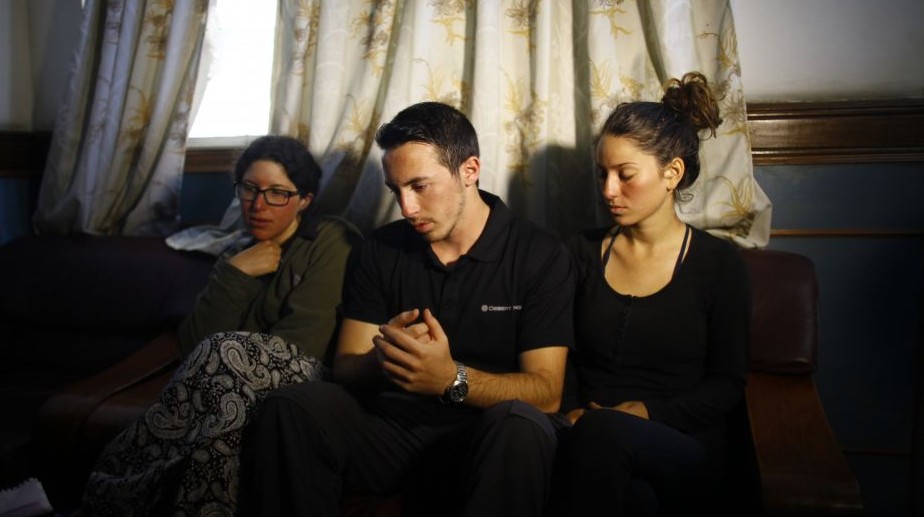
Another Israeli survivor, Yakov Megreli, said they tried to stay awake in the tea shop to stay warm.
“We tried not to sleep. We tried not to get hypothermia. It was a very frightening and awful situation,” he said.
Both talked to reporters outside a hospital in Kathmandu where survivors were brought.
The blizzard, the tail end of a cyclone that hit the Indian coast a few days earlier, appeared to contribute to an avalanche that killed at least eight people in Phu village in neighboring Manang District. The dead included three Indian and four Canadian trekkers as well as three villagers, said government official Devendra Lamichane.
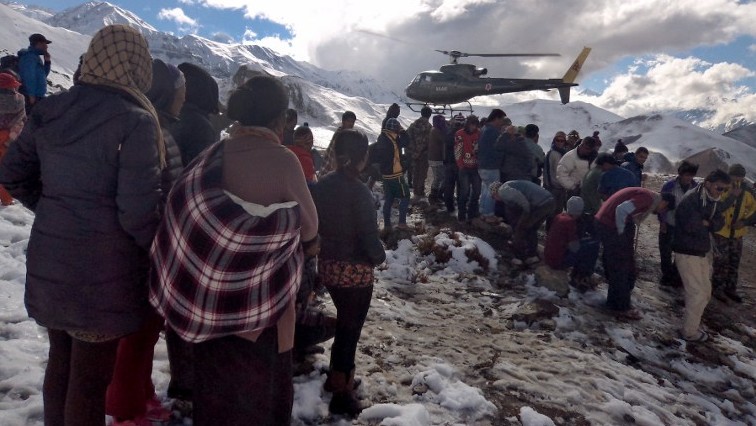
The foreigners’ bodies were buried in up to 2 meters (6½ feet) of snow and digging them out will take days, he said. Three Canadian trekkers who survived the avalanche were taken by helicopter to a shelter in a nearby town.
Bhandari said they planned to help dozens more on Friday as weather conditions were better and the high winds had stopped, allowing more helicopter flights in the area.
The government, meanwhile, announced a high-level committee with two senior ministers that would monitor and coordinate rescue efforts following criticism that the Nepal government was not doing enough to help.
Information Minister Minendra Risal said the committee ordered by the prime minister would directly monitor the rescue operation and help wherever needed. The committee would coordinate between the army, police, local administration and the private operators who are involved in the rescue.
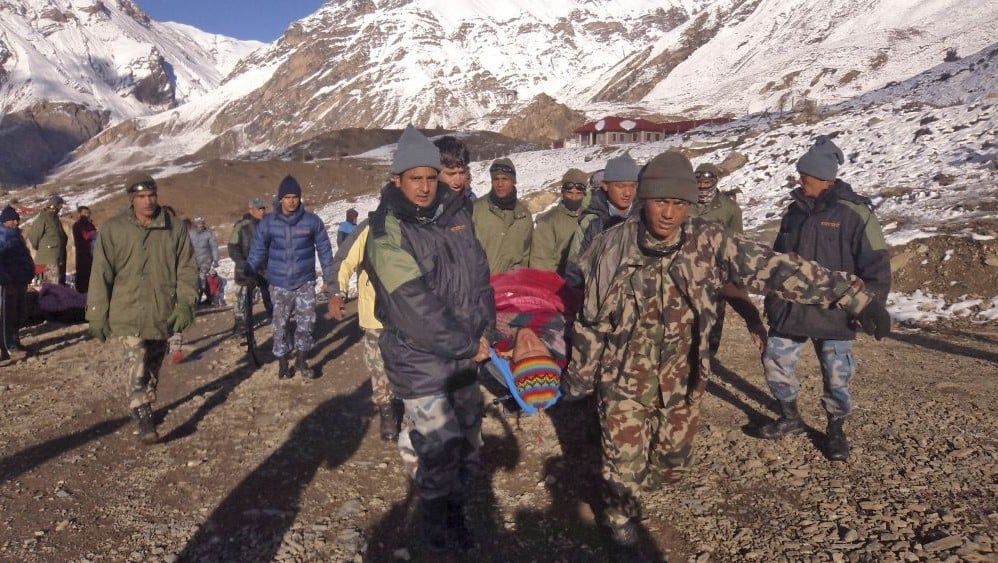
The Nepal government was earlier criticized for not helping enough. It was initially only the army attempting the rescue with their two helicopters on Wednesday and later joined by private trekking operators.
The Annapurna trekking route, 160 kilometers (100 miles) northwest of the capital, Kathmandu, was filled with foreign hikers during the peak October trekking season, when the air is generally clear and cool. There were also many Nepalese on the trails because of local festivals.
Authorities said five climbers were killed in a separate avalanche about 75 kilometers (45 miles) to the west, at the base camp for Mount Dhaulagiri. The climbers, two Slovaks and three Nepali guides, were preparing to scale the 8,167-meter (26,800-foot) peak, the world’s seventh tallest, said Gyanedra Shrestha of Nepal’s mountaineering department. Their bodies were recovered Thursday.
An avalanche in April just above the base camp on Mount Everest killed 16 Nepalese guides, the deadliest single disaster on the mountain. Climate experts say rising global temperatures have contributed to avalanches in the Himalayas.








The Times of Israel Community.