

Road racket killing the mood for birds breeding in half of Israel’s open spaces – study
First-of-its-kind soundscape also suggests that traffic sounds may negatively impact 23% of environmentally protected areas
 Add ToI as a Preferred Source on Google
Sue Surkes is The Times of Israel's environment reporter
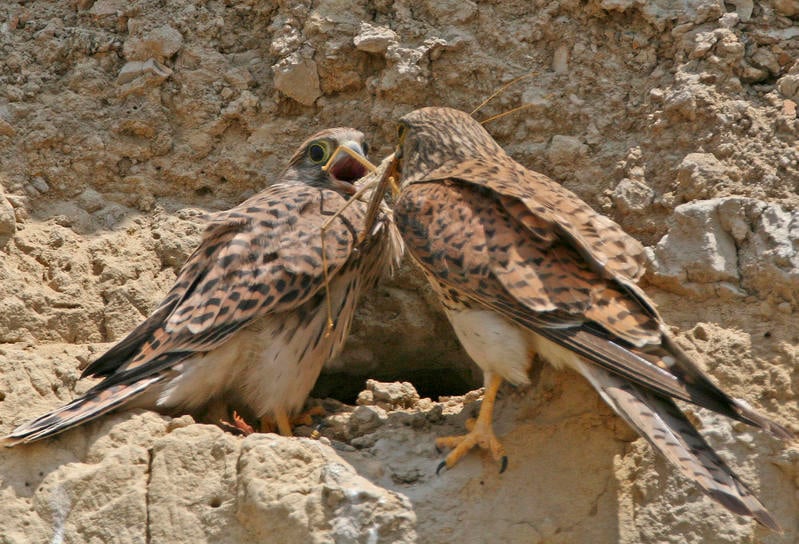
Road traffic noise could be affecting bird breeding in nearly half of Israel’s open space, including just under a quarter of its environmentally protected areas, according to a new study from Ben-Gurion University of the Negev.
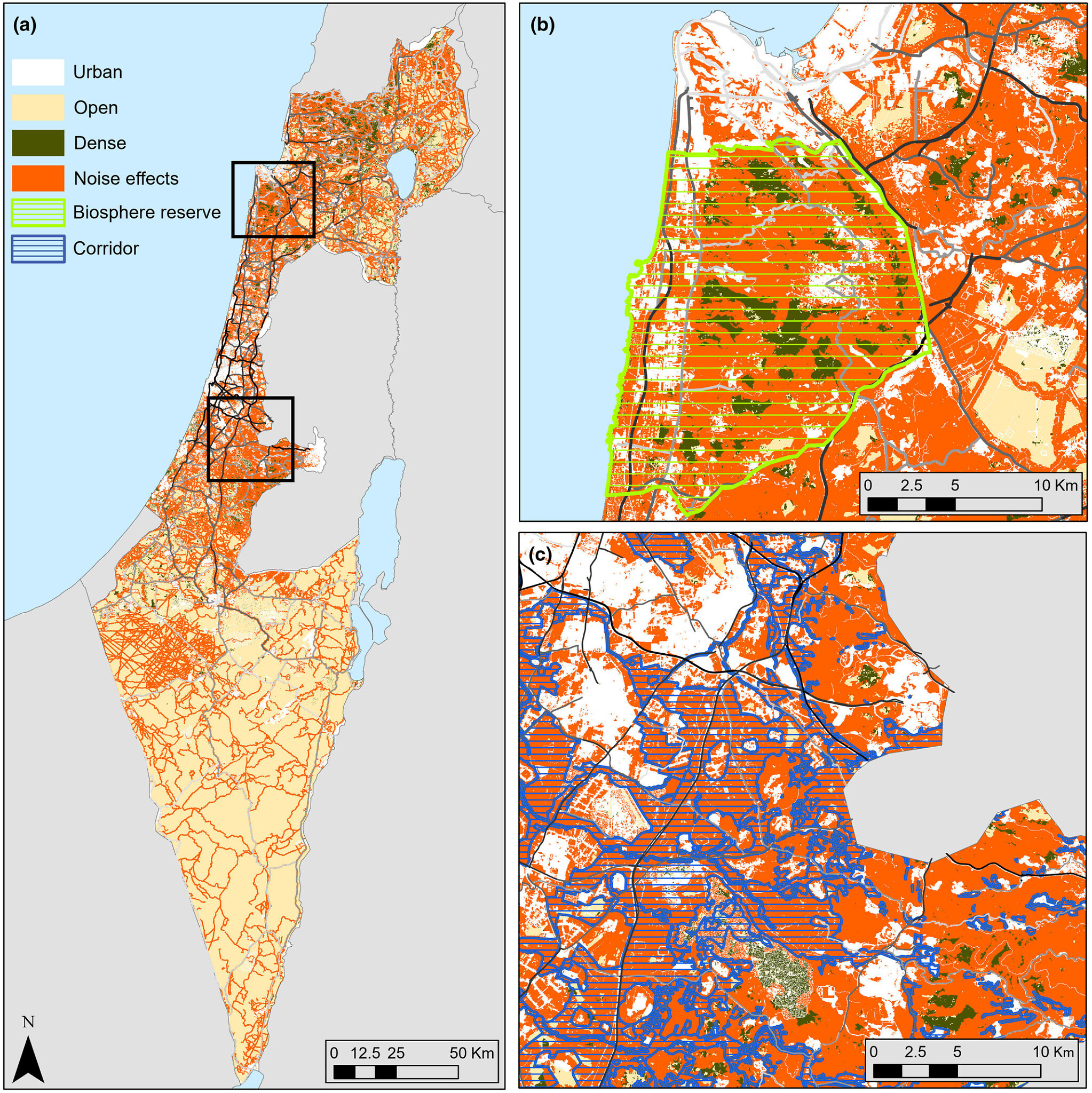
Researchers reached these conclusions by developing what they say is the first wildlife-oriented soundscape map.
Analyzing scientific literature and spatial data, they combined birds’ behavioral responses to traffic noise with the distances at which the birds were disturbed, different traffic volumes, and a variety of habitats across Israel.
The latter, covering 18,903 square kilometers (7,300 square miles), ranged from orchards, dense shrubland, and planted pine forests to fields, grasslands, and wetlands. All monitored habitats were level with a road.
“Exposure to noise pollution is known to disrupt fundamental survival behaviors, including foraging, predator avoidance, and parental care,” said the research, published Sunday in People and Nature. “However, until now, conservationists lacked a tool to quantify exactly how much land is ‘lost’ to these behavioral shifts.”
One of the researchers, Yael Lehnardt, said, “The fact that nearly half of our non-urban environments are losing their appeal to nesting birds should be a wakeup call for authorities. The technology to reduce road noise exists. We just need the policy shift and targeted management to apply it to wildlife conservation.”

Some birds avoid breeding within 3 kilometers (1.86 miles) of roads, the researchers wrote, with variation according to vegetation thickness.
When traffic was low, birds’ behavioral changes were more pronounced in areas of dense vegetation, they found, possibly because the creatures there couldn’t see what was creating the noise and became more stressed. Conversely, in open areas, where there were no trees to act as acoustic barriers, heavy traffic noise impacted more greatly.
The researchers proposed integrating noise-reduction techniques commonly used to protect human residential areas into environmental planning to protect biodiversity. Solutions included improved road maintenance, strategic landscape design, and the creation of acoustic corridors in areas of high ecological value.
“While we can model and map physical noise levels, those measurements don’t tell us directly how an animal experiences its environment,” said Lehnhardt, who carried out the research with Dr. Gopal Murali. “By adapting soundscape mapping, a method usually used by urban planners to measure human subjective experience, we can finally see the world from the perspective of the animals.”
Prof. Oded Berger-Tal, who supervised the research together with Prof. Uri Roll, said, “Expanding this research to other species and noise sources will help us identify where noise is causing ‘invisible damage.’ This is a critical step in promoting policies that treat noise as a primary environmental pollutant.”
The study was supported by the Israel Nature and Parks Authority, the Israel Science Foundation, and the US-Israel Binational Science Foundation.










The Times of Israel Community.