

Social equality minister roundly panned for plan to divert Arab economic development funds
May Golan says $1 billion will be used to fight crime wave, but reps from 7 government offices tell Knesset panel the minister is coopting cash meant to fix root cause of problems
 Add ToI as a Preferred Source on Google
Ariela Karmel is a political correspondent at The Times of Israel. She previously reported for Calcalist and Haaretz. She holds an MA in Middle Eastern and African History from Tel Aviv University and a BA in Political Science from the University of British Columbia.

Social Equality Minister May Golan has proposed diverting NIS 3.1 billion ($960,000) from programs aimed at boosting Arab economic development and sending to the National Security Ministry, the Israel Police, the Shin Bet intelligence service and her own ministry.
The planned transfer comes as Golan is being investigated by police for fraud and misusing public funds, leading some critics to claim that the move represents a conflict of interest and describe it as a kickback. There is no evidence of any link between the probe and the transfer, which supporters say is necessary to address the ongoing crime wave rocking Arab communities.
Her proposal states that the funds will be used to “address crime and violence in Arab society,” but the money will be taken from a five-year program designed to bring Arab communities on par with Jewish counterparts in areas such as housing, policing, and economic development after decades of neglect.
Arab community leaders have expressed strong opposition to the proposed cuts and have long accused Golan — known for her anti-Arab and anti-migrant rhetoric — of refusing to implement the plan since taking over the ministry last year by freezing funds; firing the ministry’s director, who was charged with executing the five-year plan; and halting the standing committee that oversaw the allocation of the plan’s budget.
The groundbreaking NIS 30 billion ($8.3 billion) program was created in 2021 under the short-lived Naftali Bennett-Yair Lapid-led government, with the Social Equality Ministry bearing most of the responsibility for implementation.
The vast majority of the redirected funds would go to the National Security Ministry and the Shin Bet, with most of the allocations spread across 2025 and 2026.
Funds will be used to establish a national police unit to address “mid-level crime in Arab society,” for technological upgrades and digital integration within law enforcement, and for a new national intelligence unit targeting organized crime in the Arab sector.

NIS 305 million ($93 million) will go to Golan’s Social Equality ministry to establish a team tasked with integrating Arab youth in academia, employment, and national civil service.
This is not the first initiative by the firebrand Likud minister to divert funds from the five-year program for the Arab community, following a previous move in March when she cut NIS 66 million ($18.2 million) from the program’s allocated budget.
Yesh Atid MK Meirav Cohen, who spearheaded the five-year program during her own tenure as social equality minister, has accused Golan of “working systemically to eliminate [the] program.”
“I was very proud to lead this program, and we reached over 90% implementation when I was minister for social equality,” said Cohen, who now chairs the Knesset Committee on the Status of Women, speaking during an emergency session she convened to discuss the proposed cuts last week. “As a result, employment rates for Arab women increased by 18%.”
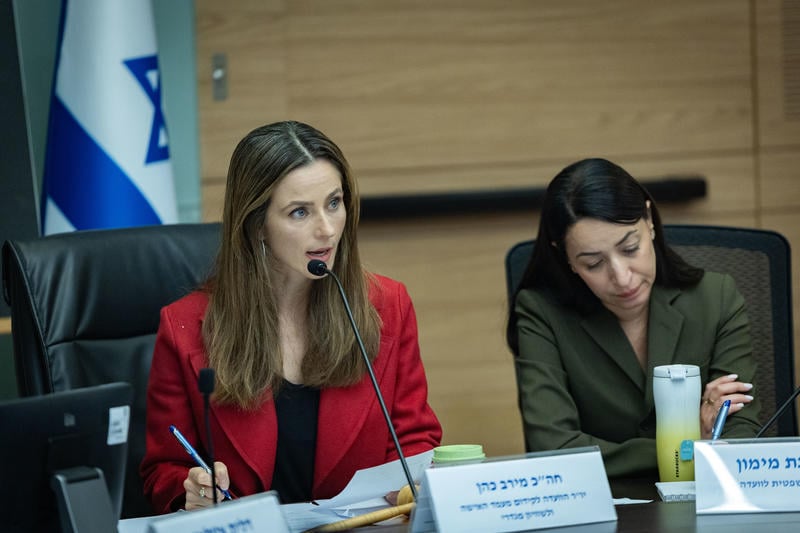
In a rare display of cross-ministerial unity, representatives from all government ministries who attended the committee hearing, including Finance, Education, Science, Justice, Health, Labor and Welfare, voiced their opposition to the cuts and testified during to the program’s significance.
While the Social Equality Ministry coordinates the five-year plan, it does not hold or control all of its funds, and over 20 ministries will lose significant funding if the cuts are implemented.
A representative from the Justice Ministry argued that the proposed budget reallocation “will not only fail to help, but will produce the opposite results. Our programs were built as multi-year programs, and cutting them midway undermines them. We have specific programs in the Arab sector… and it is simply a mistake to halt them at this stage.”
Representatives of Golan’s Social Equality Ministry and Otzma Yehudit chair Itamar Ben Gvir’s National Security Ministry did not attend the session, which opposition MKs said was part of a concerted boycott of the committee led by the two.
Cohen confirmed to The Times of Israel that both offices refused to attend and have been unwilling to cooperate with the committee.
Golan declined a request for comment.
Unanimous condemnation
Public affairs director at the coexistence organization Abraham Initiatives Yanal Jabarin appeared before Cohen’s committee to defend the program.
He later told the Times of Israel that the proposed cuts would “directly harm the ability to improve the quality of life in core areas of Arab communities: education, personal security, health, employment and infrastructure.”

Jabarin also firmly rejected Golan’s effort to frame the reallocation of funds as part of an effort to combat the ongoing crime wave in Arab communities.
According to Jabarin, “in the midst of an unprecedented wave of violence rooted in ongoing governmental neglect, choosing to cut instead of invest is an irresponsible step that destabilizes social stability and harms 20% of the country’s citizens.”
The Arab community has been demanding action over the skyrocketing murder rate in the Arab community for years. As of November 25, 233 people have been killed in the minority community — a nine percent increase from the record-setting year of 2024, according to the Abraham Initiatives.
Police have failed to solve most murder cases in the Arab sector, allowing violent crime to go unpunished, with many community leaders and opposition figures blaming police negligence and Ben Gvir, whose two years in office have seen murder rates in the Arab community soar to their highest ever.
While underfunding of police in Arab communities has been a frequent criticism, Arab leaders question why it must come at the expense of a program crafted in close consultation with them and municipalities and designed to tackle systemic issues driving crime in Arab society, such as poverty, lack of educational opportunities, and limited socioeconomic prospects, apparently with no input from the community most affected.
Jabarin said that in recent months, the Abraham Initiatives has been working with officials in various government ministries and MKs across different parties to halt the proposed cut and “preserve the achievements” of the five-year plan.
“Every shekel removed from the program will cost the state much more in the long term. There is an efficient, responsible and equitable way to manage the budget, but this kind of cut is not it,” he said.
Golan’s critics are also alleging that the reallocation of funds is an attempt to “bribe” police amid a widening police investigation into fraud in her office.
“This move is not a genuine fight against crime,” said MK Aida Touma-Sliman from the Arab-majority Hadash-Ta’al party, who has called the proposed cuts “brazen theft,” told the Times of Israel.
Rather, she said, “Golan is attempting to bribe the police into stopping its investigations of her by transferring funds that were allocated to the Arab population.”

Police raided Golan’s office in September and arrested six of her associates following a probe launched in January that found instances of nepotism at the Social Equality Ministry and dubious fundraising at an anti-migrant organization Golan founded.
Golan is suspected of fraud, misusing public funds for private purposes, creating fictitious positions in the Social Equality Ministry and concealing sources of funding. She is also likely to be questioned on suspicion of accepting a bribe.
The minister, who denies all wrongdoing, has refused to submit to police questioning and reportedly whisked her mother away in the middle of an interrogation earlier this month.
Charlie Summers contributed to this report.










The Times of Israel Community.