

The unbroken chain of Jewish freedom
Across centuries of exile, persecution, and war, the Passover story repeats itself: Jews refusing silence, reclaiming freedom, and carrying the unbroken chain forward.
Every generation of Jews has faced its own Egypt. The story of Passover – from slavery to liberation – is not a single moment in history, but a recurring pattern.
From the destruction of the Temples to the Spanish Inquisition, from pogroms to the Holocaust, each era has demanded its own exodus.
In 1978, Jonathan Davis, now head of the Raphael Recanati International School at Reichman University, experienced this firsthand. Traveling undercover to the Soviet Union as an emissary of the Prime Minister’s Office, he posed as a tourist. He was warned: assume hotel rooms are bugged, guides report to authorities, carry no written lists. His mission was to meet Jewish refuseniks, update them on Israel, and assure them they were not forgotten.
One memory stands out: a Passover Seder in Leningrad. The guest of honor was Yuli Kosharovsky, a gifted engineer imprisoned for requesting permission to make aliyah. He had been released just 24 hours earlier. Around that table, as they sang “Let my people go,” the ancient words felt immediate.
In cramped apartments under constant surveillance, Soviet Jews preserved their identity through quiet defiance – teaching Hebrew in secret, gathering for Seders despite the risks. A year later, Kosharovsky received permission to immigrate to Israel. His exodus was complete.
Fast forward to October 7, 2023. After Hamas’s attack, more than half of Reichman University’s student body was called up for reserve duty.
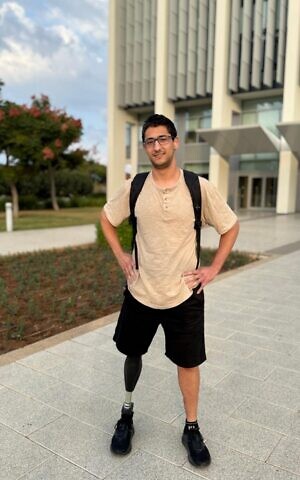
Noam Harush, a first-year Government, Strategy & Diplomacy student, served in the Armored Corps’ 53rd Battalion. After his tank was sabotaged in Gaza, his right leg was amputated below the knee. Following a year of surgeries and rehabilitation, he returned to campus determined to continue. “I feel I have a lot more to give,” he says.
Amit Bar, also studying Government, Strategy & Diplomacy, was injured in Jabaliya when a building collapsed. His right leg was amputated; two commanders were killed meters away. After nine months of rehabilitation, he resumed his studies. “Maybe I can’t defend the country on the battlefield anymore,” he says, “but I can protect it in other ways.”
Their return to lecture halls – between physiotherapy sessions and seminars – is its own form of resolve.
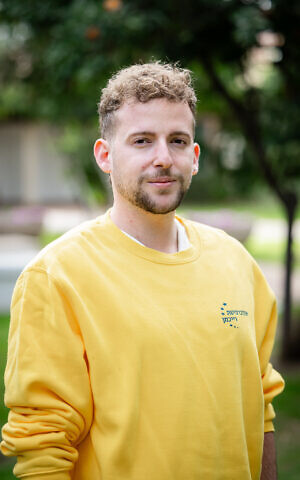
Others navigate a different front. Hila Davidyan, who spent last summer on exchange in Aix-en-Provence, encountered rising antisemitism on campus while serving extensive reserve duty. Shaked Tabib, a third-year psychology student and tank driver, has served more than 500 days since October 7, including in Gaza and most recently Syria. Studying resilience while living it, she says, has reshaped her understanding of both.
Reflecting on that Seder in Leningrad decades ago, Davis sees the same thread running through these moments. “Thirty years later, our quest for freedom and resilience, as well as standing up for ourselves as Jews, is still alarmingly relevant,” he says.
From ancient Egypt to a Leningrad apartment, from Gaza’s battlefields to university classrooms, the pattern holds.
Jewish freedom is rarely handed down. It is asserted – by those who refuse to remain enslaved, whatever the era.
Learn more here