

Through the looking glass: FSU immigrants fret about ‘survival’ of US Jewry
Addressing Russian-speaking Jews, Israeli leaders born behind the Iron Curtain say American Jewry is in more ‘danger’ than Jews in France, Iran, or Ukraine
 Add ToI as a Preferred Source on Google
Marissa Newman is The Times of Israel political correspondent.
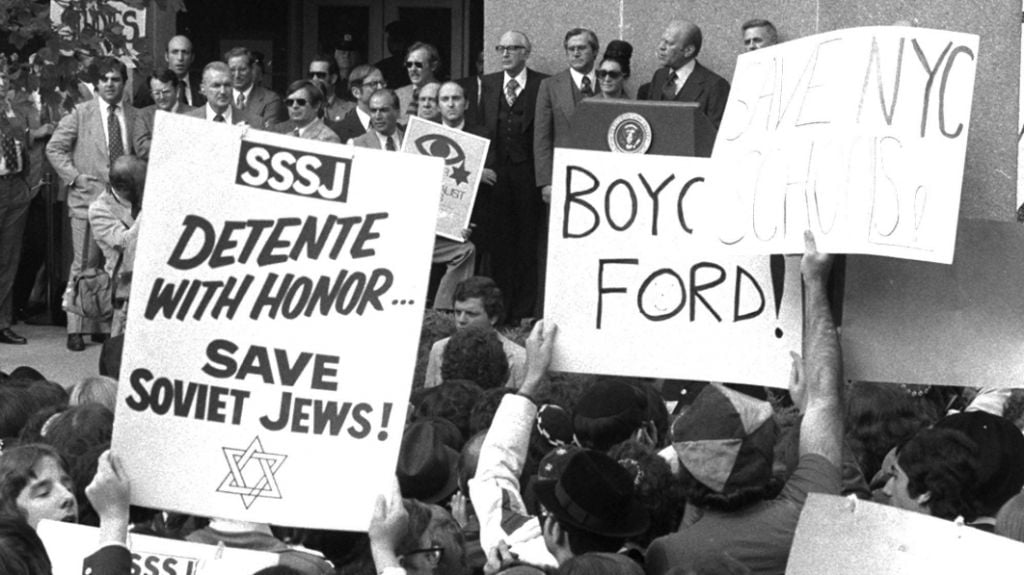
When they stood en masse outside the White House and before the United Nations, the American Jewish activists who lobbied tirelessly for decades for the freedom of Soviet Jews — the freedom to emigrate, the freedom to live as Jews – would have been incapable of imagining a day when immigrants to Israel from the former Soviet Union would fret about the “survival” and well-being of the vibrant, six million-strong American Jewish community.
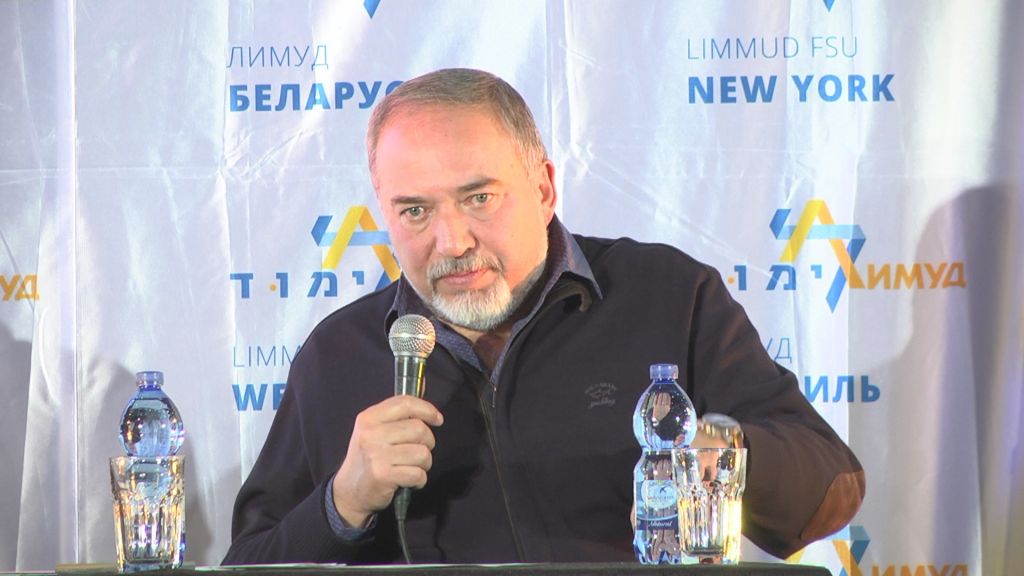
But addressing Russian-speaking Jews at a Limmud FSU conference in the southern Israel city of Eilat over the weekend, Israeli leaders born and bred behind the Iron Curtain did precisely that.
“Whoever saw the last surveys by the Pew Center, the rates of assimilation, the connection between the new generation in the United States to Judaism — not just Israel –” ought to be concerned, declared Israel’s Moldova-born Defense Minister Avigdor Liberman, adding that more-distant attitudes toward the Jewish state were also worrisome.
On the far wall facing the defense minister was an exhibit dedicated to the late Nobel Laureate Elie Wiesel, a small tribute to the Holocaust survivor who was also a former prominent advocate of Soviet Jewry.
“The picture [that emerges from the survey] is very grave,” Liberman warned in his Russian-accented Hebrew. “If we don’t pull ourselves together, in a generation and a half, there will be nearly no Jewish people in the Diaspora, apart from Orthodox communities.”
In photos plastered over several banners, Wiesel’s wry smile looked on.
“We are fighting for the future and the survival of the Jewish people in the entire world — outside of Israel, outside of Orthodoxy,” Liberman proclaimed.
Later, addressing the crowd in his native Russian, Liberman reiterated his concerns about American Jews and maintained that his Yisrael Beytenu party — which is supported by a large base of Russian-speaking voters — looks out for the Diaspora, according to a translation by a participant.
But Liberman wasn’t alone in describing the situation of American Jews as the most precarious in the Diaspora, a characterization that would likely be rejected by many American Jews.
In a lecture on Saturday, Jewish Agency chairman Natan Sharansky outlined the dangers facing Jews worldwide, pointing to an increasingly anti-Semitic France, hostile Iran, uncertain Russia, embattled Ukraine, and war-torn Yemen.
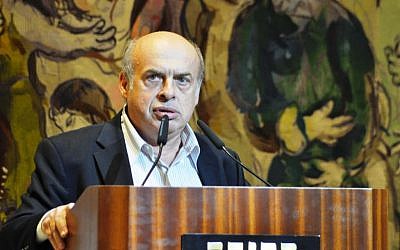
But which Jewish Diaspora community is in the “greatest danger?” the former Soviet dissident asked the crowd. American Jews, he responded, “and we have to decide what we’re going to do.”
Pointing to intermarriage and assimilation rates, Sharansky maintained that if current trends persist, regardless of which definition of Jewishness one uses – whether a Jewish mother, or eligibility for the Jewish Law of Return, or any other definition of Jewishness – we will be “losing” Jews at rates of “hundreds per day,” he estimated.
It starts on campus, he continued, when Jews are confronted with anti-Israel hostility and are taken to task over the policies of the Jewish state. Understandably, many students choose to keep their opinions — or their Jewishness — to themselves and bury themselves in their studies, he said.
Sharansky, who had spoken the evening before about his personal experiences, even likened the trends on US campuses to his early experiences growing up as a Jew in the Soviet Union, pushed to thrive academically and play down his Jewishness.
It reminds me of that, he said.



The Times of Israel Community.