

Netanyahu flew to UAE to ask MBZ to deny giving him pre-Oct. 7 warning of Hamas attack – sources
Both sides confirm trip one day later, but PMO denies it had anything to do with trying to quash report about Emirati leader’s alert; Shin Bet files complaint to military censor, claiming network that revealed trip before PM returned put him at risk
 Add ToI as a Preferred Source on Google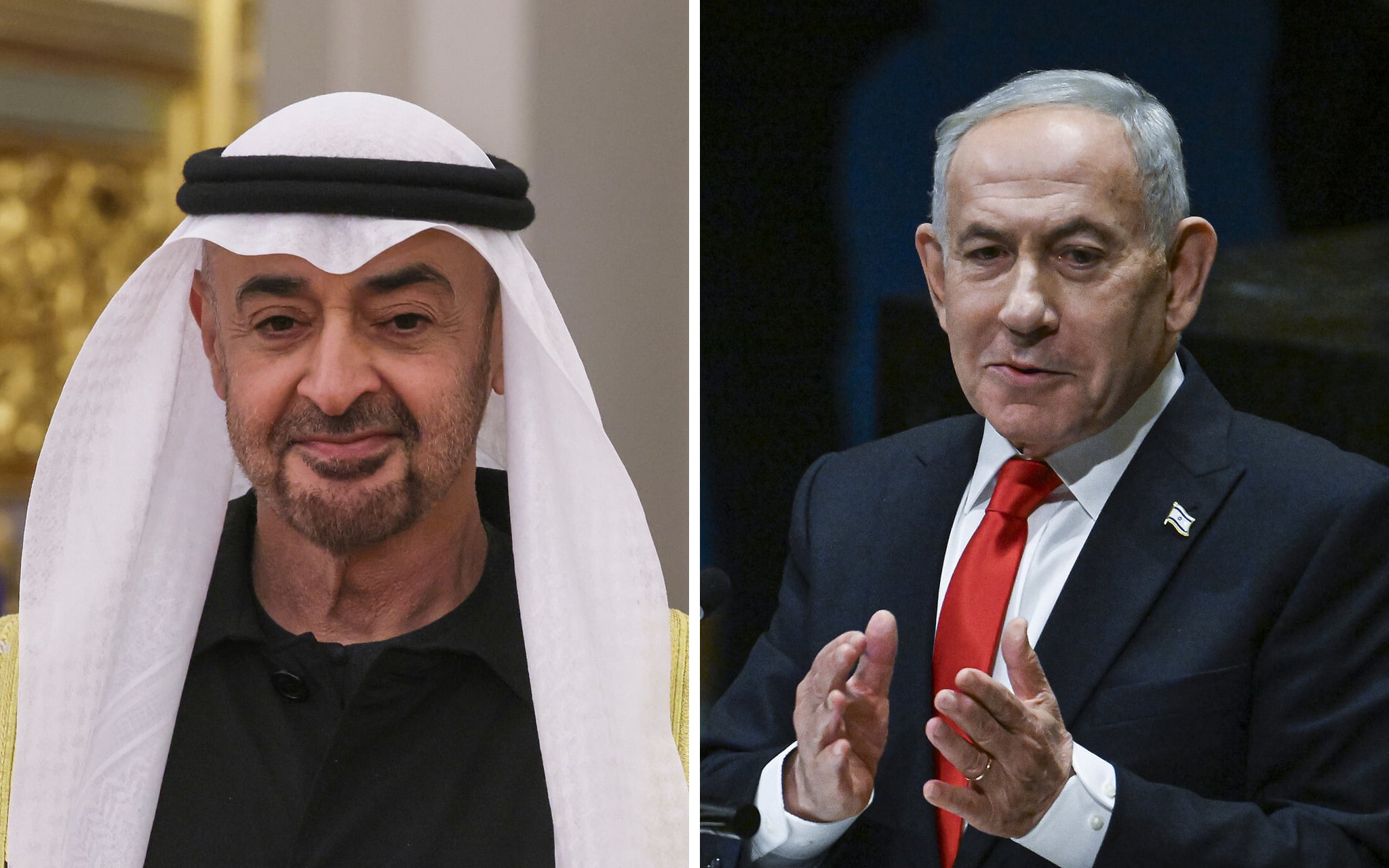
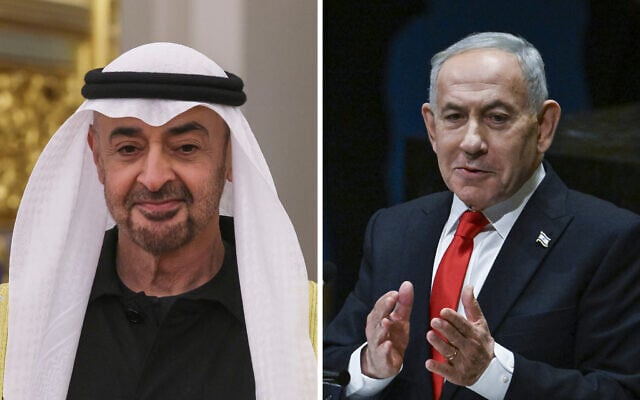
The purpose of Prime Minister Benjamin Netanyahu’s secret trip to the United Arab Emirates on Sunday was to ask its leader, Sheikh Mohammed bin Zayed, to deny reports that he had warned Netanyahu about a looming Hamas threat ahead of the terror group’s October 7, 2023, invasion, according to sources who spoke to the Associated Press on Monday.
Netanyahu’s office and the UAE’s official media agency confirmed the meeting took place on Monday evening, but the prime minister’s office denied AP’s report regarding the reasoning behind it as “fake news,” while the WAM Emirates News Agency said “the two sides discussed bilateral relations between the UAE and Israel and ways to strengthen and develop them.”
Netanyahu flew on a private plane to Abu Dhabi around noon Sunday and spent four hours in the UAE, Israel’s Channel 12 first reported on Sunday night. During the visit, he held an hourlong meeting with the UAE’s president, according to two people who were briefed on the trip. Channel 12 reported Monday that the meeting took place at the airport.
The visit came amid controversy in Israel over a reported warning given by the Emirati leader to Netanyahu a week and a half before the Hamas-led massacre, as well as several other reports of warnings, including from Egypt’s former intelligence chief, just days before the attack.
One person familiar with Netanyahu’s Sunday visit to the UAE told AP that the talks focused on bin Zayed’s reported warning, which was reported by the Haaretz newspaper earlier this month.
Netanyahu asked bin Zayed to deny the report, according to the person who purported to have firsthand information about the meeting. Netanyahu’s office has previously denied the Haaretz report.
The person, along with a regional official briefed on the meeting, spoke on condition of anonymity to discuss the secret trip.
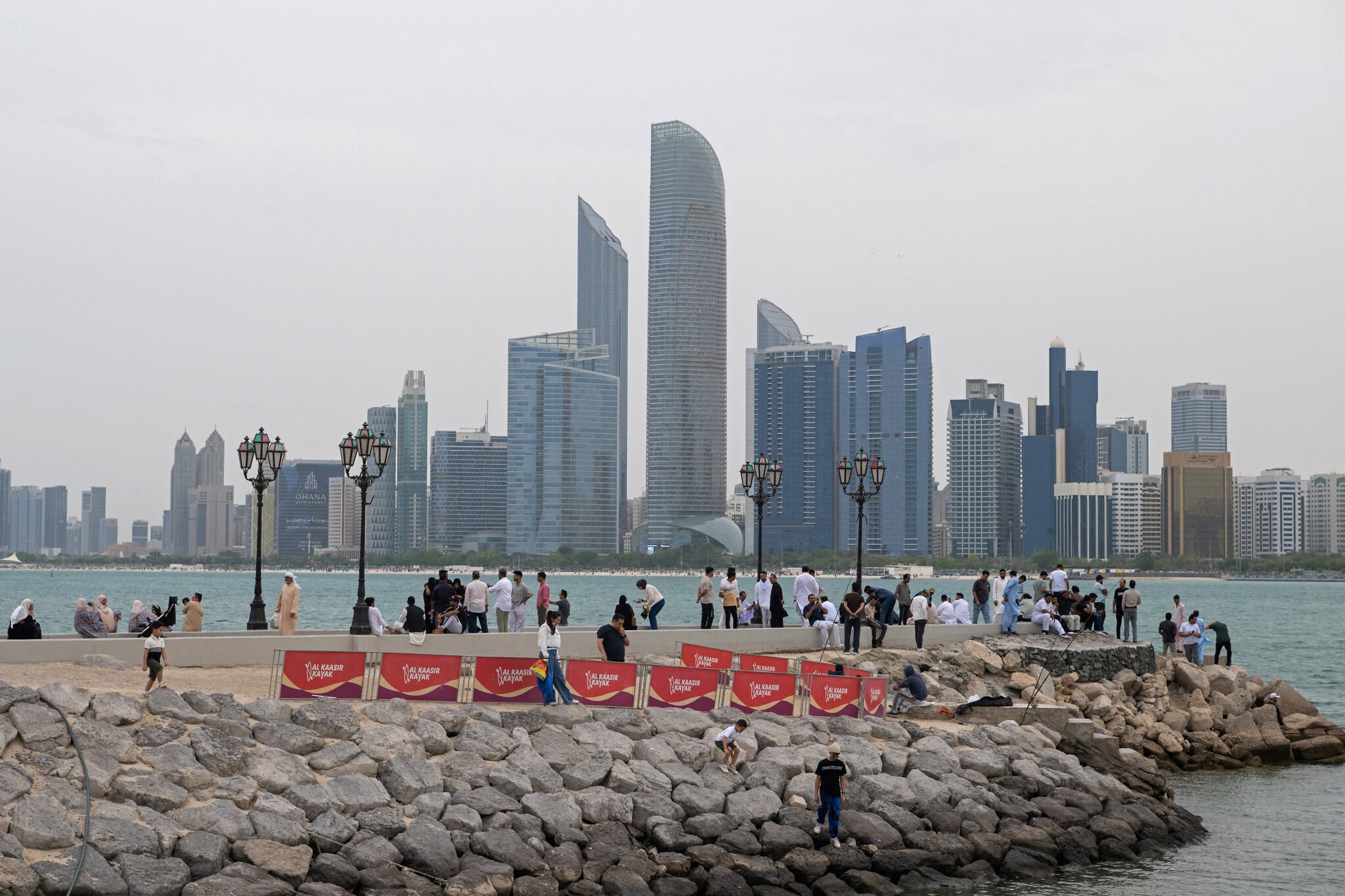
The UAE’s Foreign Ministry declined to comment on reports about the meeting. But it said it maintains “open and direct lines of communication” with Israel and shares “all relevant intelligence.”
According to Channel 12, Netanyahu’s office asked repeatedly for the sit-down in order to try to convince bin Zayed to issue a denial, but the UAE sees the issue as internal to Israeli politics and does not want to get involved, especially ahead of an election.
Also on Monday evening, Netanyahu’s office announced that the Shin Bet security agency filed a complaint with the IDF Military Censor, demanding that it take legal action against Channel 12 for revealing Netanyahu’s trip while he was still en route back to Israel, claiming that the network had risked the premier’s safety.
The announcement also revealed that Netanyahu’s wife Sara made the trip, as well as Mossad director Roman Gofman, National Security Council head Shmuel Ben-Ezra, Military Secretary Maj. Gen. Guy Markizeno, and the head of the Shin Bet Security Division. No reason was given for the inclusion of Netanyahu’s wife in the entourage.
According to the PMO, a Mossad assessment called the leak “a serious security threat to the security of the prime minister and the delegation.”
Netanyahu denies Egyptian warnings, slams media, former Shin Bet chief, foreign actors
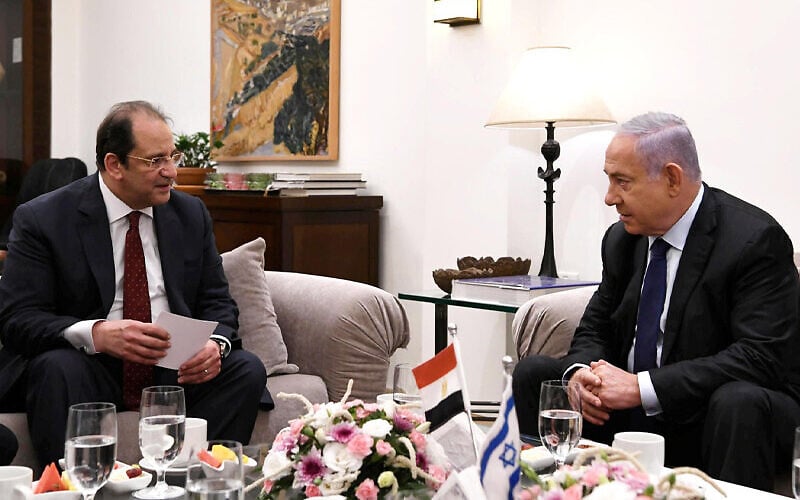
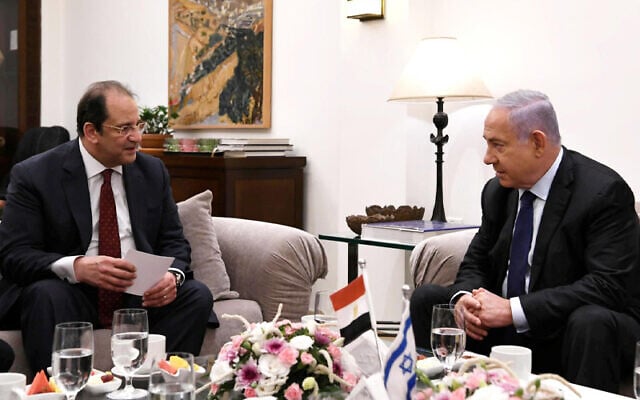
The premier also took to social media on Monday to flatly deny the earlier reports that Egypt’s former intelligence chief Abbas Kamel had personally called him just days before the Hamas invasion.
“In the months leading up to October 7, Prime Minister Netanyahu did not meet or speak with Abbas Kamel, who was then head of Egypt’s General Intelligence Service, and no Israeli intelligence official conveyed an Egyptian warning to the prime minister,” he wrote on X, after both The Wall Street Journal and The Atlantic reported that Kamel delivered warnings to Israeli officials, including in a brief trip to Ben Gurion Airport and a phone call to Netanyahu himself.
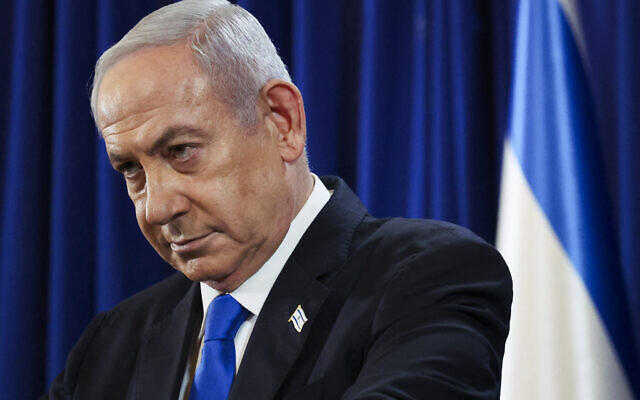
Netanyahu said that he would be filing a libel lawsuit, but did not specify against whom. His office has threatened a number of outlets and journalists with lawsuits over unfavorable coverage it claims is libelous.
He added that he never meets with foreign intelligence chiefs without the presence of their Israeli counterparts.
Netanyahu further claimed that “the left-wing media” was waging a campaign “to pin all of [former Shin Bet director] Ronen Bar’s failures and crimes on the eve of October 7 on Prime Minister Netanyahu.”
He said that overnight on October 7, Bar, then-IDF chief of staff Lt. Gen. Herzi Halevi and IDF Military Intelligence chief Maj. Gen. Aharon Haliva “discussed all the warning signs” of a Hamas attack.
“Despite this, Ronen Bar decided not to call and update the prime minister, not to alert the civilian security squads and IDF forces in the field, not to evacuate the Nova festival — and instead only to send a small [elite counterterrorist] Tequila team (which proves that he knew there was a real danger),” Netanyahu continued.

He said that Arab countries are among the “foreign and hostile states and actors” that aim to bring down his government and replace it with a government led by his election rivals Gadi Eisenkot, Yair Golan, and Avigdor Liberman, “which would withdraw from Gaza, Lebanon, Syria, and Judea and Samaria — and establish a Palestinian state.”
“That is the election question: it is either the right, or Palestine,” he insisted. The election is set for October 27.
Netanyahu has regularly blamed Israeli security officials for the failures of October 7, and asserted that if he had been woken in the early hours of that day, when security chiefs discussed concerning signs coming from Gaza, he would have ordered swift action and prevented the massacre.
He has also refused to establish a state commission of inquiry – Israel’s highest investigative authority – into the disaster, arguing that an independent panel appointed by the Supreme Court would be biased against the government. He has argued instead for a panel appointed by lawmakers, with its mandate and scope set by politicians.
Times of Israel staff contributed to this report.





The Times of Israel Community.