

Serbia’s President Vucic resigns to run for prime minister in October elections
Populist leader, who has dominated country’s politics for over a decade but faces growing protests, has made Serbia one of Israel’s closest allies in Europe
 Add ToI as a Preferred Source on Google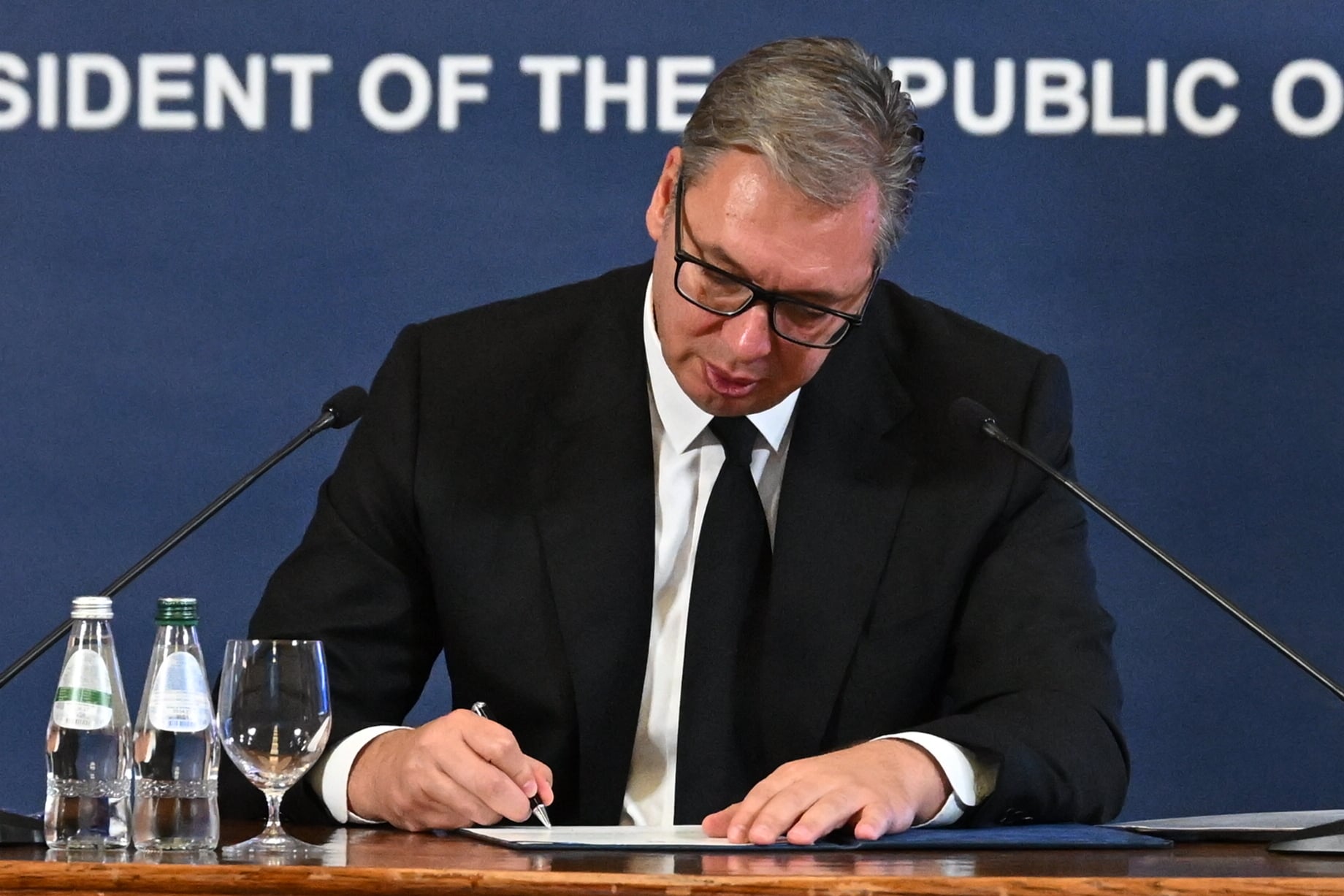
BELGRADE — Serbia’s populist President Aleksandar Vucic announced his resignation on Sunday, ending his second and final five-year term and paving the way for early presidential elections.
Vucic’s resignation, seven months before his term ends, comes amid campaigning for Serbia’s October 25 snap parliamentary vote and allows him to be appointed prime minister if his Serbian Progressive Party (SNS) forms the new government.
He had said in late June that he planned to resign and that Serbia would hold early parliamentary and presidential elections.
Rights groups have accused Vucic and his allies of increasingly authoritarian rule, with anti-government protesters saying they have been beaten by police and unfairly detained. Authorities have denied those allegations.
On Sunday, hundreds of Vucic’s supporters cheered him in front of the Presidency building in Belgrade’s city center.
“This is the last evening for me in this building,” he told the flag-waving crowd minutes before resigning.
“I have faithfully served you and my fatherland, Serbia… I am proud of what we have done together,” he said.
Under Serbia’s constitution, outgoing Parliament Speaker Ana Brnabic will serve as interim president until a new one is elected. The presidential election must be completed within 90 days, with the campaign lasting between 30 and 60 days.
“By the end of December… we will have the first round of presidential elections,” Vucic said.
Elections to test Vucic’s control
Next month’s snap parliamentary election will pit Vucic’s SNS and its allies against Students Win, a student-led anti-corruption movement, and European Serbia, an alliance of pro-Western opposition parties.
Students Win, European Serbia and other parties have yet to nominate their presidential candidates.
Vucic, 56, has dominated Serbian politics for more than a decade.
He was a hardline nationalist and information minister during the era of the late Slobodan Milosevic and the wars of the 1990s, and later served as deputy prime minister in 2012-14 and prime minister in 2014-17.
He moved to the largely ceremonial position of president in 2017, but kept tight control over his party and the government.
In foreign policy, Vucic has pursued a balancing act that seeks closer ties with China, a major investor, and Russia, Serbia’s principal supplier of natural gas, while maintaining a long-term goal of joining the EU.
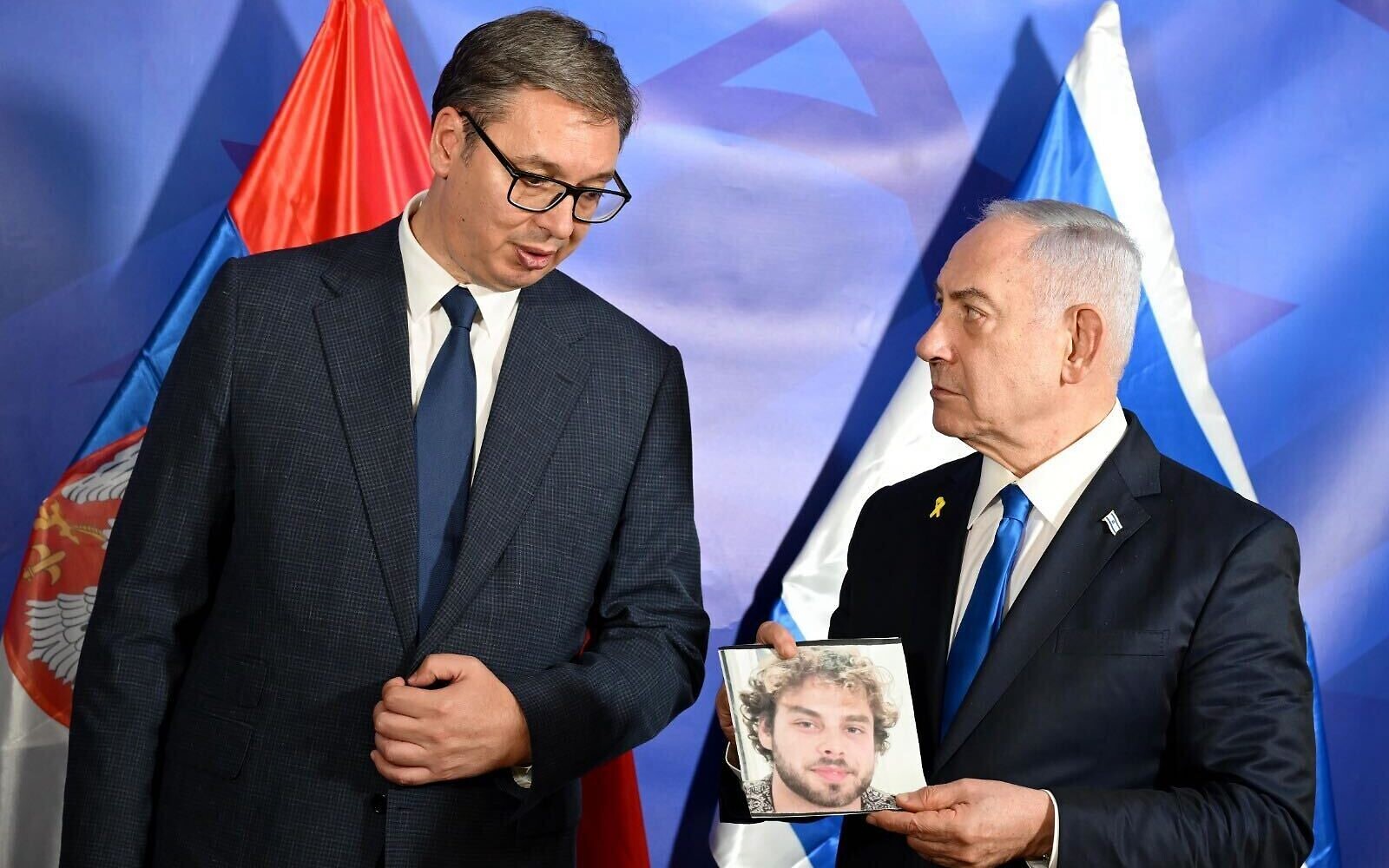
He has also sought to bolster ties with the United States and Israel.
Under his rule, Serbia has become one of Israel’s closest allies in Europe, though it is not in the European Union or NATO. Last month, he inaugurated an assembly factory for Israel-made drones in the Balkan country to boost its military
In April, Israeli Foreign Minister Gideon Sa’ar and Serbian Foreign Minister Marko Đurić announced during a meeting in Jerusalem steps toward a free trade agreement and the launch of a new strategic dialogue.
Vucic’s term in office suffered a major blow in November 2024 when an awning of a newly reconstructed railway station in the northern city of Novi Sad collapsed, killing 16 people.
The disaster sparked nationwide protests by students and the opposition, who demanded accountability for those responsible, transparency in public procurement, an end to systemic corruption, and an early parliamentary vote.
The government repeatedly denied accusations by the protesters, although several officials, including two ministers, were arrested or resigned after the incident.
On Sunday, Vucic said he has granted amnesty and a pardon to 49 people, including 12 activists and 11 of his own supporters, who were arrested or tried in connection with the protests.







The Times of Israel Community.