

Florida beauty store owner who wanted to behead Jews charged with funding Hamas
Raed Yousef charged with 19 felonies for allegedly sending $45,000 to terrorists, in latest in series of cases claiming sham charities sent money to Gaza terrorists
 Add ToI as a Preferred Source on Google
Luke Tress is The Times of Israel's New York correspondent.
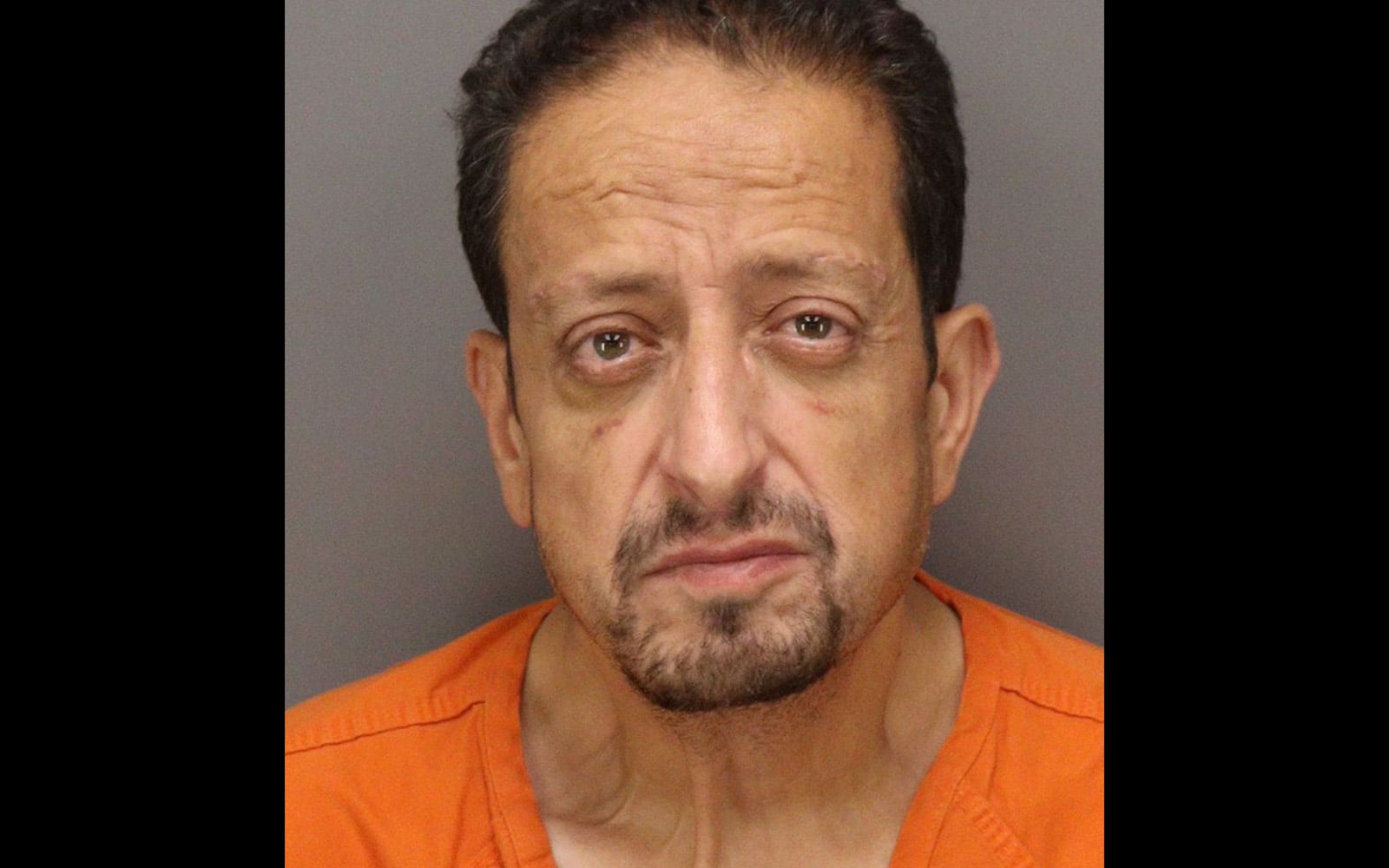
A suspect in Florida was charged with funding the Hamas terrorist group earlier this month, the latest in a series of federal US cases alleging that operatives in the US used fake charities to fundraise for Gaza terrorists.
Raed Yousef, 56, was charged with funneling tens of thousands of dollars to Hamas, misleading US authorities and committing financial crimes.
Investigators said Yousef conspired to fund the terror group with a French organization, a Palestinian Hamas member in Gaza and a US citizen in Louisiana. The co-conspirators were not named.
The scheme began days after Hamas’s October 7, 2023, invasion of southern Israel, around the time the French organization was established with the stated aim of providing aid to the needy in Africa and the Middle East.
The defendants allegedly coordinated over social media and encrypted messaging platforms, including Snapchat, Instagram, Telegram and WhatsApp.
They raised donations and routed them to Hamas using platforms such as PayPal, GoFundMe and cryptocurrency exchanges.
The conspirators instructed each other to use codewords to disguise their activities, referring to Hamas as “green” or “bread,” to delete messages after reading them, and to delete their communication apps when traveling, investigators said.
Yousef sent more than $45,000 to the French organization, knowing that the funds would be channeled to Hamas. The French group sent more than $330,000 in total to cryptocurrency accounts controlled by the terror group, prosecutors said.
The conspirators allegedly misled donors. In January 2024, Yousef told a co-conspirator, “Just tell them these are needy people in Gaza.”
“That would be better, because a lot of people will be afraid when you tell them,” he said. “They don’t want to get in trouble.”
Other messages showed Yousef calling for violence against Jews. He said beheadings should be broadcast on social media “so they can be frightened.”
In April 2024, he said, “Jews are brutal… May God take revenge against them.”
Months later, he said, “They need to be slaughtered, to behead them and display their heads.”
“One would hold their heads, one in this hand and another head in the other hand and display their heads to frighten them so that they leave our land,” he said in messages that were sent in Arabic and translated into English.
Yousef was born in Kuwait, raised in Jordan, and moved to New York with his family as a teenager. He became a US citizen in 1991. The family later relocated to Florida and has relatives in the West Bank, court filings said.
He maintained a separate alias under a different name in Jordan and lied to US authorities about traveling to the West Bank immediately before his arrest, the filings said.
Yousef owns six beauty supply stores in central Florida, his defense team said.
His defense lawyers have argued that his statements about killing Jews are protected political speech, that he believed his fundraising was for charity, and that he had “provided a minuscule amount of money to someone he should not have.”
He was charged with 19 federal felonies related to conspiracy, material support for terrorism, money laundering, and passport fraud. He faces a sentence of up to life in prison.
The case is the latest in at least five federal US investigations into alleged Gaza terrorism fundraising in the past year.
In each of the investigations, the defendants are accused of presenting false humanitarian initiatives to donors, then diverting the funds to Gaza-based terrorists.
The schemes were all allegedly international efforts using crowdfunding platforms, encrypted messaging and cryptocurrency.
The investigations appeared similar to the case against the Holy Land Foundation, a purported charity that funneled more than $12 million to Hamas in the 1990s and early 2000s. The so-called Holy Land Five, who were imprisoned, remain popular figures in the anti-Zionist movement.
Yousef and at least one other defendant, Reda Mazen Rida Sabassi, had referred to the Holy Land Foundation, according to court filings.
A search of Sabassi’s electronic devices showed that he had searched for information about the Holy Land Foundation online.
During a search of Yousef’s home, investigators found a “composition notebook for the Holy Land Foundation.” Other filings described the document as a “pamphlet” for the Holy Land Foundation.
The search also turned up $75,000 in cash, at least six firearms, and hundreds of rounds of ammunition.





The Times of Israel Community.