

Top Hezbollah commander killed in Beirut as IDF presses deeper into Lebanon
Lebanese officials report 7 dead in overnight strikes; rocket fire continues on northern Israel; Lebanese army withdraws from some border towns amid appeals to stay
 Add ToI as a Preferred Source on Google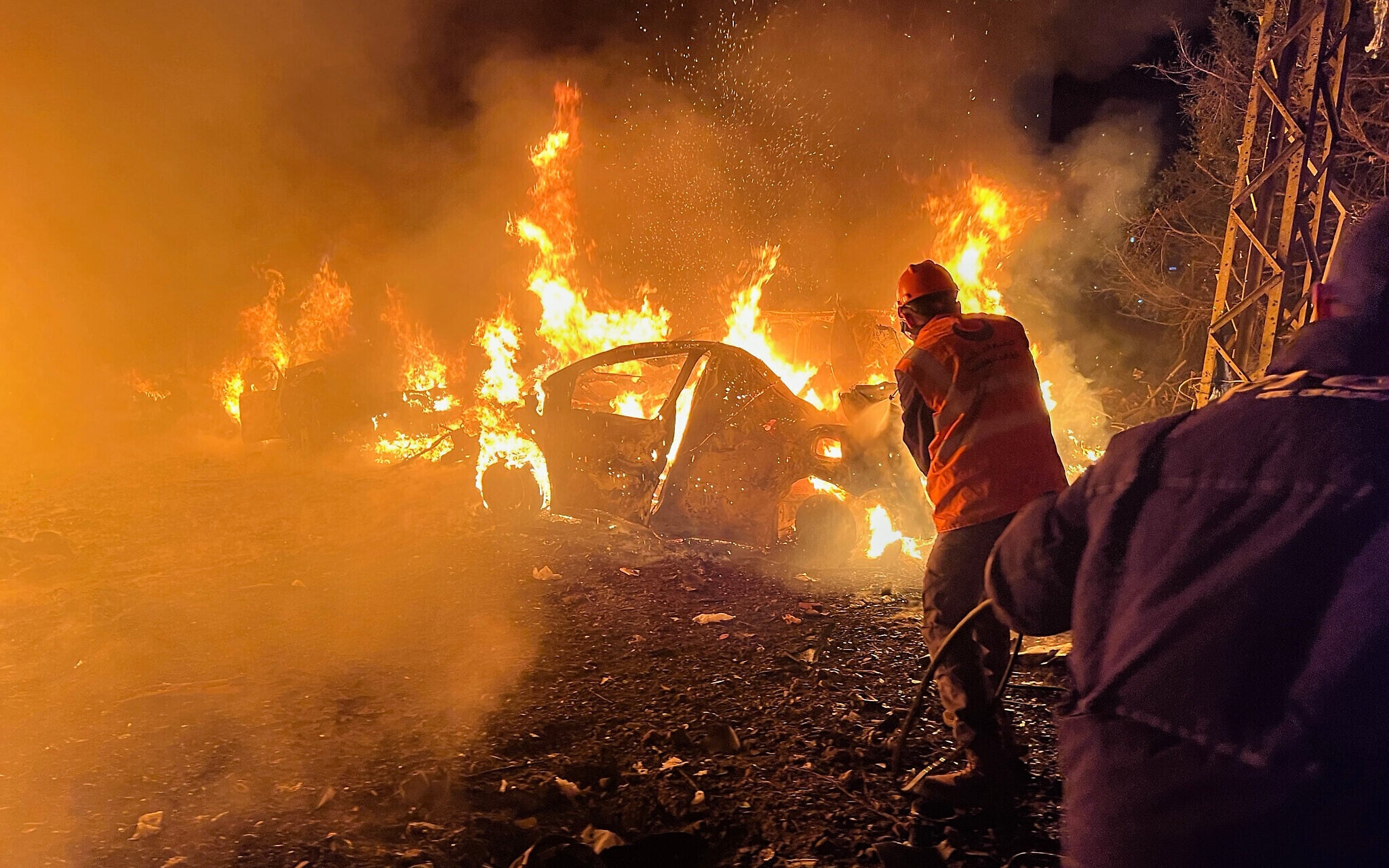
An overnight Israeli Navy strike in Beirut killed the commander of Hezbollah’s Southern Front, responsible for the terror group’s military activity in south Lebanon on the Israeli border, as Israel continued its offensive in Lebanon and Hezbollah continued its fire at Israel.
The strike in the Lebanese capital killed Hajj Yusuf Ismail Hashem, who took over the Southern Front from Ali Karaki in September 2024, after the latter was killed alongside Hezbollah chief Hassan Nasrallah in an Israeli strike.
Hashem was described by the military as a central figure responsible for advancing thousands of attacks against Israeli civilians and troops. His killing marked the most senior Hezbollah figure eliminated since hostilities escalated amid the ongoing war with Iran.
Alongside the strike on Hashem, the Israel Defense Forces said it carried out a separate attack on “another senior terrorist” in the Beirut area, without providing further details.
Two currency exchange stores in Beirut — Boa Chance, owned by Hussein Ibrahim, and Trade Point International, owned by Mohamad Noureddine — were also bombed by the Israeli Air Force overnight, with the IDF saying they had been used to finance Hezbollah.
Lebanese officials reported broader casualties from overnight Israeli strikes, saying at least seven people were killed and another 21 wounded in attacks targeting Beirut’s southern suburbs, a Hezbollah stronghold, and areas just south of the capital. According to Lebanese state media, some of the strikes hit vehicles, while others targeted districts that have largely emptied out following repeated evacuation warnings.
Hezbollah continued firing rockets at Israel on Wednesday, ahead of the Passover holiday, with one attack hitting the northern city of Kiryat Shmona, damaging a home and lightly wounding a 61-year-old man. Several others were treated for shock.
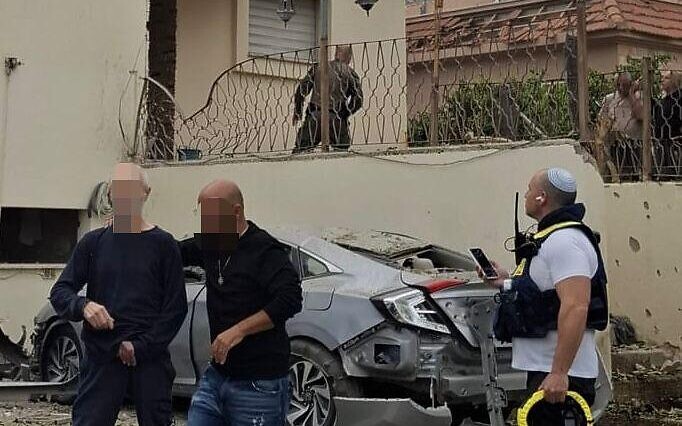
The strikes came as Israel continued targeting Hezbollah infrastructure across southern Lebanon. The military said Tuesday night it hit several rocket launchers used in a barrage on northern Israel earlier that evening.
In total, some 45 rockets were fired toward the north, setting off sirens as far south as Haifa. Most were intercepted or landed in open areas, though one struck a town in the Western Galilee, lightly wounding three people.
On Tuesday night, IDF Spokesman Brig. Gen. Effie Defrin said that the Israeli Air Force had struck over 2,500 targets in Lebanon, killing some 900 Hezbollah operatives, since the Tehran-backed terror group, on March 2, joined Iran in its war with Israel and the United States.
According to Defrin, the IDF’s ground offensive against Hezbollah in southern Lebanon was “pushing the enemy north, and distancing the threat from the communities.”
Amid the fighting, Hezbollah downed an Israeli Air Force drone over southern Lebanon on Wednesday with a surface-to-air missile. The IDF said the drone had been operating in support of ground troops and that there was no concern over sensitive information being compromised.
בסגירות מעגל מהירות: צה"ל תקף משגרים מהם נורו הרקטות לעבר שטח מדינת ישראל בירי האחרון מלבנון
צה"ל תקף לפני זמן קצר משגרים בדרום לבנון מהם נורו הרקטות בירי האחרון לעבר שטח מדינת ישראל.
גם כעת צה"ל ממשיך לאתר ולתקוף משגרים נוספים pic.twitter.com/nRGJSPBoUf— צבא ההגנה לישראל (@idfonline) March 31, 2026
Meanwhile, the Lebanese military said its forces had largely withdrawn from some border towns as Israeli troops continued to push their ground invasion into the country.
Israel has declared that southern Lebanon up to the Litani River will be a “security zone” in its ongoing war the terror group, and residents will not be able to return until further notice.
The Lebanese military said in a statement that troops had to reposition to prevent being dispersed and cut off from support lines. The country’s armed forces have gradually withdrawn from a handful of border towns.
Remaining residents in the Christian-majority communities of Rmeich and Ain Ebel have appealed to the Lebanese military and leadership to stay. The Lebanese military says it will maintain soldiers in those towns.
Over 1 million people in Lebanon have been displaced over the past month amid the IDF’s operations.
Lebanon’s health ministry said Wednesday that the strikes have killed 1,318 people in the country since the conflict renewed. The ministry statement said the toll included 91 women, 125 children and 53 health workers, with 3,935 other people wounded.






The Times of Israel Community.