

Trump considering limited strikes to force Iran to make nuclear deal – report
WSJ: Attacks could expand, possibly to effect regime change, if Tehran keeps refusing to give up enrichment; Iran tells UN that all Mideast assets of ‘hostile force’ are fair game if US attacks
 Add ToI as a Preferred Source on Google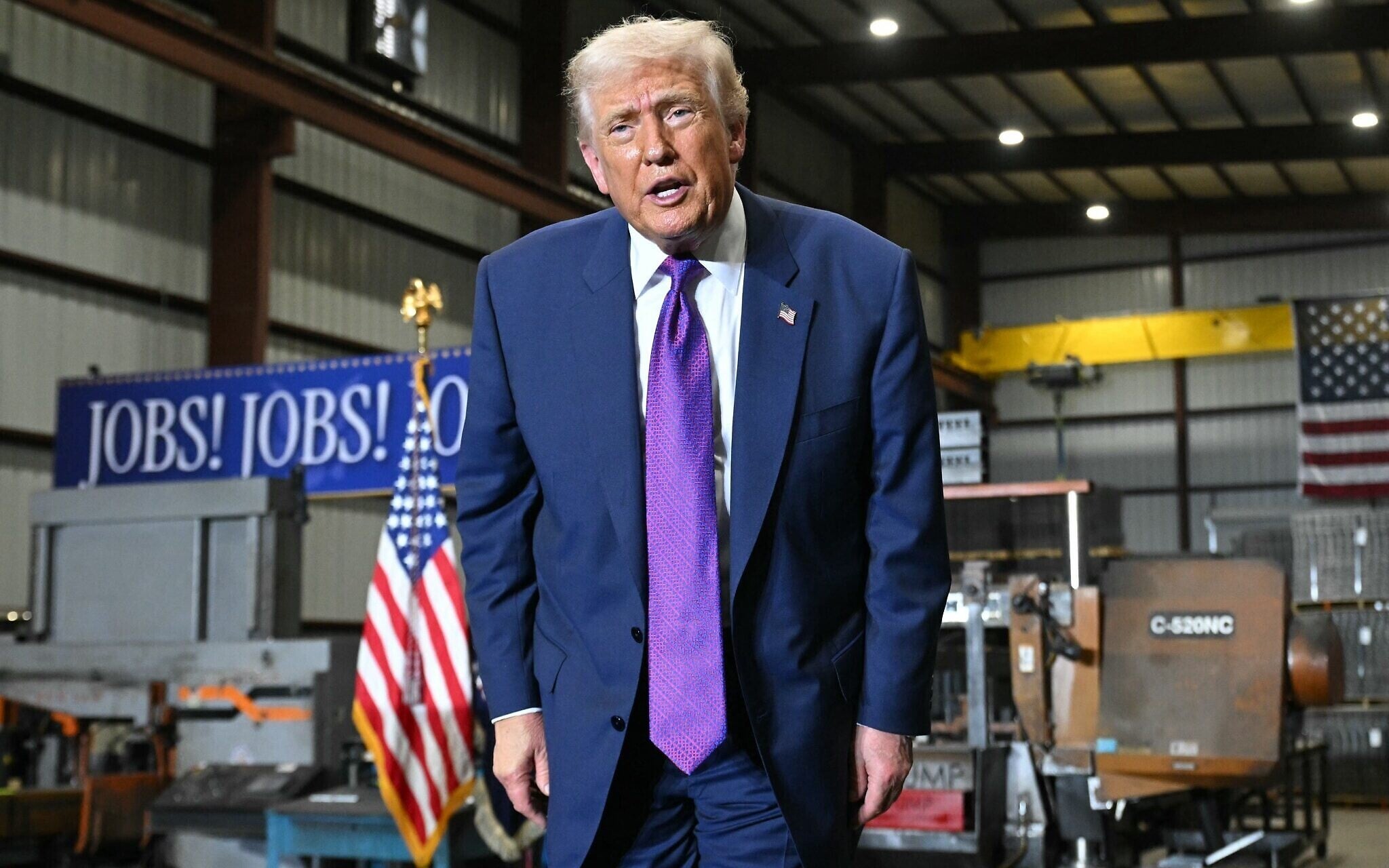
US President Donald Trump is considering launching limited strikes on Iran to force it to accept his demands for a nuclear agreement, The Wall Street Journal reported Thursday, as Tehran said bases of “hostile force” in the region would become “legitimate targets” if Washington attacks.
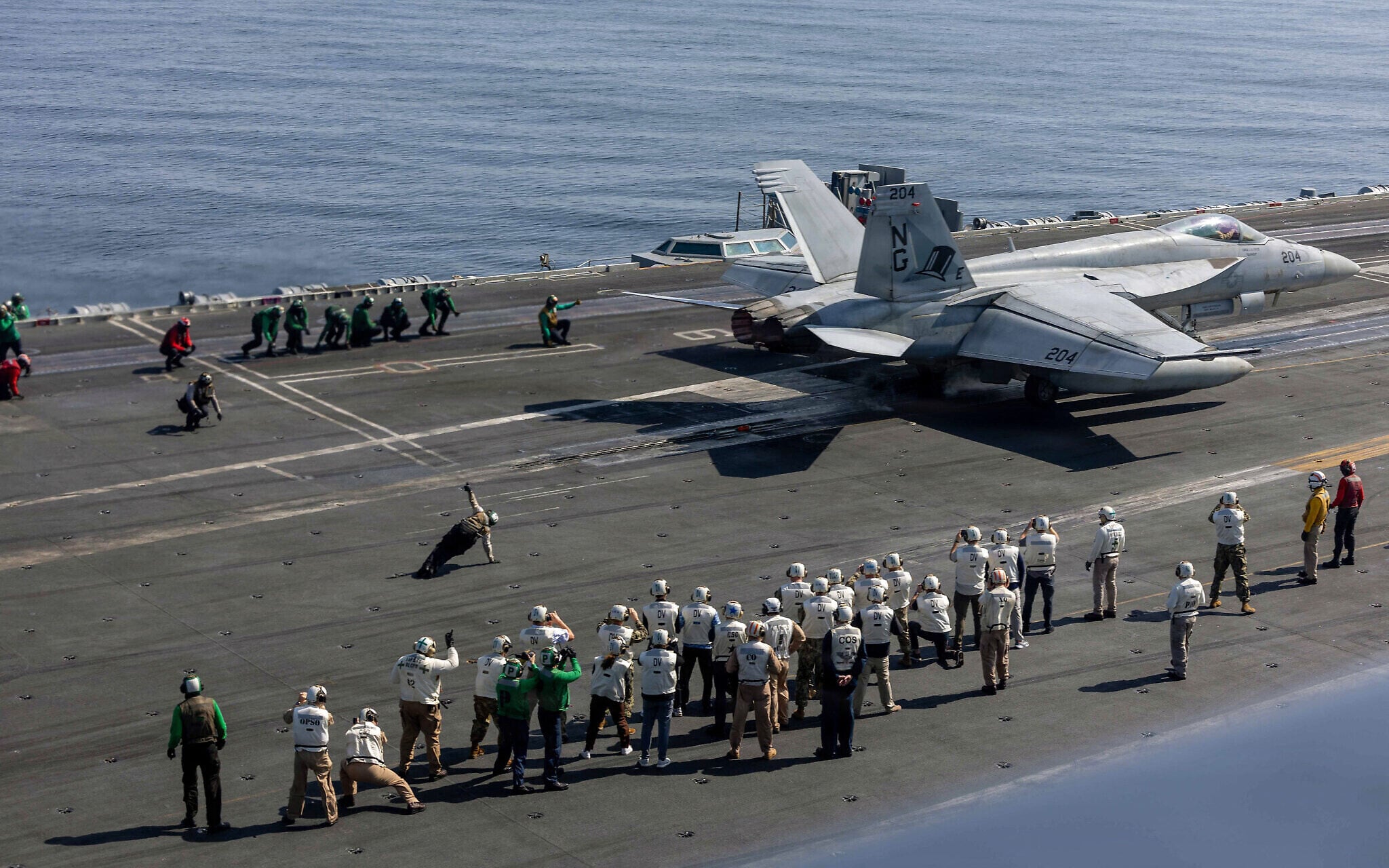
Citing people familiar with the matter, the Journal said preliminary US strikes on Iran could begin within days, targeting some military or government sites but stopping short of a full-scale assault that could trigger a major Iranian response.
If Iran continues to reject Trump’s demand that it give up its uranium enrichment program, the US will launch a wider assault on regime targets, with the possible aim of toppling the Islamic Republic, according to the newspaper. One source cited by the outlet said Trump could ramp up attacks until the Islamic Republic falls or takes apart its nuclear program.
Trump has not yet decided whether to attack Iran, officials told the Journal.
According to the newspaper, senior aides have repeatedly presented the limited-strike option to Trump, but officials said recent discussions have focused on larger-scale strikes. It was unclear how seriously Trump was considering the possibility of small-scale military action, the newspaper said.
The report came after US and Iranian negotiators held the second round of indirect nuclear talks in Geneva on Tuesday. Iran’s Foreign Minister Abbas Araghchi called the talks “constructive,” even as US Vice President JD Vance said Iran had not accepted all of Trump’s “red lines.”
The WSJ report made no mention of Israel, which, according to Hebrew media, thinks the talks are likely doomed and is gearing up for a potential joint operation against Iran alongside the US. An opinion poll published Thursday showed 59 percent of Israelis support joining the US in attacking Iran.
Trump on Thursday said the indirect nuclear talks with Iran were going well, but that “bad things” could happen to Iran if no agreement was reached. He later said his deadline for a deal was within ten to fifteen days.
The US president has overseen a significant military buildup in the Middle East and repeatedly threatened to use it against Iran, first over its deadly crackdown on anti-regime protesters last month and more recently over its nuclear program. He wrote on social media on Wednesday that the US may need to use UK military bases, including one on an Indian Ocean island, “should Iran decide not to make a deal.”
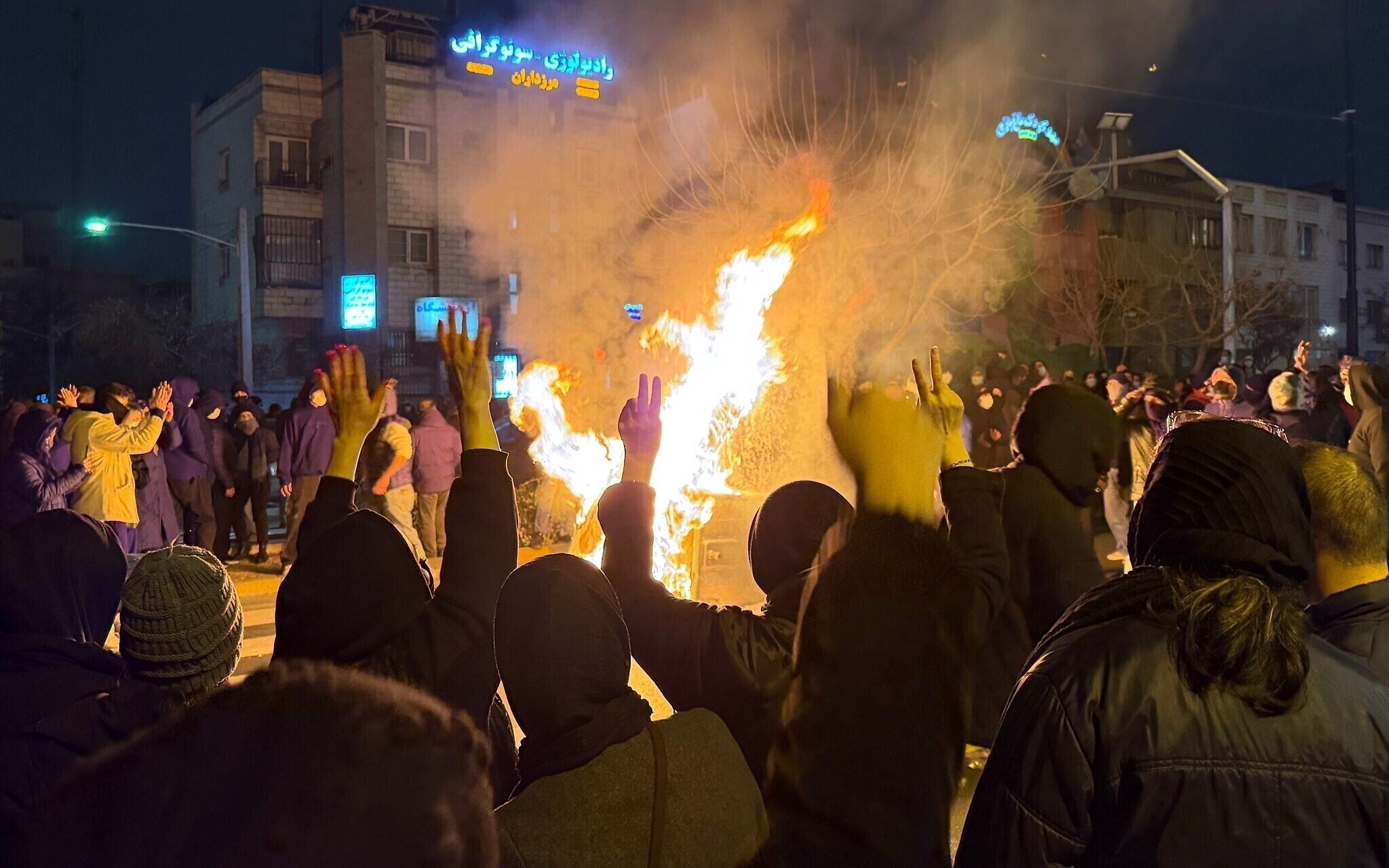
Referring to the social media post, Iran’s UN Ambassador Amir Saeid Iravani said in a letter to UN Secretary General Antonio Guterres and the president of the UN Security Council on Thursday that the bases and assets of the “hostile force” would be “legitimate targets” if the Islamic Republic were attacked.
“Such a belligerent statement by the President of the United States… signals a real risk of military aggression, the consequences of which would be catastrophic for the region and would constitute a grave threat to international peace and security,” the letter read.
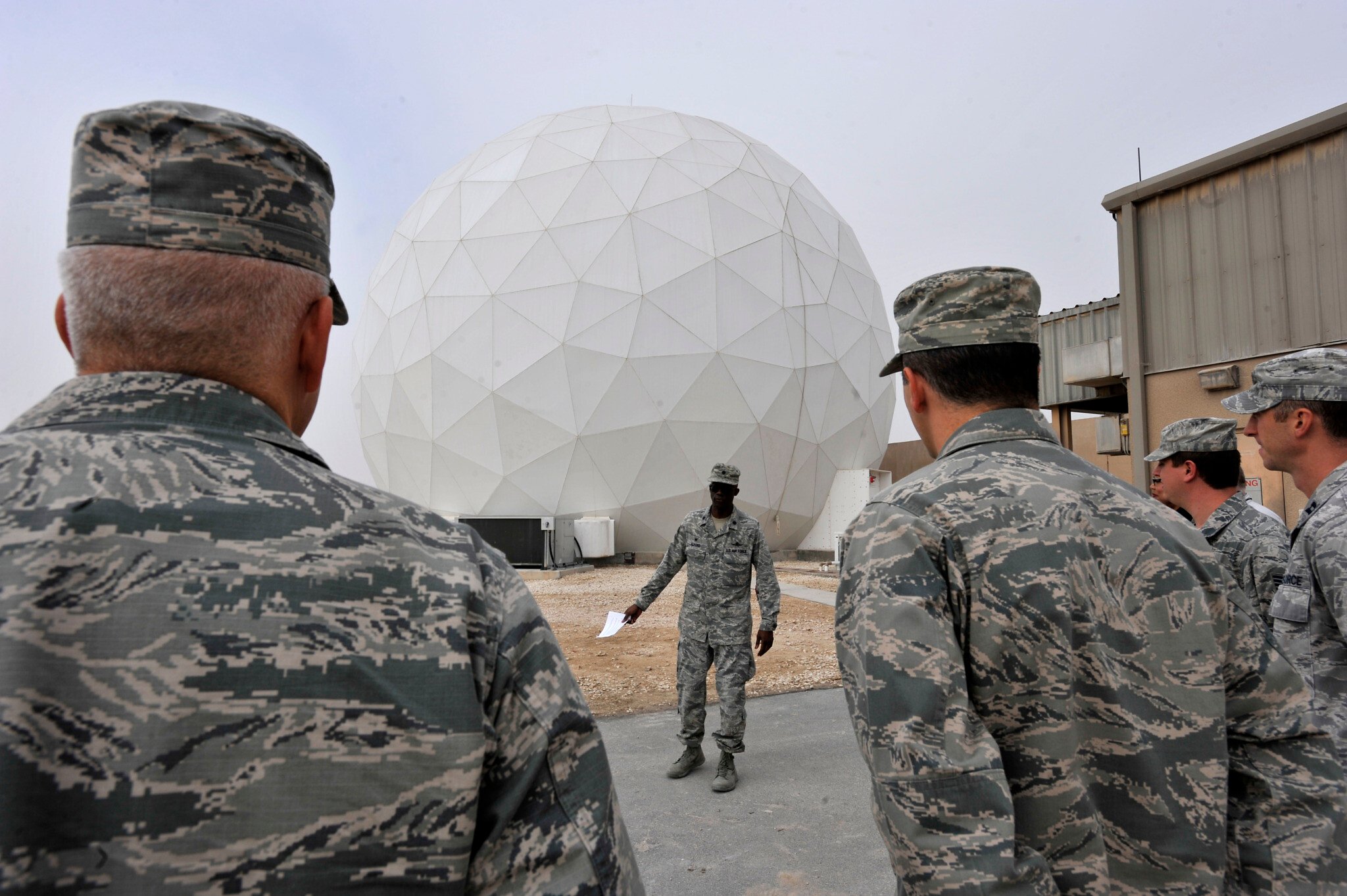
If Iran faced military aggression, “all bases, facilities, and assets of the hostile force in the region would constitute legitimate targets in the context of Iran’s defensive response,” Iravani warned. Last year, Iran targeted the Al Udeid air base in Qatar in retaliation for American strikes on three of its nuclear sites.
Iravani called for the Security Council — the UN’s top decision-making body, where Washington has veto power — to “ensure that the United States immediately ceases its unlawful threats of the use of force.”
He also claimed Iran remains committed “to diplomatic solutions” and “on a reciprocal basis, addressing ambiguities regarding its peaceful nuclear program.”
While Iran, whose leaders are sworn to destroy Israel, denies it seeks nuclear weapons, it has enriched uranium to levels that have no peaceful application, obstructed international inspectors from checking its nuclear facilities, and expanded its ballistic missile capabilities.
A previous attempt at negotiations collapsed when Israel launched surprise strikes on Iran’s nuclear facilities, ballistic missile program and military leadership last June, beginning a 12-day war that Washington briefly joined to bomb Iranian nuclear sites.
In the current talks, the US has also demanded that the negotiations with Iran cover the Islamic Republic’s ballistic missile program and support for terrorist proxies in the region. Iran has refused to expand the negotiations beyond the nuclear issue.
Amid the tensions, Norway’s military said Friday that it was relocating about 60 soldiers in the Middle East to other countries in the region and Norway because of security concerns.
Meanwhile, in a phone call with Araghchi on Friday, Russian Foreign Minister Sergei Lavrov expressed support for the negotiation process and for “Iran’s legitimate rights” under the Treaty on the Non-Proliferation of Nuclear Weapons, the Russian Foreign Ministry said via its channel on the Telegram messaging app.
The call came a day after Iran and Russia carried out a joint naval drill in the Gulf of Oman.







The Times of Israel Community.