

Trump: US to ‘suspend bombing’ of Iran for 2 weeks while talks held on ‘longterm peace’ deal
Saying ‘everyone’s had enough,’ US president writes ‘double-sided CEASEFIRE’ dependent on Strait of Hormuz reopening. But mediator Pakistan says it’s ‘effective immediately’ and also covers Lebanon, which Netanyahu disputes
 Add ToI as a Preferred Source on Google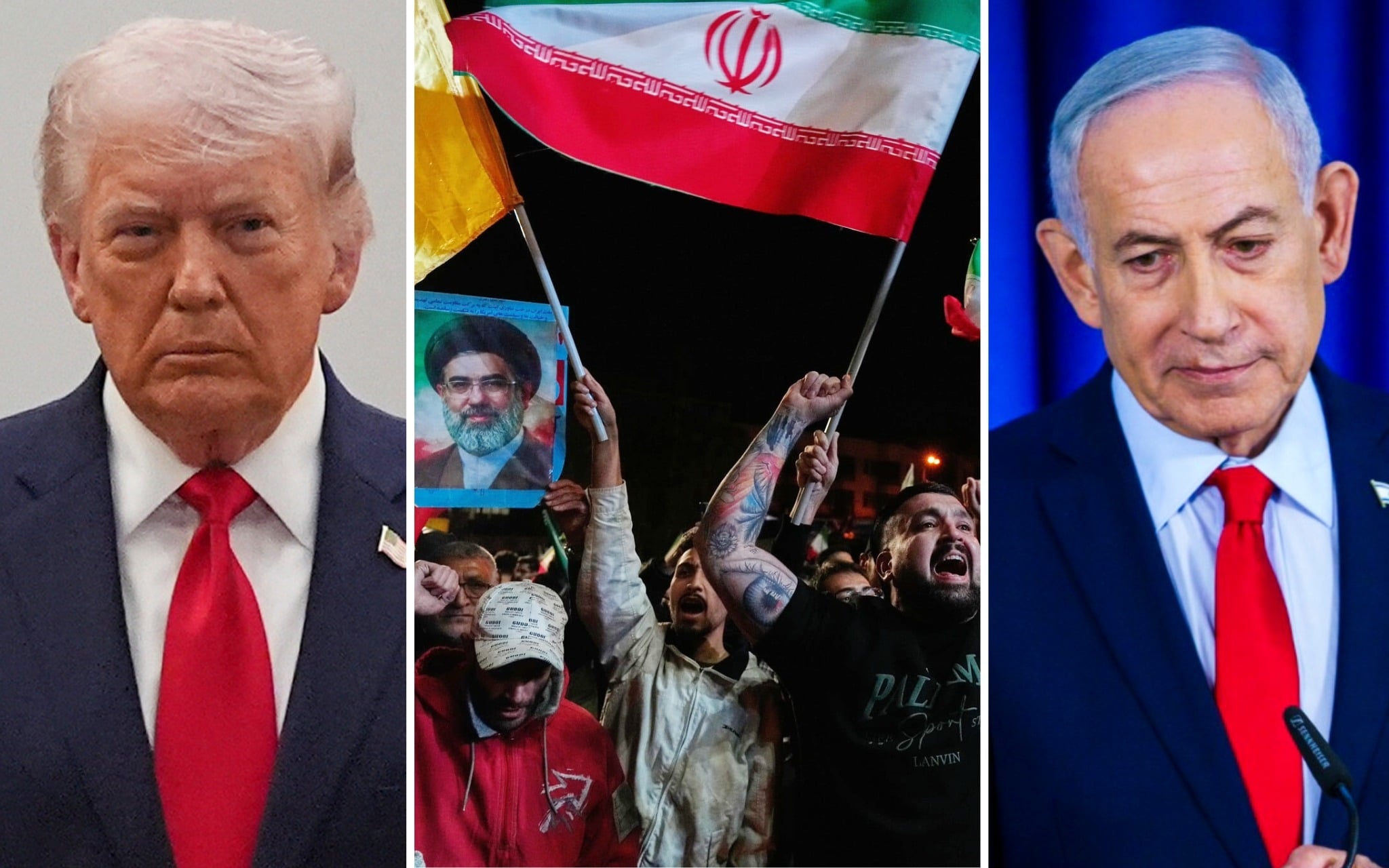
US President Donald Trump announced on Tuesday evening that he was pushing off a major bombing campaign in Iran for two weeks and that Washington had agreed to a two-week ceasefire, potentially ending the war against Iran launched by the US and Israel on February 28.
An official said the US had halted all offensive operations against Iran, although, in the first two hours after the announcement, Iran continued to fire missiles at Israel, and Israeli forces kept striking targets in the Islamic Republic.
Declaring the ceasefire in a Truth Social post at 6.32 p.m., shortly before he was set to escalate attacks with the expiration of his latest ultimatum to the regime, Trump said it was subject to the Strait of Hormuz being reopened. He had threatened to destroy Iran’s bridges and power plants if it failed to open the vital waterway, and warned that “a whole civilization will die tonight.”
However, the premier of Pakistan — which has served as the key mediator between Washington and Tehran — claimed the truce was “effective immediately” and that in addition to the US and Iran, “their allies” agreed to “an immediate ceasefire everywhere, including Lebanon and elsewhere.”
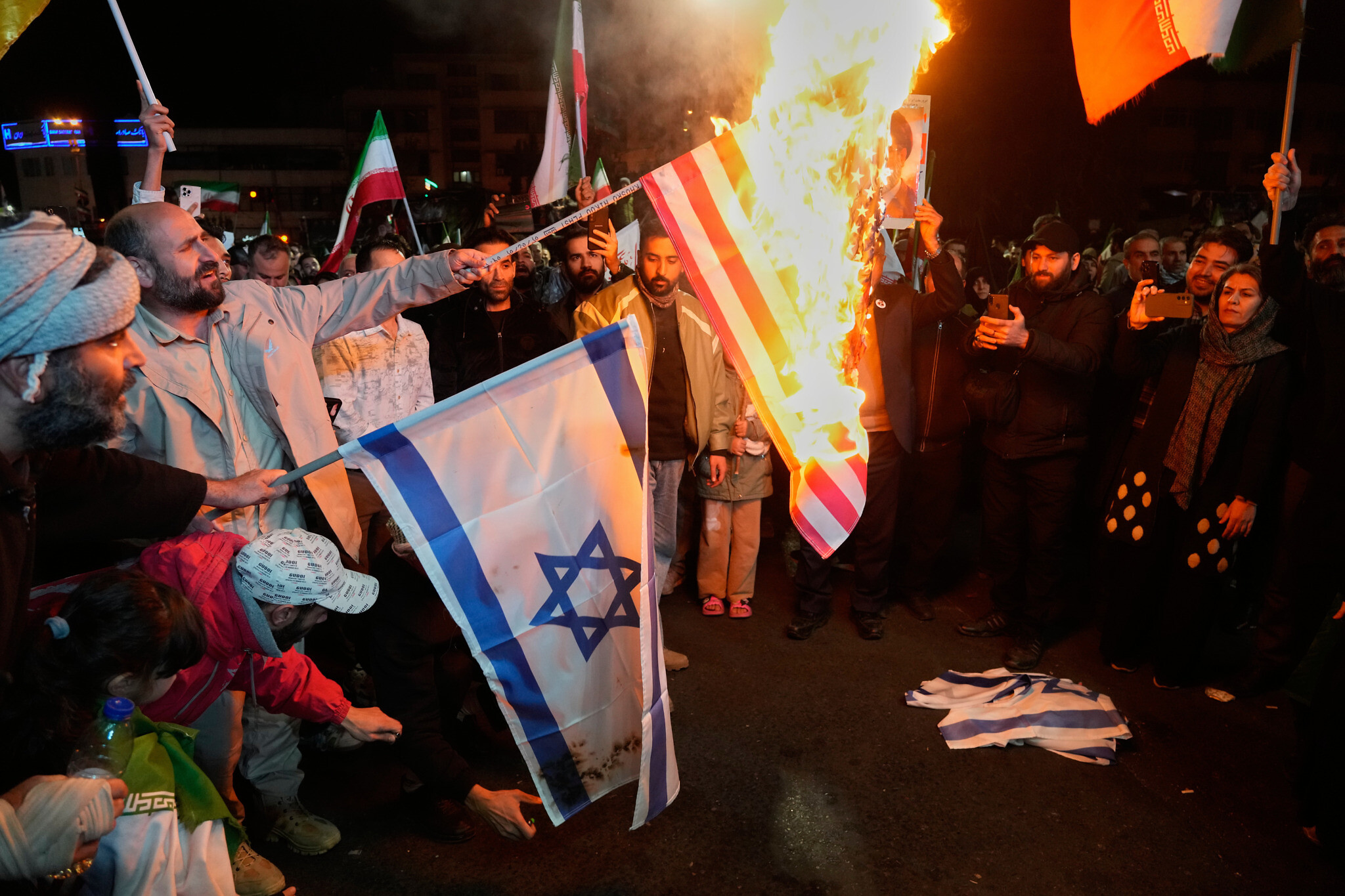
Iranian state TV soon after flashed an announcement claiming that Trump had accepted Iran’s terms for ending the war, describing it as a “humiliating retreat” by the US president. Pro-government demonstrators in the streets of Tehran screamed: “Death to America, death to Israel, death to compromisers!” They also burned American and Israeli flags in the street.
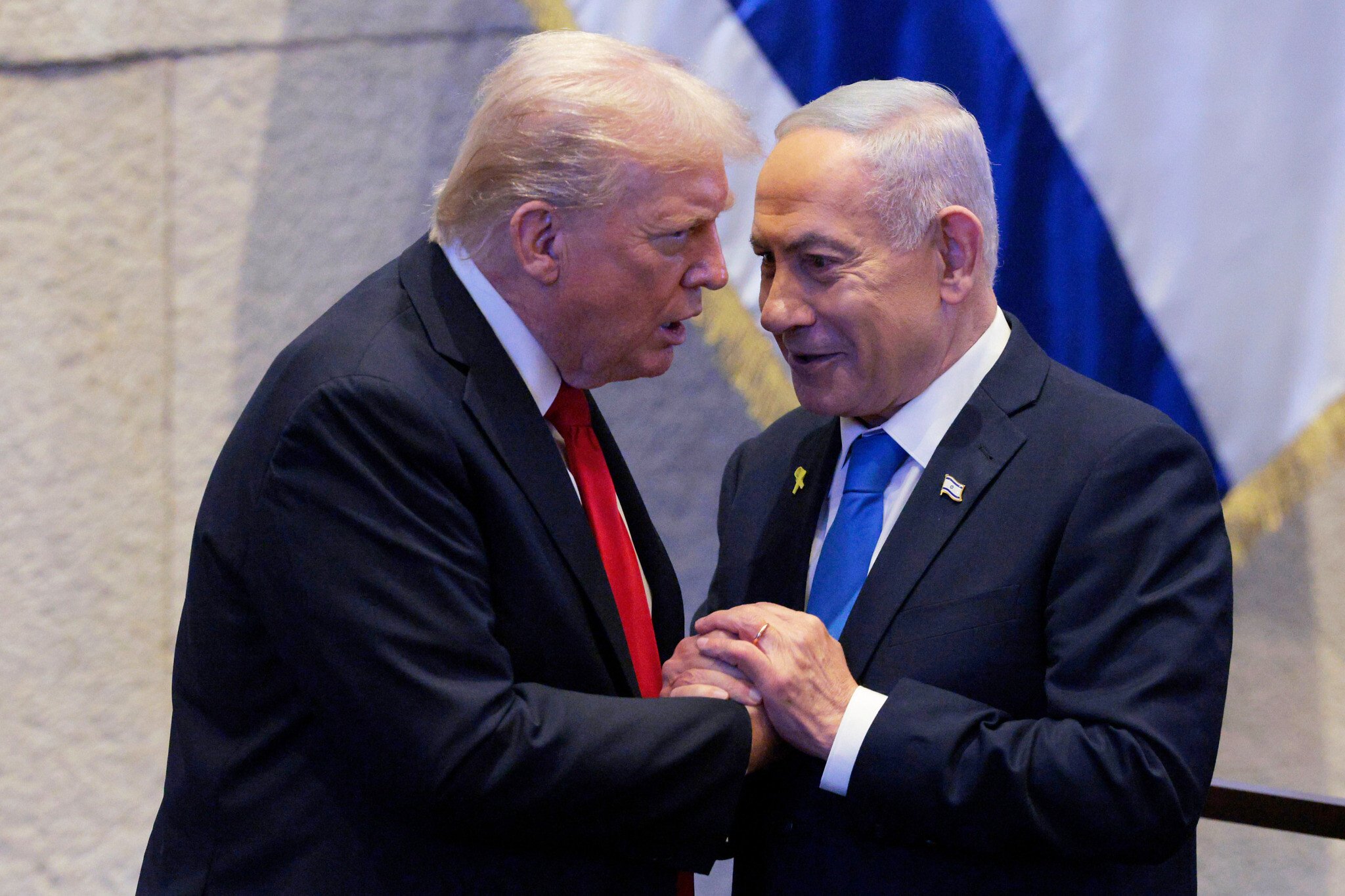
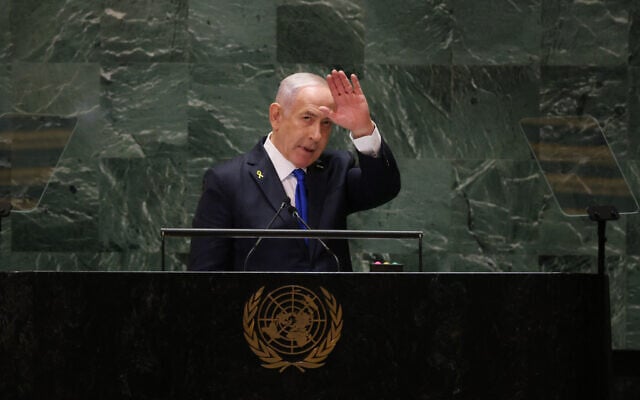
Some four hours later, Prime Minister Benjamin Netanyahu said he supported what he depicted as a conditional ceasefire, dependent on the opening of the Strait of Hormuz, while also maintaining that it did not cover Lebanon. In a statement issued by his office, he also said he had been assured that the US remained committed, in the upcoming negotiations, to ensuring that “Iran no longer poses a nuclear, missile and terror threat to America, Israel, Iran’s Arab neighbors and the world.”
That followed a statement sent to reporters by a senior Israeli official saying that the US had “coordinated in advance” with Israel on the “temporary ceasefire.”
“Based on conversations with Prime Minister Shehbaz Sharif and Field Marshal Asim Munir, of Pakistan, and wherein they requested that I hold off the destructive force being sent tonight to Iran, and subject to the Islamic Republic of Iran agreeing to the COMPLETE, IMMEDIATE, and SAFE OPENING of the Strait of Hormuz, I agree to suspend the bombing and attack of Iran for a period of two weeks,” Trump wrote in his Truth Social post, some 90 minutes before his 8 p.m. deadline for Iran to reopen Hormuz and agree to a US proposal for ending the war was set to expire.
“This will be a double-sided CEASEFIRE! The reason for doing so is that we have already met and exceeded all Military objectives, and are very far along with a definitive Agreement concerning Longterm PEACE with Iran, and PEACE in the Middle East,” Trump wrote.
“We received a 10-point proposal from Iran, and believe it is a workable basis on which to negotiate.”
Breaking news: President Trump says he has agreed to stop bombing Iran for two weeks to allow for agreement to be finalized. pic.twitter.com/4FQvSROhoj
— Politics & Poll Tracker ???? (@PollTracker2024) April 7, 2026
“Almost all of the various points of past contention have been agreed to between the United States and Iran, but a two-week period will allow the Agreement to be finalized and consummated,” he added.
“On behalf of the United States of America, as President, and also representing the Countries of the Middle East, it is an Honor to have this long-term problem close to resolution,” Trump said.
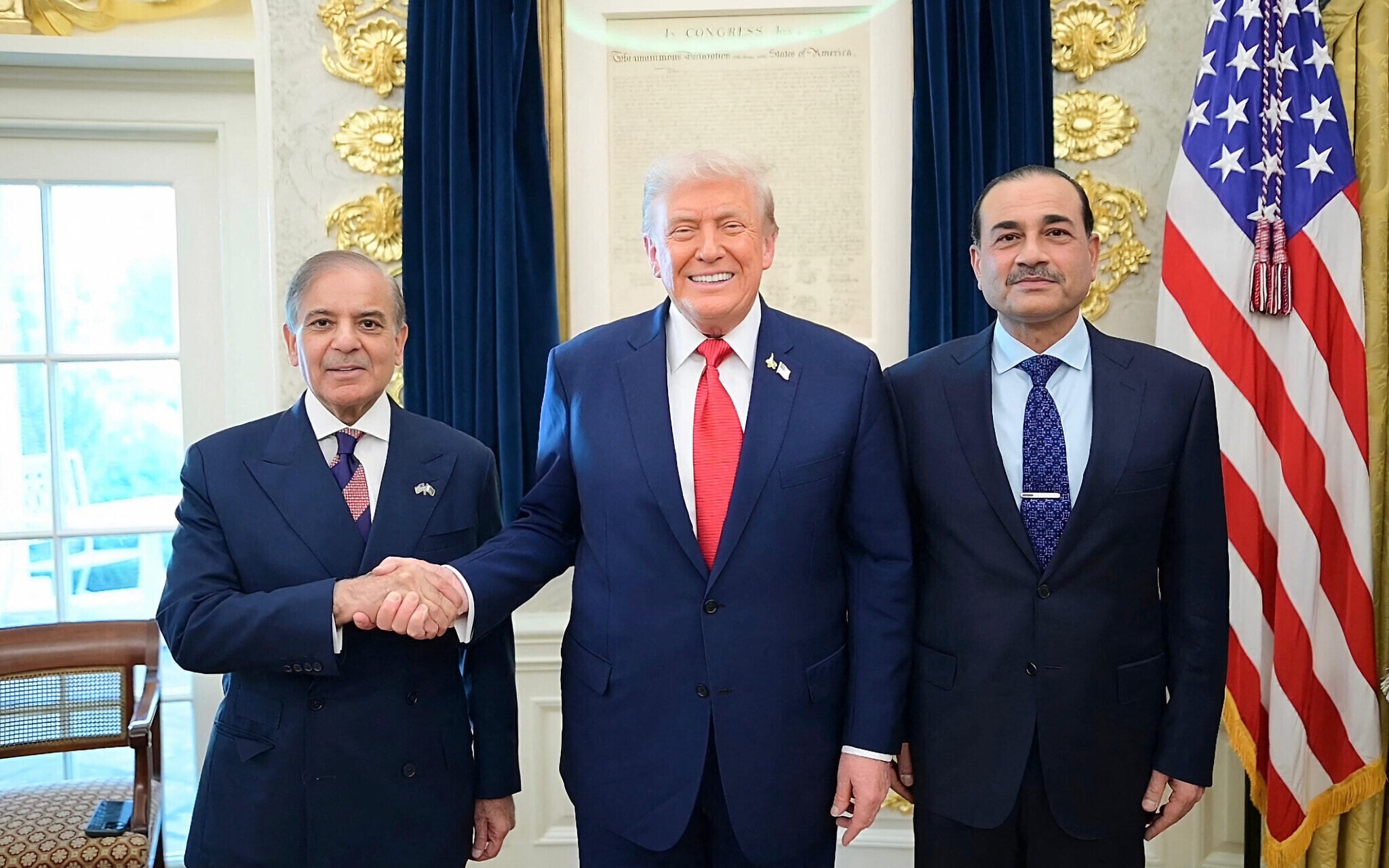
The announcement marked the fourth time Trump had pushed back his threat to bomb Iran’s energy and civilian infrastructure sites if it did not agree to his demands. He first gave Tehran 48 hours to reopen the Strait of Hormuz on March 21 and had since pushed back that deadline by five days, 10 days and one day, respectively, with the latest postponement following his warning that “a whole civilization will die tonight” if Iran did not agree to his demands by Tuesday, 8 p.m. Eastern Standard Time.
After Trump spoke, a US official confirmed the American military halted all offensive operations against Iran, though the official said defensive measures and operations remain in effect. Signaling Iranian attacks would continue, an American defense official quoted by Axios said the US expected some time to pass before the ceasefire order was relayed to the lower ranks of Iran’s Islamic Revolutionary Guard Corps.
Iran and US claim victory
In its official response to Trump, Iran said it would stop launching attacks if strikes against it stopped, according to a statement on behalf of the Iranian Supreme National Security Council issued by Foreign Minister Abbas Araghchi.
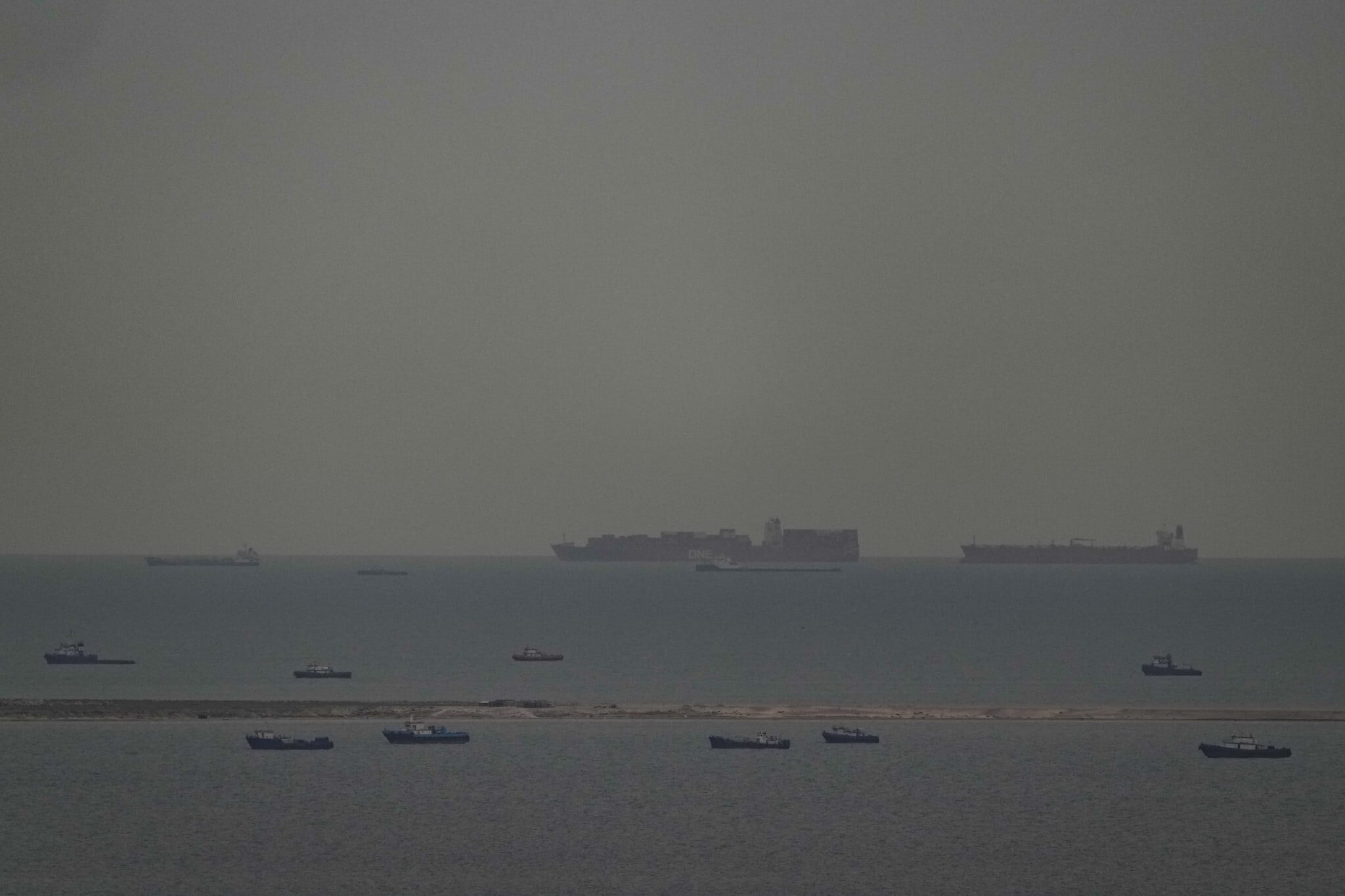
“For a period of two weeks, safe passage through the Strait of Hormuz will be possible via coordination with Iran’s Armed Forces and with due consideration of technical limitations,” the statement added.
Separately, Iranian state media quoted the regime’s Supreme National Security Council confirming that talks with the US will begin Friday in the Pakistani capital of Islamabad, adding that the negotiations did not mean an end to the war.
Claiming victory, Iran said the talks, which may last up to 15 days and can be extended by agreement, aim to finalize details of its 10-point proposal, which calls for “continued Iranian control over the Strait of Hormuz, acceptance of enrichment, lifting of all primary and secondary sanctions.”
Other key demands in the 10-point blueprint, offered through mediators in Pakistan, include US military withdrawal from the Middle East, an end to attacks on Iran and its allies, the release of frozen Iranian assets and a UN Security Council resolution making any deal binding.
These terms, if agreed, would represent an extraordinary step down by the US after 47 years of hostilities with Iran, starting from the 1979 Islamic Revolution.
“It is to be noted that the adoption of such a resolution shall render all these agreements binding under international law and shall constitute a significant diplomatic victory for the Iranian nation,” the Supreme National Security Council said.
That statement appeared to irk Trump, who falsely claimed on social media it was “made up” by a site in Nigeria and berated CNN for reporting on it, as the White House quickly tried to frame the two-week ceasefire as a win.
“This is a victory for the United States that President Trump and our incredible military made happen,” Press Secretary Karoline Leavitt said in a statement to The Times of Israel.
“From the very beginning of Operation Epic Fury, President Trump estimated this would be a 4-6 week operation,” she said. “Thanks to the unbelievable capabilities of our warriors, we have achieved and exceeded our core military objectives in 38 days.”
“The success of our military created maximum leverage, allowing President Trump and the team to engage in tough negotiations that have now created an opening for a diplomatic solution and long-term peace,” Leavitt added.
“Additionally, President Trump got the Strait of Hormuz reopened,” she said.
The channel was open before the war started, though, and Iran now says safe passage must be coordinated with its forces.

Trump himself later echoed Leavitt, telling AFP in a telephone interview that the United States won a “total and complete victory. 100 percent. No question about it.”
He added that Iran’s uranium “will be perfectly taken care of, or I wouldn’t have settled,” without elaborating.
A big day for World Peace
In a post on Truth Social early Wednesday, Trump hailed “a big day for World Peace!” as he tried to frame the two-week ceasefire as a win.
“Iran wants it to happen, they’ve had enough! Likewise, so has everyone else!” Trump wrote. “The United States of America will be helping with the traffic buildup in the Strait of Hormuz,” Trump said, without elaborating, in an apparent reference to vessels waiting to traverse the waterway.
“There will be lots of positive action! Big money will be made. Iran can start the reconstruction process,” he said.
“We’ll be loading up with supplies of all kinds, and just ‘hangin around’ in order to make sure that everything goes well,” he added, appearing to again threaten Iran if it doesn’t fall in line. “I feel confident that it will.”
“Just like we are experiencing in the US, this could be the Golden Age of the Middle East!” Trump wrote.
Trump says that Iran wants World Peace along with everyone else in new Truth Social post. pic.twitter.com/uWtZr02M1B
— Politics & Poll Tracker ???? (@PollTracker2024) April 8, 2026
Netanyahu backs Trump, says truce does not cover Lebanon
Several hours after Trump’s initial announcement, Netanyahu’s office issued a statement supporting the ceasefire, while stressing that it does not cover Lebanon despite Pakistani mediators’ claims to the contrary.
“Israel supports President Trump’s decision to suspend strikes against Iran for two weeks, subject to Iran immediately opening the straits and stopping all attacks on the US, Israel and countries in the region,” the Prime Minister’s Office said, in a statement only released in English.
“Israel also supports the US effort to ensure that Iran no longer poses a nuclear, missile and terror threat to America, Israel, Iran’s Arab neighbors and the world,” the statement continued.
“The United States has told Israel that it is committed to achieving these goals, shared by the US, Israel and Israel’s regional allies, in the upcoming negotiations.”
“The two-week ceasefire does not include Lebanon,” the premier’s office added.
The response from Netanyahu followed a statement sent by a senior Israeli official to reporters saying the US “coordinated in advance” with Israel and insisting that Iran “is opening the Strait of Hormuz without getting any of its demands it advance, such as a commitment for a final end to the war, reparations, the removal of heavy sanctions against it and more.”
The official added that the Trump administration told Israel that during the coming negotiations hosted by Pakistan, the US will stick to its guns in demanding Iran remove all nuclear material from the country, halt uranium enrichment, “remove the ballistic missile threat and more.”
A regional official, however, said the two-week ceasefire allows both Iran and Oman to charge fees on ships transiting through the Strait of Hormuz, with the Islamic Republic to use the money for reconstruction. The strait, which is in the territorial waters of both Oman and Iran, is considered an international waterway and tolls have never been paid before to pass through it. There were also no “technical limitations” in place, which Iran says there now will be, prior to the war, when over 100 ships a day passed through as part of a decades-old traffic system.
Three wounded in Iranian missile attack on south
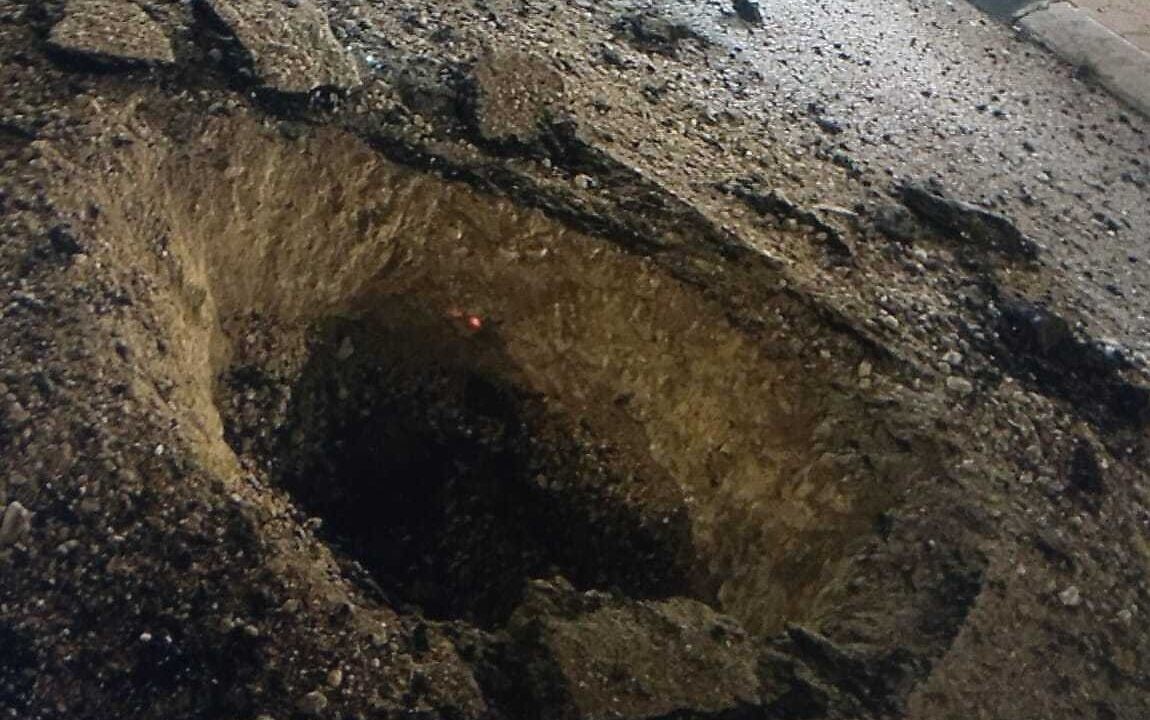
Right after Trump declared the ceasefire, Iran launched a ballistic missile at the Jerusalem area and central Israel, which was followed by several more attacks on the center, north and south of the country.
Medics reported that three boys were lightly wounded by an Iranian cluster submunition that struck the southern town of Tel Sheva, with the Magen David Adom ambulance service saying it treated two 15-year-olds and a 12-year-old who were hurt by the blast and glass shards.
Several others were treated for acute anxiety, MDA added.
The Islamic Republic also continued attacking the Gulf states of Saudi Arabia, Qatar, Kuwait, Bahrain and the United Arab Emirates, with the latter reporting a fire at the Habshan gas processing facility.
Times of Israel staff contributed to this report.



The Times of Israel Community.