

Under pressure, Arab Knesset parties sign agreement to work toward reviving Joint List
Spokesperson says mass public pressure over violent crime in Arab communities prompted party leaders to reunify the bloc before upcoming elections
 Add ToI as a Preferred Source on Google
Ariela Karmel is a political correspondent at The Times of Israel. She previously reported for Calcalist and Haaretz. She holds an MA in Middle Eastern and African History from Tel Aviv University and a BA in Political Science from the University of British Columbia.
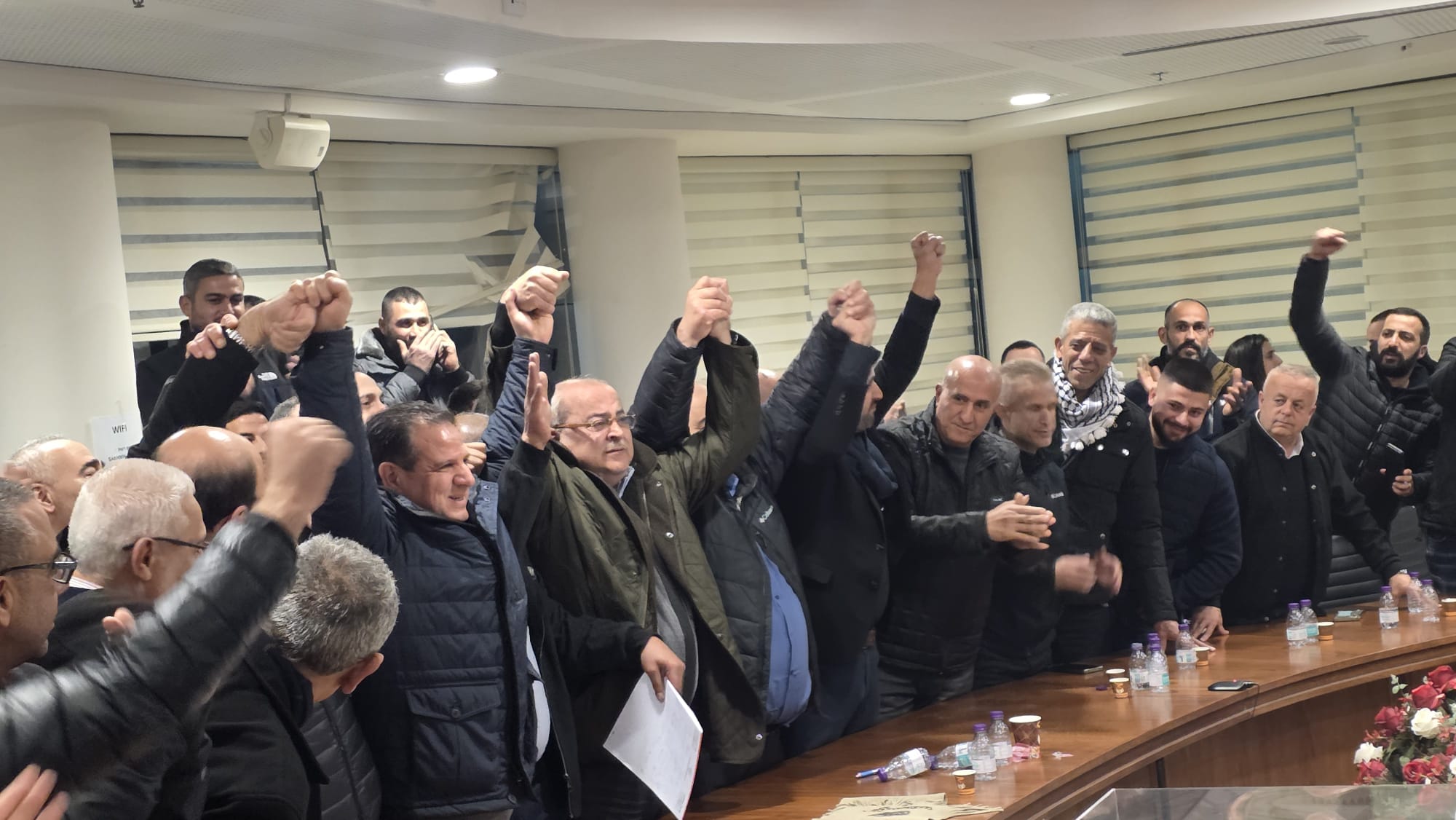
The four Arab parties – Hadash, Ra’am, Ta’al, and Balad – signed an agreement to work toward re-establishing the Joint List bloc on Thursday, a spokesperson for one of the parties told The Times of Israel.
The party heads, Hadash’s Ayaman Odeh, Ra’am’s Mansour Abbas, Ta’al’s Ahmed Tibi, and Balad’s Sami Abu Shehadeh were in Sakhnin, as part of a nationwide general strike over the police’s failure to stem a surging violent crime wave besetting the Arab community.
The agreement was written on a notepad bearing the Sakhnin Municipality’s letterhead and the signatures of the party heads, and footage showed the party heads cheering and holding hands after signing.
The Arab parties have for months been in talks to revive the list, which seemed halted amid internal fights between Ra’am and the other parties, mainly over Abbas’s demand for the bloc to be merely a technical alliance to allow him the option to split after the elections and join a governing coalition separately.
According to the Kan public broadcaster, the other parties acquiesced, enabling an agreement to be signed.
However, a spokesperson for one of the parties told the Times of Israel that the four party heads – principally Abbas – were ambushed into a public agreement, amid widespread pressure from the Arab community to revive the bloc amid the crime epidemic sweeping Arab society.
חתימת ראשי המפלגות הערביות להקמת המשותפת מחדש: אחמד טיבי, איימן עודה, סאמי אבו שחאדה ומנסור עבאס pic.twitter.com/Umg2d9PmfK
— מוחמד מג'אדלה محمد مجادلة (@mmagadli) January 22, 2026
Arab society experienced its deadliest year on record in 2025, with 252 homicide victims. And since the start of January, 20 more people have lost their lives to violent crime.
Nearly all Arab cities and towns shut down Thursday as part of the protest action, which evolved from a local strike in Sakhnin after several shop owners were targeted in extortion-related shootings.
Leaders were gathered in Sakhnin as part of a march led by the High Follow-Up Committee, the leading umbrella organization in Arab society, and implored political leadership to “do something” and unify.
“You can’t say it’s absolutely final, but such a public commitment will lead to more serious meetings, and everyone will be afraid to look like the ones who collapsed the list,” said the spokesperson.
At its peak in 2020, the Joint List bloc commanded the third-largest bloc in the Knesset. Bitter arguments over the allocation and rotation of Knesset seats eventually led Ra’am to break away in 2021. Abbas ultimately joined Naftali Bennett and Yair Lapid’s short-lived coalition government, becoming the first Arab party to sit in an Israeli coalition.
בלחץ המפגינים בסח'נין: ראשי המפלגות הערביות רע"מ, חד"ש, תע"ל ובל"ד חתמו על הסכם להקמת הרשימה המשותפת pic.twitter.com/ChseyuWi8d
— מוחמד מג'אדלה محمد مجادلة (@mmagadli) January 22, 2026
This left Odeh’s Hadash, a joint Jewish-Arab leftist faction incorporating Israel’s old Communist Party, allied with Tibi’s Ta’al and the secular nationalist Balad party, the latter of which failed to pass the electoral threshold in the last election. The Joint List finally collapsed ahead of the 2022 election.
The bloc’s demise provoked intense frustration among the Arab public, who have been pressuring the party heads to reunify ahead of upcoming elections in October to bolster political influence, not just in the opposition in Knesset, but through participation in government.
According to data from a survey published in November by the Moshe Dayan Center at Tel Aviv University, 77.4% of Arab respondents support the inclusion of an Arab party in the next governing coalition.
The report also said that a Joint List would significantly increase voter turnout among Arab citizens. While turnout is expected to reach 52.4% if the four parties run separately, it would rise to 61.8% and secure approximately 15.5 Knesset seats if the Joint List were re-established.








The Times of Israel Community.