

UNESCO Holocaust exhibit nixed after Latvian protests
Riga officials said to object on grounds exposition on children in the Salaspils concentration camp would damage their country’s image
 Add ToI as a Preferred Source on Google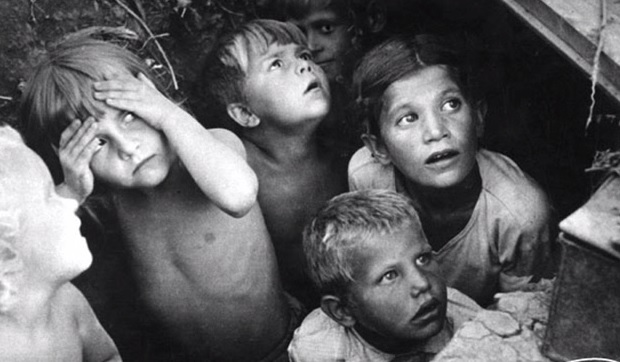
Latvian officials prevented the opening of an exhibition about the Holocaust that Russia wanted to host at a United Nations building.
The exposition, titled “Stolen childhood: Holocaust victims Seen by Child Inmates of Salaspils Nazi Concentration Camp,” was canceled following objections by Latvian officials to its scheduled opening on Sunday at the Paris seat of UNESCO, the United Nations Educational, Scientific and Cultural Organization, a UNESCO spokesman told JTA on Wednesday.
The exposition’s curator, historian Alexander Dioukov, told RIA Novosti that Latvia’s chief delegate to UNESCO, Sanita Pavluta-Deslandes, said the exposition risked damaging her country’s image during its presidency of the European Union, which the Baltic country assumed on January 1 and will hold until July 1.
Dioukov, who heads the Historical Memory association, said the exposition was co-sponsored by the UNESCO missions of Russia and Belarus.
UNESCO policy gives member states veto powers over events organized by other member states, a UNESCO spokesman told JTA.
“It wasn’t UNESCO’s decision to cancel, it was simply protocol,” spokesman Roni Amelan said. “Latvia opposed an exhibition by the Russian Federation that included photos from a concentration camp in Latvia.”
In an unsigned email to JTA, Latvia’s delegation to UNESCO said it offered to its Russian counterpart “to cooperate in order to organize in the future the event devoted to Holocaust remembrance, including by showing the film ‘The Controversial History’ about Latvia’s inhabitants, Holocaust survivors, Salaspils concentration camp survivors [and] Soviet deportation survivors.”
The email author did not answer JTA’s question as to why Latvia opposed the “Stolen childhood” exhibition.
Speaking to the LETA news agency on Wednesday, Karlis Eihenbaums, a spokesman for the Latvian Foreign Ministry, confirmed Riga’s opposition to the exhibition, adding that Dioukov “expressed openly hostile and unfriendly statements about Latvia and its people.”
Long burdened by bitter memories of Russia’s occupation of Latvia and Latvian complicity in Nazi war crimes during World War II, the two countries have had a tense relationship. Latvian leaders often have accused Moscow of expansionism and equated Nazism to communism despite protests by the Simon Wiesenthal Center and other Jewish groups.
In turn, Moscow hit back at what it called government support for the popular glorification of Nazi Latvians, including some who murdered Jews.








The Times of Israel Community.