

US downs Iranian drone flying toward aircraft carrier; PM to Witkoff: Iran can’t be trusted
American military accuses IRGC of also harassing a US merchant vessel in Strait of Hormuz; Israel reportedly insisting that Trump administration stick to 4 key negotiating demands
 Add ToI as a Preferred Source on Google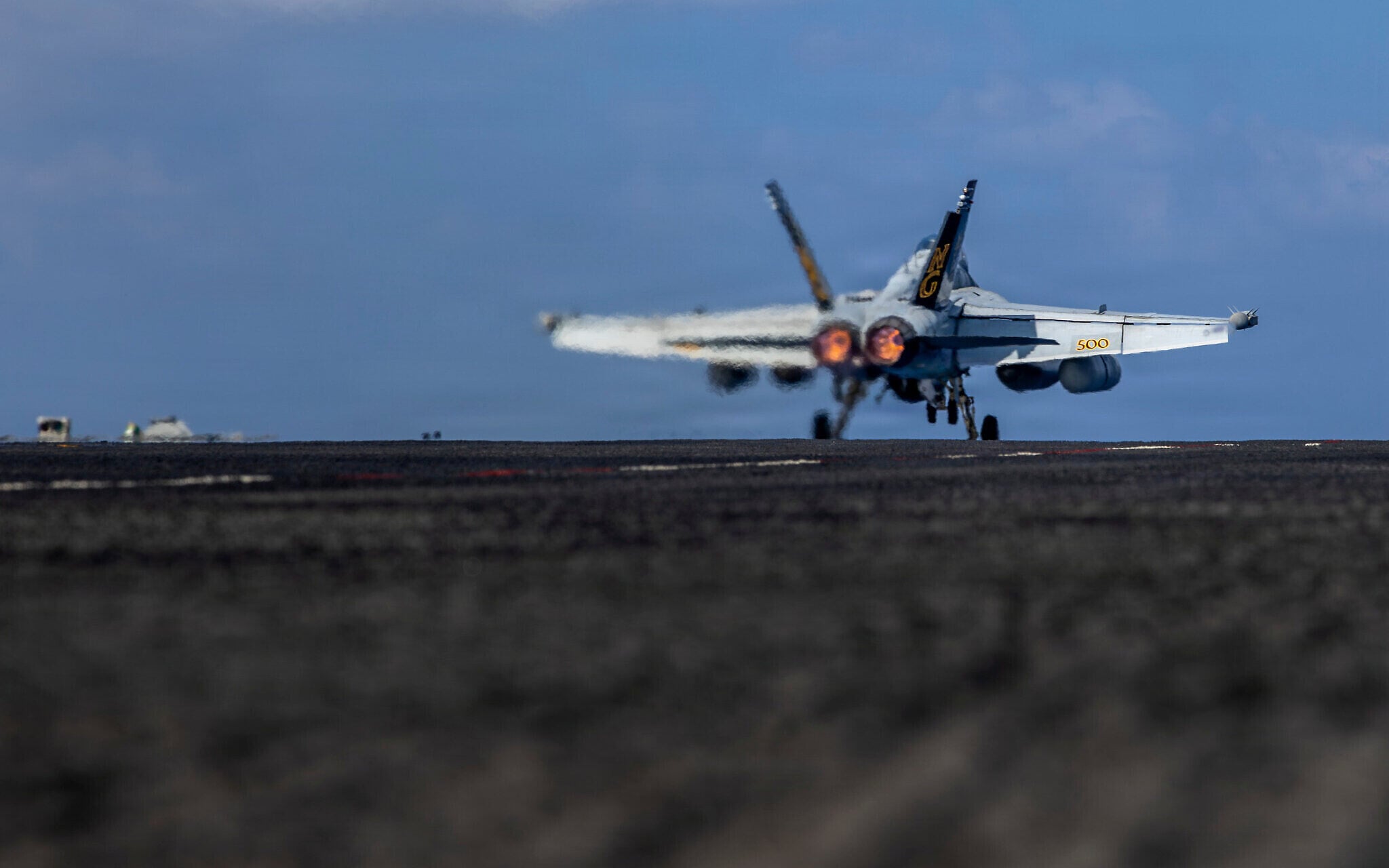
A US Navy fighter jet shot down an Iranian drone that was approaching the aircraft carrier USS Abraham Lincoln in the Arabian Sea, US Central Command said Tuesday, in an incident that threatens to further ramp up tensions as the Trump administration warned of possible military action to get Iran to the negotiating table.
The drone “aggressively approached” the aircraft carrier with “unclear intent” and kept flying toward it “despite deescalatory measures taken by US forces operating in international waters,” Central Command spokesman Capt. Tim Hawkins said in a statement.
The shootdown was followed by a second incident, in which Iranian forces harassed a US-flagged and US-crewed merchant vessel that was sailing in the Strait of Hormuz, the American military said, and also came as Iran reportedly pushed to change the location and format of negotiations set to be held in Turkey on Friday.
The developments could escalate the heightened tensions between the longtime adversaries as President Donald Trump has threatened to use military action first over Iran’s bloody crackdown on nationwide protests and then to try to get the country to make a deal over its nuclear program, ballistic missiles and support for proxy groups. Trump’s Republican administration has built up military forces in the region, sending the aircraft carrier, guided-missile destroyers, air defense assets and more to supplement its presence.
The Shahed-139 drone was shot down by an F-35C fighter jet from the Lincoln, which was sailing about 500 miles (800 kilometers) from Iran’s southern coast, Hawkins said. No American troops were harmed, and no US equipment was damaged, the military’s statement noted.
Iranian state media reported that Iran’s paramilitary Islamic Revolutionary Guard Corps is investigating the “interruption” of the drone. Semi-official Tasnim news agency posted on its Telegram that before the footage cut out, the drone was able to successfully transfer the images it took back to Iran.
US says Iran also harassed a merchant vessel
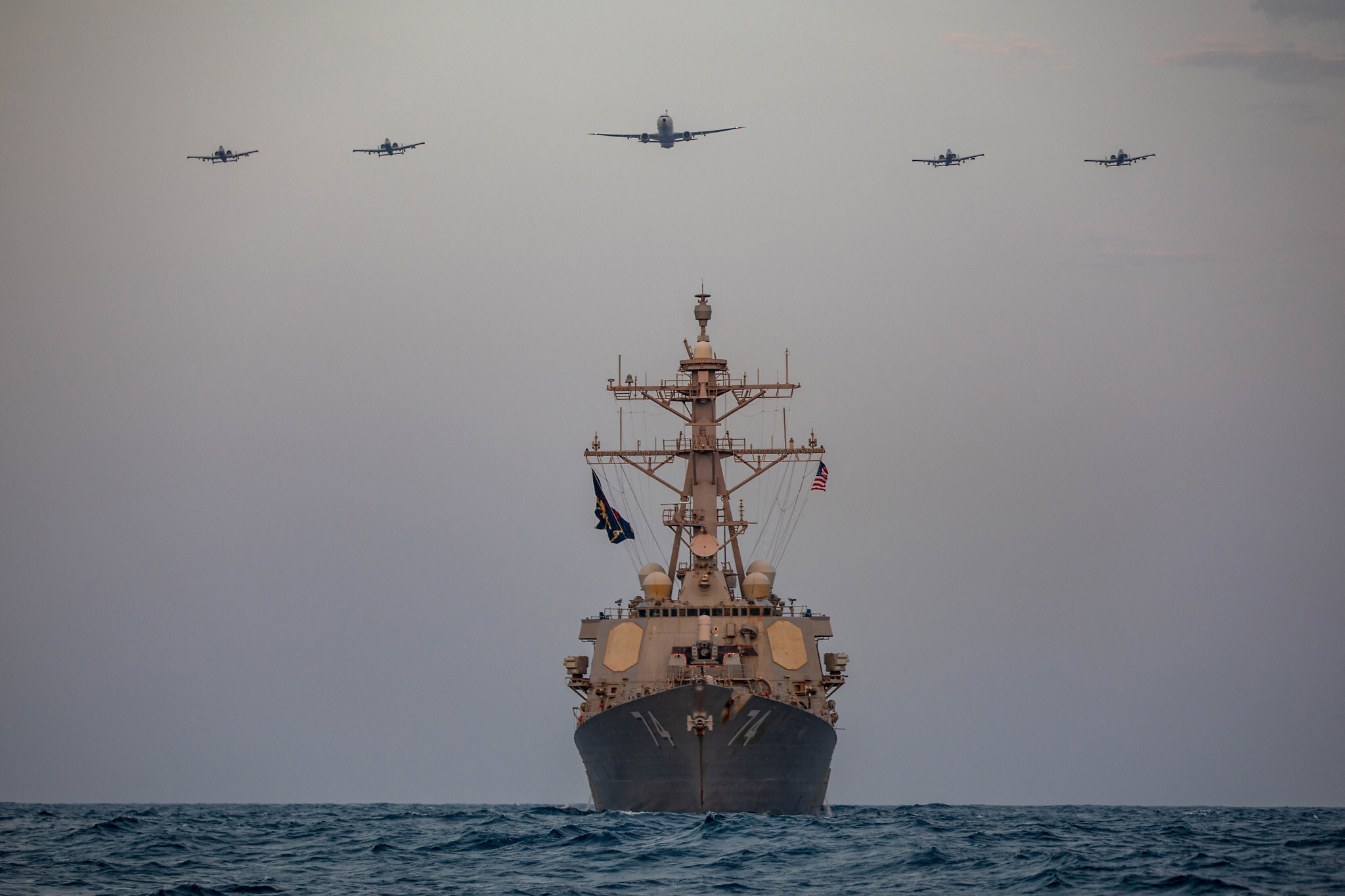
After the shootdown, Revolutionary Guard forces harassed the merchant vessel Stena Imperative, the US military said. Two boats and an Iranian Mohajer drone approached the ship “at high speeds and threatened to board and seize the tanker,” Hawkins’ statement said.
The destroyer USS McFaul responded and escorted the Stena Imperative “with defensive air support from the US Air Force,” the statement said, adding that the merchant vessel was now sailing safely.
Talks between special envoy Steve Witkoff — who met Tuesday in Jerusalem with Prime Minister Benjamin Netanyahu — and Iranian officials are still planned, White House and Iranian officials said. A source familiar with the situation said earlier that Trump’s son-in-law Jared Kushner is also due to take part in the talks, with Iranian Foreign Minister Abbas Araqchi expected to head Tehran’s negotiating team.
Asked later Tuesday, Trump would not be drawn on where talks would take place, but he told reporters that “we are negotiating with them right now” and insisted negotiations were being held “all over… There’s more than one” location.
“They are negotiating. They’d like to do something. We’ll see if something is going to be done. They had a chance to do something a while ago, and it didn’t work out, and we did Midnight Hammer,” Trump said, referring to the US airstrikes on Iran’s nuclear program last June.
“I don’t think they want that happening again. They would like to negotiate. We are negotiating with them right now.”
American officials told the Wall Street Journal that Trump considered walking away from negotiations with Iran following the naval confrontations, but ultimately chose not to. The report did not explain why Trump ended up deciding not to leave the talks.
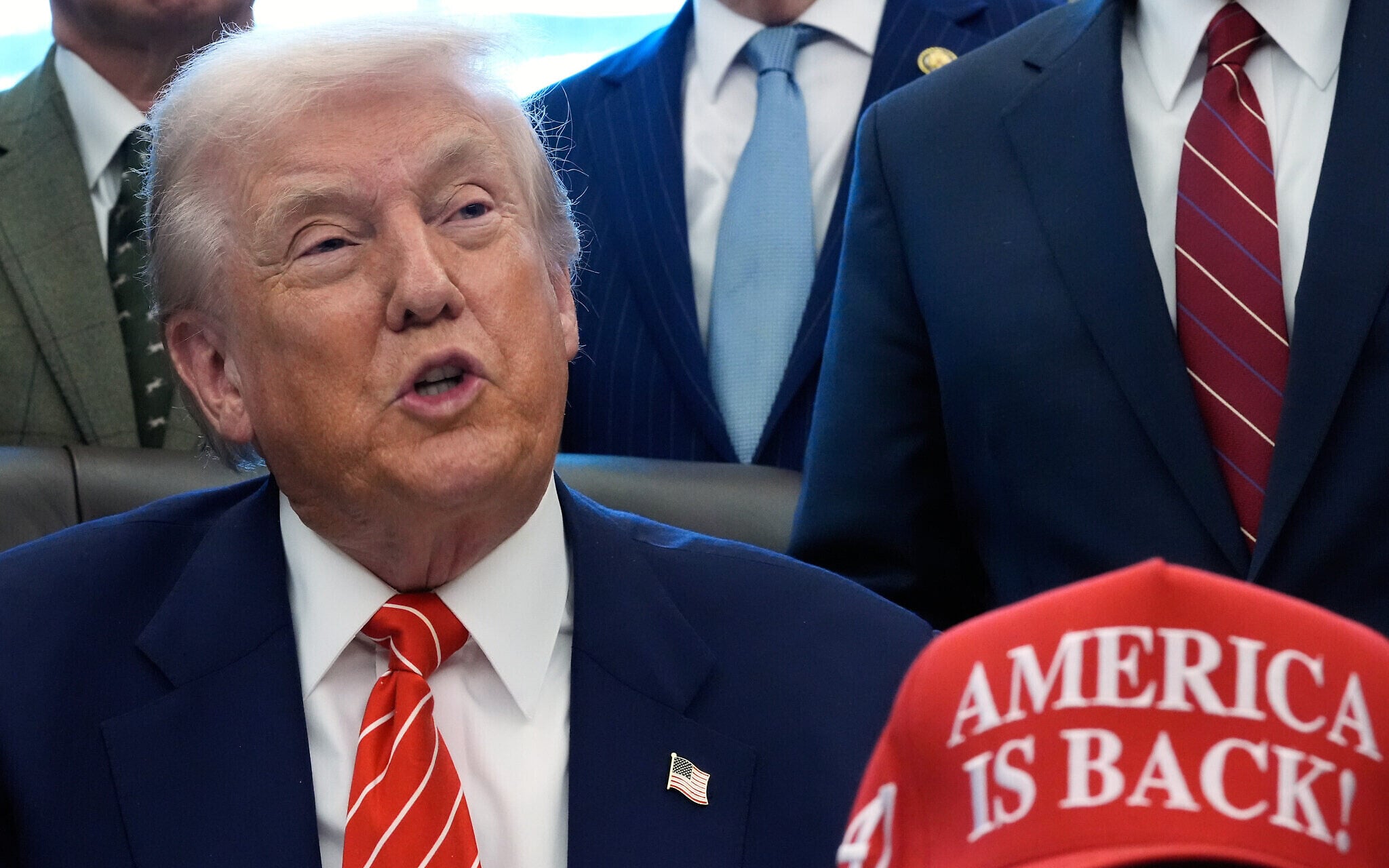
Adding further complications to an already delicate diplomatic effort, a regional source said Tuesday that Iran is demanding that the talks be held in Oman not Turkey, and that the scope be narrowed to two-way negotiations on nuclear issues only.
The regional diplomat with knowledge of Iran’s demands said Tehran sought “to change the format, they want to change the scope.”
“They only want to discuss the nuclear file with the Americans while the US wants to include other topics such as the (ballistic) missiles and the activities of Iran’s proxies in the region,” the diplomat added.
Ministers from several other countries in the region, including Pakistan, Saudi Arabia, Qatar, Egypt and the United Arab Emirates had also been expected to attend, but the regional source told Reuters that Tehran now wanted only bilateral talks with the US.
Quoting an Arab source, the Axios news site later reported that the Trump administration agreed to move the talks to Oman. The source added that negotiations were still being held on whether any Arab or Muslim countries would also take part in the Oman talks.
Iranian President Masoud Pezeshkian earlier said that he instructed his country’s foreign minister to “pursue fair and equitable negotiations” with the US. Iranian Foreign Ministry spokesman Esmail Baghaei also told state TV that the talks were still expected in the next few days but that the details, including where they would take place, were still being discussed.
Tensions began to rise again between the US and Iran as the Islamic Republic spent weeks brutally suppressing protests that began in late December against growing economic instability before broadening into a challenge to the country’s ruling theocracy.
Trump had promised in early January to “rescue” Iranians from their government’s protest crackdown before starting to pressure Tehran again to make a deal over its nuclear program. That is even as the Republican president insists Iranian nuclear sites were “obliterated” in US strikes in June.
‘Administration has proven its commitment to Israel’
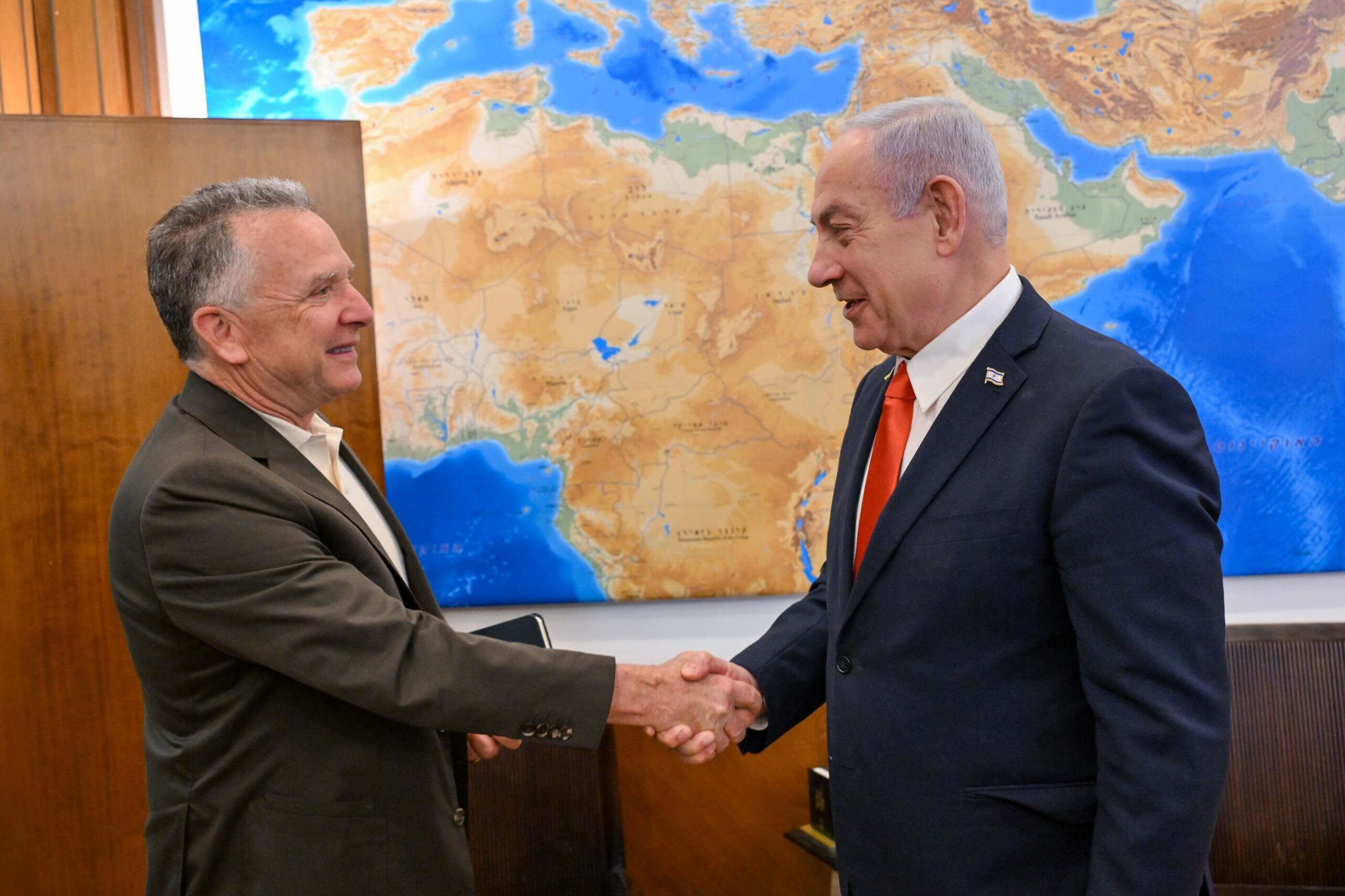
Ahead of his expected meeting with Iranian officials later this week, Witkoff met with Netanyahu, who according to his office emphasized to Trump’s special envoy that “Iran has repeatedly proven it cannot be trusted to keep its promises.”
Netanyahu was joined for the meeting by the heads of Israel’s security services, the Prime Minister’s Office told The Times of Israel. Two Israeli officials confirmed the meeting was attended by Israel’s spy agency head David Barnea, Defense Minister Israel Katz, and IDF commander Eyal Zamir.
A senior diplomatic official later told Channel 12 that Israel has laid out several critical requirements for American negotiators ahead of the talks with Iran, with Israeli officials insisting that the US not budge on four key demands: that Iran transfer its highly-enriched material to another country, halt nuclear enrichment completely, cease its production of ballistic missiles, and stop funding anti-Israel proxy groups in the Middle East.
“Every agreement that does not include these conditions is a bad agreement. This administration has proven its commitment to Israel in every area, and specifically in the Iranian area,” the senior official told Channel 12.
He added that, “Israel has influenced in the past, and will influence this time too” in negotiations between the two powers.
Iran has long said that these demands are unacceptable infringements of its sovereignty.
An Iranian diplomatic source said earlier that Tehran’s view of the talks is neither optimistic nor pessimistic, adding that the Islamic Republic’s defensive capabilities are non-negotiable and that it is ready for any scenario.
“It remains to be seen whether the United States also intends to conduct serious, results-oriented negotiations or not,” the source said.







The Times of Israel Community.