

US, Hamas reportedly hold direct talks, as Board of Peace disarmament plan stalls
Senior Trump official Lightstone meets with Hayya, as Hamas bucks ceasefire’s 2nd phase requirement that it give up weapons, arguing that Israel violating truce’s first phase
 Add ToI as a Preferred Source on Google
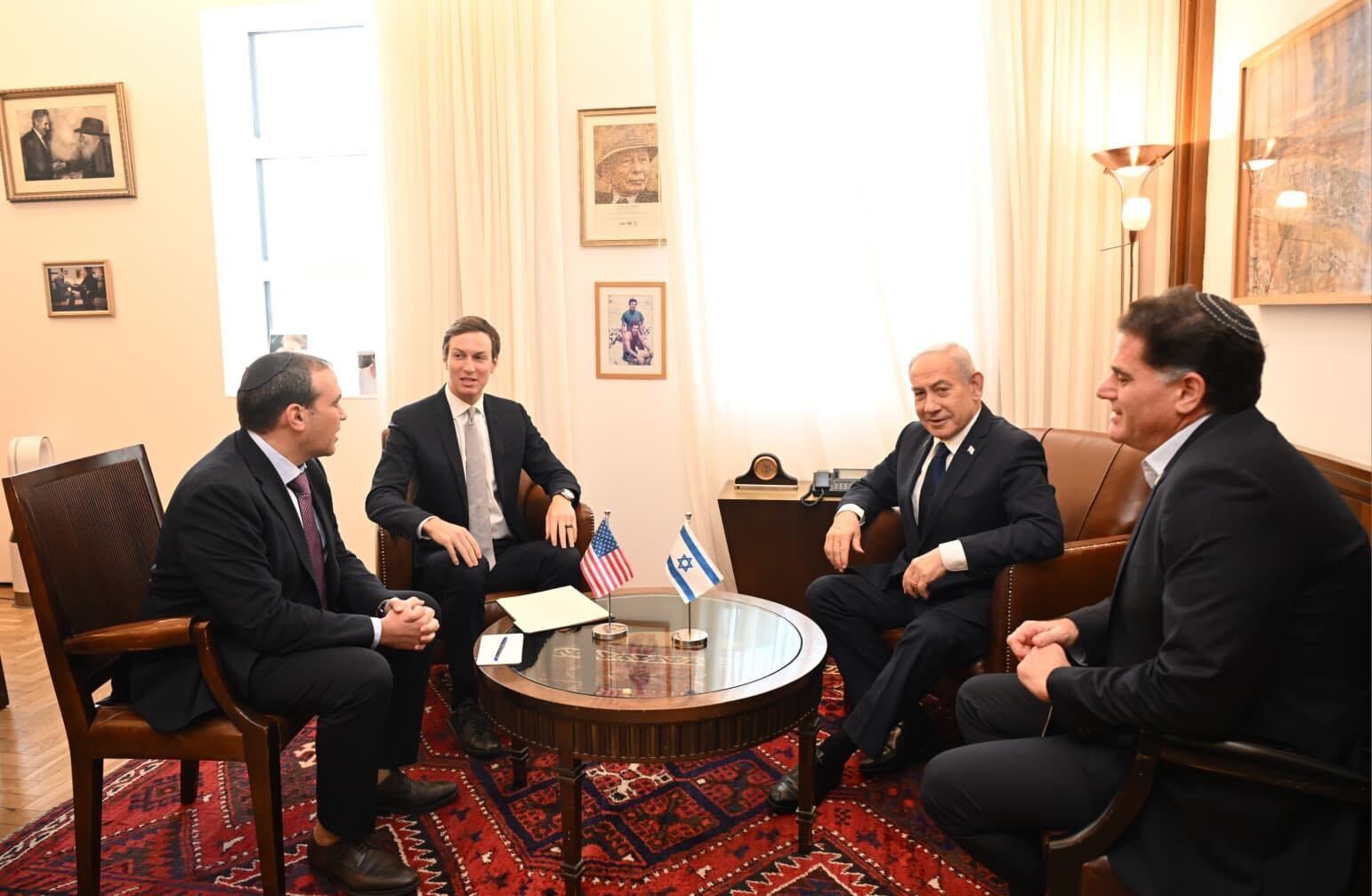
US and Hamas officials reportedly held a rare meeting on Tuesday, as the Washington-led Board of Peace responsible for overseeing the postwar management of Gaza sought to break the logjam in implementing the next phase of a ceasefire in the Strip.
Top Hamas negotiator Khalil al-Hayya met with senior US adviser Aryeh Lightstone as well as Board of Peace Gaza High Representative Nickolay Mladenov in Cairo on Tuesday night, according to CNN report. The trio is also reported to have met last month.
The Board of Peace has been seeking to coax Hamas to accept to a disarmament plan, conditioning the reconstruction of Gaza on the terror group giving up its weapons. Earlier this month, Mladenov gave Hamas an April 11 deadline to approve the proposal, which envisioned a phased handover of weapons. While Hamas balked at the offer, the Board of Peace refrained from blowing up the talks, instead scheduling Tuesday’s meeting in Cairo to continue trying to convince the group to take the deal.
Hamas argues that Israel is violating the terms of the ceasefire’s first phase and that the group should therefore not be expected to make concessions regarding the second phase. Hamas points to repeated Israeli strikes deep inside Gaza, humanitarian aid well below the levels required by the truce and Jerusalem’s pushing of the Yellow Line ceasefire demarcator deeper into the Strip, thereby expanding the eastern portion of the territory controlled by Israel.
Hayya again raised these issues during his meeting with Lightstone and Mladenov, CNN said.
Board of Peace officials have in recent weeks have leaned on Israel to address some of these violations, and the number of aid trucks entering Gaza has since risen.
But Hamas still appears hesitant to accept the disarmament proposal, with a senior source in the group telling CNN that it “reduces the whole process to a single clause – disarmament – while other first phase obligations are postponed or marginalized,” and “reflects a major imbalance in the ordering of priorities: Israel’s security first, while Palestinians’ humanitarian, political and administrative rights are postponed.”
In October 2025, the US brokered a ceasefire deal that largely ended two years of fighting triggered by Hamas’s 2023 attack on Israel. The first phase secured the release of all remaining hostages taken by the Palestinian terror group, in exchange for Israel’s release of thousands of Palestinian security prisoners and detainees.
The second phase, according to a 20-point plan proposed by Trump, is set to see a multinational force take control of Gaza, alongside a technocratic Palestinian committee, as the IDF withdraws and Hamas disarms.
Mladenov, a former UN envoy to the Middle East now charged with implementing Trump’s plan for postwar Gaza, has reportedly been passing on to Hamas an Israeli warning that if it does not agree to disarm, Israel will go back to war, a threat that Israeli officials have also made publicly.
Israel, which is insisting on full disarmament of Hamas, has continued to carry out near-daily strikes on Hamas assets and other Gaza targets it says were involved in breaches or planned violations of the ceasefire.
צה"ל חיסל מפקד ביחידת הקשר של ארגון הטרור חמאס: שני מפקדים ביחידת הייצור חוסלו בתקיפה נוספת
כוחות צה"ל בפיקוד הדרום תקפו וחיסלו שלשום את אחמד אבו חצ'ירה, מפקד ביחידת הקשר של ארגון הטרור חמאס במרחב העיר עזה.
אבו חצרה פעל לקידום מתווי טרור בטווח הזמן המיידי נגד כוחות צה"ל, היווה… pic.twitter.com/xjKF4FcVt2
— צבא ההגנה לישראל (@idfonline) April 16, 2026
On Thursday, the IDF said it killed the commander of Hamas’s communications unit in a recent strike in Gaza City, identifying him as Ahmad Abu Khadra.
According to the military, Abu Khadra was involved in advancing imminent attack plans against IDF troops and was targeted in a precision strike.
In a separate strike earlier this week, the IDF said it killed two operatives from Hamas’s production unit – Islam Hisham Riyad Kanita and Mahmoud Hamed Youssef Hamduna – who were allegedly working to rebuild the group’s military capabilities, including during the ongoing ceasefire.
In the latter half of March, Hamas was presented with a proposal for the gradual disarmament of all groups in Gaza in the coming months, two Arab diplomats familiar with the matter told The Times of Israel at the time.
The proposal requires Hamas in the first stage to — within 90 days — hand over its heavy weaponry, such as missiles and rocket launchers, in addition to maps of its tunnel network.
While Hamas negotiators have expressed willingness in talks with Arab mediators to hand over the terror group’s heavy weapons, they have insisted on maintaining lighter weapons, arguing that they are necessary for self-defense, one Arab diplomat said.








The Times of Israel Community.