

ZAKA volunteers help guide search for victims of Texas Hill Country flooding
After July 4 flash floods, Israeli search and rescue team is using AI-based model to identify most likely locations of bodies
 Add ToI as a Preferred Source on Google
Zev Stub is the Times of Israel's Diaspora Affairs correspondent.
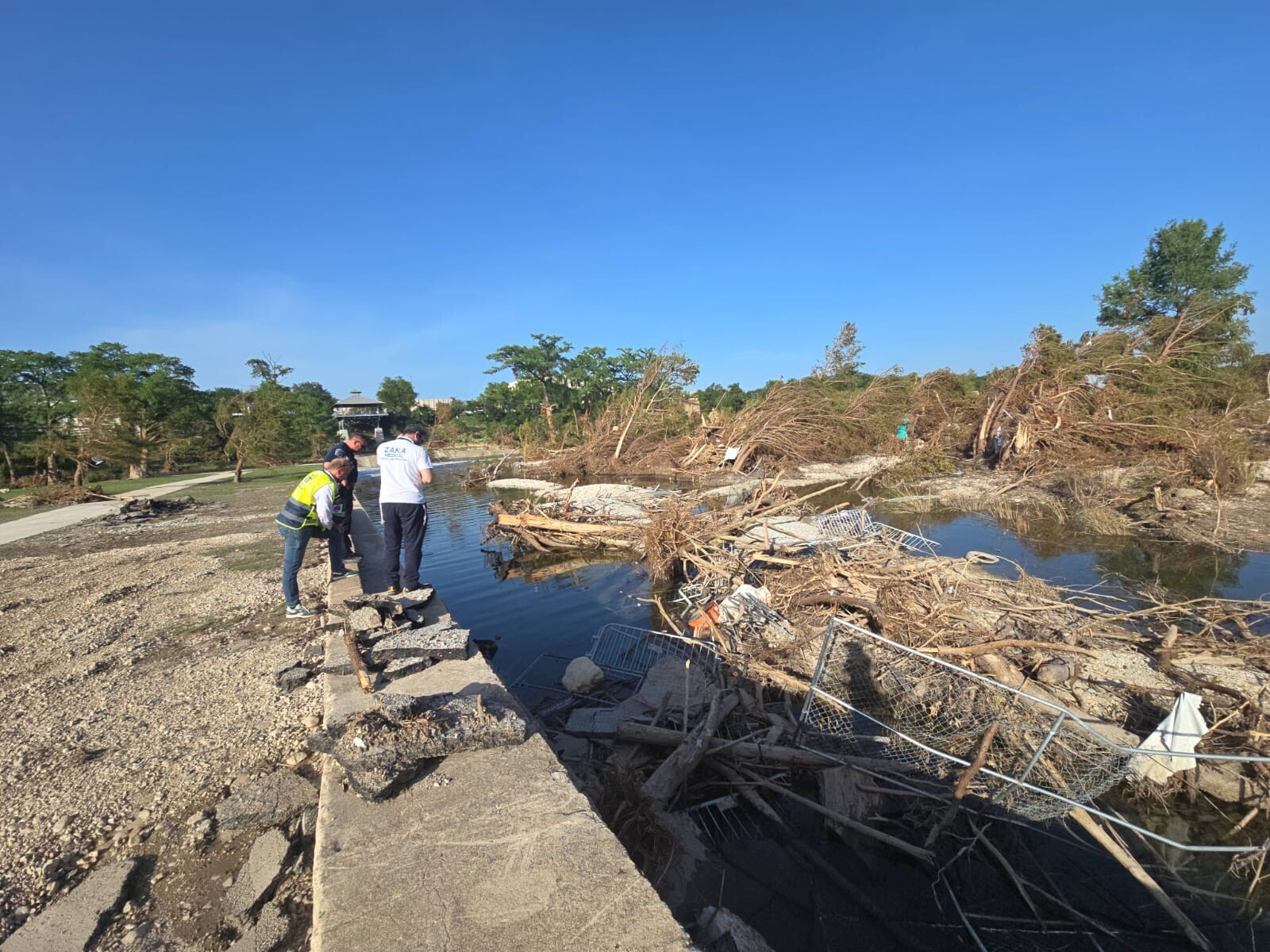
In the sweltering summer heat, search teams are still scouring the Guadalupe River in central Texas for the bodies of dozens of people who have missing since flash floods devastated the Hill Country earlier this month.
A search and rescue team of ZAKA volunteers from Israel is using a unique set of skills to help find them faster.
“We arrived about two weeks ago after authorities made a request for us to provide assistance,” ZAKA International commander Nachman Dyksztejn told Times of Israel. “People here know and appreciate that Israel is here helping, and the entire community has been very supportive of us.”
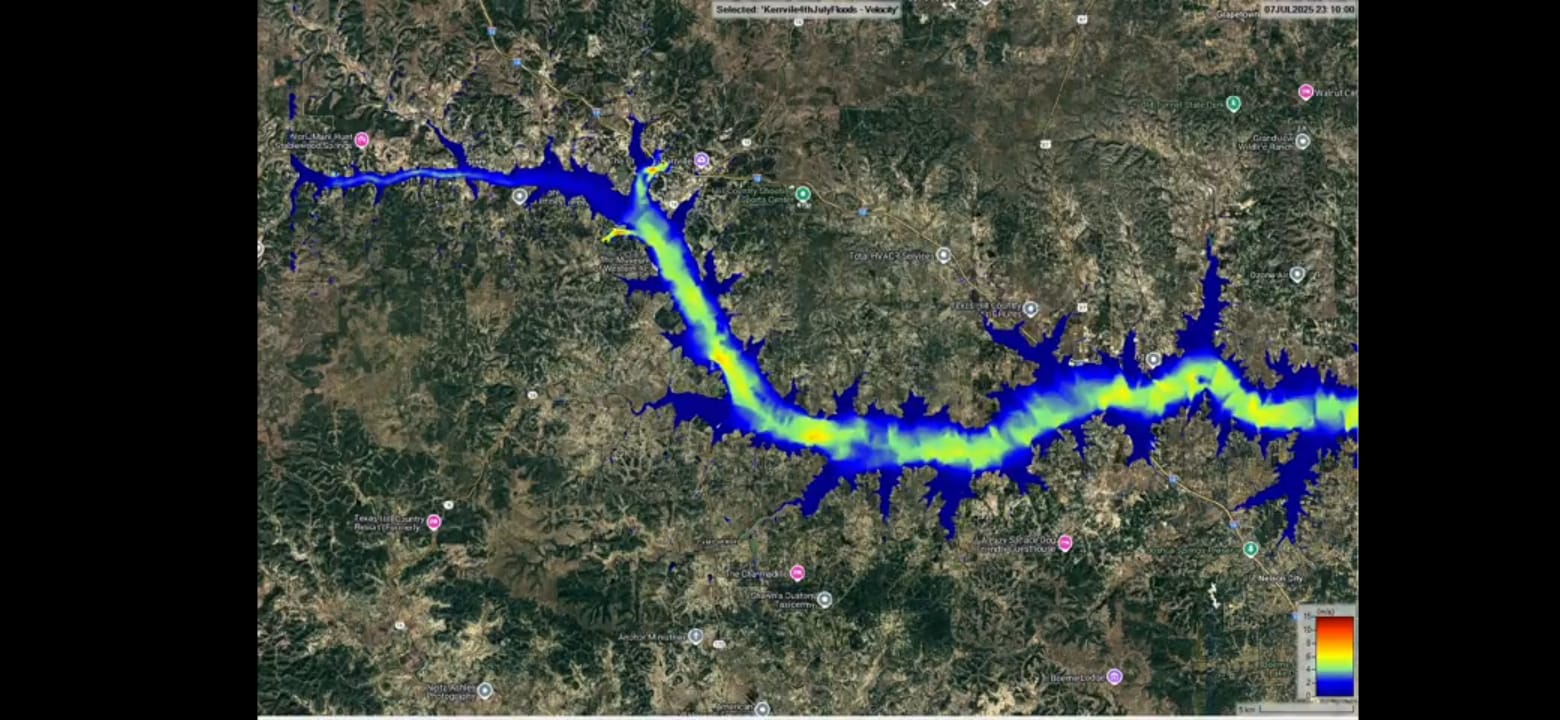
ZAKA’s team is using an AI-based model for mapping flood behavior. Employing tools developed by Prof. Barak Fishbein from the Technion, it can identify where bodies are most likely to be, so rescue teams can concentrate their efforts.
Hydrodynamic modeling and artificial intelligence (AI) algorithms enable the reconstruction of flood dynamics in both space and time, based on terrain features, weather conditions, elevation data, and other environmental factors.
“Our simulations take into account factors like the path the flood water took, the velocity and depth of the water, maps of the debris, and the age and weight of the people known to be missing,” Dyksztejn explained. “Others have created similar technology, but we have unique insights that allow us to do this more effectively.”
More than 135 people died when the flash flood swept through the Hill Country on the morning of July 4, including dozens of campers and counselors at a local summer camp. The region, located about 70 miles northwest of San Antonio and dotted with small towns and summer campgrounds, is considered a high-risk area for flash flooding due to its shallow rivers and rugged hills and valleys.
An overnight downpour caused the Guadalupe River to rise by more than 25 feet within a span of less than 90 minutes before dawn, causing massive damage throughout the area. Several weeks later, search teams are still working 12-hour shifts to sort through the damage in an effort that is expected to take months.
ZAKA is focused on finding the corpses of victims, similar to its role at Israeli disasters, in order to provide a dignified burial of the dead. Three weeks after the flood, it is virtually impossible that any of the missing are still alive, Dyksztejn said.
“In Jewish tradition, we are commanded not to abandon the dead,” he said. “We go wherever we are needed to help families reclaim their loved ones and ensure they are treated with the respect they deserve.”
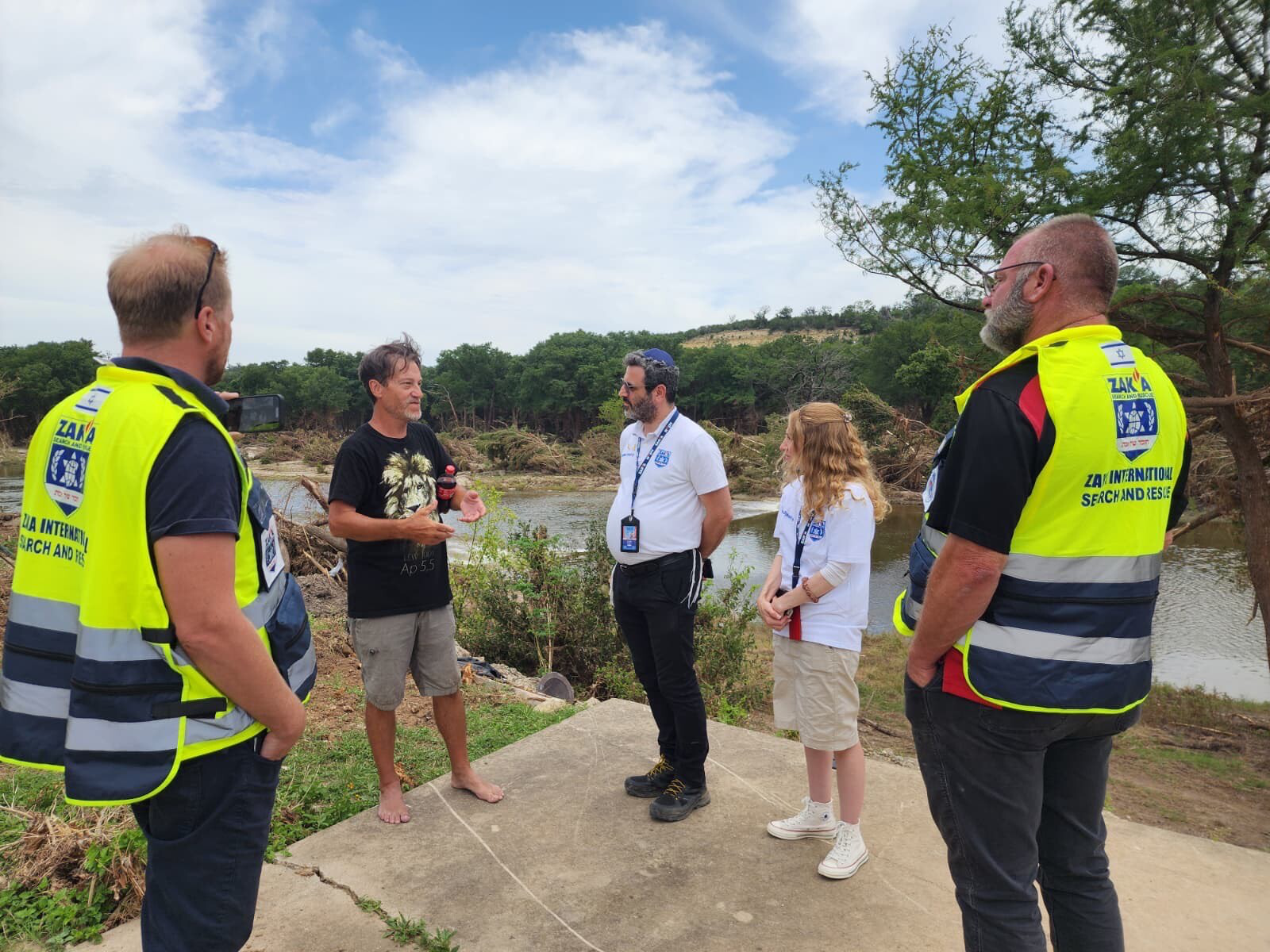
Dyksztejn, who has managed ZAKA operations in disasters around the world, has spent most of his days in a command center analyzing data and sending it to response teams to guide their efforts.
The mission is coordinated with Texas A&M Task Force 1 and is under the supervision of the Texas Division of Emergency Management (TDEM), ZAKA said.
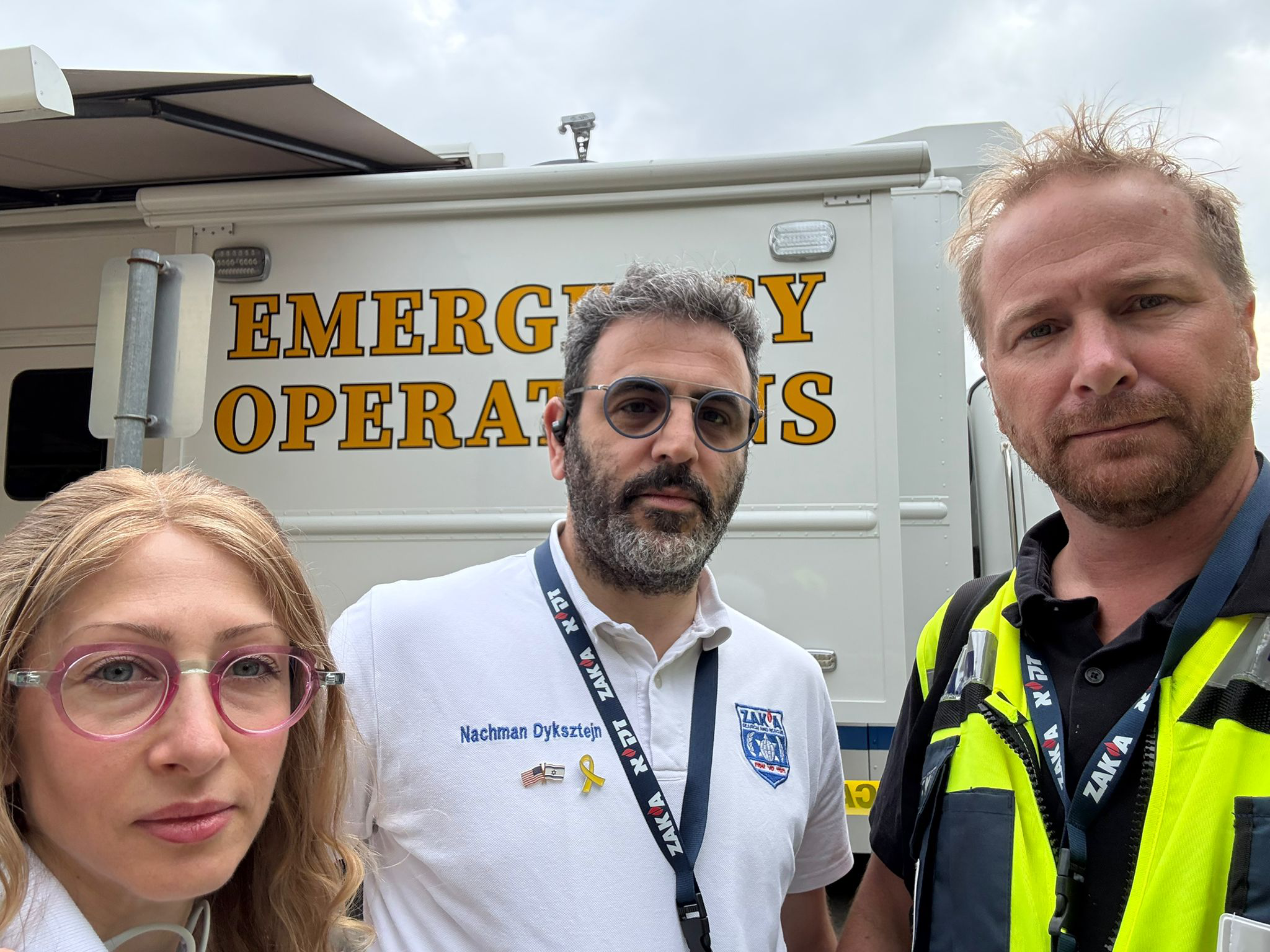
The team of three people comprises Dyksztejn and his wife, Valerie Dyksztejn, a software engineer and trained ZAKA responder, and Zaka director of international relations Marnix van Ede.
The team is not allowed to provide details on the success of the operation, Dyksztejn said.
“This has been a huge kiddush Hashem [sanctification of God’s name],” Dyksztejn said. “People are grateful that we came from Israel to help, and they are constantly thanking us, hugging us, and cooperation with local authorities has been phenomenal.”
The team has been told it will be called back if future disasters happen, Dyksztejn said. ZAKA has more than 3,800 volunteers in 42 countries, providing assistance at more than 10,000 emergencies a year, according to the nonprofit’s website.
The effort was funded by a variety of supporters, including Bridges for Peace, Kenneth Copeland Ministries, and representatives of the Jewish communities in San Antonio. The Israeli Consulate General in Houston and the Israeli government also helped facilitate the mission, ZAKA said.
“This mission is unlike any other,” said ZAKA CEO Dubi Weissenstern. “We are not just bringing advanced tools and trained responders. We are bringing a commitment to uphold the sanctity of life and death. Our role is to ensure that every person who perished is found, recovered with care, and, where possible, laid to rest in accordance with their faith and traditions. That is the essence of dignity, and it is what we owe to every human being.”







The Times of Israel Community.