

61 is the loneliest number
Netanyahu may have eked out a coalition at the last second, but papers report his quest for partners is not over as he’ll find it nearly impossible to scrape by with 61 seats
 Add ToI as a Preferred Source on Google
Joshua Davidovich is The Times of Israel's Deputy Editor
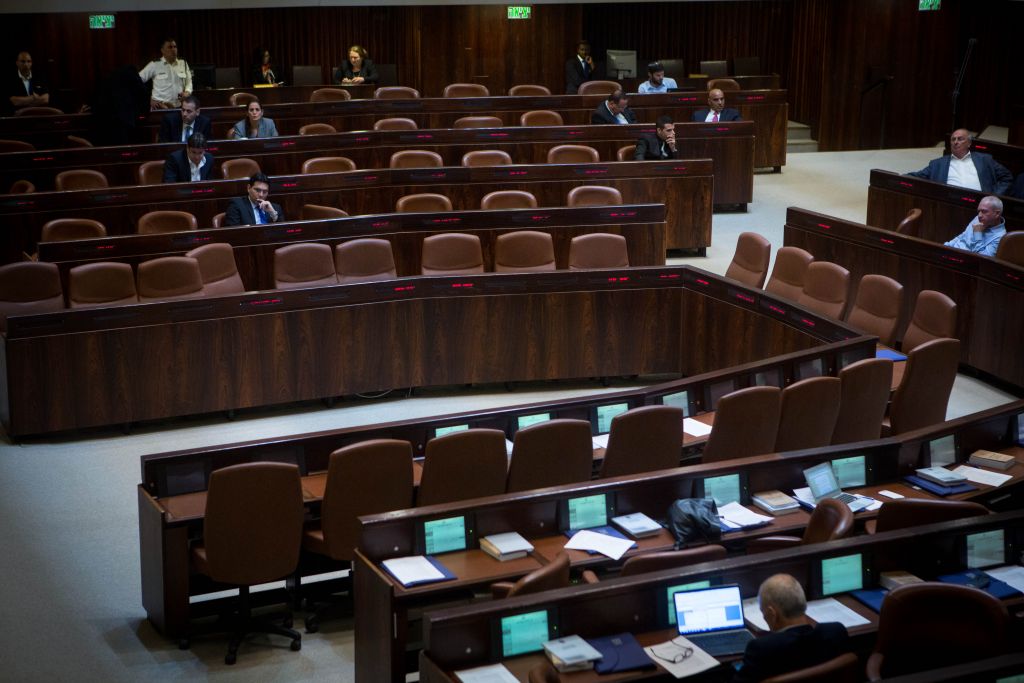
The drama of Wednesday night’s down-to-the-wire finish in Netanyahu’s coalition creation is alive and well Thursday morning, as newspapers hawk the news along with its most important and controversial development: the nomination of Jewish Home vixen Ayelet Shaked to Justice Minister (albeit with clipped powers).
The creation of the creaky, razor-thin 61-seat government and Shaked’s appointment win few plaudits in the morning papers, though, which quickly look ahead to Netanyahu’s next move to expand his coalition.
Yedioth Ahronoth’s Eitan Haber explains why the number 61 is not so magical after all. “A government of 61 is a hell for those in the coalition, especially for whoever takes the task of coalition head and will need to worry about coalition discipline and getting the majority to vote on bills the government supports. With a thin majority like this, every minister and MK will have to be in the Knesset all hours of the day, three days a week. … There’s no point in talking about going abroad without somebody from the opposition coming too. They’ll hardly be able to go to the bathroom, because this is a fighting opposition, which will have seven eyes on who is in the plenum.”
Haaretz reports that sources inside Likud and Zionist Union say talks between the parties to join up are expected to begin within a couple of weeks.
“[Kulanu head] Moshe Kahlon won’t allow us to continue with a 61-seat coalition and rightly,” the paper quotes an ethereal voice emanating from Likud saying. “It will be impossible to pass a budget or any significant reforms like this, and any junior MK in the coalition can hold up progress.”
Columnist Yossi Verter writes that talks to expand the coalition might not only be limited to Zionist Union, but could also veer in the direction of a dreaded former rival.
“Another possibility that cannot be discounted, since around here anything’s possible, is that Netanyahu will prefer to approach Yesh Atid, with its 11 MKs, whose price for joining would be far lower. He would have to give Yesh Atid only three ministries, foremost among them the Foreign Ministry for its chairman, Yair Lapid. Political observers believe that United Torah Judaism won’t veto Lapid so long as all its coalition wishes are fulfilled. The question is whether Lapid is prepared to commit political and electoral suicide to become foreign minister.”
Israel Hayom quotes Likud sources saying that Netanyahu will in fact keep the Foreign Ministry in his own hands to use as a bargaining chip in talks with Herzog, confirming what has been long suspected.
But columnist Haim Shine thinks that Netanyahu doesn’t necessarily need to go groveling to Herzog, writing that a 61-mandate government can be plenty stable.
“In the annals of the State of Israel there have been narrow governments that held it together for significant blocks of time. The responsibility shown by coalition MKs in a thin government can cover up for the lack of general support from Knesset members. The collective responsibility of the members of the government, for the good of all and not personal consideration, and above all the faith that they are all working toward a grand vision can assure the stability of the government,” he writes.
While everyone is looking ahead, papers have no small amount of criticism for Jewish Home’s tactics in pushing the coalition talks to the brink and squeezing some serious concessions from Likud.
Moti Tuchfeld in Israel Hayom writes that Jewish Home head Naftali Bennett may have gotten what he wanted, but he’ll pay for it later.
“In Jewish Home they may be cheering themselves over the Justice Ministry, but they may have lost one of the most important things they had – the support of the Likudniks,” he writes. “ Should Netanyahu have the chance to switch him out for Herzog, he won’t have much pull with the Likudnik.”
In Yedioth, Tova Tzimuki explains why Netanyahu was so against giving up the Justice Ministry to Ayelet Shaked, who will now be able to appoint a new attorney general when Yehuda Weinstein retires in a few months, without Likud having any say over who it will be. Beyond that, she writes, Shaked has some big plans for the courts, and the bench is not a fan.
“The appointment of a Jewish Home minister caused senior court officials and High Court judges to shudder,” she writes, referencing the party’s push for two controversial laws. “The first will ask to negate every High Court ruling the government or Knesset doesn’t like. The second will send a message that Jewish values are more important than democratic ones. Even if the agreement with Kahlon won’t allow drastic changes like those, it’s enough that the minister holds ideas like this to signal to Supreme Court judges that they need to exercise judicial restraint.”
Judicial bombshells may be in our future, but Haaretz looks back to a literal bombshell from the recent past, which terrorists attempted to place on the border between Syria and Israel last month before an Israeli aircraft and some well placed missiles intervened, according to the army.
The broadsheet reports that Israeli officials now believe the bomb was placed at the behest of Iran, and not Hezbollah, despite the fact that the attempted attack came a couple of days after Israel reportedly hit a Hezbollah weapons convoy in Syria.
The paper reports the cell was working for Samir Kuntar, an arch-terrorist (released from Israeli jail several years ago) who has been working to set up a base on the Syrian Golan for attacks against the Jewish state.
If you think the mess of actors on the Golan is a mess, Israel Hayom packs enough intrigue for a John le Carre novel into a 200-word story on what did or didn’t happen in Sudan overnight, when there was or wasn’t an attack on a munitions factory near Khartoum.
The paper reports that Sudanese witnesses reported a series of explosions from a foreign plane, but then its army said there were no explosions, but they fired at an aircraft, but then the army said it actually shot down an Israeli drone armed with missiles and a camera, but then Arab sources said it may have been an Iranian attempt to bomb Sudan over its support for Saudi-led airstrikes in Yemen, and to top it all off, a boilerplate Israeli denial of knowing anything. “Security sources denies the report on the downing of an Israeli drone,” the paper reports.
Well, that settles it.










The Times of Israel Community.