

A bamboo forest grows among the sculptures at the Israel Museum
A large, climbable installation rises from the art garden while nearby, James Turrell gives watchers a slice of sky
 Add ToI as a Preferred Source on Google
Jessica Steinberg, The Times of Israel's culture and lifestyles editor, covers the Sabra scene from south to north and back to the center
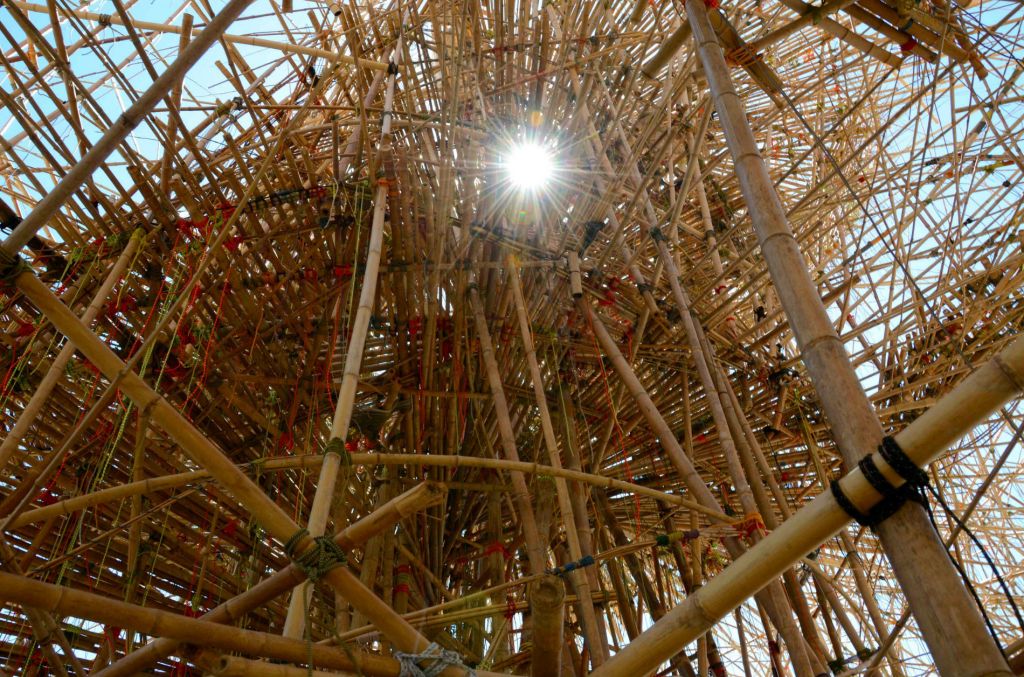
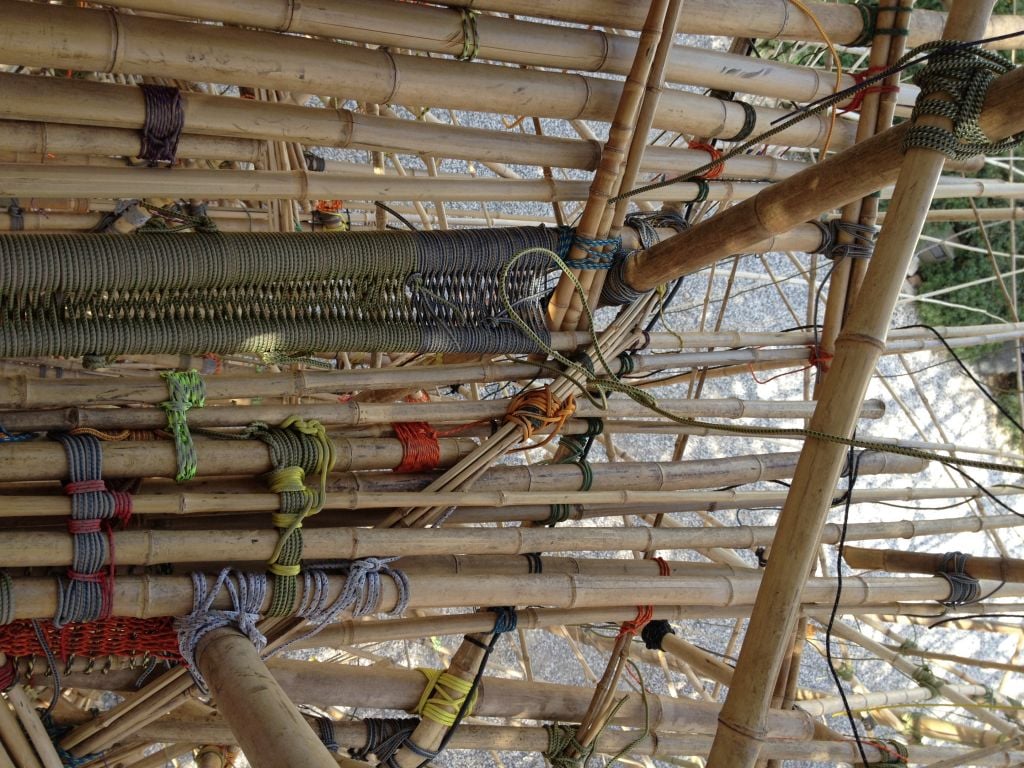
There’s a new jungle gym in town, and it’s not just for kids. Made from thousands of bamboo poles, intricately tied together with multicolored mountain climbing ropes, this is Big Bambú, the new installation at Jerusalem’s Israel Museum.
Designed — and built — in the Isamu Noguchi-designed art garden over the last few months, it will entice visitors all summer long. It will open on Thursday.
Identical twin brothers Mike and Doug Starn, who have installed similar bamboo structures on the roof garden of the Metropolitan Museum of Art and the 54th Biennale in Venice, Italy, spent several months in Israel, working with a team of local and imported mountain climbers to help build their creation.
These are guys who know how to build; one of their most recent projects was the scaffolding for the ark in the recent “Noah” film.
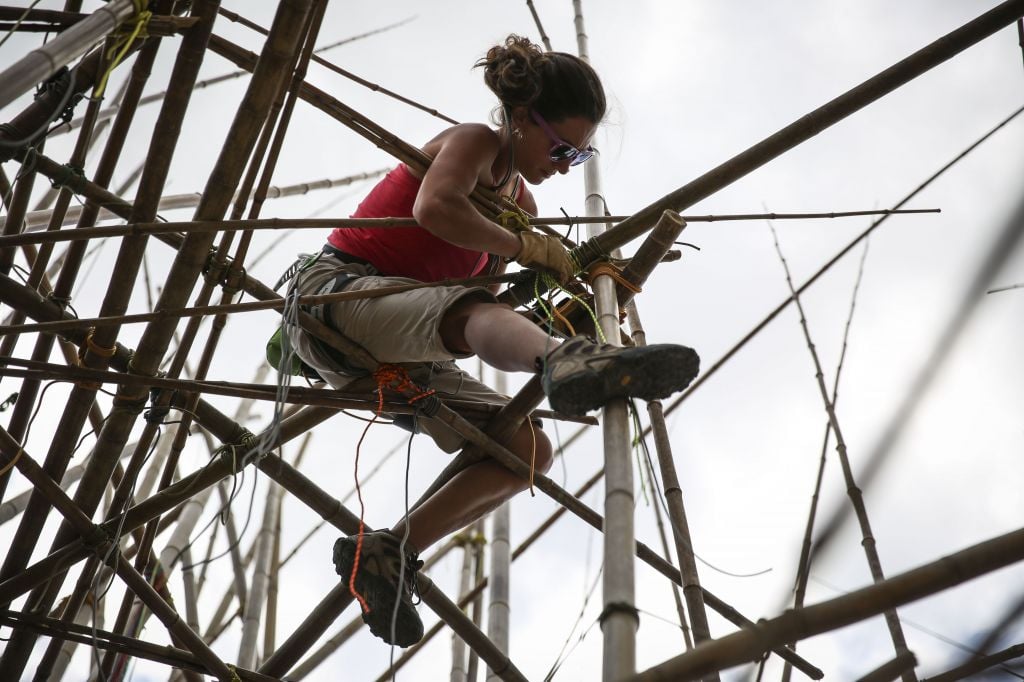
The two want visitors to explore the installation’s myriad paths, and climb its heights. They hope a bar will be put in below during the summer, and added cozy, cushioned seats with cup holders for those lounging amid the tall stalks and — hopefully — sipping cocktails.
But either way, the brothers see Big Bambú as “serious artwork that does reflect the joy of life,” according to Mike Starn.
They chose bamboo after getting lost in a Kyoto, Japan, bamboo forest some years back, he said. They like bamboo’s sustainability as a grass, and they added the easily recognizable climbing cords to “draw attention.” It’s also a natural material for them to use, given that many of their helpers are rock climbers from the Shawangunk Mountains in New Paltz, New York.
Be warned: climbing times will be limited. Be sure to reserve a half hour slot on the Israel Museum website; wear closed, rubber-soled shoes; and note that only children ages 6 and up can climb Big Bambú and children ages 6-13 must have an adult accompanying them, June 16, 2014-October 1, 2014.
Once you’re back on the ground in the garden, continue your stroll on the pebbly paths. After you’ve stopped to admire the Rodin, Picasso and Kadishman sculptures, keep walking until a large white structure emerging from the hill comes into a view.
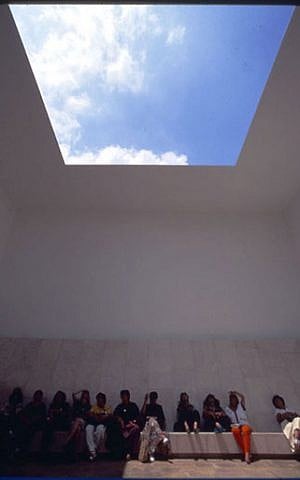
A short walk down and through a narrow corridor brings you to James Turrell’s 1992 installation “Space that Sees,” a square room with a ceiling that is open to the sky. It’s an artwork that changes depending on the time of day, although museum curators recommend twilight as a particularly worthwhile time to watch the ever-changing sky and cloud formations.
It’s a good introduction to Turrell’s current exhibit at the museum, “Light Spaces,” in which he continues his lifelong habit of using light as a material, whether as a square projected on a corner of a room or as pink light inhabiting a space. Turrell is a Quaker, and there is something inherently peaceful and prayerlike about his spaces, particularly in the garden, where all elements are provided for sitting back and contemplating.
“James Turrell: Light Spaces,” June 7, 2014-October 18, 2014, Nathan Cummings Building for Modern and Contemporary Art and Billy Rose Art Garden.








The Times of Israel Community.