

One maneuver too many
Op-ed: Will Netanyahu’s proposed ‘Jewish state’ legislation finally puncture years of grudging Israeli consensus that there is no alternative to him as prime minister?

 Add ToI as a Preferred Source on Google
David Horovitz is the founding editor of The Times of Israel. He is the author of "Still Life with Bombers" (2004) and "A Little Too Close to God" (2000), and co-author of "Shalom Friend: The Life and Legacy of Yitzhak Rabin" (1996). He previously edited The Jerusalem Post (2004-2011) and The Jerusalem Report (1998-2004).
It’s extraordinary, the hold that Prime Minister Benjamin Netanyahu continues to exert over the Israeli electorate.
Things are not too good in today’s Israel. The ultra-sensitive relationship between the Jewish majority and the Arab minority in this country is even more strained than usual. There is no peace process with the Palestinians. Hamas is inflaming passions, and encouraging terrorism, over the fate of the Temple Mount, with assistance from ostensibly more moderate Palestinian voices. In Gaza, Hamas is re-arming, having defied the might of the Israeli army for 50 days this summer. Hezbollah, ten times as strong, is ready to strike from the north. Threats mount across almost every border in our entirely unstable and unpredictable neighborhood. Further afield, Iran is facing down the West with its nuclear weapons program, even as its leaders repeatedly agitate for Israel’s demise. Perceived Israeli recalcitrance on the Palestinian front is harming our ties even with our closest allies. The economy is slowing. Affordable housing is an oxymoron…
Israelis on the left blame Netanyahu for much of the morass. They argue that his refusal to halt building over the pre-1967 lines destroyed the prospects of substantive progress with Mahmoud Abbas, the last potential Palestinian partner we’re likely to see. They dismiss as empty rhetoric his talk of opportunities for building relations with Arab states that share Israel’s concerns about Iran, asserting that no such ties can flourish so long as the Palestinian conflict rages. They castigate him for placing his commitment to settlement expansion above all too many other priorities, including our crucial partnership with the United States. They argue that settlement-building has also cost Israel the consensual support of world Jewry — a terrible, unforgivable loss.

They blame him too for the deteriorating internal Jewish-Arab relationship, and highlight his planned “Jewish state” legislation as central to that decline. Just as Israel toyed unnecessarily in years past with legislation to outlaw non-Orthodox conversions — and thus to make explicit the notion that non-Orthodox streams of Judaism have no place here, a devastating delegitimation of much of the Diaspora — so, too, a “Jewish state” law, even if mildly worded, signals Arab illegitimacy in a country that had previously managed, through constructive ambiguity, to reconcile its democratic and “Jewish homeland” imperatives.
On the left, they argue that Netanyahu’s settlement-building has cost Israel the consensual support of world Jewry — a terrible, unforgivable loss
Yet Israelis on the right also blame Netanyahu for much of the morass. They say he hasn’t built enough in the settlements, hasn’t had the guts to defy the US and other international naysayers. For all the planning announcements and consequent international hullabaloo, outside Jerusalem there’s been almost a freeze, they say. Some of them wish he’d just annex parts of the West Bank already. They fume at the concessions he’s made in the cause of inevitably unsuccessful diplomatic efforts with the Palestinians, including the release of dozens of Palestinian killers from Israel’s jails. They derisively contrast his stark promises, as opposition leader, to oust Hamas, with the pusillanimous hesitancy of Operation Protective Edge. They think he’s all talk when it comes to his pledges to “stand alone” if necessary to thwart Iran.
And Israelis across the spectrum dislike his handling of the economy — the sense that Netanyahu’s Israel has embraced capitalism with too few socioeconomic safeguards; that the rich are getting richer and the poor are getting poorer, rapidly.
On the right, they derisively contrast Netanyahu’s stark pledge, as opposition leader, to oust Hamas, with the pusillanimous hesitancy of Operation Protective Edge
Except here he still is, gazing down from the top of the political pyramid, deciding which strings to pull, strategizing to ensure that he remains in power — secure in the knowledge that every survey, even after all his years in office, and even amid all that criticism from all sides, shows that much of the Israeli public considers him to be the only conceivable prime minister.
How can that be? How to explain the contradiction? Most everybody is critical of him, yet few can see anyone but him in charge.
Part of the answer, plainly, lies in the paucity of alternatives — the perceived unsuitability and mediocrity of the would-be replacements. It may be that Israeli politics is so dirty that decent people steer clear of it or are spat out by it. Fresh faces rapidly come to look tarnished and weary. Remember the hope for change inspired in some quarters by Yair Lapid’s Yesh Atid? No, me neither.

And yet, even as Netanyahu today continues his relentless political machinations, and maintains his masterful management of the political game — savoring the polls; weighing how and when to advance the “Jewish state” law; contemplating calling early elections; reaching out to potential allies; shrinking back; sloganeering, deriding his rivals — one wonders if we are approaching a tipping point. Is there a moment at which the great, grudging Israeli consensus that Benjamin Netanyahu is the only credible prime minister simply collapses? And if so, is that moment close at hand?
At the very least, it’s a question that ought to preoccupy Netanyahu.
Even in those democracies whose laws allow it, prime ministers and presidents cannot go on and on and on. At some point, the electorate has just had enough. At some point, an issue arises where the long-serving leader so mis-leads as to puncture the aura of irreplaceability
Sure, he must think to himself, Isaac Herzog comes across as irredeemably, helplessly mild and unthreatening, no matter how tough he tries to sound. Sure, Lapid has been ground down at the Treasury, the graying face of Israel’s slowing economy. Sure, Livni’s appeal has been compromised by every single day she’s spent as the fig leaf concealing the coalition’s diplomatic intransigence. Sure, Avigdor Liberman will have a tough time broadening his appeal beyond his Russian constituency, no matter how hard he tries to shift expediently around the political spectrum. Sure, Naftali Bennett is a rookie populist whose party’s core settler supporters won’t tolerate too great a deviation from their cause. Sure, Moshe Kahlon is just the latest semi-familiar pretty face certain to crash and burn the more the electorate comes to truly know him.
All these years, Netanyahu must muse, and still there’s nobody with the strong security background, the powerful rhetorical skills, the political smarts, the experience to constitute a serious challenge.
And if, some months from now, President Rivlin charges Netanyahu with the task of forming another coalition, after another successful election performance, then the prime minister will indeed have had no cause for concern.
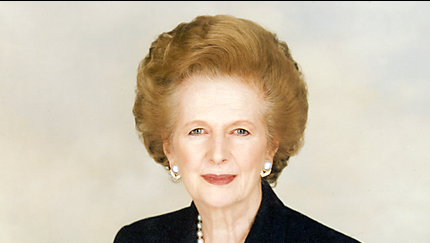
Nonetheless, history shows that even in those democracies whose laws allow it, prime ministers and presidents cannot go on and on and on. At some point, the electorate has just had enough. At some point, the alternative leaders, however flawed, start to look less terrifying. At some point, an issue arises where the long-serving leader so mis-leads as to puncture the aura of irreplaceability. The mighty Helmut Kohl was felled by rising unemployment. With Margaret Thatcher, it was the obscure issue of a “poll tax.” With Tony Blair, it was the war in Iraq.
Most Israelis, for their conflicting reasons, fault Netanyahu for the current state of the Palestinian conflict. Many hold him partly to blame for the high cost of living. On a relatively minor but emblematic issue, most looked askance at his remorseless effort to prevent Reuven Rivlin becoming president — behavior that seems more small-minded and nasty the more Rivlin excels in the role. But I wonder if the “Jewish state” legislation will prove to be the watershed — the issue over which the Netanyahu consensus breaks down. The point at which his narrow political interests — angling to shore up his right-wing base ahead of Likud primaries and possible general elections — are deemed to have become too detrimental to Israel’s wider interests. The gambit too far.
Israelis, like all democratic electorates, require more of their prime minister than that he be able to survive in office. However, unlike electorates in less-threatened democracies — i.e., all other democracies — they do recognize that simply keeping the country afloat, intact, amid the region’s threats, takes immense skill, and they know that some of the buffoons who lead other nations and presume to lecture ours would be quite incapable of doing so. That’s been central to Netanyahu’s enduring appeal — the track record of relative competence in the most challenging of posts in a near-impossible environment.
But ultimately, Israelis, like all electorates, also need a leadership that offers hope — hope of a better future. In Israel’s case, if the dangers posed by the region are unlikely to recede, this means hope of at least domestic harmony and socioeconomic progress. That kind of hope is in short supply right now. And Netanyahu’s “Jewish state” legislative shenanigans, stomping through the minefield of Israel’s Jewish-Arab relations, aren’t helping.
For the hitherto unassailable Netanyahu, this might just be one maneuver too many.









The Times of Israel Community.